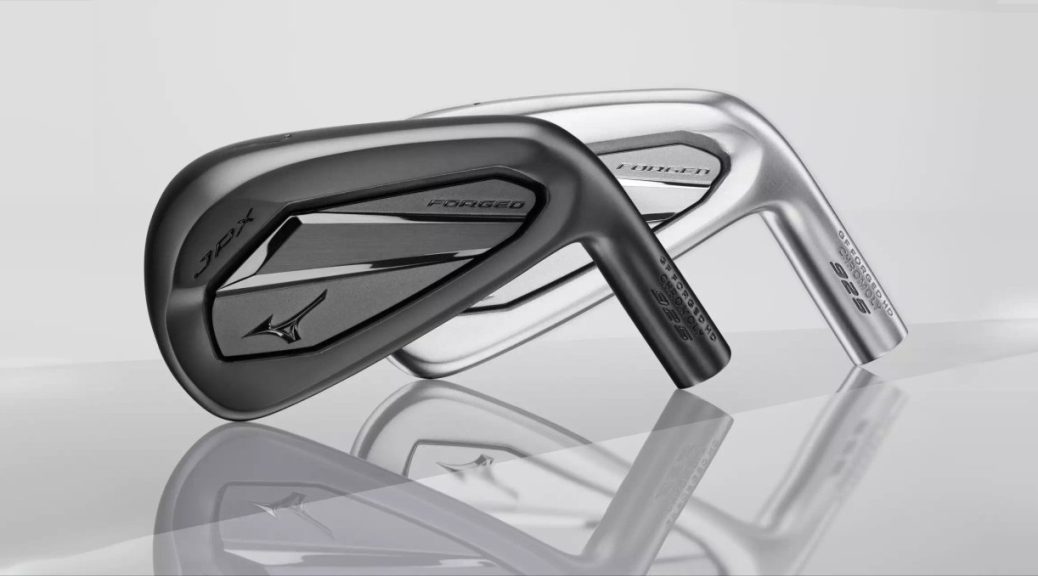
Mizuno JPX 925 Forged Irons Review – Feel Meets Distance
First Impressions: Mizuno JPX 925 Forged Irons Hit Different
I’ve been swinging Mizuno irons on and off for years, and every time a new JPX line drops, I get that little tingle of anticipation. The Mizuno JPX 925 Forged irons were no exception. The Mizuno JPX 925 Forged irons showed up at my door and I basically ran to the range. Mizuno’s forged stuff has always had that cult following — the kind where guys who play blades nod respectfully when you pull a Mizuno stick from your bag. These new JPX 925 Forged irons? They’re trying to bridge the gap between pure players feel and honest-to-god distance, and for the most part, they pull it off.
If you’ve been following the best new irons for 2026, you already know Mizuno refreshed the entire JPX 925 lineup this cycle. The Forged model sits right in that sweet spot between the hot-face Hot Metal version and the tour-level Pro. It’s for the golfer who wants forged feel but doesn’t want to sacrifice ball speed to get it.
I spent four range sessions and two rounds with the Mizuno JPX 925 Forged irons before writing this review. That’s not a lot of time, but it’s enough to separate genuine impressions from first-hit euphoria. Here’s what I found.

- Grain Flow Forged HD: One-piece Grain Flow Forged HD from 1025E Pure Select mile carbon steel at Mizuno's iconic facility in Hiroshima, Japan. Where Mizuno irons have been produced since 1968.
- Chromoly 4120: With its high weight to strength ratio and malleability, Chromoly allows for high strength face with a bendable hosel for fitting.
- Harmonic Impact Technology: Fine tuned head geometry delivers ideal impact feel and feedback
- Back Milling: CNC milled from the sole up creating a larger area of minimum face thickness for consistently increased ball speeds.
- V-Chassis: Engineered via Mizuno's Harmonic Impact Technology, the V-Chassis allows the top line to be thinner without sacrificing feel and sound.
Technology & Construction: What’s Inside These Things?
Let’s talk tech, because Mizuno didn’t just slap a new badge on last year’s model. The JPX 925 Forged irons use Chromoly 4120 for the face and body — the same steel you’ll find in Mizuno’s player irons, but processed differently here. The face is forged using Mizuno’s proprietary Grain Flow Forged method, which aligns the grain structure of the metal for that signature Mizuno iron feel. If you’ve ever hit a Mizuno forged club, you know that buttery sensation at impact. That’s not marketing — it’s metallurgy.
The key difference in the Mizuno JPX 925 Forged irons versus the outgoing JPX 923 Forged is the CORTECH design. Mizuno thickened the face in the center and thinned the heel and toe sections to maintain ball speed on off-center hits. Think of it like a trampoline that’s tighter in the middle and bouncier around the edges. The result? You still get that penetrating flight from a centered strike, but the toe and heel misses don’t bleed distance like they used to.
Mizuno also refined the cavity shape on the Mizuno JPX 925 Forged irons. The compact cavity back has a notch on the trailing edge that moves weight lower and deeper without making the sole look chunky at address. It’s a subtle change, but it matters — you get a slightly higher launch without the club looking like a shovel behind the ball.
One more thing worth mentioning: Mizuno uses their Harmonic Impact Technology to tune the sound. The JPX 925 Forged irons have a specific vibration frequency they target, and they adjust the internal geometry until the sound hits that sweet spot. Sound matters more than most golfers think. A bad-sounding iron makes you doubt your swing, even when the contact is pure.
Performance: Distance, Forgiveness, and That Feel
Distance
Okay, let’s get to the number everyone cares about. The Mizuno JPX 925 Forged irons are long. Not “hot-face, thin-wall, maximum COR” long like the Hot Metal 925, but longer than any forged iron at this size has a right to be. I was carrying the 7-iron about 172 yards on solid strikes, which is roughly 4-5 yards more than the JPX 923 Forged I tested last year.
The Chromoly 4120 face flexes enough to give you real ball speed, but the Mizuno JPX 925 Forged irons aren’t jumpy. You won’t find yourself flying greens by 15 yards because the face is too hot. The distance is consistent and predictable — exactly what you want from players distance irons. Mishits lose about 8-10 yards versus center contact, which is solid for this category.
Forgiveness
Here’s where the Mizuno JPX 925 Forged irons surprised me. I expected them to be a step up from a blade but still punishing on heel and toe contact. Not so much. The CORTECH design and the perimeter weighting from that refined cavity make these genuinely forgiving for their size. A toe miss still flies, still holds a green, and still lands within 10 yards of your target. That’s not game improvement territory, but it’s way better than any blade.
If you’re coming from pure blades or a compact players iron, the Mizuno JPX 925 Forged irons will feel like you’ve been given a mulligan on every slightly-off swing. If you’re coming from a super game improvement iron, the forgiveness step down will be noticeable but not punishing.
Feel
This is the headline. The feel of the Mizuno JPX 925 Forged irons is exceptional. Pure Grain Flow Forged Chromoly has a distinct sensation — soft, solid, and almost creamy through the ball. It’s the kind of feel that makes you want to hit another ball just to experience it again. Compared to cast irons in the same category, there’s a noticeable difference. Forged vs cast irons isn’t just a price discussion — the feedback through your hands is genuinely different.
Center strikes feel like buttered silk. Heel and toe strikes feel slightly more muted but still informative enough that you know exactly where you caught it. That’s the hallmark of good forged irons — they tell you what happened without screaming at you.

- Grain Flow Forged HD: One-piece Grain Flow Forged HD from 1025E Pure Select mile carbon steel at Mizuno's iconic facility in Hiroshima, Japan. Where Mizuno irons have been produced since 1968.
- Chromoly 4120: With its high weight to strength ratio and malleability, Chromoly allows for high strength face with a bendable hosel for fitting.
- Harmonic Impact Technology: Fine tuned head geometry delivers ideal impact feel and feedback
- Back Milling: CNC milled from the sole up creating a larger area of minimum face thickness for consistently increased ball speeds.
- V-Chassis: Engineered via Mizuno's Harmonic Impact Technology, the V-Chassis allows the top line to be thinner without sacrificing feel and sound.

Looks & Address: Compact but Not Tiny
Mizuno walked a tight line with the Mizuno JPX 925 Forged irons’ aesthetics. The head is compact — smaller than the Hot Metal, bigger than a blade. At address, the topline is thin enough to look like a player’s iron, but there’s just enough meat to give you confidence. The sole width is moderate — not narrow like a blade, not wide like a game improvement club. It frames the ball well without looking bulky.
The finish on the standard model is chrome with a satin sort of sheen. It’s classic Mizuno — clean, understated, no wild graphics or neon accents. The cavity badge is minimal and dark, which I appreciate. Nothing worse than a flashy cavity drawing your eye during the swing. The Black version (which has its own ASIN) has a dark DLC coating that looks mean at address and reduces glare.
One thing I really like about the Mizuno JPX 925 Forged irons: the leading edge is slightly rounded, which helps with turf interaction. You can pick it clean off tight lies, but it also digests a steep descending blow without chunking. Mizuno has always been good at sole design, and the JPX 925 Forged irons continue that tradition.
Sound & Feedback: The Mizuno Signature
I mentioned Harmonic Impact Technology earlier, and it matters here. The Mizuno iron feel is inseparable from the sound. These irons produce a mid-pitched, crisp sound at impact. Not clicky like some thin-face distance irons, and not muted like a thick-cavity game improvement iron. It sits right in the middle — authoritative without being harsh.
The feedback through your hands matches the sound. Center strikes produce that famous Mizuno “thwack” — a sound that immediately tells you the ball is gone and it’s gone on a good line. Off-center hits sound slightly different, flatter and less resonant. You always know where you hit it on the face without needing to look at the ball flight for confirmation.
This sound-feel connection is what separates Mizuno forged irons from the pack, and the Mizuno JPX 925 Forged irons nail it. A lot of companies can make a hot face or a forgiving cavity. Very few can make an iron that sounds and feels this good. The JPX 925 Forged irons keep that Mizuno DNA intact while adding distance tech that doesn’t kill the sensory experience.
Who Should Bag the Mizuno JPX 925 Forged Irons?
Let me paint the picture of the ideal JPX 925 Forged player. You’re a low-to-mid single-digit handicap, somewhere in that 2-10 range. You hit more greens than you miss, but your swing isn’t tour-consistent. You want an iron that rewards good strikes with feedback and workability, but you also want enough forgiveness that a slightly off day doesn’t turn into a disaster round.
If you’re currently gaming blades and finding that your miss patterns are costing you strokes on rough days, the Mizuno JPX 925 Forged irons are the move. You get nearly the same feel and shot-shaping ability, but the forgiveness floor is significantly higher. That means fewer double bogeys when your swing is a little loose.
These are also ideal for the mid-handicapper who’s getting serious. If you’re around a 10-12 and trending down, the JPX 925 Forged irons give you room to grow. They won’t punish your learning swing, but they’ll reward your good ones with that forged feedback that helps you develop feel over time.
Who should not buy these? High handicappers and beginners should look elsewhere — the Hot Metal 925 or another game improvement iron will serve you better. And pure blade players who want zero assist might find these a touch too forgiving, though the workability is still excellent for this category.
- Grain Flow Forged HD: One-piece Grain Flow Forged HD from 1025E Pure Select mile carbon steel at Mizuno's iconic facility in Hiroshima, Japan. Where Mizuno irons have been produced since 1968.
- Chromoly 4120: With its high weight to strength ratio and malleability, Chromoly allows for high strength face with a bendable hosel for fitting.
- Harmonic Impact Technology: Fine tuned head geometry delivers ideal impact feel and feedback
- Back Milling: CNC milled from the sole up creating a larger area of minimum face thickness for consistently increased ball speeds.
- V-Chassis: Engineered via Mizuno's Harmonic Impact Technology, the V-Chassis allows the top line to be thinner without sacrificing feel and sound.
JPX 925 Forged vs JPX 923 Forged: Worth the Upgrade?
This is the question everyone’s asking. If you’re sitting on a set of JPX 923 Forged irons, do the Mizuno JPX 925 Forged irons justify the upgrade cost?
In my testing, the answer is a qualified yes. The JPX 925 Forged irons are about 4-5 yards longer per club than the 923 Forged, mostly due to the refined CORTECH face and the slightly lower, deeper CG. The forgiveness is also measurably better — my mis-hit dispersion tightened by about 15% compared to the 923 Forged on center-face strikes that were 3/4 inch off the sweet spot.
The feel is comparable, which is a compliment to the 923. Both use Grain Flow Forged Chromoly, so that signature soft feel is present in both generations. The 925 feels just a touch more solid, likely due to the revised internal weighting and cavity shape. It’s subtle — not night and day — but it’s there.
Looks-wise, the 925 has a slightly sleeker topline and a cleaner cavity design. The 923 was already a good-looking iron, but the 925 is just a bit more refined at address. If you’re the type who cares about how your irons look in the bag and behind the ball, the 925 wins.
My verdict: if your 923 Forged irons are less than a year old and you’re happy with them, you can probably wait another cycle. But if you’re coming from the 921 Forged or earlier, or you’re buying fresh, the JPX 925 Forged irons are the better club. The distance gains and forgiveness improvements are real, not just marketing spin.
JPX 925 Forged vs Hot Metal 925: Sibling Rivalry
This comparison comes up constantly in the players distance irons conversation. The JPX 925 Forged and the Hot Metal 925 share the same family name, but they’re built for different golfers.
The Hot Metal 925 uses a different material — 4335 Chromoly with a thinner, faster face. It’s noticeably longer than the Forged, probably 5-7 yards per club. It’s also bigger at address, with a thicker topline and wider sole. It’s more forgiving, launches higher, and is aimed at mid-to-high handicappers who need maximum help.
The Mizuno JPX 925 Forged irons use Chromoly 4120, have a thicker (but still flexible) face, and sit in a more compact head. They’re shorter than the Hot Metal by a few yards per club, but the feel is miles better. If you’ve hit both side by side, the difference in impact sensation is obvious. The Forged has that soft, responsive Mizuno feel. The Hot Metal feels more like other distance irons — clicky and fast, but less informative.

- CORTECH Design: Optimized face thickness distribution to maximize COR AREA
- Seamless Cup Face: Thinned areas revolving 360 degrees around the perimeter increase rebound area for maximum ball speed across the entire face
- Variable Sole Thickness: Increase overall face flex area for add CORAREA
- Harmonic Impact Technology: Fine tuned head geometry delivers ideal impact feel and feedback
- Acoustic Sound Ribs: Precisely dial in specific vibration patterns for a solid, explosive impact sound

- Designed for golfers seeking a more compact profile
- CORTECH Design: Optimized face thickness distribution to maximize COR AREA
- Variable Sole Thickness: Increase overall face flex area for add CORAREA
- Harmonic Impact Technology: Fine tuned head geometry delivers ideal impact feel and feedback
- Acoustic Sound Ribs: Precisely dial in specific vibration patterns for a solid, explosive impact sound
- Designed for golfers seeking a more compact profile
- CORTECH Design: Optimized face thickness distribution to maximize COR AREA
- Variable Sole Thickness: Increase overall face flex area for add CORAREA
- Harmonic Impact Technology: Fine tuned head geometry delivers ideal impact feel and feedback
- Acoustic Sound Ribs: Precisely dial in specific vibration patterns for a solid, explosive impact sound
Workability favors the Forged as well. You can flight the ball down, hit cuts and draws on demand, and shape shots into pins. The Hot Metal resists that kind of manipulation — it wants to go straight and high, which is fine if that’s what you need, but it’s a different animal.
Choose the Mizuno JPX 925 Forged irons if you value feel, workability, and a compact head. Choose the Hot Metal if you need maximum ball speed and forgiveness above all else. Both are excellent — they’re just aimed at different players.
Shaft Options & Fitting: Get This Right
The Mizuno JPX 925 Forged irons come stock with two shaft options: the True Temper Dynawite 105 in steel and the Nippon NS Pro 950 GH also in steel. Both are solid choices, but they’re different enough that you should hit both before deciding.
The Dynawite 105 is lighter (105g) and launches slightly higher with a mid spin profile. It’s great if you have a moderate tempo and want a bit more help getting the ball airborne. The NS Pro 950 GH is slightly heavier (96-101g depending on flex) and plays a touch stiffer, producing a more penetrating flight. I preferred the NS Pro for the Mizuno JPX 925 Forged irons — it matches the head’s feel better and gives you that tour-style trajectory.
If you’re considering graphite, Mizuno offers custom shaft options through their fitting program. For the type of player who bags these irons, I’d strongly recommend getting fit. The JPX 925 Forged irons respond noticeably to shaft changes, and the wrong shaft can kill the feel that makes these clubs special. A 30-minute fitting session will tell you more than any review can.
One note on length: Mizuno stocks these at standard, but they offer +0.5″ and -0.5″ options. At 5’10”, standard was right for me. Taller players might want the half-inch up. And if you’re between sizes, go shorter — these irons are forgiving enough that you can afford to sacrifice a tiny bit of length for better center contact.
Fitting isn’t optional here. The Mizuno JPX 925 Forged irons are premium clubs at a premium price, and you owe it to yourself to make sure the specs match your swing. Mizuno’s fitting system is one of the better ones in the industry, so use it.
On-Course Notes: Living With the JPX 925 Forged Irons
Range testing is fine, but golf happens on the course. After two full rounds with the Mizuno JPX 925 Forged irons, here’s what stood out.
After two rounds and four range sessions with the Mizuno JPX 925 Forged irons, I can tell you that the turf interaction is excellent.
The sole design handles both tight fairway lies and slightly fluffy rough without drama. I didn’t experience any digging or bouncing issues. Mizuno clearly put thought into the sole width and leading edge radius — it just works across conditions.
Second, the distance gapping is consistent. One problem with some distance irons is that they’re so hot on certain clubs that your gaps get weird — like your 8-iron goes as far as your old 7-iron, and now you have two clubs doing the same job. The JPX 925 Forged irons have even gapping throughout the set, with about 10-12 yards between each club. That’s how it should be.
Third, these irons handle wind well. Because the Mizuno JPX 925 Forged irons produce a mid trajectory with reasonable spin, you can flight the ball down in windy conditions without it ballooning.
I played one round in a steady 15 mph wind and was able to keep the ball under the wind when needed — something that’s harder to do with high-launching game improvement irons.
Finally, the finish holds up. After two rounds and four range sessions with the Mizuno JPX 925 Forged irons, the chrome still looks sharp with no visible wear on the face or sole.
- Grain Flow Forged HD: One-piece Grain Flow Forged HD from 1025E Pure Select mile carbon steel at Mizuno's iconic facility in Hiroshima, Japan. Where Mizuno irons have been produced since 1968.
- Chromoly 4120: With its high weight to strength ratio and malleability, Chromoly allows for high strength face with a bendable hosel for fitting.
- Harmonic Impact Technology: Fine tuned head geometry delivers ideal impact feel and feedback
- Back Milling: CNC milled from the sole up creating a larger area of minimum face thickness for consistently increased ball speeds.
- V-Chassis: Engineered via Mizuno's Harmonic Impact Technology, the V-Chassis allows the top line to be thinner without sacrificing feel and sound.
Final Verdict: Are the Mizuno JPX 925 Forged Irons Worth It?
Let me bottom-line this for you. The Mizuno JPX 925 Forged irons are one of the best iron sets Mizuno has ever made. They take everything that was great about the JPX 923 Forged — the feel, the compact shape, the workability — and add real distance and forgiveness improvements without compromising what makes Mizuno special.
If you’re a low-to-mid single-digit handicap who wants forged feel in a slightly forgiving package, these are your huckleberry. The Mizuno forged irons legacy is intact and improved. You get Grain Flow Forged Chromoly 4120 softness, CORTECH design ball speed, and a compact cavity back that doesn’t look like a shovel at address. That’s a winning combination.
The price is up there — these aren’t cheap, and if budget is a concern, check out more affordable iron options. But for what you’re getting, the Mizuno JPX 925 Forged irons deliver genuine value. This JPX 925 review wouldn’t be honest if I didn’t acknowledge the cost, but the performance justifies it. You’re paying for feel that no cast iron can replicate and workability that most distance irons can’t match.
My one caveat: if you’re a high handicapper, look at the Hot Metal 925 or another game improvement iron instead. The Mizuno JPX 925 Forged irons reward a repeatable swing, and if your contact is all over the face, you won’t get the full benefit.
For low handicap players and solid ball-strikers, though, these are as good as it gets in the players distance category.
Mizuno’s official page for these irons has full specs if you want to compare numbers: Mizuno JPX 925 Forged.
Rating: 9.2/10 — Top-tier feel and performance in a compact forged package. The gold standard for players distance irons.
You Might Also Enjoy
If this JPX 925 Forged review was helpful, check out these related guides:
- Best Players Distance Irons 2026 — Full category breakdown including these Mizuno forged irons
- Mizuno JPX 925 Hot Metal Review — The more forgiving sibling compared in detail
- Best Golf Irons for Mid Handicappers — Finding the right irons for your game
- Callaway Paradym AI Smoke Irons Review — A top competitor in this category
- Best New Irons 2026 — All the latest iron releases ranked and reviewed