Best Urethane Cover Golf Balls (2026): 7 Premium Picks Tested and Ranked
Why Urethane Cover Golf Balls Are Worth Every Penny
If you’ve ever stood over a 12-foot putt and watched your ball check up on a dime instead of rolling off the green, you already know why the best urethane cover golf balls matter. That sticky, responsive feel around the greens? That’s the urethane talking. And once you play a round with one of these tour-level golf balls, going back to a hard ionomer cover feels like putting with a hockey puck.
The best urethane cover golf balls give you three things that cheaper balls just can’t: spin control on approach shots, soft feel on putts and chips, and consistent flight off every club in the bag. Whether you’re a scratch golfer or a 15-handicap trying to get more action on your short game, urethane is the cover material that makes the difference.
But here’s the thing — not all urethane golf balls are created equal. Cast urethane versus thermoplastic urethane cover? Three-piece versus five-piece? High compression versus low? The options can make your head spin faster than a wedge shot with a Pro V1.
That’s exactly why I put together this guide. I’ve played all seven of these premium golf balls extensively, and I’m going to break down exactly what each one does well, where it falls short, and who should be bagging it. By the end, you’ll know exactly which of the best urethane cover golf balls belongs in your bag.
Titleist Pro V1

- Pro V1 has a softer feel, less spin and flatter trajectory than Pro V1x, which makes it the preferred model for players who like exceptionally long distance, the ability to flight shots, and score with precision and touch.
- New faster high gradient core delivers more speed and iron and wedge spin for more control
- Low long game spin from a speed amplifying high-flex casing layer
- Penetrating and consistent flight from a spherically-tiled 388 tetrahedral dimple design
- Excellent greenside spin from a soft cast urethane elastomer cover

Let’s get the obvious one out of the way first. The Titleist Pro V1 is the ball that made cast urethane golf balls famous, and for good reason — it’s still the benchmark everything else gets measured against.
The Pro V1 uses a cast urethane cover, which is the gold standard for spin control golf balls. Cast urethane is poured as a liquid over the core and then cured, creating a thinner, softer, and more consistent cover than thermoplastic alternatives. That’s why this ball checks up on short shots like nothing else.
Off the driver, the Pro V1 produces a penetrating, stable flight. Titleist’s spherically-tiled 388 dimple pattern keeps the ball on line even in moderate wind. It’s not the longest ball on this list — if pure distance is your thing, check out our guide for swing speeds over 100 mph — but it’s consistent, and consistency wins rounds.
Where the Pro V1 really earns its stripes is the scoring zone. Wedge spin is absurd. Full shots with a 56-degree will back up 6–10 feet on firm greens. Partial shots check almost instantly. The soft feel on putts is that buttery, responsive sensation that tour players obsess over.
Durability is solid for a cast urethane golf ball. You’ll get a full round out of one — maybe two if you’re not hitting cart paths or trees. The cover will scuff on square wedge contact, but that’s true of any soft urethane ball.
Who it’s for: Any golfer with a swing speed above 85 mph who wants the best all-around performance. If you’re a single-digit handicap or aspiring to be one, the Pro V1 remains the measuring stick among the best urethane cover golf balls, and for good reason.
Callaway Chrome Soft

- Outstanding tour performance with soft feel.
- New Hyper Fast Soft Core produces exceptionally fast ball speeds.
- New Seamless Tour Aero delivers a consistently high ball flight with low spin.
- New High-Performance Tour Urethane Soft Cover delivers outstanding greenside control with soft feel.
The Chrome Soft is Callaway’s answer to the question: “What if one of the best soft feel golf balls didn’t feel like hitting a rock?” As far as tour-level golf balls go, this one prioritizes touch over everything. This is the softest urethane ball on this list, and for a lot of golfers, that’s exactly the point.
Callaway uses a thermoplastic urethane cover on the Chrome Soft, which is slightly different from the cast urethane cover you’ll find on the Pro V1. The thermoplastic urethane cover is injected and molded rather than poured, which makes it a touch more durable but marginally less spin-friendly on the most aggressive wedge shots. For most golfers, the difference is negligible.
The real story here is the Hyper Elastic SoftFast Core. It’s designed to compress easily at moderate swing speeds, which means if you’re swinging in the 85–95 mph range, you’re getting actual compression and energy transfer — not just a dead thud. If that sounds like your speed, also check our picks for 90 mph swing speeds.
Around the greens, the Chrome Soft delivers a very soft feel that’s hard to beat for putting touch. Chip shots check up nicely, though not with the same bite as a Pro V1 or Z-Star. Full wedge shots will spin back 4–6 feet, which is plenty for most amateurs.
Distance is competitive — not the longest, but you won’t lose ground to your buddies playing Pro V1s. The flight is a bit higher, which helps carry on approach shots but can be a liability in heavy wind. Speaking of which, if you play in windy conditions regularly, our wind-specific ball guide might be worth a look.
Who it’s for: Mid-to-high handicap golfers who want premium feel without paying premium-Pro-V1 prices. The Chrome Soft is one of the best urethane cover golf balls for golfers who prioritize soft feel and moderate spin over tour-level aggression.
TaylorMade TP5

- New 5 Layer Progressive Construction - Our largest speed gradient optimizes spin separation between driver/long iron (low spin) and wedges (high spin). New White on White and Yellow on Yellow Cover Design - New urethane coloration designed to match paint colors for enhanced durability perception.
- Item Package Dimension: 7.59L x 5.46W x 1.88H inches
- Item Package Weight - 1.41 Pounds
- Item Package Quantity - 1
- Product Type - RECREATION BALL
The TP5 is TaylorMade’s five-piece answer to the two-piece-versus-three-piece debate: why pick a side when you can have five layers? And honestly, it works better than it has any right to.
This ball uses a cast urethane cover — the same premium construction as the Pro V1 — and it shows. Around the greens, the TP5 generates spin numbers that rival Titleist’s finest. Full wedge shots check hard, and the feel on putts is responsive without being mushy.
The five-piece construction is the real differentiator. Each layer has a different stiffness, which means the ball behaves differently depending on which club you’re hitting. Off the driver, the outer layers engage for lower spin and maximum distance. On iron shots, the inner layers compress for a higher, softer-landing flight. On chips and pitches, the urethane cover takes over for maximum spin control.
Off the tee, the TP5 is legitimately long. If you’ve got the swing speed for it — and you should, since we’re talking about premium golf balls that need compression — the TP5 carries every bit as far as anything in this lineup. Golfers with faster swings should also check our recommendations for 100+ mph swingers.
The feel is what TaylorMade calls “graduated” — firm off the driver, progressively softer as you move down the bag. Some golfers love this progression. Others find it disorienting at first. Give it two or three rounds before you make a call.
Durability is average for a cast urethane ball. You’ll get 18 holes, maybe 27 if you’re not hitting a lot of wedge shots. The cover scuffs on squared-off wedges, same as every other soft urethane cover on this list.
Who it’s for: Mid-to-low handicap golfers who want tour-level spin with driver distance. The TP5 is one of the best urethane cover golf balls for players who don’t want to choose between distance and control — it genuinely gives you both.
Srixon Z-Star (Z-Star 9)
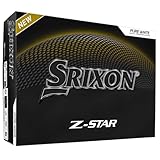
- FastLayer DG Core: Designed with a newly formulated soft center that transitions to a firmer outer layer, this core delivers exceptional distance and a soft feel, optimizing energy transfer for longer drives.
- Spin Skin+ Coating: The Z- Star series features an extra thin premium urethane cover, providing tour-caliber greenside spin, feel, and control. These improved covers are slightly stronger for more resistance against dirt and grime. These models are also made with Biomass, a durable, plant-derived material requiring fewer carbon emissions to manufacture.
- 338 Speed Dimple Pattern: The new dimple design creates less drag and enhances aerodynamic performance for a penetrating ball launch, maximizing glide distance during descent, and maintaining stability in windy conditions.
- Premium 3-Piece Urethane Construction: Combining a soft feel with tour-level performance, this construction ensures high greenside spin and low driver spin, catering to the needs of skilled golfers seeking control and distance.
- Available in Pure White and Tour Yellow: Offering color options to suit personal preferences, both variants maintain consistent performance and visibility on the course.
Srixon doesn’t get enough credit in the premium ball conversation, and that’s a shame because the Z-Star 9 is an absolute weapon. It’s one of the best urethane cover golf balls you can buy, and it usually costs less than the Pro V1.
The Z-Star 9 uses a cast urethane cover with Srixon’s Spin Skin+ coating — a thin, elastic layer between the cover and the mantle that adds grip without sacrificing ball speed. The result is a ball that spins like crazy on short shots while still maintaining impressive distance off the tee.
Off the driver, the Z-Star 9 produces a mid-high flight with good stability. Srixon’s dimple pattern is aerodynamically efficient, and this ball holds its line well in moderate wind. It’s not the lowest-spinning driver ball, but it’s far from balloon-y.
Where the Z-Star shines is the scoring zone. Wedge spin is elite. If you love hitting shots that back up on the green, this ball delivers. The Spin Skin+ layer gives it that extra grab on partial shots — chip shots that hit and stop on a dime, pitch shots that check after a foot of roll. For more on short game performance, see our chipping and putting ball guide.
Feel on putts is crisp and responsive. Not quite as buttery as the Pro V1, but firmer in a way that some golfers actually prefer — you get clear feedback on mishits without losing touch on good ones.
Durability is better than average for a cast urethane ball. Srixon’s cover formula seems a touch harder than Titleist’s, so you might squeeze an extra nine holes out of each ball. Not bad when you’re paying less per dozen to begin with.
Who it’s for: Value-conscious golfers who want tour-level spin without paying tour-level prices. The Z-Star 9 is one of the best urethane cover golf balls for mid-to-low handicaps who care about short game performance above all else.
Bridgestone Tour B RX
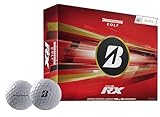
- VeloSurge core-mantle integration for unmatched distance
- Low compression for swing speeds UNDER 105 mph
- Designed for players who want additional distance
- Top-selling model
- Played on TOUR by Fred Couples
Bridgestone has been quietly making some of the best urethane cover golf balls on the market for years, and the Tour B RX is their answer for the moderate swing speed player who wants tour-level performance without tour-level compression requirements.
The Tour B RX features a urethane cover over Bridgestone’s Reactiv iQ core — a smart core that stiffens on high-speed impacts (driver) for distance and softens on low-speed impacts (wedges) for feel and spin. It’s the same basic concept as the TP5’s graduated feel, executed in a simpler three-piece package.
Off the driver, the RX is designed for swing speeds in the 85–105 mph range. If you’re swinging harder than that, Bridgestone wants you in the RXS or the B X. But for the vast majority of golfers — including most of us who think we swing faster than we actually do — the RX is the right fit. For help figuring out your speed category, our under-90 mph guide is a great starting point.
The Reactiv iQ core does its job well. Driver spin is low without feeling dead, and the ball launches on a nice mid-high trajectory that carries well. It’s not the longest ball on pure ball speed, but the efficiency of the flight makes up for it — you’ll see competitive carry distances with less dispersion.
Wedge spin is good. Not Pro V1-level, not Z-Star-level, but legitimately good. You’ll get 4–6 feet of backup on full wedge shots, and partial shots check reliably. The feel on putts leans slightly firm, which I actually prefer on fast greens where you need to be delicate with pace control.
Durability is a strength. Bridgestone’s urethane formula seems a touch more resistant to scuffing than the competition. Two full rounds from a single ball is realistic if you’re not hitting trees or cart paths.
Who it’s for: Golfers with moderate swing speeds who want a tour-level golf ball that actually compresses for them. The Tour B RX is one of the best urethane cover golf balls for the 90–100 mph swinger who’s tired of wasting Pro V1s they can’t fully compress.
Vice Pro

- 3 Piece cast urethane cover ball construction with extra-thin cover for high short game spin
- Designed for advanced golfers with medium swing speeds to maximize driver distance and benefit from maximum wedge spin
- Outstanding spin control and soft feel off the club
- Newly designed, closed alignment line for better aiming
Vice Golf came onto the scene promising tour-level performance at direct-to-consumer prices, and the Vice Pro delivers on that promise — mostly. This is one of the best urethane cover golf balls for budget-conscious players who still want premium spin who still want premium performance.
The Vice Pro uses a cast urethane cover over a three-piece construction. That’s the same basic formula as the Pro V1, just executed at a lower price point. And for the most part, it works. The ball spins well on short shots, feels good off the putter, and carries competitive distance off the tee.
Off the driver, the Vice Pro produces a mid-trajectory flight with average spin. It’s not going to wow you with distance, but it’s not leaving you 20 yards short either. The 318-dimple pattern keeps the flight stable without being overly penetrating.
Wedge spin is where the Vice Pro earns its keep. Full wedge shots spin back 4–7 feet, and partial shots check up nicely. The cast urethane cover gives you that tacky, responsive feel on chips that lets you be creative around the greens. If your short game is where you save strokes, this ball supports it.
The feel on putts is soft — close to the Chrome Soft in that regard. Some golfers love it, others find it a touch dead on longer putts where you need the ball to roll out. It’s a matter of preference, but if you like soft feel, the Vice Pro delivers.
Durability is the one area where the price difference shows. The urethane cover scuffs more readily than the Pro V1 or Z-Star, and you’ll want to swap balls after 18 holes if you’re hitting a lot of aggressive wedge shots. For the price, though, that’s a trade most golfers are happy to make.
Now here’s the real advantage: price per dozen. When you buy in bulk from Vice, the per-ball cost drops significantly compared to buying Pro V1s at retail. If you’re the type who loses a sleeve a round (no judgment — we’ve all been there), the Vice Pro is one of the best urethane cover golf balls from a pure value standpoint.
Who it’s for: Golfers who want cast urethane performance without paying $55 a dozen. The Vice Pro is ideal for mid-handicaps who lose balls regularly but refuse to play ionomer covers. Also worth checking: our best golf balls under $30 guide for even more budget-friendly picks.
Snell Prime 4.0

- Turbocharged Distance & Low Spin: Ultra‑fast core delivers explosive ball speed off drivers and fairway woods, helping you gain more yardage while maintaining control.
- Optimized Flight & Spin Control: Innovative multi‑mantle construction ensures a high‑trajectory launch and precise iron control for sharper, more accurate shots.
- Premium XV3 Urethane Cover: Durable and slightly firmer feel grants excellent greenside control, forgiveness on short shots, and enhanced long‑term durability.
- Engineered for High Swing Speeds: With an 85‑90 compression rating, this ball is tailored for players with higher swing speeds seeking maximum performance and optimal 160+ yard carry potential.
- Trusted Small‑Business Quality: Proudly from Snell Golf, a small business brand known for craftsmanship and customer focus.
Dean Snell knows golf ball design. He holds over 40 patents, he designed the original Pro V1 at Titleist, and he founded Snell Golf to bring tour-level performance to golfers at a fair price. The Prime 4.0 is his latest, and it’s one of the best urethane cover golf balls that most golfers have never heard of — and that’s a shame, because the performance is legit.
The Prime 4.0 uses a cast urethane cover over a four-piece construction. That’s one more layer than the Pro V1 and Vice Pro, giving Snell more design levers to pull for performance tuning. The result is a ball that plays like it costs $55 but sells for roughly half that.
Off the driver, the Prime 4.0 is impressively long. The four-piece construction keeps driver spin low while maintaining good compression at moderate swing speeds. Golfers in the 85–100 mph range will find this ball easy to launch with a stable, mid-high flight. If you’re on the slower side, our swing speed guide has context on what to expect.
Iron shots fly with a slightly higher trajectory that lands soft. This is where the four-piece design pays off — the intermediate layers let the ball compress differently on iron shots versus driver shots, giving you a higher, steeper descent angle that stops quickly on the green.
Wedge spin is excellent. Not quite at the Pro V1’s level, but close enough that most golfers won’t notice a difference on the course. Full shots back up 4–8 feet, and partial shots check within a foot. The cast urethane cover gives you that tacky feel on chips and pitches that makes short game creativity possible.
Feel on putts is medium-soft — a nice middle ground between the firm Pro V1 and the soft Chrome Soft. You get good feedback without harshness, and the ball rolls true off the face.
Durability is on par with other cast urethane golf balls. Expect one full round per ball, maybe a few extra holes if you’re being gentle. The cover isn’t as scuff-resistant as Bridgestone’s formula, but it’s no worse than Titleist’s.
Who it’s for: Smart shoppers who want tour-level performance without the tour-level markup. The Snell Prime 4.0 is one of the best urethane cover golf balls for golfers who know good performance when they feel it but don’t need a Titleist logo to feel confident over the ball.
What Is a Urethane Cover?
Alright, let’s get nerdy for a minute. If you’re shopping for the best urethane cover golf balls, you should understand what makes them different what urethane actually is and why it matters.
Urethane is a polymer — a type of plastic — that’s exceptionally soft, elastic, and grip-friendly. When used as a golf ball cover, it does two critical things: it grabs the clubface on short shots (creating spin) and it compresses on impact (creating soft feel). Those are the two qualities that separate premium golf balls from the cheap two-piece rocks in the bargain bin. When you’re shopping for the best urethane cover golf balls, you’re investing in the scoring zone.
There are two types of urethane used in golf ball covers:
Cast urethane is poured as a liquid over the ball’s core and then cured into a solid cover. This process creates a thinner, softer, more uniform cover. Cast urethane is what you’ll find in the Pro V1, TP5, Z-Star, Vice Pro, and Snell Prime 4.0. It’s the gold standard for spin control golf balls because the liquid application allows for thinner covers that grab the clubface more aggressively.
Thermoplastic urethane (TPU) is injected and molded onto the core. It’s slightly more durable and consistent in manufacturing, but marginally less spin-friendly on the most aggressive shots. The Chrome Soft and some Bridgestone models use thermoplastic urethane cover construction. The performance gap has narrowed significantly in recent years — most golfers won’t feel a difference on the course.
Why does this matter? Because the cover is the only part of the ball that touches the clubface. The core determines energy transfer and distance. The cover determines spin and feel. If you’re playing an ionomer-covered ball (the hard plastic covers on $20/dozen balls), you’re sacrificing short-game spin and putting feel. Urethane — whether cast or thermoplastic — is what gives you control over those scoring shots.
For golfers with handicaps below 15, the difference between urethane and ionomer covers is noticeable and meaningful. For beginners or very high handicaps, the extra spin might actually hurt — more sidespin on mishits means more curvature. If you’re still developing a consistent swing, check out our straight-flight ball recommendations before investing in urethane covers.
How to Choose the Best Urethane Cover Golf Balls
Now that you know what each ball does and what urethane actually is, let’s talk about how to pick the right one for your game. Finding the best urethane cover golf balls for your game comes down to your swing speed, your priorities, and yes, your budget.
By Swing Speed
Your swing speed is the single biggest factor in choosing a ball. A ball you can’t compress is a ball you’re wasting money on.
Under 85 mph: Go with the Chrome Soft or Tour B RX. Both compress easily at moderate speeds and deliver the soft feel and spin control you need without requiring tour-level clubhead speed. Our under-90 mph guide has more details.
85–100 mph: This is the sweet spot for most of these balls. The Z-Star 9, Prime 4.0, Chrome Soft, and Tour B RX all perform well in this range. Pick based on feel preference and budget — the best urethane cover golf balls in this range all perform at a high level.
Over 100 mph: The Pro V1 and TP5 are designed for you. Their firmer constructions need the extra speed to fully compress, and they deliver the distance and spin control that fast swingers demand.
By Priority
Spin control above all: Pro V1 or Z-Star 9. Both use cast urethane covers that generate maximum spin on scoring shots. If you live and die by your short game, these are your balls.
Soft feel above all: Chrome Soft. It’s the softest urethane ball on this list, and it’s not particularly close. If you hate the feel of firm putts, this is your pick.
Best value: Snell Prime 4.0 or Vice Pro. Both deliver tour-level performance at roughly half the price of the Pro V1. If you lose balls regularly — and most of us do — these are the smart plays among the best urethane cover golf balls.
Distance + spin combo: TP5. The five-piece construction genuinely delivers on both fronts. You don’t have to sacrifice driver distance to get wedge spin.
Quick Comparison
| Ball | Cover Type | Pieces | Best For | Value |
|---|---|---|---|---|
| Titleist Pro V1 | Cast Urethane | 3 | All-around excellence | ★★☆☆☆ |
| Callaway Chrome Soft | Thermoplastic Urethane | 3 | Soft feel, moderate speed | ★★★☆☆ |
| TaylorMade TP5 | Cast Urethane | 5 | Distance + spin | ★★☆☆☆ |
| Srixon Z-Star 9 | Cast Urethane | 3 | Short game spin | ★★★★☆ |
| Bridgestone Tour B RX | Urethane | 3 | Moderate swing speed | ★★★☆☆ |
| Vice Pro | Cast Urethane | 3 | Budget premium play | ★★★★★ |
| Snell Prime 4.0 | Cast Urethane | 4 | Best overall value | ★★★★★ |
By Budget
Let’s be real — urethane golf balls are expensive. That’s the trade-off for spin and feel. But the best urethane cover golf balls on this list offer a range of price points Here’s how the cost breaks down:
Premium tier ($50+/dozen): Pro V1, TP5. You’re paying for the name, the tour validation, and the last few percentage points of performance. Worth it if you’re competitive. Not worth it if you lose two balls per round.
Mid tier ($35–45/dozen): Chrome Soft, Z-Star 9, Tour B RX. These are tour-level balls that happen to cost a bit less. The performance gap to the premium tier is smaller than the price gap suggests.
Value tier ($25–35/dozen): Vice Pro, Snell Prime 4.0. Direct-to-consumer pricing means you’re getting urethane cover performance without the retail markup. If you’re on a budget, these are the best urethane cover golf balls for your dollar — no question.
One more thing on price: buying in bulk changes the math. Vice and Snell both offer significant discounts when you buy 3+ dozen at once. If you know your ball, stock up. It brings the per-ball cost down to the point where losing one doesn’t sting as much.
Cold Weather Considerations
Urethane covers get firmer in cold weather — that’s just physics. If you play year-round in cold climates, you might want a slightly softer urethane ball for winter rounds, or check our cold weather golf ball guide for specific recommendations.
Cast Urethane vs. Thermoplastic Urethane: Does It Really Matter?
I touched on this earlier, but let’s dig in because this comes up every time someone asks about the best urethane cover golf balls.
Cast urethane is made by pouring liquid urethane over the core and letting it cure. This creates a thinner, softer cover that produces more spin on short shots. It’s the process used in the Pro V1, TP5, Z-Star, Vice Pro, and Snell Prime.
Thermoplastic urethane is injected and molded. It’s slightly more durable and easier to manufacture consistently, but the cover is marginally less spin-friendly. The Chrome Soft uses this process, as do several Bridgestone models.
In practice? The difference is measurable on a launch monitor but barely noticeable on the course. A full wedge shot with a cast urethane ball might spin 200–400 RPM more than the same shot with a thermoplastic urethane cover ball. That translates to maybe 6–12 inches of difference on the green. If you’re a tour pro playing for your livelihood, that matters. If you’re a 10-handicap playing for weekend bragging rights, it doesn’t.
What does matter more than cast vs. thermoplastic is the overall ball construction — the core, the mantle layers, the compression, and how all of it interacts with your swing. Don’t get hung up on the manufacturing process. Focus on how the ball feels and performs in your hands.
The USGA conforming balls list includes every ball on this page, so you don’t have to worry about legality in tournament play.
The Verdict: Which Urethane Ball Should You Buy?
After playing all seven of these balls extensively, here are my straight-up recommendations:
If money is no object and you want the best: Titleist Pro V1. It’s the standard for a reason. The cast urethane cover, the spin control, the consistency — nothing else combines all three at the same level. Among tour-level golf balls, this one sits on the throne. It’s the best urethane cover golf ball, period. If you want the gold standard, this is it.
If you want tour performance at a fair price: Srixon Z-Star 9. Same cast urethane construction, spin numbers that rival the Pro V1, and you’re saving $10–15 per dozen. This is the smart golfer’s pick.
If you want the best overall value: Snell Prime 4.0. Dean Snell designed the Pro V1, then started his own company to sell a comparable ball for less money. The Prime 4.0 performs like a $50 ball at $30 pricing. Hard to beat that.
If you have a moderate swing speed: Callaway Chrome Soft or Bridgestone Tour B RX. Both are among the best soft feel golf balls designed to compress at speeds under 100 mph, and both deliver soft feel with solid spin control. Don’t buy a Pro V1 if you can’t compress it — you’re leaving performance on the table.
If you want distance AND spin: TaylorMade TP5. The five-piece construction is the real deal. You get low driver spin with high wedge spin, and the feel progression from driver to putter makes sense once you get used to it.
If you lose balls and hate paying full retail: Vice Pro. Buy four dozen, bring the per-ball cost way down, and enjoy cast urethane performance without wincing every time one finds the water.
The best urethane cover golf balls are the ones that match your swing, your priorities, and your budget — and every ball on this list earns its spot. Don’t overthink it — pick one from this list that fits, buy a sleeve, and go play. The only way to know for sure is to hit the shots.
You Might Also Enjoy
Looking for more golf ball guidance? Check out these guides:
- Best Golf Balls for Swing Speeds Under 90 MPH — Not everyone swings like a tour pro. Here’s what to play if your speed is moderate.
- Best Golf Balls for Chipping and Putting — If your short game is where you save strokes, this guide is for you.
- Best Golf Balls for 90 MPH Swing Speed — The 90 mph threshold is where things get interesting. Here’s what to play.
- Best Golf Balls for Windy Conditions — Playing in the wind? These balls hold their line when it matters.
- Best Golf Balls Under $30 — Premium performance on a budget. Because losing a $5 ball shouldn’t ruin your round.