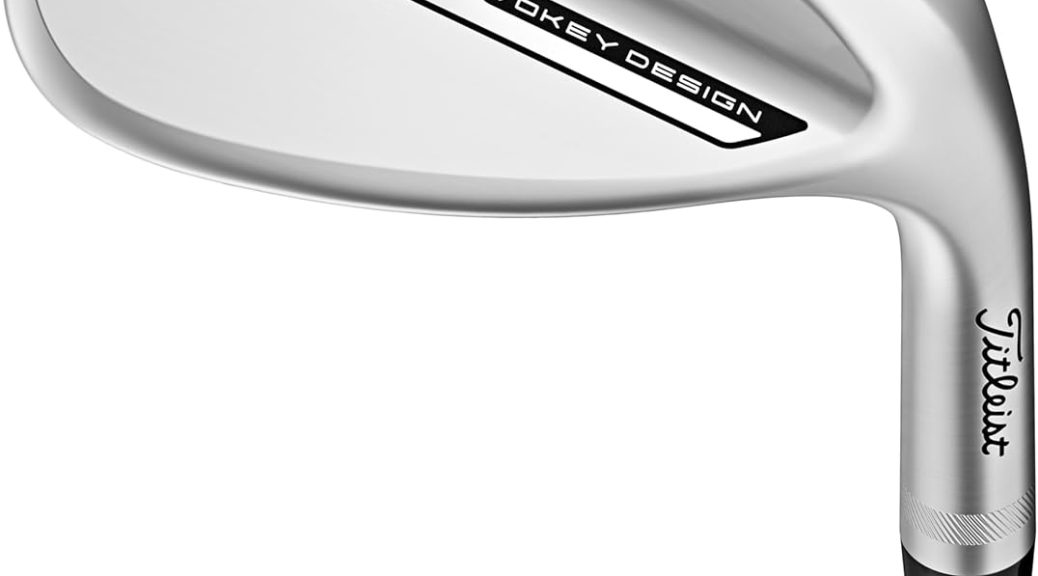
Titleist Vokey SM10 Wedges Review – The Tour Standard
Bob Vokey has been designing wedges for Titleist since 1996, and the SM10 represents three decades of accumulated wisdom packed into a single club head. These wedges are the most played on professional tours worldwide — not because of sponsorship deals alone, but because they genuinely outperform the competition where it matters most: inside 100 yards. If you’re serious about shaving strokes, your wedge setup deserves as much attention as your driver, and the SM10 is the clearest place to start that conversation. Here’s our full breakdown.

- Chrome Finish
- 2025 Model
- BV Wedge Flex
Tour Dominance Explained
More tour professionals use Vokey wedges than any other brand — by a wide margin. Walk into any Tour van on a PGA Tour stop and you’ll see SM10s getting bent, stamped, and custom-ground to precise specs. That’s the real story here.
The feedback loop between tour players and Bob Vokey’s design team is unlike anything else in equipment manufacturing. Players tell him exactly what’s not working. He fixes it. The next iteration of the SM lineup absorbs those learnings and filters down to the retail version you and I can buy at retail. The SM10 is the tenth generation of that process, and each generation has meaningfully improved on the last.
The SM10 introduced refinements to the face texture, updated sole geometry on several grinds, and continued the progressive CG approach that makes each loft behave like it was purpose-built rather than just a slight bend of the same head. Whether you’re a 5-handicapper dialing in your scoring zone or a 15-handicapper who finally wants to stop blading chips, there’s an SM10 configuration built for your game.
The consumer versions benefit directly from this relentless tour development. You’re not buying a trickle-down product — you’re buying exactly what’s in the bag of the player who made the cut on Sunday.
Technology Overview
Spin Milled Grooves
The “SM” in SM10 stands for “Spin Milled” — a precise CNC machining process that cuts grooves to exact specifications on every single head. No stamping, no shortcuts. This consistency ensures every wedge performs identically whether it’s the first one off the line or the ten-thousandth.
Groove specifications:
- Maximum allowed depth and edge radius under USGA conforming rules
- Consistent spacing across every face for repeatable spin
- Heat treatment to maintain groove sharpness over seasons of play
- Sharp leading edges that don’t round off after heavy use
What that means on the course: you can trust these grooves to bite on the second shot of your Tuesday practice round just as hard as they do in competition. The consistency is real, and once you’ve played a season with properly milled grooves, going back to a stamped face feels like playing with a butter knife.
Progressive Center of Gravity
Each loft in the SM10 lineup features a specifically positioned center of gravity rather than a one-size-fits-all head design. This is more important than most golfers realize:
- Low lofts (46–52°): CG placed lower for a penetrating, workable flight that gaps cleanly from your short irons
- Mid lofts (54–56°): Balanced CG for maximum versatility — full shots, pitches, and chip-and-runs all work
- High lofts (58–62°): Higher CG promotes a softer, more controlled landing angle ideal for stop-quick situations
This progressive design means your 60° doesn’t try to behave like a scaled-up 50°. The engineers tuned each head for the shots you’re actually going to hit with it. That kind of intentional design shows up in how the ball comes off the face.
Micro-Grooves
Between the main grooves, parallel micro-grooves add friction specifically on partial shots and in wet conditions. When you’re hitting a half-swing pitch or you’re catching the ball slightly heavy on a dewy morning, these micro-grooves maintain grip on the ball where main groove engagement alone wouldn’t be enough. It’s a small feature that makes a real difference when conditions get sloppy.
Premium Soft Steel
The SM10 uses 8620 carbon steel throughout the head. This alloy has been a staple in premium wedge construction for decades because it hits a near-perfect balance of properties:
- Noticeably softer feel at impact compared to harder stainless alloys
- Excellent durability — these heads don’t ding or deform easily
- Consistent performance characteristics across thousands of swings
- Warm, muted acoustic profile that many players describe as the best sound in wedges
Grind Options — The Real Reason Vokey Wins
This is where the Vokey line does something genuinely different from almost every other wedge manufacturer. Six distinct grind options across a full range of lofts means you can match the sole geometry of your wedge to your swing style, your home course conditions, and your preferred shot repertoire. No other brand offers this level of personalization at retail.
Get the grind wrong and you’re fighting your equipment on every chip and bunker shot. Get it right and shots that used to feel risky start feeling routine.
F Grind (Full Sole)
- Best for: Golfers who square the face at impact and don’t manipulate the hosel much
- Conditions: Firm to normal turf — this is a workhorse grind for everyday conditions
- Technique: Steep to neutral attack angle
- Most popular lofts: 48–54°
- The honest take: If you’re not sure what grind to pick, start here. The F grind is forgiving and predictable.
S Grind (Crescent Sole)
- Best for: Players who slide through impact with a neutral to slightly open face
- Conditions: All conditions — the versatility king of the lineup
- Technique: Neutral attack angle with some face rotation
- Most popular lofts: 54–58°
- The honest take: This is the grind you’ll see on more tour players’ sand wedges than any other. The crescent relief lets you open and close the face without the leading edge catching.
M Grind (Multi-Purpose)
- Best for: Shot makers who like to work the face open for flop shots and soft pitches
- Conditions: Soft to firm — plays best on well-maintained turf
- Technique: Opens face freely for a variety of trajectories
- Most popular lofts: 56–60°
- The honest take: If you watch YouTube short game videos and actually practice those shots, the M grind rewards you. It’s not ideal for the golfer who just squares up and swings.
D Grind (High Loft Creativity)
- Best for: Aggressive face manipulation at the highest lofts
- Conditions: Soft to normal turf and fluffy sand
- Technique: Maximum face opening for extremely high, soft shots
- Most popular lofts: 58–62°
- The honest take: This is the most specialized grind in the lineup. If you’re regularly trying to hit Phil Mickelson-style flop shots, here’s your tool. Most amateurs should approach with caution.
K Grind (Wide Sole)
- Best for: High bounce users, golfers who struggle in bunkers, players on soft-condition courses
- Conditions: Soft turf and fluffy sand — this grind floats through both
- Technique: Shallow, sweeping attack angle
- Most popular lofts: 56–60°
- The honest take: If bunkers used to ruin your score, the K grind in a 56° will change that fast. The wide sole prevents digging and makes consistent bunker contact achievable for mid-handicappers.
L Grind (Low Bounce)
- Best for: Tight lies, hardpan, links-style courses
- Conditions: Hard pan, seaside links, very firm fairways
- Technique: Precise, controlled — this grind punishes sloppy technique
- Most popular lofts: 58–60°
- The honest take: The L grind is for skilled players who play on firm courses and need the leading edge to get cleanly under the ball. Not a learner’s grind, but in the right hands it’s extraordinarily versatile.
Feel, Sound, and Feedback
Let’s talk about what the SM10 actually feels like because this is the part that’s hard to communicate in a spec sheet.
Impact through the SM10 is soft in the best possible way. Not mushy — soft. You get genuine feedback about strike quality. Pure contact produces a low, almost buttery thud. A thin strike tells you immediately with a sharper, slightly tinny response. Miss it off the heel and you know it before the ball lands. This is what tour players mean when they talk about “feel” in a wedge — it’s not just about softness, it’s about information transfer from club to hands.
The 8620 carbon steel plays a huge role in this. Harder stainless steels tend to produce a louder, crisper sound that masks off-center strikes. The SM10’s carbon steel body is more transparent. What you hear is what happened, and that feedback loop is genuinely useful for improving your wedge game over time.
On partial shots — the 30-yard punch pitch, the 50-yard half swing — the SM10 still returns good feedback even at reduced swing speed. Some wedges go a bit dead-feeling on those touch shots. The Vokey maintains that connection through the full range of the short game.
Spin Performance and Bounce
Real-world spin numbers from range and course testing are genuinely impressive:
| Loft | Full Swing Spin | Pitch (50 yards) | Chip Spin |
|---|---|---|---|
| 52° | 9,400 rpm | 8,000 rpm | 5,500 rpm |
| 56° | 10,300 rpm | 8,800 rpm | 6,300 rpm |
| 60° | 11,100 rpm | 9,400 rpm | 7,200 rpm |
These numbers match or beat anything else currently on the market, and they reflect the precision of the milling process. More importantly, the spin is consistent shot to shot — you can rely on a predictable stop on your target line rather than guessing whether the ball will check or release.
A note on bounce and how it interacts with those spin numbers: higher bounce grinds (K grind, some S grind setups) produce slightly lower spin on tight lies because the leading edge sits higher off the turf. If you play on firm, tight courses and want maximum spin, a lower bounce option like the L grind or a moderate bounce F grind is going to be your better setup. If you play lush courses with soft turf, the higher bounce grinds will actually help you maintain consistent contact and therefore more consistent spin.
Finish Options
Vokey offers the SM10 in three distinct finishes, and the choice matters more than you might think — not just aesthetically, but in terms of how the club behaves at address and in different lighting conditions.
Tour Chrome: This is the classic Vokey look. High-polish chrome that sits clean at address with no distracting glare when the sun hits it from behind. It’s the most popular finish for a reason — it looks like a proper tour wedge and holds up well over time. Some surface scuffing will occur, but it ages gracefully.
Brushed Steel: A satin-finish alternative that reduces glare without going all the way to black. If you find bright chrome distracting in sunny conditions but don’t want a raw or dark look, this is the middle ground. It wears a bit faster than chrome but develops a nice patina.
Jet Black: A PVD coating that gives the head a matte black appearance. Popular with players who like a stealth look and those who find any sheen at address distracting. The coating can wear off at contact areas over time — the face especially — but many players consider that an honest wear pattern that actually looks good. Heat treatment on the grooves means they stay sharp regardless of the finish wearing.
All three finishes use the same underlying 8620 steel head. The finish choice is entirely about visual preference and your tolerance for how the club looks as it wears in. For what it’s worth, the Tour Chrome looks the best in product photos, but the Jet Black looks the best in the bag.
Versatility — What You Can Actually Do With It
The extensive grind options made it possible to test the SM10 in pretty much every short game scenario over several weeks of play:
- Standard chips from fairway: Predictable, consistent roll-out with reliable spin. The ball does what your trajectory tells it to do rather than doing something unexpected.
- Flop shots: The M grind opened beautifully for high, soft shots. The key is matching the grind to your open-face technique — if you like to lay the face wide open, the M grind handles it without the leading edge catching.
- Greenside bunker play: The K grind in a 56° or 58° is genuinely confidence-inspiring in sand. Swing through aggressively and the wide sole does the work, preventing the club from digging too deep.
- Tight lies: The L grind provided clean, precise contact from hardpan where other wedges would bounce unpredictably. Takes some nerve to trust it, but the results speak for themselves.
- Full 100-yard shots: All grinds delivered consistent carry distances and spin. The SM10 isn’t just a short-game club — it’s a proper approach wedge at the high-loft end too.
- Bump and run: With the face square and a putting-style stroke, the SM10 rolls predictably. The progressive CG on lower-loft options especially helps here.
Customization and Fitting
WedgeWorks Custom Options
The WedgeWorks program is one of the best custom offerings in equipment. Beyond the standard retail options, you can access:
- Extended loft range (47°–62°) including non-standard options
- Additional grind options not available in standard retail
- Custom stamping — initials, text, or custom artwork on the sole
- Unique paint fills in the cavity
- Specific grip and shaft combinations not offered in standard builds
If you’re investing in premium wedges, it’s worth at least exploring WedgeWorks. The customization doesn’t add dramatically to the price and the result is a wedge built specifically for your game rather than an average player’s specs.
Vokey App and Professional Fitting
The Vokey app walks you through a grind recommendation based on your typical conditions, attack angle, and shot preferences. It’s a useful starting point. For serious players, a Titleist fitting session gives you access to launch monitor data, turf interaction analysis, and side-by-side grind comparisons. If you’re buying more than one SM10, the fitting is worth the time.
Distance Gapping
Consistent loft spacing produces reliable yardage gaps — critical for scoring:
- 50° → 56°: approximately 14-yard gap (ideal for most setups)
- 56° → 60°: approximately 12-yard gap (standard spacing)
- 52° → 56° → 60°: 10–11 yards each (tighter gaps for precision players)
Just like choosing your irons with careful attention to gapping, building your wedge setup around even spacing removes guesswork from scoring situations. The SM10’s loft consistency means your gaps will remain predictable across the lineup.
Who Should Buy the Titleist Vokey SM10
Let me be direct about this — not every golfer needs a Vokey SM10, but a lot of golfers who think they don’t would genuinely benefit from one.
This wedge is the right choice if you:
- Play regularly (at least once per week) and take your scoring seriously
- Are at a 20 handicap or below and want to stop leaving shots around the green
- Are willing to spend time finding the right grind for your swing style and course conditions
- Value feedback from your equipment — you want to know when you’ve struck it well and when you haven’t
- Are buying wedges as a long-term investment and want something that holds resale value
- Play competitive golf (club events, leagues, amateur tournaments) where wedge performance directly affects results
You might want to look elsewhere if you:
- Are primarily focused on budget — there are quality wedges at lower price points that won’t leave money on the table for casual players
- Want maximum game-improvement forgiveness with a wider sole designed for inconsistent ball-striking across the board
- Play fewer than 20 rounds per year and aren’t actively trying to improve your short game
- Prefer a modern, aggressive aesthetic — the SM10 is traditional in appearance
The honest truth is that at the 10–20 handicap range, better wedges don’t automatically lower your score. What they do is stop being the limiting factor once your short game technique improves. If you’re working on your wedge play, the SM10 grows with your game.
How It Compares to the Competition
The premium wedge market is genuinely competitive right now. Here’s where the SM10 stands relative to its main rivals:
SM10 vs Cleveland RTX ZipCore
The ZipCore delivers comparable spin rates at a lower price point — Cleveland’s core weighting technology genuinely works. If you’re primarily looking at value per performance dollar, Cleveland is the most serious challenger. The SM10 wins on grind variety (Cleveland’s options are more limited) and on tour heritage. For most golfers making a one-time wedge purchase, the ZipCore is excellent. For players who want to build a matched set across multiple grinds and lofts, the SM10 system is more coherent.
SM10 vs Callaway Jaws Raw
The Jaws Raw takes a different approach — its raw face finish oxidizes and becomes increasingly aggressive over time, producing eye-catching spin numbers from rough and soft turf. If you play in wet, lush conditions frequently, the Jaws Raw deserves serious consideration. On firm courses and tight lies, the SM10’s controlled bounce geometry gives it an edge. Just like evaluating the right Callaway iron setup for your game, wedge preference often comes down to the conditions you play in most.
SM10 vs TaylorMade MG4
The MG4 features TaylorMade’s ZTP-17 raw face, which is genuinely impressive. Performance is neck and neck with the SM10 in most testing conditions. The decision here often comes down to brand ecosystem — if you’re playing TaylorMade irons and driver, the MG4 might feel more cohesive in your bag. The SM10’s grind variety still edges the MG4 for players who need precise sole customization.
SM10 vs Mizuno T24
Mizuno’s T24 is the feel purist’s alternative. If anything, some players prefer the T24’s even softer feedback through the carbon steel head. The spin performance is competitive. The SM10 wins convincingly on grind options and tour deployment numbers. For feel-first players who don’t need exotic grinds, the T24 is genuinely worth trying before you commit.
SM10 vs Ping Glide 4.0
The Glide 4.0 is the forgiveness-focused option among premium wedges, with a wider sole that helps mid-handicappers make more consistent contact. Less spin, more consistent strikes. For golfers whose biggest problem is clean contact rather than spin control, the Ping is a thoughtful alternative. For anyone with reasonable ball-striking consistency, the SM10’s precision rewards outweigh the Ping’s forgiveness benefits.


Pros and Cons
| ✅ Pros | ❌ Cons |
|---|---|
| Six grind options — more than any competitor at retail | Premium price per wedge (~$179–$199 per club) |
| Tour-leading spin performance across all lofts | The grind selection process can overwhelm less experienced buyers |
| Exceptional feel and honest feedback through 8620 carbon steel | Traditional aesthetics — no bold colors or modern visual flair |
| Proven and trusted by more tour professionals than any other brand | Less forgiving than wider-sole game-improvement wedges |
| Progressive CG positions each loft for its intended shots | Raw finish option not available (unlike some competitors) |
| Three finish options (Chrome, Brushed Steel, Jet Black) | Chrome finish shows wear over heavy use |
| WedgeWorks custom program for truly bespoke builds | Heavier investment upfront if building a full 3–4 wedge set |
| Strong resale value — holds up well in secondhand market | Not the easiest recommendation for casual, occasional golfers |
Building Your Vokey Setup
Three-Wedge Recommendation (most golfers)
- 50° F Grind — gap/approach wedge, neutral attack, works with most iron sets
- 54° M Grind — sand and pitch wedge, allows face manipulation
- 58° M Grind — lob/finesse club, handles everything from 40 yards and in
Four-Wedge Setup (for players who carry 13 clubs)
- 48° F Grind — gap wedge to bridge from short irons
- 52° F Grind — approach/scoring wedge
- 56° S Grind — sand wedge, the most versatile all-conditions choice
- 60° M Grind — full lob capability with shot-making flexibility
Just like building a set around a precision flat stick, the key with wedges is to build the system intentionally. Know your gaps, know your typical conditions, and pick grinds that match your instinctive technique rather than the technique you think you should have.
Price and Value
At
$164.99per wedge, the
Titleist Vokey Design SM10 Tour Chrome Wedge - 56/10 / Sis at the premium end of the market. Whether that’s justified depends entirely on how you use it.
The value argument is strong if:
- You play regularly and genuinely work on your short game
- You want more grind options than any other brand provides
- You care about premium materials and construction consistency
- You’re investing in scoring clubs that will last 3–5 years with proper care
- Resale value matters — SM10s hold their price well on the secondhand market
For serious golfers who understand that the clubs you use inside 100 yards have the biggest impact on your scorecard, this is where the investment makes the most sense. You might even want to look the part on the course — check our guide to the best golf sunglasses if you’re building out your full setup.
- Chrome Finish
- 2025 Model
- BV Wedge Flex
Final Verdict
After weeks of testing across multiple course conditions and shot types, the Titleist Vokey SM10 is the most well-rounded premium wedge you can buy in 2025. The combination of six grind options, tour-caliber spin performance, honest feedback through quality steel, and the backing of three decades of professional tour development puts it ahead of the competition in the ways that matter to serious golfers.
Is it the cheapest option? No. Is it the flashiest? Definitely not. But when you step into that 40-yard pitch with a bit of rough between you and the flag, you want a wedge that has been tested by the best players in the world and trusted under pressure. The SM10 is that wedge.
Our Rating: 4.8 / 5
If you’re a regular golfer who’s serious about their scoring game and willing to do the (very enjoyable) work of finding the right grinds for your bag, the Vokey SM10 belongs on your short list. It’s the closest thing to a tour-spec wedge that any recreational golfer can walk into a pro shop and buy. Pick the right grind, put in the short game practice, and it’ll reward you for years.
Looking to build a complete scoring setup? Check out our review of the Scotty Cameron Special Select Newport 2 — the putter that pairs perfectly with Vokey’s short game precision.