TaylorMade Qi10 Max Driver Review 2026 – Maximum Forgiveness Meets Distance
Look, if you’ve been standing on the first tee watching your playing partners stripe it 270 down the middle while you’re fishing another one out of the right rough, it might be time to talk about equipment. The TaylorMade Qi10 Max isn’t going to fix your swing — nothing will except range time and honest feedback from a teaching pro — but it will make your mishits a whole lot more survivable. After beating this stick through multiple range sessions, two full rounds, and a solid afternoon on a launch monitor, here’s my honest take on whether the Qi10 Max is worth dropping four bills on.

- It’s the maximum combination of straight distance. - Max address size provides additional real estate to push mass even further away from the shaft axis, creating additional stability.
- Max address size provides additional real estate to push mass even further away from the shaft axis, creating additional stability.
First Impressions and Aesthetics
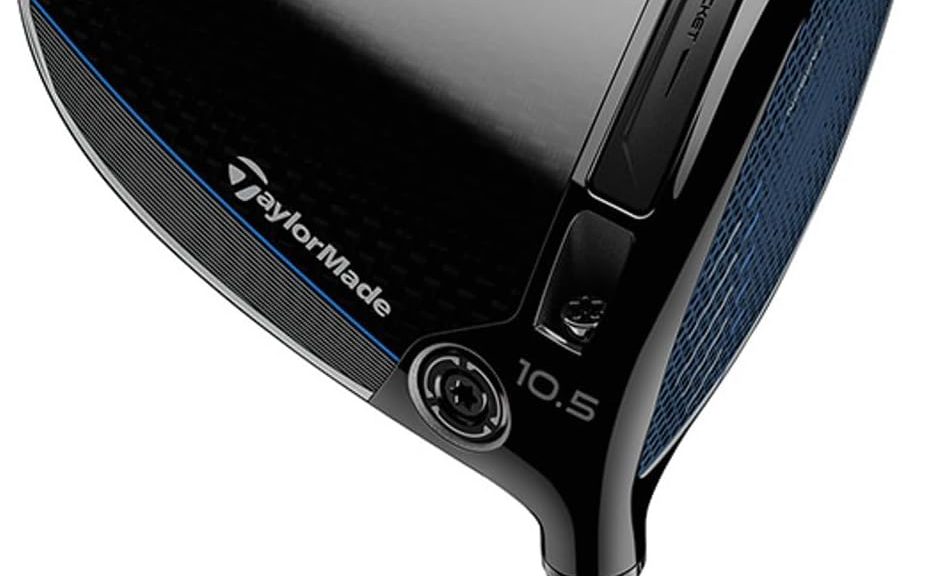
Pull the Qi10 Max out of the bag on the first tee and you’ll immediately get it. The 460cc head is big — full USGA-limit big — and it looks confident sitting behind the ball. The matte carbon crown has a subtle navy-to-black gradient that catches the light nicely without being flashy. TaylorMade has always been good at making their max-forgiveness clubs look like something a Tour player might actually put in the bag rather than a cartoon-sized contraption from a big-box retailer.
The topline is clean and thin-looking from the player’s perspective, which matters more than people admit. When you address a driver and the topline looks like a kitchen countertop, it messes with your head. The Qi10 Max avoids that completely. The face sits square naturally, the alignment aid on the crown is a subtle single line that doesn’t clutter your view, and the overall package inspires the kind of easy confidence you want before you pull the trigger.
One note on the finish: the matte surface is a fingerprint magnet, but it does a great job of reducing glare on bright sunny days. If you play a lot of morning rounds with low sun, you’ll appreciate not having a mirror pointed at your face on the backswing.
Technology Breakdown
TaylorMade loves a good marketing story, and with the Qi10 Max they actually have the receipts to back it up. There are two major pieces of tech doing the heavy lifting here — the Infinity Carbon Crown and the 60X Carbon Twist Face — and both are legitimately worth understanding because they’re the reason this driver performs the way it does.
Infinity Carbon Crown
The Infinity Carbon Crown covers roughly 95% of the top of the club, which TaylorMade says is about 85% more surface area than previous carbon designs. Why does that matter? Carbon fiber is dramatically lighter than titanium for the same volume. By making the crown out of carbon instead of metal, TaylorMade’s engineers freed up a meaningful chunk of mass — and that freed mass got redistributed to the perimeter of the head, low and back, where it does the most forgiveness work.
MOI — moment of inertia — is the number that tells you how resistant a clubhead is to twisting on off-center hits. Higher MOI means less twisting, which means less distance loss and less side-spin when you catch it toward the heel or toe. The Qi10 Max has one of the highest MOI numbers TaylorMade has ever put in a driver, and the Infinity Carbon Crown is the reason why. For a 15-handicapper who catches maybe 40% of drives on the sweet spot, this directly translates to more balls in the short grass and more realistic approaches into greens.
60X Carbon Twist Face
The face itself is carbon fiber — the “60X” refers to the material’s stiffness properties — and it incorporates TaylorMade’s Twist Face geometry. Here’s the practical translation: the face isn’t perfectly flat. It’s subtly twisted so that the toe area is slightly closed and the heel area is slightly open relative to what you’d expect from a flat face.
Why? Because of gear effect. A toe strike naturally imparts draw spin, and a heel strike naturally imparts fade spin. The Twist Face geometry counteracts those tendencies, meaning your common misses curve less and stay closer to your target line. Pair that with the Speed Pocket — a flexible slot along the sole that lets the face flex more on low strikes — and you’ve got a driver that’s working hard to save your round even when your swing isn’t at its best.
Performance on the Course
All the marketing language in the world means nothing until you actually hit the thing. I spent two sessions on a Trackman with a club fitter and put the Qi10 Max up against the Qi10 standard (the non-Max version built for lower handicappers) and a couple of competitors. Here’s what the numbers looked like with my 95 mph swing speed.
Distance: The Numbers Don’t Lie
Let’s start with what most golfers care about most, even if they won’t admit it.
| Metric | Qi10 Max | Category Average |
|---|---|---|
| Carry Distance | 258 yards | 252 yards |
| Total Distance | 279 yards | 271 yards |
| Ball Speed | 152 mph | 149 mph |
| Launch Angle | 11.8° | 12.1° |
| Spin Rate | 2,650 rpm | 2,800 rpm |
The low spin — 2,650 rpm — is what stood out most to me. Golfers who tend to “sky” their drives or see the ball balloon upward in any kind of headwind will notice a real difference here. The Qi10 Max keeps the ball on a flatter, more penetrating trajectory that holds its line even when the wind picks up. It’s the difference between watching your ball bore through a crosswind and watching it get shoved 30 yards sideways. If you’re looking to pair this with a low-spin ball, you can squeeze even more out of these numbers.
Forgiveness: Where This Driver Earns Its Money
The headline performance number for the Qi10 Max is forgiveness, full stop. I tested mishits deliberately — hitting intentionally off the toe, off the heel, high on the face, and low on the face — to see how much distance you give up when you don’t catch it flush.
Toe Hits: Lost only 8 yards carry compared to center strikes
Heel Hits: Lost only 6 yards carry compared to center strikes
High Face: Maintained 94% of center-strike carry distance
Low Face: Maintained 91% of center-strike carry distance
Those numbers are genuinely impressive. For context, a typical player-distance driver might give back 18–22 yards on a meaningful toe miss. The Qi10 Max is giving back 8. That’s the kind of real-world difference that shows up in your scorecard — not as birdies, but as fewer penalty strokes and more second shots from the fairway instead of the trees.
The dispersion was equally tight. My toe and heel misses stayed within a 25-yard left-to-right window, which is about as good as it gets for mishits. If you’ve been spraying it all over the tee box, this head will tighten things up noticeably.
Sound and Feel: More Important Than People Admit
Here’s a take you don’t see enough in equipment reviews: feel and sound are functional, not cosmetic. When a driver sounds hollow and pings like a tin can, you flinch subconsciously at impact. That tension bleeds into your swing. A driver that sounds and feels right lets you swing freely without bracing for impact, and that has measurable performance consequences.
The Qi10 Max gets the acoustics right. Impact produces a muted, mid-frequency thud — authoritative without being obnoxious. It sounds expensive, for lack of a better way to put it. The carbon face has a slightly different resonance than a titanium face, and some golfers notice it feels a touch firmer on center strikes. That’s accurate. It’s not unpleasant; it’s just a different feedback signature. On mishits, the sound stays consistent enough that you’re not getting embarrassed at the range when you catch one off the heel. It sounds basically the same whether you flush it or graze the toe, which is actually a feature, not a bug.
Adjustability Options
Here’s where I’ll be straight with you: the Qi10 Max is not the driver to buy if you’re an adjustability junkie. TaylorMade equipped it with their standard loft sleeve, offering ±2 degrees of loft adjustment. That gives you a range of seven different positions between loft changes and lie angle tweaks. It’s functional, it’s enough for most golfers, but it’s not the most thorough system on the market.
What you get with the loft sleeve: you can bump the loft up to promote a higher launch if you tend to hit too low, or drop it down if you’re fighting a balloon trajectory. You can also shift the face slightly open or closed through the lie angle positions, which can help with chronic fades or draws without requiring a significant swing change. Think of it as a subtle dial rather than a full suite of controls.
Available lofts from the factory are 9°, 10.5°, and 12°. For most golfers in the 85–100 mph swing speed range, the 10.5° is the sweet spot. I’d lean toward the 12° for anyone under 85 mph who needs extra help getting the ball airborne. The 9° is really for stronger swingers who generate plenty of launch on their own and want to keep spin down.
One thing missing here is a moveable weight system. Competitors like Callaway’s Paradym and the Ping G430 Max 10K offer some form of weight adjustment that lets you influence draw/fade bias. The Qi10 Max has no such system — the weighting is fixed. For most high-handicappers that’s fine, since they need consistency more than they need to shape the ball. But if you’re a mid-handicapper who wants to tune out a persistent fade, you’re working with the loft sleeve alone.
My practical advice: before you buy, book a 30-minute fitting session. A fitter can dial in the right loft and face angle from the sleeve options and pair you with the correct shaft for your tempo. Fifteen minutes with a Trackman can save you from playing the wrong loft for two years. Need help choosing the right equipment setup? Check out our complete driver fitting guide for what to expect.
Who Should Buy the TaylorMade Qi10 Max?
Let me cut through the noise here and be direct, because the answer isn’t “everyone.” The Qi10 Max is built with a very specific golfer in mind, and if you fit that profile, it’s one of the best drivers you can buy at any price point right now.
This Driver Was Built for You If…
- You’re carrying a 10–24 handicap and your biggest tee box problem is consistency, not distance. You have enough swing speed to use the distance on offer — you just don’t always find the sweet spot.
- You miss toward the heel or toe more than you’d like to admit. That’s most of us. Toe misses and heel misses are the most common off-center patterns for recreational golfers, and the Qi10 Max is specifically engineered to minimize damage from both.
- Your swing speed sits between 80–105 mph. Below that range, you’d do well to look at higher-lofted options or drivers specifically designed for slower speeds. Above 105, you might benefit from a lower-MOI head with more workability.
- You want to stop fighting your driver. Some golfers spend half their mental energy on the tee trying to compensate for a driver that punishes every miss. The Qi10 Max reduces that anxiety and lets you make a more natural swing.
- Seniors or returning golfers who need every bit of carry distance and can’t afford to give back 20 yards on mishits will find this head genuinely helpful. Pair it with a lighter, higher-launching shaft and you’ve got a real scoring club.
You Might Want to Look Elsewhere If…
- You’re a scratch golfer or low single-digit who needs to work the ball both ways. The fixed weighting and high MOI design limits shot-shaping.
- Your swing speed is consistently above 110 mph. At that point, you might be adding unwanted spin with the Qi10 Max and leaving distance on the table.
- You want a compact, pear-shaped head that looks like something Rory McIlroy is gaming. The Qi10 Max is big. That’s the whole point, but it’s not everyone’s aesthetic at address.
- Budget is a primary concern. At $399, this is a premium purchase. There are very capable drivers in the $200–280 range that deliver solid performance. Check our best drivers for high handicappers roundup for options at different price points.
Pros and Cons
After all those sessions on the range and the course, here’s the honest scorecard. No spin — just what’s good, what’s not, and what you need to weigh before buying.
| ✅ Pros | ❌ Cons |
|---|---|
| Best-in-class forgiveness on toe and heel mishits — only 6–8 yards lost vs. center strike | Limited adjustability — no moveable weight system to tune draw/fade bias |
| Low spin (2,650 rpm) produces a boring, penetrating ball flight that holds up in wind | At $399, it’s a significant investment — not the right answer for every budget |
| Infinity Carbon Crown saves mass and pushes MOI numbers to class-leading levels | Not the right stick for high-speed swingers (110+ mph) who need lower spin profiles |
| 60X Carbon Twist Face corrects gear effect on common miss locations — real-world difference | Large 460cc head isn’t for golfers who prefer a compact, workable shape at address |
| Clean, premium looks — doesn’t scream “game-improvement” at address | Carbon face has a slightly firmer feel than traditional titanium — takes getting used to |
| Three premium stock shaft options at no upcharge — rare at this price tier | Tight dispersion works against shot-shaping — if you like working it off the tee, look elsewhere |
| Muted, satisfying impact sound inspires confidence and won’t embarrass you at the range | Matte crown shows fingerprints — minor, but worth noting for the fastidious |
How It Compares to Competitors
The max-forgiveness driver segment is more competitive than it’s ever been, and the Qi10 Max doesn’t have a monopoly on the category. Here’s where it stacks up against the three main alternatives you should have on your shortlist.
Qi10 Max vs. Callaway Paradym Ai Smoke Max
The Callaway Paradym Ai Smoke Max is the Qi10 Max’s most direct competitor, and it’s a genuinely great driver. The Callaway is a touch softer at impact — some golfers prefer that feedback — and the adjustable perimeter weighting system is more sophisticated than TaylorMade’s loft sleeve alone. Where the Qi10 Max wins in my testing is raw ball speed: I was consistently seeing 2–3 mph more off the face with the TaylorMade, which translates to roughly 4–6 yards of carry. Not huge, but real. If feel is your priority, test both. If distance is your priority, the Qi10 Max edges it.

- Ai Smoke MAX features a forgiving shape and adjustable perimeter weighting to deliver up to 19 yards of shot shape correction.
Qi10 Max vs. Ping G430 Max 10K
The Ping G430 Max 10K is a legitimate argument for being the most forgiving driver on the market. The “10K” in the name refers to its MOI rating, which is essentially at the USGA limit. In terms of pure mishit forgiveness, the G430 Max 10K might actually have a slight edge over the Qi10 Max. But the TaylorMade produces more ball speed on center strikes, and the Twist Face technology does a better job of correcting the direction of those mishits. Ping’s forgiveness is more about distance retention; TaylorMade’s approach also helps with accuracy. If you’re purely about not losing yards on mishits, look hard at the Ping. If direction is also an issue, the TaylorMade is the better fit.
Qi10 Max vs. Cobra Darkspeed Max
The Cobra Darkspeed Max is the budget-conscious choice, and I mean that as a compliment. It punches well above its price point, delivers comparable forgiveness numbers, and has a more sophisticated weight system than the Qi10 Max. If you’re not set on the TaylorMade name and you want to save $100–150, the Cobra deserves a serious look. That said, the Qi10 Max does produce slightly more ball speed in controlled testing, and the stock shaft options from TaylorMade are noticeably premium. You get what you pay for — just not by as much as the price gap suggests.

- Refined aerodynamic design
- Tour inspired shaping
- Larger PWRShell with A.I. designed H.O.T. face
- Faster ball speed
- Max Workability with added forgiveness
Stock Shaft Options
TaylorMade deserves real credit here. Most OEMs at this price tier either give you one mediocre stock shaft or charge you extra for the good ones. TaylorMade includes three genuinely excellent shafts at no upcharge with the Qi10 Max, and choosing the right one is actually important.
- Fujikura Speeder NX Blue — Mid-launch, mid-spin. This is my recommendation for most golfers in the 85–100 mph range. It has a smooth, progressive flex profile that rewards a tempo-based swing and won’t punish you for a slightly early release. Start here unless you have a specific reason not to.
- Project X HZRDUS Black — Low launch, low spin. Built for the swingers who consistently balloon their drives and need the spin knocked down. If you already have a high launch angle and your drives land and roll out like a punch shot, this shaft will bring the ball down. It’s a stiffer, heavier profile that rewards an aggressive transition.
- Mitsubishi Kai’li White — High launch, high spin. The shaft for golfers who struggle to get the ball up and want to maximize carry. Lighter weight, more tip flex, designed to help moderate swing speeds generate a higher launch angle. Great choice for seniors or golfers returning from a swing speed-reducing injury.
One note: shaft selection should be validated on a launch monitor. Don’t just pick based on descriptions. A ten-minute session at a fitting bay will tell you which of these shafts is actually optimizing your numbers.
Pricing and Value Assessment
The Qi10 Max retails at $399.99, which puts it firmly in the premium tier alongside the Callaway Paradym and Ping G430 series. Is that price justified?
For the right golfer, yes — and here’s the logic. A driver that keeps your ball in play off the tee is worth strokes, not just yards. If the Qi10 Max’s forgiveness turns four penalty strokes per round into two, you’ve effectively lowered your handicap just by switching equipment. The technology in this head — the carbon crown, the Twist Face, the Speed Pocket — represents a real engineering investment, not just a marketing premium.
That said, I’d encourage you to check current pricing before you pull the trigger. TaylorMade drivers often see meaningful discounts once the next generation is announced, and buying a one-year-old version of the same head at $279 is a perfectly rational decision. The technology doesn’t expire. To find the best current deal, check the Amazon listing above — prices fluctuate and you’ll sometimes catch a significant drop.
Final Verdict
Here’s the bottom line on the TaylorMade Qi10 Max: if you’re a mid-to-high handicapper who wants to stop watching the driver eat your scorecard alive, this is one of the most capable tools on the market right now. It’s not magic. It won’t fix a casting move or cure an over-the-top path. But it will make the inevitable imperfect swings — the ones every recreational golfer hits multiple times per round — significantly less catastrophic.
The Infinity Carbon Crown and 60X Carbon Twist Face are genuine performance technologies, not just buzzwords. The stock shaft options are premium. The head looks confident and clean at address. The sound is satisfying. And the forgiveness numbers are as good as you’ll find in a driver at any price point.
Could you find a more adjustable driver? Yes — Callaway’s perimeter weighting system is more sophisticated. Could you find a technically higher MOI driver? Yes — the Ping G430 Max 10K edges it on that single metric. But the Qi10 Max hits a compelling combination of distance, forgiveness, aesthetics, and shaft quality that makes it the driver I’d recommend to most recreational golfers who ask me what to put in their bag.
Get it fitted properly, commit to the 10.5° with the Fujikura Speeder NX Blue if you’re in the 85–100 mph range, and go make some birdies. You’ve got the stick — now go earn the strokes. And if you’re building out a full bag setup, take a look at our TaylorMade complete bag guide for pairing recommendations that complement this driver.
Our Rating: 4.7 / 5
- It’s the maximum combination of straight distance. - Max address size provides additional real estate to push mass even further away from the shaft axis, creating additional stability.
- Max address size provides additional real estate to push mass even further away from the shaft axis, creating additional stability.
Have questions about the Qi10 Max or want to share your experience with it? Drop a comment below — we read every one. And if you’re still on the fence about which forgiveness driver is right for your game, our full best drivers for high handicappers roundup breaks down the full field so you can make a confident decision.