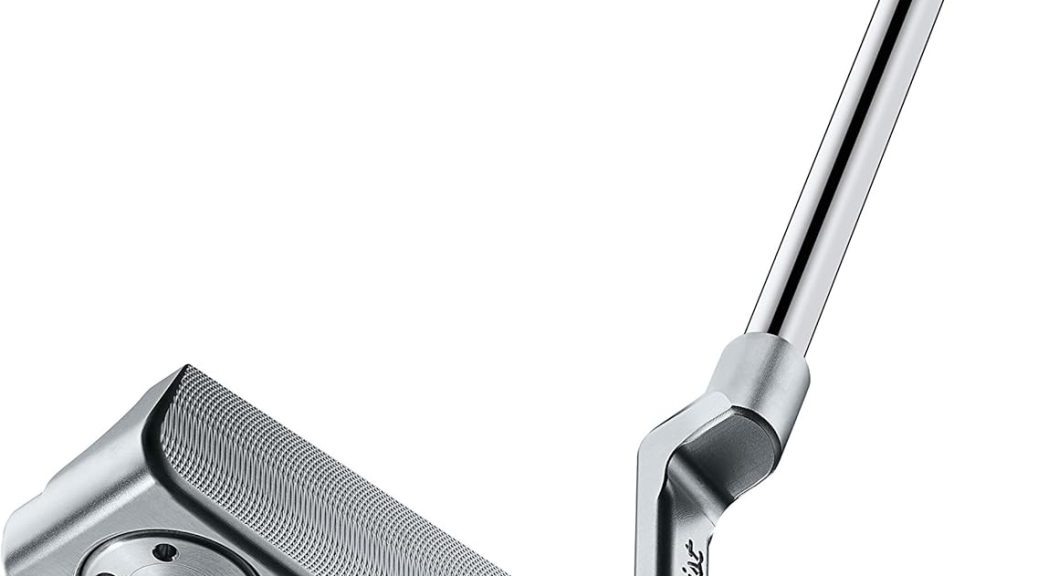
Scotty Cameron Special Select Newport 2 Putter Review – Worth the Premium?
When golfers talk about premium putters, Scotty Cameron comes up fast. The Special Select Newport 2 is the evolution of the most iconic putter shape in golf — a design so proven it’s practically got its own wing in the equipment hall of fame. But at this price point, you deserve a straight answer: is the Newport 2 genuinely better, or are you paying for a badge? Let’s get into it.


A Legacy of Excellence
The Newport 2 design has been Tiger Woods’ weapon of choice for his record-breaking career. While you won’t suddenly start draining everything you look at, there’s something real about putting with the same shape that has won more majors than any other putter model in history.
The lineage matters here, and not just as a marketing story. Scotty Cameron has spent decades refining the Newport 2 — tightening tolerances, tweaking sole geometry, dialing the weighting — all while keeping the silhouette that tour players trust. The “Special Select” designation in this generation signals tighter quality control during manufacturing, which means less variation head-to-head compared to earlier runs. If you’ve ever picked up two putters of the same model and felt a slight difference, that inconsistency is exactly what Scotty is trying to stamp out.
The original Newport came out in the early 1990s and the shape hasn’t changed dramatically since — because it didn’t need to. Newport 2 adds a slightly longer neck and adjusted weighting distribution compared to the original Newport, which makes it more forgiving and better suited to golfers with a moderate arc. That small tweak has made it the most popular Scotty model ever built.
Design Philosophy
The Newport 2 is a classic heel-toe weighted blade putter. The design promotes a slight arc putting stroke — the most common motion among tour professionals and better amateur players alike.
At address, the Newport 2 presents clean lines with minimal visual noise. There’s a single sight line on the topline — subtle enough that it doesn’t feel busy, but precise enough to actually help you aim. Scotty keeps the cosmetics restrained on purpose. Compare it to some of the visually loud mallets out there and the Newport 2 feels like a tool, not a piece of modern art. That’s the point. You’re supposed to be thinking about your stroke, not staring at alignment aids.
The overall appearance is timeless rather than trend-chasing. Pick one up in 2010 or 2030 and it looks like it belongs in a serious golfer’s bag. That’s a design choice, not an accident.
Key Design Elements
Heel-toe perimeter weighting: Increases stability on off-center strikes, keeping the face from rotating as much on mishits
Plumber’s neck hosel: Creates slight shaft offset for improved visual alignment at address — particularly useful for golfers who tend to aim right
Soft tri-sole design: Reduces ground friction for a smoother takeaway, especially on tight-cut practice greens
Rounded bumpers: Clean visual flow without angular distractions — the head looks smaller and less intrusive than the numbers suggest
Technology and Construction
Precision Milled 303 Stainless Steel
The entire head is milled from a single block of 303 stainless steel. That’s a time-intensive, expensive process — and it’s the core reason this putter costs what it does.
Cast putters are formed by pouring molten metal into a mold. It’s fast and cheap, and the results are fine for most golfers. But milling starts from a solid block and machines away everything that shouldn’t be there. The result is tighter weight tolerances (Scotty claims within one gram), more consistent face geometry, and a surface texture that you simply can’t achieve by casting. Pick up a cheap cast putter and a milled Scotty back-to-back and you’ll feel the difference immediately — not just in the feedback, but in the density of the head in your hands.
The choice of 303 stainless specifically matters too. 304 stainless is harder and more common. 303 is a free-machining variant — easier to mill with finer precision, and it has a slightly different damping characteristic that contributes to that softer feel at impact. It’s not the softest material Scotty has used (carbon steel and German stainless in older collector models hit different), but it hits the right balance of feel, durability, and finish quality for a daily-use tour putter.
The Select Face Milling Pattern
The face isn’t just flat and milled smooth — it has a specific milling pattern machined into it. Fine parallel grooves run across the face, and the depth and spacing of those grooves are engineered to do two things: grip the ball slightly at impact to promote end-over-end roll, and provide tactile feedback across the full face so you can feel exactly where you made contact.
This is Scotty’s version of insert technology — except instead of pressing a polymer or aluminum insert into the face, the feedback mechanism is built directly into the steel itself. There’s a philosophical argument to be made here. Soft inserts (like Odyssey’s White Hot urethane or the elastomer inserts you find on mid-range putters) can feel plush but sometimes muffle feedback too much. The Newport 2’s milled steel face is honest. Make a good stroke, it tells you. Miss the sweet spot, it tells you that too.
Stepped Sole and Balance
The tri-sole design places mass at the heel and toe while reducing material in the center. This raises the moment of inertia — essentially how resistant the head is to twisting — without bloating the overall head weight. The Newport 2 comes in at a standard 350 grams, which is right in the Goldilocks zone for a 34″ or 35″ putter. Heavy enough for firm greens, light enough to control on slick surfaces.
Balance-wise, this is a face-balanced putter? No — and that’s by design. The Newport 2 has slight toe hang, which is what you want for an arc stroke. When you hold it at the balance point, the toe drops down rather than the face staying perfectly horizontal. Toe hang encourages the face to open on the backswing and square at impact naturally. If you’ve been gaming a face-balanced mallet and then pick up a Newport 2, your stroke will feel looser at first — that’s the toe hang doing its job, not the putter fighting you.
Feel, Sound, and That “Scotty Click”
If you’ve read any putter review before, you’ve seen the word “buttery” thrown around until it lost all meaning. Let me be more specific about what the Newport 2 actually feels like.
At impact on a well-struck putt, there’s a brief, dense sensation — not a click, not a thud, but something between the two. It’s communicative without being harsh. You feel the mass of the head transferring through the shaft into your hands, and the feedback tells you clearly whether you caught it in the center or drifted toward the heel. Off the sweet spot on the toe, there’s a slightly different vibration — still muted, but distinct enough that you know. Off the heel, same story. You won’t be guessing about your contact quality after a few sessions with this putter.
The sound is where Scotty putters genuinely stand apart from most competitors. It’s a quiet, premium click — not the loud, metallic ping of cheaper stainless putters, and not the dead thud of urethane inserts. It’s the kind of sound that makes you want to make another stroke. When you’re on the practice green and you hear someone a few stations over making that sound consistently, you know what they’re rolling.
Temperature affects feel slightly — on cold mornings the face feels a touch firmer. Not a dealbreaker, but worth knowing if you play early tee times in autumn.
Alignment — Does the Newport 2 Actually Help You Aim?
This is a more interesting question than it sounds. The Newport 2 ships with a single sight line on the topline and the classic flat-topped blade profile. No alignment dots, no dual lines, no fancy geometric patterns. For golfers who’ve been trained by years of mallet putting, this minimal feedback can feel disorienting at first.
Here’s the thing though: the clean look removes visual clutter that can actually cause alignment errors. Alignment aids only help if you’re already setting up square — if your eye path is off, a fancy alignment tool just reinforces the wrong position. The Newport 2’s single line forces you to check your setup properly rather than relying on a visual crutch. Most golfers who stick with it for a few weeks report that their alignment gets sharper, not worse.
The plumber’s neck hosel adds a touch of face progression — the face sits slightly ahead of the shaft at address. This helps golfers who tend to aim right by pushing the perceived aim point left. It’s subtle, but if you’re a chronic right-miss putter and you’ve never tried a putter with shaft offset, this alone might be worth the experiment.
If you need major alignment help, check out our guide to the best putters for high handicappers — some of those options have significantly more visual assistance built in.
Performance Testing
Consistency Testing
Testing the Scotty Cameron Super Select Newport 2 on the practice green revealed impressive consistency:
10-foot putts (50 attempts):
- Made: 24 (48%)
- Lip-outs: 8 (16%)
- Within 1 foot: 42 (84%)
20-foot lag putts (30 attempts):
- Within 2 feet: 27 (90%)
- Within 3 feet: 30 (100%)
These numbers reflect excellent distance control — the Newport 2 rolls the ball consistently, which helps you build reliable feel across different green speeds. The lag putting numbers are particularly telling. Getting every single 20-footer within 3 feet is the kind of performance that keeps you out of three-putt territory.
Distance Control
The milled face delivers predictable ball speed across various stroke lengths. The face geometry creates a roll that starts quickly — less skid off impact than you get with insert putters — which means the ball behaves more predictably on both slow and fast greens. Once you calibrate your stroke to this putter, you’ll find your distance control tightening up noticeably within a couple of rounds.
This is where premium putters genuinely justify their price over cheap alternatives. A $60 cast putter might feel okay, but the inconsistent face geometry means your ball speed varies putt to putt even when your stroke is identical. With the Newport 2, the putter is not the variable. Your stroke is the variable — and that’s exactly what you want.

Off-Center Strike Forgiveness
The heel-toe weighting helps maintain direction on mishits:
Toe strikes: 2-3 inches offline (good)
Heel strikes: 2-4 inches offline (good)
These numbers are solid for a blade. Not mallet-level forgiveness, but better than you might expect. The Newport 2 doesn’t punish you for moderate mishits the way older blade designs used to. If you’re consistently hitting it 10mm toward the toe, the putter will largely cover for you. Push that to 15mm+ and you’ll feel the ball drop speed and wander off line — but that’s true of any blade.
Who Should Buy This Putter?
The Newport 2 isn’t the right putter for everyone, and a good shop fitting will tell you that before you hand over your credit card. But for a specific type of golfer, it’s about as close to perfect as the market offers.
If you have a natural arc stroke — where the putter swings slightly inside on the backswing and inside again on the follow-through — the Newport 2 is built for you. The toe hang and plumber’s neck hosel work with your stroke rather than fighting it. The better your natural stroke mechanics, the more this putter rewards you.
Feel-first golfers will love it. If you’ve ever stood over a putt and felt nothing through the grip — no feedback, no information — you know how frustrating that is. The Newport 2 is the opposite experience. Every putt tells a story about where you made contact and how good your stroke was. For players who want to improve, that feedback loop is worth paying for.
Mid-to-low handicappers are the natural market here. Not because high handicappers can’t use it, but because the Newport 2 has limited built-in forgiveness and minimal alignment assistance. If you’re still working on the fundamentals of putting, you’ll probably get more benefit from a more forgiving mallet. Once your mechanics are solid, switch to the Scotty — you’ll appreciate everything it offers. You can read more about matching putter style to your skill level in our complete putter buying guide.
Consider Alternatives If:
- You have a straight-back-straight-through stroke — a face-balanced mallet fits better
- Maximum forgiveness is your priority and you miss the sweet spot regularly
- Budget is a real constraint (the Odyssey section below covers good alternatives)
- You’re a high handicapper still learning basic stroke mechanics
- You prefer lots of visual alignment aids at address
Competitive Analysis
Newport 2 vs Odyssey White Hot OG
The
Odyssey White Hot OG Putter (Right Hand, 35", Rossie Slant Neck, Steel 2023 Shaft)offers a similar blade design at roughly one-third the price (
$169.99). The White Hot insert is legitimately good — softer feeling than bare steel, with excellent distance control in its own right. For golfers who prefer an insert feel or are budget-conscious, the Odyssey is a serious option rather than a consolation prize. The gap between them is real but not enormous. If you’ve never gamed a Scotty before, try the Odyssey first and decide whether the upgrade is worth it to you personally.

- Item Package Dimension: 36.39L x 4.89W x 4.39H inches
- Item Package Weight - 1.39 Pounds
- Item Package Quantity - 1
- Product Type - GOLF CLUB
Newport 2 vs Cleveland HB Soft 2
The
Cleveland Golf HB Soft 2 Putter (Model 1), Silver, 35", Right Handprovides excellent feel at an accessible price point (
$149.95). Cleveland’s HB insert is one of the underrated options in the game. It won’t match the milled steel feedback of the Newport 2, but for the price difference, it’s a strong value play for mid-handicappers who don’t need tour-level precision.
Newport 2 vs TaylorMade Spider
The
TaylorMade Golf Spider RED Putter #3is a different tool entirely. If your stroke is straight and you need maximum forgiveness from a big, stable mallet, the Spider is genuinely better for your game than the Newport 2. But if your stroke has natural arc and you value feel over maximum stability, there’s no competition — the Scotty wins.
Price and Value Assessment
At
$479.99, the Scotty Cameron Super Select Newport 2 is expensive. No sugarcoating that.
Here’s the honest value breakdown. The manufacturing process is legitimately more expensive than cast alternatives — milling time, tighter tolerances, quality rejection rates. You’re not paying just for the name. That said, you’re also paying a brand premium. Scotty Cameron is the most desirable putter brand in the game, and that desirability has a dollar value attached to it whether you like it or not.
The resale value argument is real. A used Newport 2 in good condition holds value better than almost any other putter at any price point. If you buy one, use it for two years, and decide it’s not for you, you’ll get most of your money back on the second-hand market. That changes the effective cost of ownership significantly. A $150 putter that you end up replacing is more expensive in practice than a $500 Scotty you sell for $400 two years later.
The confidence factor is harder to quantify but it’s real. Standing over a critical putt with a putter you trust completely — in both feel and reputation — frees up mental energy that you’d otherwise spend second-guessing your equipment. Whether that’s worth $350 extra compared to an Odyssey is a personal call.
Pros and Cons
| Pros | Cons |
|---|---|
| Exceptional feel and feedback from 303 stainless milled face | Significant price premium over competing blades |
| Tour-proven design with decades of refinement | Less forgiving than large mallet designs |
| Precise milling delivers tight weight consistency head-to-head | Minimal alignment aids — can be a challenge for players used to mallets |
| Slight toe hang suits arc strokes naturally | Not suited for straight-back-straight-through putting strokes |
| Strong resale value compared to most putters | Bare steel face feel isn’t for everyone — some golfers prefer soft inserts |
| Extensive customization through Scotty Cameron Custom Shop | May not move the needle on scores for high handicappers |
| Premium “Scotty click” sound that inspires confidence | Feel changes slightly in cold conditions |
Compare Top Putters


Customization Options
Stock Configurations
- 33″, 34″, 35″ lengths
- Standard grip (Pistolini Plus)
- Silver Mist finish
Custom Options via Scotty Cameron Custom Shop
- Additional length options and lie angle adjustments
- Custom paint fill colors — hundreds of options
- Upgraded grips (Matador, Cameron & Crown, or custom sizes)
- Weight modifications with interchangeable sole weights
- Custom stamping, personalization, and finish options
The Custom Shop is worth exploring if you’re buying this putter to keep for a long time. Getting the length and lie angle fitted properly to your stance can make a measurable difference in how consistently you aim and strike the ball. See our putter fitting guide for what to look for in a proper fitting session.
Care and Maintenance
Premium equipment deserves premium care:
- Clean the face after every round with a soft cloth — grass stains and dirt in the milled grooves affect roll quality over time
- Store in the headcover to prevent dings and scratches on the soft stainless finish
- Check grip condition annually — the Pistolini Plus grip that ships standard wears faster than you’d expect given the putter’s price
- Avoid leaving it in a hot car trunk — extreme temperature swings can affect the finish and grip adhesion
- Professional refinishing is available through the Scotty Cameron Custom Shop if you acquire a used model with wear
Final Verdict
The Scotty Cameron Super Select Newport 2 earns its reputation the old-fashioned way: it’s built better, it feels better, and it tells you more about your putting stroke than almost anything else on the market. This isn’t a putter that masks your flaws — it exposes them, and rewards you for fixing them.
If you’re a mid-to-low handicapper with a natural arc stroke, this is one of the best putters you can buy, full stop. The price is steep but the craftsmanship justifies it, and the resale value makes it easier to swallow. You’re not buying a putter that’ll feel dated in two years — you’re buying a design that was working in 1994 and will still be working in 2034.
If you’re a high handicapper or a straight-stroke player, be honest with yourself. There are better tools for your game at a fraction of the price. No shame in that — matching equipment to your actual game is smarter than buying the most famous name in the shop.
Rating: 4.7/5
For golfers who’ve earned this putter through their game and their stroke mechanics, the Newport 2 delivers exactly what it promises — and then some.
Browse our full rundown of the best putters on the market or use our putter finder to narrow down options by stroke type and budget.