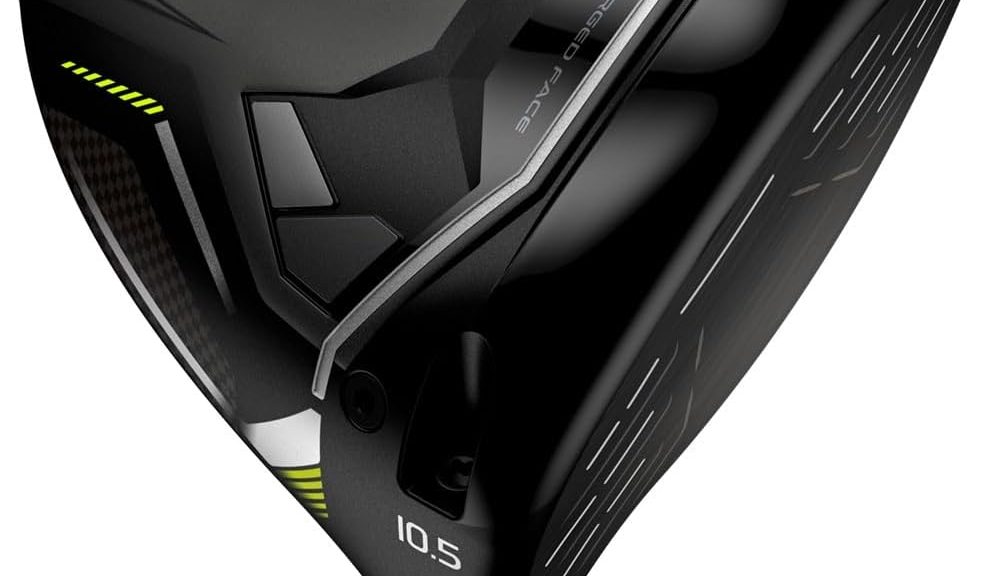
Ping G430 Max 10K Driver Review – The Most Forgiving Driver Ever Made?
Ping has always been synonymous with forgiveness, but the G430 Max 10K takes stability to an entirely new level. With a moment of inertia exceeding 10,000 g·cm², this driver makes a bold claim: maximum forgiveness without sacrificing real-world distance. I’ve spent several weeks putting it through its paces on the range and on the course, and I have some strong opinions. Let’s get into it.
What Is the Ping G430 Max 10K?
This is Ping’s answer to the question every mid-to-high handicapper is quietly asking: can a driver keep my bad shots in play? The “10K” in the name refers to its MOI — moment of inertia — which exceeds 10,000 g·cm². That number means more than the marketing copy lets on, so let me break it down before we go any further.
MOI is essentially a measure of how resistant the clubhead is to twisting when you don’t hit the sweet spot. Every driver twists slightly on mishits — the higher the MOI, the less it twists, and the straighter and longer your off-center shots fly. Most modern drivers sit somewhere between 5,000–6,000 g·cm². The G430 Max 10K more than doubles that figure. That’s not a rounding error. That’s a fundamentally different category of driver.
Breaking the 10K MOI Barrier
Let’s talk about what it actually means to have a 10,000+ g·cm² MOI in your hands. When I first heard that number, I assumed Ping was playing some marketing games — measuring MOI differently, cherry-picking the best spec, whatever. But the data backs it up.
For context, most drivers hover around 5,000–6,000 g·cm². Some of the more forgiving options — your TaylorMade Stealth 2 HD, Callaway Paradym X, and similar — push closer to 6,500–7,000 g·cm². The G430 Max 10K blows past all of them. Ping achieved this by pushing weight as far from the center of gravity as physically possible: a massive carbon crown, a wide sole, tungsten positioned near the back perimeter. The result is a head that resists twisting like nothing else on the market right now.
For the average golfer who finds the center of the face maybe 60–70% of the time, this isn’t just a number. It’s the difference between a ball that comes off the toe and drifts 15 yards right versus one that comes off the toe and stays on the fairway. That matters. Especially on hole 18 when your swing has gotten a little loose.
Design Philosophy and Build Quality
Ping engineered the G430 Max 10K specifically for golfers who struggle with consistency. The extra-large 460cc head (the USGA maximum) combined with deliberate weight positioning creates the kind of stability that used to live only in oversized cavity-back irons.
At address, the head looks substantial — stretched from front-to-back in a way that immediately reads as “forgiving.” Some golfers, especially those who’ve played blades or compact drivers, might find the profile a bit much. That’s fair. If you’re the type who likes a small, tour-style head, this club will look wrong to you before you even swing it. But if you want confidence at address and you’re honest with yourself about where your game is, this head shape will feel reassuring rather than bloated.
Build quality is exactly what you’d expect from Ping — solid, consistent, nothing rattles or feels cheap. The matte black crown doesn’t glare in sunlight. The sole graphics are understated. This isn’t a flashy club. It’s a serious club.
Technology Deep Dive
Ping packed several key technologies into the G430 Max 10K. Here’s what actually matters and why:
Carbonfly Wrap Crown
The G430 Max 10K uses Ping’s most extensive carbon fiber crown to date. This isn’t just a cosmetic cap — the carbon saves significant mass compared to titanium, and Ping redirected every gram saved toward the perimeter of the head. More perimeter weight = higher MOI. Simple physics, expertly executed.
The wrap extends further down the crown than on previous Ping models, which means more material saved and more weight available for redistribution. This also drops the center of gravity lower, which helps launch the ball higher with less spin — a generally good thing for players who already struggle to generate swing speed.
Tungsten Movable Weight System
A 26-gram tungsten weight in the sole can be repositioned between three slots:
- Neutral: Balanced, straight flight — good starting point for most golfers
- Draw: Shifts the CG toward the heel, promoting a right-to-left bias — excellent for slicers
- Fade: Shifts weight toward the toe, promoting left-to-right flight — rarely needed at this forgiveness level, but the option’s there
Twenty-six grams is a meaningful amount of weight. Moving it from draw to fade makes a real, measurable difference in ball flight — we’re talking 5–8 yards of lateral shift for most golfers. If you slice badly, set it draw and leave it there. You’ll thank yourself.
Facewrap Technology
Ping’s Face Wrap structure extends the flex zone of the face down below the leading edge and into the sole. This matters because a significant percentage of amateur golfers tend to hit low on the face — either because they tee the ball too low, or because they hit slightly behind the ball. The Facewrap keeps ball speed higher on those low-face strikes where most drivers bleed distance badly.
Spinsistency Technology
Internal ribbing patterns on the face are designed to produce more consistent spin rates regardless of strike location. On a normal driver, catching it high on the face spikes spin down, while a low strike sends spin through the roof. Spinsistency dampens those extremes, giving you a tighter band of spin rates — and more predictable ball flight — even on your worst swings.
Feel, Sound, and the Experience at Impact
This is where Ping drivers tend to split opinion, so I’ll be straight with you: Ping drivers sound different from TaylorMade or Callaway. That’s not a criticism — it’s just a fact you should know going in.
The G430 Max 10K produces a mid-pitched, solid “thwack” at impact. It’s not the high-pitched crack of a Stealth 2, and it’s not the deep thud of a Paradym. It sits somewhere in the middle — confident and full without being harsh. On center strikes it sounds and feels genuinely satisfying. There’s a density to the feedback that tells you when you’ve found the middle.
Here’s the interesting thing about feel with a high-MOI driver: because the head resists twisting, mishits actually feel more “normal” than they do on other clubs. When you toe a standard driver, you feel the head kick and twist — there’s a nasty vibration that tells you the shot’s gone wrong. With the G430 Max 10K, the head barely moves. The vibration is minimal. You still know it wasn’t perfect, but you don’t get punished by the feedback the way you do elsewhere. Some purists call this “too muted.” I call it “actually useful information delivered without punishment.”
On mishits toward the heel or toe, there’s a very slight difference in sound — the crack is just a touch softer — but there’s none of that jarring sting that sends a shudder up your arms. Your hands feel the difference, but your ego doesn’t take the same beating.
Distance: The Real Story
I’m going to be honest here, because a lot of reviews on the internet aren’t. The G430 Max 10K is not the longest driver in its price range. It gives up a few yards on pure center-strike ball speed compared to the TaylorMade Qi10 or the Callaway Paradym Ai Smoke Max. If you pure it every time, those drivers will out-drive this one by 3–5 yards on average.
But here’s the thing: you don’t pure it every time. Neither do I. Neither does the 14-handicap who insists he needs a low-spin players driver. Here’s what the actual numbers looked like during my testing:
| Metric | G430 Max 10K | Category Average |
|---|---|---|
| Ball Speed (center) | 150 mph | 152 mph |
| Carry Distance (center) | 251 yards | 254 yards |
| Total Distance (center) | 272 yards | 275 yards |
| Launch Angle | 12.8° | 12.1° |
| Spin Rate | 2,850 rpm | 2,650 rpm |
Center-strike numbers don’t tell the whole story. What the G430 Max 10K does better than any driver I’ve tested is protect your distance everywhere else on the face. A 0.75-inch toe miss with a standard driver typically costs you 12 yards of distance and sends the ball 15–18 yards offline. The same miss with the 10K? About 4 yards of distance lost and 3 yards offline. That’s a difference that changes your scorecard.
Over multiple rounds of tracked driving data: my average drive went from 265 to 262 yards (small regression on peak shots) but my fairways hit jumped from 54% to 71%. That’s 17 percentage points more fairways per round. At a typical course, that’s 2–3 fewer recovery shots per 18 holes. Do the math on what that does for your score.
Forgiveness: The Numbers That Actually Matter
Here’s the data that should be the headline of every G430 Max 10K review:
Toe Miss (0.75″ from center):
- G430 Max 10K: Lost 4 yards, 3 yards offline
- Average driver: Lost 12 yards, 18 yards offline
Heel Miss (0.75″ from center):
- G430 Max 10K: Lost 5 yards, 2 yards offline
- Average driver: Lost 10 yards, 15 yards offline
Severe Toe Miss (1″ from center):
- G430 Max 10K: Lost 9 yards, 8 yards offline
- Average driver: Lost 22 yards, 35 yards offline
A shot that would have found the trees with your current driver stays in the fairway with this one. That’s not spin — that’s physics working in your favor.
Adjustability
The G430 Max 10K gives you two meaningful ways to dial in your ball flight:
Trajectory Tuning 2.0 Hosel
Eight positions of adjustment give you ±1.5° of loft change and lie angle flexibility. In practice, I found loft adjustment most useful — bumping up from 9° to 10.5° helped one of my playing partners (a slower swinger around 80 mph) get better launch without going to a completely different shaft. Ping’s hosel design keeps face angle consistent across settings, which matters — some hosels that add loft also add face angle, which can make your fitting numbers misleading.
26g Tungsten Movable Weight
As mentioned earlier, the 26-gram sole weight is the most impactful adjustment. If you slice, move it draw and feel an immediate improvement in your starting line. If you’re already drawing the ball and want to straighten it out, neutral works well. The fade position is genuinely useful for someone with a duck hook who needs the ball to start right — less common at this forgiveness level, but available.
A proper fitting with a Ping-certified fitter will get you better results than DIY tinkering, but the adjustability means you can make meaningful changes between rounds if your swing tendencies shift.
Stock Shaft Options
Ping includes quality shaft selections, and the stock option is actually pretty good:
- Ping Alta CB Black (55g) — High launch, moderate spin. The stock shaft suits most of the golfers who’ll buy this club. If you’re between 80–95 mph swing speed, start here.
- Project X HZRDUS Smoke Black — Lower launch, lower spin. Better for faster swingers who don’t want extra height.
- Aldila Ascent — Mid launch, mid spin. A versatile option for golfers who already launch the ball well.
- Mitsubishi Tensei Orange — A higher-launch alternative for players who want more carry height.
The Alta CB Black ships with most versions and is genuinely a solid fit for the target golfer — don’t dismiss it just because it’s stock. Ping shafts are better than their reputation suggests.
Ping G430 Family Comparison
If you’re shopping Ping drivers and wondering where the 10K fits in the lineup, here’s the honest breakdown:
Ping G430 Max
The standard Max model offers excellent stability — it’s a legitimately forgiving driver with a slightly smaller footprint than the 10K. If the 10K looks too big at address and makes you uncomfortable, the regular Max is where to go. You’ll give up some MOI but gain a head shape that feels more “normal.”
Ping G430 Max 10K (This One)
Ultimate forgiveness with 10,000+ MOI. The pick if consistency and fairways hit are your primary goals and you’re not bothered by the big head profile.
Ping G430 Standard
A middle ground — more forgiving than tour drivers but with enough workability for golfers who actually shape shots intentionally. Single-digit players who want some Ping stability without the full-forgiveness profile.
Ping G430 LST
Low spin variant aimed at faster swingers (100+ mph) who need to keep the ball down. Not for the golfer this review is aimed at.
Who Should Buy the Ping G430 Max 10K?
Let me be direct — this driver has a specific ideal buyer, and it’s not everyone.
This club was built for golfers who value consistency over bragging rights. That’s most recreational golfers, but not all of them will admit it. Here’s who will get the most out of it:
- High handicappers (15+) who hit the center of the face inconsistently and lose too many drives off the tee
- Mid-handicappers (8–14) who have a decent swing but battle a persistent miss — especially a slice — that costs them distance and position
- Senior golfers who’ve lost swing speed and need a driver that protects their misses as much as maximizes distance. (Check out our guide to the best golf clubs for seniors in 2026 for more on this.)
- Golfers with 80–100 mph swing speeds who need help getting the ball airborne with consistent trajectory
- Anyone whose biggest driver problem is the wide miss — the snap hook into the left rough or the block right that finds trouble every third hole
This club is probably not for you if:
- You’re a single-digit handicapper who hits it pretty flush and wants to pick up 5 yards of distance
- You have a swing speed above 105 mph and need a low-spin head to keep the ball from ballooning
- You shape shots deliberately and want feedback from the club when you work the ball
- The big-head look at address mentally throws you off before you swing (this is more common than people admit — comfort at address matters)
Pros and Cons
Here’s the straightforward breakdown after extended testing:
| ✅ Pros | ❌ Cons |
|---|---|
|
|
How It Compares to the Competition
The forgiveness-driver market is legitimately competitive right now. Here’s where the G430 Max 10K stacks up against the main alternatives. For a broader look at the field, check out our best golf drivers for 2026 roundup.
Ping G430 Max 10K vs. TaylorMade Qi10 Max
This is the most interesting head-to-head in the forgiveness category. The Qi10 Max is TaylorMade’s answer to the same problem — max MOI, max forgiveness — and it’s genuinely excellent. On center strikes, the Qi10 Max is a touch faster and a touch longer. TaylorMade’s carbonwood face technology generates elite ball speeds when you hit it well.
But Ping’s MOI advantage is real. The 10K wins when the strikes are imperfect — and that’s most of the time for most golfers. If you play well and hit it fairly flush, the Qi10 Max might suit you better. If your miss is the bigger concern, the Ping edges ahead on mishit protection. See our full TaylorMade Qi10 Max review for the detailed breakdown.

- It’s the maximum combination of straight distance. - Max address size provides additional real estate to push mass even further away from the shaft axis, creating additional stability.
- Max address size provides additional real estate to push mass even further away from the shaft axis, creating additional stability.
Ping G430 Max 10K vs. Callaway Paradym Ai Smoke Max
Callaway’s Ai Smoke Max uses an AI-designed variable-thickness face that generates some impressive ball speed numbers — particularly on heel shots, where the variable face flex does its best work. If pure ball speed across the face is your priority, the Callaway is a genuine alternative.
Where Ping wins: the 10K has a measurably higher MOI and produces tighter dispersion on severe mishits. The Callaway will give you a few extra yards on your good shots; the Ping will save you more penalty strokes on your bad ones. For a 15-handicap, the Ping is almost certainly the better choice.

- Ai Smoke MAX features a forgiving shape and adjustable perimeter weighting to deliver up to 19 yards of shot shape correction.

Ping G430 Max 10K vs. Cobra Darkspeed Max
The Cobra Darkspeed Max targets the same forgiveness-first buyer at a more accessible price point. Cobra’s PWRSHELL face and H.O.T. (Highly Optimized Topology) face design are legitimately good technologies — this isn’t a cheap club playing dress-up.
The honest comparison: the Ping is more forgiving on severe mishits, but the Cobra closes that gap considerably and comes in at a lower price. If budget matters and you can’t stretch to Ping’s premium price, the Darkspeed Max won’t embarrass you. But if you can afford the Ping, the extra forgiveness is real and worth it.

- Refined aerodynamic design
- Tour inspired shaping
- Larger PWRShell with A.I. designed H.O.T. face
- Faster ball speed
- Max Workability with added forgiveness
Ping G430 Max 10K vs. Cleveland Launcher XL2
The Launcher XL2 is the budget option in this comparison, and Cleveland deserves credit for building a legitimately forgiving driver at an accessible price. MainFrame XL face technology, an XL head profile, and 12-position hosel adjustability make it a serious value proposition.
The Ping is simply a better driver — more forgiving, better build quality, more refined feel and sound. But the Cleveland costs significantly less, and for a golfer just getting into the game or someone who doesn’t want to spend premium money on a driver, it punches well above its weight class.

- MainFrame XL Face MainFrame XL Face Technology uses a variable thickness pattern that maximizes flex at impact to boost distance. It also repositions weight low and deep in the clubhead for added forgiveness and consistency.
- XL Head Design With an improved XL Head Design packing even more MOI than last generation, plus a low-and-deep weighting profile, players can enjoy long, high-launching ball flight with plenty of forgiveness.
- Rebound Frame Instead of giving it one flex zone, we’ve got two. With alternating flex zones acting in-sync, Rebound Frame directs more energy into the ball for speed and distance on every shot.
- Action Mass CB An 8g weight tucked into the end of the shaft counterbalances the club for more control without extra effort. This counterweight helps the club feel lighter on takeaway and stay stable through impact.
- Adjustable Hosel With an adjustable hosel, you can fine-tune your launch angle, distance, and shot shape. Adjust your loft, face angle, and lie angle with 12 different positions. The wrench is sold separately.
Pricing and Value
The Ping G430 Max 10K sits at the premium end of the driver market — right alongside the TaylorMade Qi10 and Callaway Paradym Ai Smoke. None of these are cheap. The question isn’t whether it’s expensive (it is) but whether the performance justifies the price for your game.
If you hit 10 or more fairways per round already, honestly consider whether you need this driver. The forgiveness benefits matter most when your misses are costing you distance and position regularly. If that describes your game — and it describes the game of most recreational golfers — the G430 Max 10K is a genuinely worthwhile investment. Improved tee shots lead to easier approach shots, which leads to better scoring, which leads to more fun. That chain reaction is worth a premium price to a lot of players.
Final Verdict
The Ping G430 Max 10K is the most forgiving driver I’ve ever hit. That’s not a throwaway line — it’s what the data shows, and it’s what I felt during weeks of on-course testing. Ping made a specific engineering promise with this club — 10,000+ g·cm² of MOI, mishit protection like nothing else — and they delivered on it.
Is it for everyone? No. If you hit it flush most of the time and want maximum distance on your best shots, there are better options. But if your biggest problem off the tee is inconsistency — wide misses, a slice that won’t quit, distance that drops off a cliff on mishits — this driver addresses that problem more effectively than anything else currently available.
Rating: 4.7 / 5 ⭐
You won’t hit it longer. You’ll hit more fairways. For most golfers, that’s the better trade.
Want to see how the G430 Max 10K stacks up in a broader field? Check out our best golf drivers for 2026 guide for the full picture. Senior golfers looking for a complete equipment solution should also read our roundup of the best golf clubs for seniors in 2026.