
How to Practice Golf at Home (Even Without a Backyard)
Want to improve your golf game but can’t make it to the course or driving range every day? You’re not alone. Between work, family, and life’s other demands, finding time to practice golf can feel impossible. But here’s the secret the pros don’t want you to know: some of the most effective golf practice can happen right in your living room, garage, or apartment. Whether you’re stuck in a tiny apartment with zero outdoor space or have a modest backyard that’s too small for full swings, this guide will show you exactly how to build an effective home practice routine. We’ll cover putting drills you can do on carpet, chipping exercises that won’t break your windows, full swing practice with the right equipment, and golf-specific fitness exercises that will transform your game.
Why Practicing Golf at Home Actually Works
Before we dive into the how, let’s talk about the why. Many golfers underestimate the power of home practice because they think you need a full course to improve. That’s simply not true. Consider this: putting accounts for roughly 40% of your total strokes in a round of golf. That’s nearly half your game that can be practiced on any flat surface. Your short game—chips, pitches, and partial swings—makes up another 20-25% of your shots. That means you can practice well over half your game without ever setting foot on a golf course. Home practice also offers unique advantages:- Consistency – You can practice daily, even if just for 15 minutes
- Repetition – Building muscle memory through frequent, focused sessions
- Convenience – No driving to the range, no waiting for a tee time
- Cost savings – One-time equipment investment vs. ongoing range fees
- Weather independence – Rain, snow, or shine, you can still practice
Putting Practice at Home: The Foundation of Lower Scores

Carpet Putting Drills That Actually Work
Most household carpet provides a reasonably close approximation to green speed, especially if it’s low-pile. Here are proven drills you can do right now: The Gate DrillPlace two tees or coins slightly wider than your putter head about 2 feet in front of your ball. Practice rolling putts through the “gate” to develop a square face at impact. This drill eliminates the slice or hook spin that causes so many missed putts. The Clock Drill
Place 4-8 balls in a circle around a target (a cup, coin, or even a coaster). Starting at “12 o’clock,” work your way around, sinking each putt before moving to the next. If you miss, start over. This builds pressure and simulates game situations. Distance Control Ladder
Without a cup, lay down 4-5 targets at increasing distances (2 feet, 4 feet, 6 feet, etc.). Practice rolling balls to stop exactly at each target. Distance control is often more important than direction on longer putts.
Essential Putting Training Aids
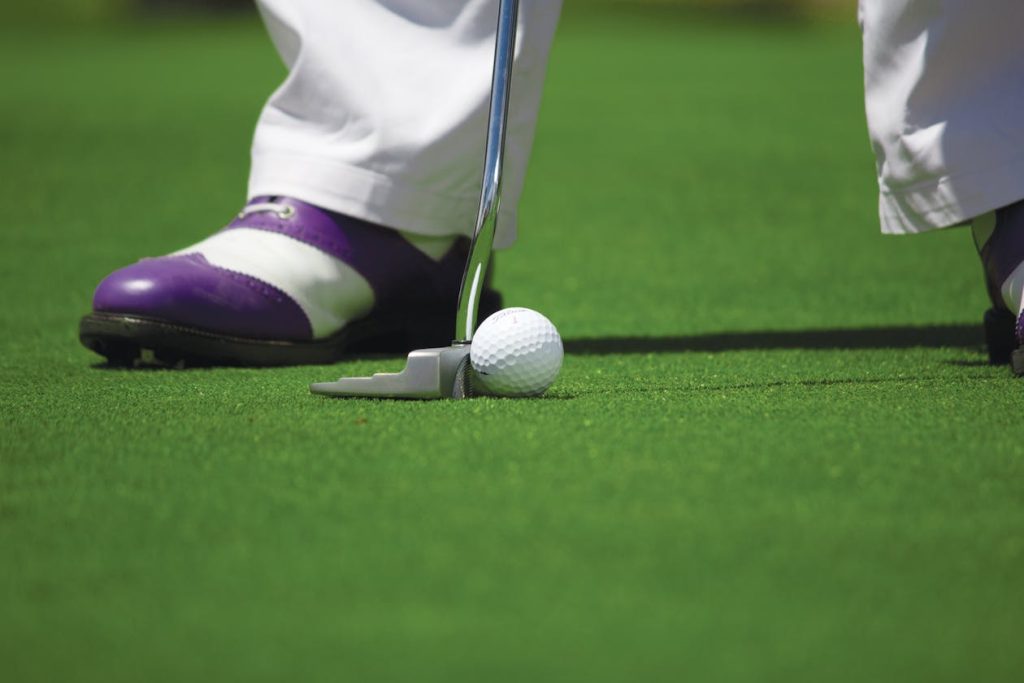
While you can practice putting with just a ball and putter, the right training aids can accelerate your improvement dramatically. A quality putting mat with alignment guides is the gold standard for home putting practice. Look for mats with built-in guides for ball position, alignment, and stroke length feedback. Another excellent option is a putting trainer that gives instant feedback. Even a basic putting mat gives you a consistent surface and helps you groove a repeatable stroke.Chipping Practice Indoors: Safe and Effective Methods
Setting Up Your Indoor Chipping Station
Here’s what you need for safe, effective indoor chipping practice:- Foam or low-flight practice balls – These are absolutely essential for indoor practice. Real golf balls indoors are a recipe for broken windows, damaged walls, and angry family members.
- A chipping net or target – Pop-up chipping nets are perfect for apartments and small spaces. They catch your chips and give you targets to aim at.
- A small hitting mat – Protects your carpet or floor and provides a realistic turf surface for your wedge to interact with.
Indoor Chipping Drills
The Towel DrillLay a towel flat on the ground about 10-15 feet away. Practice landing chips directly on the towel. This develops the precise distance control that separates good chippers from hackers. Once you can hit the towel consistently, fold it in half to make the target smaller. The One-Arm Chip
Practice chipping with just your lead arm (left arm for right-handed golfers). This promotes proper technique—using the big muscles and body rotation rather than flipping the wrists. It feels awkward at first but produces remarkably solid contact. Trajectory Control
Using foam balls, practice hitting different trajectories: low runners, mid-flight chips, and higher loft shots. Even without seeing the full ball flight, you can develop feel for how different setups and swings affect launch angle.
Full Swing Practice Without a Backyard
Space Requirements
To swing a driver safely, you need roughly:- Ceiling height: At least 9-10 feet (most garages work)
- Width: 10-12 feet to swing freely
- Depth: 8-10 feet between you and the net
Choosing a Practice Net
Your practice net is the most important investment for home full-swing practice. Look for these features:- Size: At least 7×7 feet, ideally 10×7 feet for full driver swings
- Durability: Heavy-duty netting that can withstand thousands of shots
- Easy setup: Quick assembly/disassembly if you need to store it
- Ball return: Some nets include ball return features for continuous practice
Full Swing Drills for Home Practice
Mirror WorkPractice your swing positions in front of a mirror (or record yourself on your phone). Check your address position, backswing plane, and finish position. You can make tremendous improvements just by seeing what your swing actually looks like versus what you think it looks like. Impact Position Training
Set up to a net or impact bag and practice moving into proper impact position: weight forward, hips open, hands ahead of the ball. Hold the impact position and check it in a mirror. Then hit shots focusing on recreating that feeling. Tempo Training
Use foam balls or wiffle balls to work on swing tempo without the distraction of ball flight. Count “one” on your backswing and “two” at impact. The consistent rhythm builds a repeatable, pressure-proof swing.
Golf Fitness Exercises You Can Do Anywhere
Rotational Power Exercises
Medicine Ball Rotational ThrowsStand sideways to a wall, holding a medicine ball at hip height. Rotate your hips and core explosively, throwing the ball against the wall. This mimics the rotational power generation in your golf swing. 3 sets of 10 reps each side. Cable/Band Rotations
Attach a resistance band to a door handle at hip height. Stand sideways and rotate away from the anchor point, maintaining straight arms. This builds rotational strength through the exact range of motion used in your swing. 3 sets of 15 reps each side.
Hip Mobility Exercises
90/90 Hip StretchSit on the floor with both knees bent at 90 degrees—one in front, one to the side. Rotate your torso over your front leg, feeling a deep stretch in your hip. This opens up the hip rotation needed for a powerful backswing and downswing. Hold 30 seconds each side, repeat 3 times. World’s Greatest Stretch
Step into a deep lunge, place your hand on the ground inside your front foot, then rotate your chest and reach your arm toward the ceiling. This mobilizes hips, thoracic spine, and shoulders simultaneously. 5 reps each side.
Core Stability for Golf
Dead BugsLie on your back with arms straight up and knees at 90 degrees. Slowly lower opposite arm and leg while maintaining a flat lower back. This builds the core stability that prevents early extension and maintains posture through the swing. 3 sets of 10 reps each side. Bird Dogs
On hands and knees, extend opposite arm and leg while keeping your back flat and hips level. This trains the anti-rotation stability that’s crucial for consistent ball striking. 3 sets of 10 reps each side. Planks with Rotation
From a forearm plank position, rotate your hips and reach one arm toward the ceiling, then return to plank and repeat on the other side. This combines stability with rotational mobility. 3 sets of 8 reps each side.
Grip and Forearm Strength
Wrist Curls and Reverse CurlsUsing light dumbbells or even water bottles, perform wrist curls and reverse wrist curls. Strong forearms help you maintain control through impact and prevent the dreaded flip. 3 sets of 15 reps. Towel Wringing
Soak a towel and wring it out as hard as you can, rotating in both directions. Simple but incredibly effective for grip strength. Do this while watching TV—2-3 minutes per day adds up quickly.
Recommended Home Practice Gear
After testing dozens of products and talking to hundreds of golfers, here are our top recommendations for building your home practice setup:Best Putting Training Mat: WELLPUTT Golf Putting Training Mat
The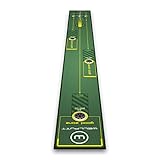
- Professional 10 x 1.15ft putting training mat developed to accurately replicate a medium-to-fast-green. Approved by Cameron McCormick, coach of Jordan Spieth, Daniel Berger and So Yeon Ryu
- Multiple visual aids for body and putter alignment, stroke amplitude and eye positioning providing muscle memory and mental mapping solutions
- Two rolling speeds according to the play direction. First direction to practice accuracy (stimp speed 11.5ft) and second direction to refine distance control (stimp speed 10ft)
- Lifetime guarantee. UV resistant. Easy to clean, easy to store
- Made in France
is our top pick for home putting practice. Its built-in alignment guides and distance markers give you instant feedback on every stroke. The realistic green speed helps you develop proper touch and distance control.
Why we love it:
- Built-in alignment and distance guides
- Realistic green speed simulation
- Rolls up for easy storage
- Durable construction that lasts years
Best Chipping Net: CHAMPKEY Golf Chipping Net
A quality
- Included In The Package: 1 * Golf Chipping Net, 1 * Dual-Turf Golf Chipping Mat measuring 13"x17", 12 * Foam Golf Balls, 2 * Support Rods for the Chipping Net, 4 * Fixing Pins, and an Instruction manual.
- Dual-Sided Design: Designed chipping net features two sides to enhance golfers' chipping skills. The front side of the net includes multiple pockets to help improve your chipping accuracy, while the back side is ideal for long-distance training.
- Chipping Mat With Rubber Backing: Crafted from premium turf and studry rubber backing, this chipping mat offers superior grip and stability during training sessions.
- Premium Foam Balls: These foam balls are constructed from compressed foam material, offering excellent hardness and strength. The surface texture is designed to mimic real golf balls, providing realistic spin.
- Versatile For Indoor And Outdoor Settings: Featuring an effortless pop-up design and straightforward storage instructions, this product is suitable for use both indoors and outdoors.
is perfect for indoor and outdoor short game practice. This net includes a mat and foam balls, sets up in seconds, and gives you multiple target pockets to aim at. Completely safe for indoor use.
Why we love it:
- Includes mat and 12 foam balls
- Multiple target zones for varied practice
- Instant setup and takedown
- Lightweight and portable
Best Practice Net: Amazon Basics Golf Practice Net (10×7)
For full swing practice, the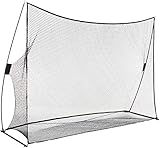
- Golf net with large hitting area allows for safe golf-swing practice; suitable for indoor/outdoor use
- Durable hitting net catches balls and stores them neatly at the base for handy, time-saving retrieval
- Sturdy, yet lightweight design made of metal and fiberglass; conveniently portable for anywhere/anytime practice
- Quick, easy set-up/take-down; includes 4 metal stakes and a carry bag for storage or transport
- Measures 10 feet wide by 7 feet high by 3 feet deep (120 by 84 by 36 inches); weighs 18.14 pounds; backed by an Amazon Basics 1-year limited warranty

offers excellent value. The 10×7 foot size catches even mishits, and the sturdy frame can handle thousands of full-speed shots. It’s easy to set up and includes a carry bag for storage or transport.
Why we love it:
- Large hitting area for confidence
- Sturdy frame construction
- Excellent value for money
- Includes carrying case
Best Foam Practice Balls: Guirnd Foam Golf Balls
For indoor practice,
- Material: These foam golf balls are made of soft pu rubber material, no odor, dent and impact resistant,the ball compresses slightly on impact,just like a real golf ball,allowing it to really "pop" off the club face,not easily shattered or broken.
- Size & Color: Each of the 10 foam golf balls is 41mm in diameter and weighs 7.8g. 5 colors (yellow, white, orange, blue and red), 4 of each color, 20 foam golf practice balls in total, the vibrant colors make sure you never lose a single foam golf practice balls when practicing on the grass!
- Design: The surface of the foam golf balls is designed with a realistic dimpled texture that maintains a constant spin when flying through the air, improving accuracy of distance to the hole and enabling you to enjoy the pleasure of golf.
- Practice Golf Balls for Backyard: Designed for golfers with limited time and space, the foam golf balls allow the practitioner to enjoy the practice swing with a practice ball that simulates the feel of a real ball in flight.
- Multiple applications: Foam golf practice balls are employed to backyard, indoor simulator and golf course practice. The practice golf balls can be tipped into a bucket next to the base camp to practise hitting the ball. The simulated golf ball can also provide a great toy for your pet, our foam golf balls will not hurt your furniture, glass windows and animals.
are essential. These lightweight balls won’t damage anything if you mishit, making them perfect for chipping practice in your living room. They provide realistic feel and limited flight, ideal for indoor training.
Why we love them:
- 100% safe for indoor use
- Realistic feel and contact feedback
- Long-lasting durability
- 20 balls per pack for continuous practice
Creating Your Home Practice Routine
Having the right equipment is only half the battle. Here’s a sample weekly routine that maximizes your home practice time:
Daily (10-15 minutes):
- 50 putts on your putting mat
- 5 minutes of mobility work (hip stretches, thoracic rotation)
3x per week (20-30 minutes):
- Chipping practice with foam balls (various trajectories)
- Core stability exercises (planks, dead bugs, bird dogs)
2x per week (30-45 minutes):
- Full swing practice into your net
- Strength training (rotational exercises, grip work)
This routine adds up to less than 3 hours per week but will dramatically improve your game. The key is consistency—small daily efforts compound into significant improvement over time.
Frequently Asked Questions
Can I really improve my golf game without going to a course?
Absolutely. Putting and short game account for over 60% of your strokes, and both can be practiced effectively at home. Many tour pros credit daily home practice—especially putting—for their consistency. You won’t replace on-course experience entirely, but home practice builds the muscle memory and technique that transfers directly to the course.
What’s the minimum space I need for home golf practice?
For putting, you need just 6-8 feet of carpet. For chipping with foam balls, about 10-15 feet gives you enough room. Full swing practice requires more space—ideally a garage or room with 9-10 foot ceilings and at least 10×12 feet of floor space. Even if you only have space for putting, that’s still worth doing daily.
Are foam practice balls effective for training?
Yes, foam balls are excellent for building technique and muscle memory. While they don’t replicate the exact feel and flight of real balls, they provide enough feedback to work on contact, trajectory control, and swing mechanics. They’re also the only safe option for indoor practice where a mishit could cause damage.
How often should I practice at home to see improvement?
Consistency beats duration. Practicing 10-15 minutes daily will produce better results than one long session per week. The key is building habits and maintaining muscle memory. Even on busy days, 50 putts before bed takes less than 10 minutes and keeps your stroke sharp.
Can apartment dwellers practice golf at home?
Definitely. Putting and chipping are perfectly suited for apartments. Use a putting mat for putting practice, and foam balls with a pop-up net for chipping. You might not be able to take full swings with a driver, but you can work on half-swings with shorter clubs, or use specialized training aids that don’t require ball flight.
What’s the best investment for home practice on a budget?
If you can only buy one thing, get a quality putting mat. Putting improvement has the fastest impact on your scores, and you can practice anywhere with minimal space. As your budget allows, add a chipping net and foam balls, then eventually a full practice net and mat.
Conclusion: Start Today
You don’t need a backyard, a driving range membership, or hours of free time to improve your golf game. With the right equipment and a consistent practice routine, you can make meaningful improvements to your game from your living room, garage, or apartment.
Start with putting—it’s the quickest win and requires the least equipment. Add chipping practice as you can, and work in full swing practice when space allows. Complement your ball-striking work with golf-specific fitness exercises, and you’ll build a complete practice routine that rivals what you could do at any range or course.
The golfers who improve fastest aren’t necessarily the ones with the most talent—they’re the ones who practice most consistently. By making practice convenient and accessible at home, you remove the biggest barriers to improvement.
Your lower scores are waiting. Pick up a putter and start today.