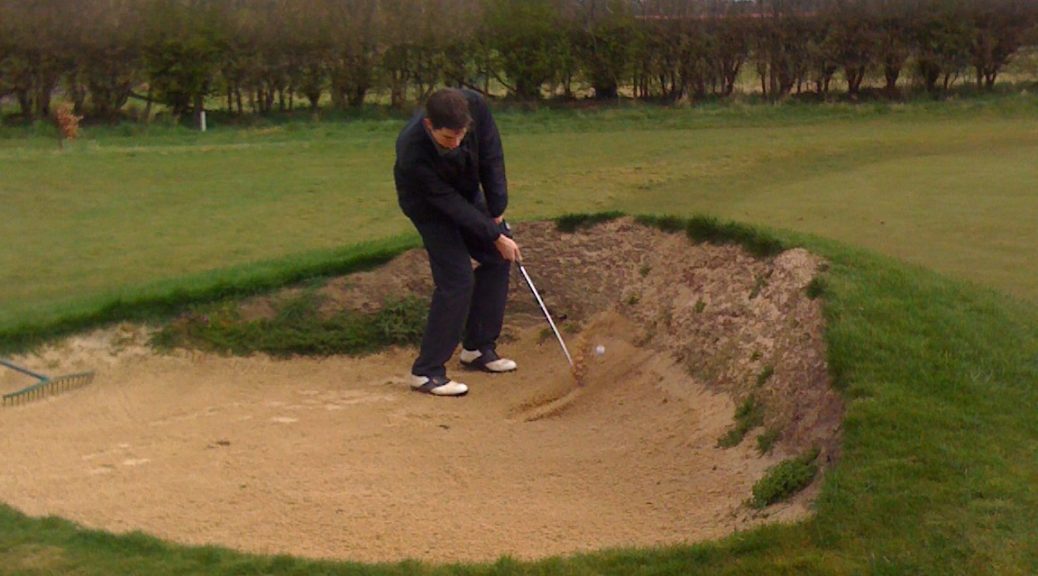
How to Hit Out of Bunkers (Stop Being Afraid of Sand)
There’s a moment every golfer knows too well. Your ball sails through the air, lands on the green… and then that sickening bounce into the bunker. Your heart sinks. Your palms get sweaty. You’re already adding two or three strokes to your scorecard in your head.
Sound familiar? You’re not alone. Bunker fear is one of the most common anxieties in amateur golf. But here’s the thing: it doesn’t have to be this way. In fact, once you understand the basics, bunker shots can become one of the most predictable and reliable shots in your entire game.
This guide will transform your relationship with sand. By the end, you’ll walk into bunkers with confidence rather than dread. Let’s get you out of the sand and onto the green.

Why Bunker Shots Are Actually Easier Than You Think
Here’s something that might surprise you: bunker shots are the only shot in golf where you don’t actually hit the ball.
Think about that for a second. Every other shot requires precise contact with the ball. Miss by a centimetre and you’re skulling it across the green or chunking it into the ground. But in a greenside bunker? You’re hitting the sand behind the ball, and the sand does the work of lifting your ball out.
This is why Tour pros often prefer being in a greenside bunker over thick rough. The bunker shot is more predictable. The margin for error is actually larger than you might think. You can enter the sand anywhere from 1-4 inches behind the ball and still get a decent result.
The problem for most amateurs isn’t technique—it’s fear. They’re so worried about leaving it in the bunker that they decelerate through impact, which ironically is the one thing that guarantees you’ll leave it in the bunker.
Let go of the fear. Trust the technique. The sand is your friend, not your enemy.
Basic Greenside Bunker Technique
Let’s break down the fundamentals that will get you out of any standard greenside bunker lie.
Open Your Clubface
Before you even step into the bunker, open your clubface. This is crucial. You want the bounce of your sand wedge to work properly, and an open face increases the effective bounce while also adding loft.
How open? Start with the face pointing to 1 o’clock (for a right-handed golfer). This might feel extreme, but trust it. The open face is what allows the club to slide through the sand rather than dig.
Open Your Stance
Once you’ve opened the clubface, align your body left of the target (for right-handers). Your feet, hips, and shoulders should all point left. How far left? Roughly the same amount that you’ve opened the clubface.
This might feel like you’re aiming into the trees, but here’s the magic: you swing along your body line, and the open clubface sends the ball toward your target. Open stance + open face = ball going where you want it.
Dig Your Feet In
Wiggle your feet into the sand. This does two things: it gives you stability on an unstable surface, and it lowers your base, which helps ensure you hit sand first.
Ball Position Forward
Play the ball slightly forward of centre in your stance. This encourages the club to enter the sand behind the ball rather than hitting ball-first.
Where to Enter the Sand
This is where most golfers overthink things. You’ve probably heard “hit 2 inches behind the ball” and then spent your entire bunker shot trying to measure exact distances in your head.
Here’s a better way to think about it: look at a spot in the sand about 2 inches behind the ball, and hit that spot.
Don’t think about the ball at all. Your only job is to splash that spot of sand onto the green. The ball just happens to be sitting on top of that sand, so it goes along for the ride.
Some teaching pros recommend drawing a line in the sand (during practice only—this is against the rules during a round) to give yourself a visual target. In your mind, you’re not hitting a bunker shot; you’re just throwing sand at the flag.
The entry point can vary slightly based on conditions:
- Firm sand: Enter slightly closer to the ball (about 1.5 inches behind)
- Soft, fluffy sand: Enter a bit further back (2.5-3 inches behind)
- Wet, heavy sand: Enter closer and use a less open face
Follow Through: The Key Most Amateurs Miss
If there’s one thing that separates successful bunker players from those who leave it in the trap every time, it’s the follow through. This is absolutely critical, so pay attention.
You must accelerate through the sand and complete your follow through.
Most amateurs do one of two things wrong:
- They decelerate through impact, trying to “help” the ball out
- They stop the club in the sand, thinking they need to dig
Both of these will leave your ball in the bunker. The sand creates enormous resistance, and if you’re not committed to getting through it, the club will get stuck.

The Splash, Not the Dig
Think of your club entering the sand and sliding through it, not digging into it. The bounce on the bottom of your sand wedge is specifically designed to prevent digging—but only if you let it work.
Imagine you’re throwing a handful of sand onto the green. You wouldn’t stop your hand halfway through that motion, would you? Commit to a full, aggressive follow through.
Your finish position should have your hands high, your chest facing the target, and your belt buckle pointing toward where you want the ball to go.
Match Your Swing Length
Here’s a simple rule: your backswing and follow through should be roughly equal in length. If you take a big backswing, you need a big follow through. Many amateurs take too big a backswing and then quit on the shot.
For a standard greenside bunker shot of 15-20 yards, think “9 to 3″—hands go back to about 9 o’clock and finish at about 3 o’clock.
Fairway Bunker Technique
Everything changes when you’re in a fairway bunker. Unlike greenside bunkers where you hit the sand first, fairway bunker shots require ball-first contact—just like a normal iron shot.

Key Differences from Greenside Bunkers
- Don’t open the face – Use your normal face angle
- Hit ball first – Contact the ball before the sand
- Choke down slightly – This helps ensure clean contact
- Quiet lower body – Less leg action reduces the chance of slipping or swaying
- Take one more club – You’ll lose distance due to the conservative swing
Setup Adjustments
Position the ball slightly back of centre in your stance. Dig your feet in for stability, but remember this lowers you—that’s why we choke down to compensate.
Focus on a smooth, controlled swing. You’re not trying to crush it. A clean strike with one more club will get you the distance you need.
The Golden Rule
When in doubt, get out. If you have a high lip in front of you, don’t be a hero. Take your medicine, grab a wedge, and get back to the fairway. Trying to hit a 5-iron over a 4-foot lip is how you make double bogey into quadruple bogey.
Uphill and Downhill Bunker Lies
Standard bunker technique assumes a flat lie, but bunkers are rarely that accommodating. Here’s how to adjust.
Uphill Lies
When the ball is above your feet or you’re hitting up a slope:
- Tilt your shoulders to match the slope – Your lead shoulder should be higher
- Ball position stays the same relative to your stance
- Expect more loft – The ball will come out higher and land softer
- Take a slightly bigger swing – The uphill slope adds resistance
The good news: uphill lies are generally easier. The slope helps get the ball up quickly.
Downhill Lies
Downhill bunker shots are among the hardest in golf. The slope wants to drive your club into the sand too deeply.
- Tilt shoulders to match the slope – Lead shoulder lower this time
- Ball position slightly back in your stance
- Expect less loft – The ball will come out lower and roll more
- Aim for more green – Account for the extra roll
- Chase the ball down the slope – Your follow through should travel down the hill
The key with downhill lies is staying down through the shot. The tendency is to lift up early, which causes you to blade it across the green. Keep your chest down and chase that club through.
Plugged and Fried Egg Lies
We’ve all been there: your ball lands in the bunker and buries itself like it’s trying to hide from you. Whether it’s fully plugged or sitting in a “fried egg” crater, these lies require a different approach.
The Plugged Lie
When your ball is buried:
- Close the clubface – Yes, the opposite of normal. This promotes digging.
- Square or slightly closed stance – Again, opposite of normal
- Hit closer to the ball – Enter the sand about 1 inch behind
- Swing steeper – More up and down, less around
- Don’t expect spin – The ball will come out hot and roll
The goal with a plugged lie is simply extraction. Get it out and onto the green. Accept that you won’t have much control over where it stops.
The Fried Egg
A fried egg (ball sitting in a small crater) is a bit easier than a full plug:
- Slightly close the clubface – Not as extreme as a plugged lie
- Enter the sand at the back edge of the crater
- Hit firmly – You need to move more sand
- Expect moderate roll – More than a normal bunker shot, less than a plugged lie
Practice Drills for Bunkers
You can’t get better at bunker play without practice, but most golfers avoid the practice bunker entirely. Here are drills that will transform your sand game.

The Line Drill
Draw a line in the sand perpendicular to your target. Practice hitting that line without a ball. Get comfortable entering the sand at a consistent point. Once you’re hitting the line reliably, place a ball 2 inches in front of the line and hit shots.
The Splash Drill
Forget the ball entirely. Practice splashing sand onto the green. Focus on the feeling of the club sliding through the sand and releasing toward the target. This builds the commitment to follow through.
The Board Drill
Place a 2×4 piece of wood buried just under the sand surface, a few inches behind where the ball would be. Hit shots. The board prevents you from digging too deep and teaches you to use the bounce properly.
The Distance Control Challenge
Place three targets at 10, 20, and 30 yards. Hit five balls to each target, trying to land as close as possible. This teaches you to vary your swing length and speed for different distances.
The Worst Lie Game
Intentionally create terrible lies—plugged balls, fried eggs, balls against the lip. Practice escaping from disaster. When you can handle the worst lies, normal lies feel easy.
Frequently Asked Questions
What club should I use in a bunker?
For greenside bunkers, a sand wedge (54-56 degrees) or lob wedge (58-60 degrees) is ideal. The bounce on these clubs is designed for sand play. For fairway bunkers, use whatever club gets you the distance you need while still clearing the lip—typically an iron or hybrid.
Why do I keep hitting it thin out of bunkers?
Thin shots usually come from lifting up during the swing or playing the ball too far back. Focus on keeping your chest down through impact and moving the ball forward in your stance.
Why do I keep leaving it in the bunker?
Almost always, this is from decelerating. You must commit to the shot and accelerate through the sand. Take a shorter backswing if needed, but whatever you do, accelerate through impact.
Should I look at the ball or the sand?
Look at the sand—specifically, the spot where you want to enter. If you look at the ball, you’ll hit the ball. Look at the sand, and you’ll hit the sand.
How do I hit bunker shots higher or lower?
For higher shots, open the face more and play the ball more forward. For lower shots, close the face slightly and play the ball back. You can also vary your follow through—a higher finish produces a higher shot.
Do I need a sand wedge to play bunker shots?
While a sand wedge is ideal, you can escape bunkers with other wedges. A gap wedge or pitching wedge will work, though you’ll need to adjust for less bounce and loft. Avoid using low-lofted clubs in greenside bunkers.
Embrace the Sand
Bunker shots don’t have to be scary. With the right technique and a confident mindset, you can turn one of your weakest areas into a reliable strength.
Remember the key principles:
- Open the face and stance for greenside bunkers
- Hit the sand, not the ball
- Commit to your follow through
- Adjust your technique for fairway bunkers and difficult lies
- Practice regularly—the bunker won’t bite
The next time your ball rolls into a bunker, take a deep breath. Walk in with confidence. Splash that sand onto the green and watch your ball follow.
You’ve got this. Now get out there and practise.