How to Choose Your First Set of Golf Clubs (Complete Guide)
Walking into a golf store for the first time feels a bit like stepping into another dimension. Rows upon rows of shiny clubs, each with different numbers, head shapes, and price tags that range from “reasonable” to “remortgage your house.” If you’ve ever stood there wondering why anyone needs fourteen different sticks to hit a ball into a hole, you’re not alone.
Here’s the good news: choosing your first set of golf clubs doesn’t have to be complicated. In fact, as a beginner, you have a significant advantage—you don’t need the most expensive equipment, and you definitely don’t need to overthink it. What you need is the right gear to help you learn the game without fighting your clubs at every swing.
I’ve helped dozens of friends get started in golf over the years, and I’ve seen both ends of the spectrum: the guy who dropped $2,000 on custom-fitted clubs before ever taking a lesson (spoiler: he quit after three months), and the beginner who picked up a quality starter set and is now regularly breaking 90. Your equipment matters, but not in the way you might think.
This guide will walk you through everything you need to know about choosing your first golf clubs—from understanding what each club does, to whether you should buy new or used, to specific recommendations that won’t empty your wallet. Let’s get you on the course.
Understanding Golf Club Types: What’s in the Bag?
Before we talk about buying clubs, let’s demystify what you’re actually looking at. A full golf bag can contain up to 14 clubs, but they all fall into four main categories.
Woods (Driver and Fairway Woods)
Despite the name, modern woods are made of metal—usually titanium or steel. The driver is your longest club and designed to hit the ball the farthest, typically off the tee on par-4 and par-5 holes. It has the largest clubhead and the longest shaft, which is why it’s also the hardest club to control.
Fairway woods (3-wood, 5-wood, 7-wood) have smaller heads and shorter shafts. They’re versatile clubs that can be used off the tee or from the fairway when you need distance but more control than a driver provides. For beginners, a 3-wood or 5-wood is often easier to hit than a driver, and you’ll probably reach for it more often than you’d expect.
Hybrids
Think of hybrids as the bridge between woods and irons. They have a design that combines the best of both worlds—the forgiveness of a wood with the accuracy of an iron. Hybrids have become incredibly popular because they’re easier to hit than long irons, especially for beginners.
A 4-hybrid or 5-hybrid will likely become one of your most-used clubs. They’re great for approach shots on longer holes and can even be used off the tee on tight par-3s.
Irons
Irons are numbered from 1 through 9, with lower numbers producing longer, lower shots and higher numbers producing shorter, higher shots. Most beginner sets include irons from 5 or 6 through 9. These are your precision clubs, used for approach shots to the green and on shorter holes.
The key thing to understand about irons is that beginner-friendly ones have larger clubheads and more “forgiveness”—meaning they’re designed to produce decent results even when you don’t make perfect contact. Don’t worry about the 3-iron or 4-iron for now; even most professionals carry hybrids instead of long irons these days.
Wedges
Wedges are specialized short irons designed for specific situations. The pitching wedge (PW) is standard in most sets and used for shorter approach shots. A sand wedge (SW) has extra weight on the bottom (called “bounce”) to help the club glide through sand rather than digging in. Some sets also include a gap wedge (GW) and lob wedge (LW), though these aren’t essential for beginners.
For starting out, a pitching wedge and sand wedge will cover most situations you’ll encounter around the green.
Putter
The putter is your most-used club. You’ll use it on every hole, often multiple times. Putters come in endless shapes and sizes, from traditional blade putters to modern mallet designs. As a beginner, the specific style matters less than finding one that feels comfortable and helps you align to your target.
Complete Set vs. Building Your Own
When getting into golf, you have two main options: buy a complete boxed set or piece together your own collection of clubs. Let me save you some time—for beginners, a complete set is almost always the better choice.
Why Complete Sets Make Sense for Beginners
Cost efficiency: A complete set with a bag typically runs $300-500 and includes everything you need. Buying individual clubs of comparable quality would easily cost double or triple that amount.
Matched equipment: Clubs in a set are designed to work together. The shaft flexes, club weights, and grip sizes are consistent throughout, which helps you develop a more consistent swing.
Simplicity: No decision fatigue. You pick a set that fits your budget and physical specs, and you’re done. You can always upgrade individual clubs later as you improve and learn what you prefer.
When Building Your Own Might Make Sense
The main exception is if you have access to quality used clubs at great prices. Some golfers piece together excellent sets from estate sales, used sports equipment stores, or online marketplaces. However, this requires knowledge about what to look for and the time to hunt down deals.
My honest recommendation: start with a complete set, play for a season or two, then start upgrading specific clubs based on what you’ve learned about your game. Your first upgrade is usually the driver or putter—clubs where personal preference really matters.
New vs. Used Clubs for Beginners
This is one of the most common questions I hear from new golfers, and the answer depends on your situation.
The Case for New Clubs
New complete sets from reputable brands offer several advantages. You get a warranty, consistent quality, and the knowledge that the grips aren’t worn and the clubfaces aren’t damaged. Modern beginner sets are specifically engineered for forgiveness and to help higher handicappers improve.
The price gap between new and used has also narrowed considerably. Quality complete sets like the Callaway Strata or Wilson Profile SGI can be found for under $400, which is remarkably affordable when you consider you’re getting 12+ clubs and a bag.
The Case for Used Clubs
Used clubs make sense if you’re not certain golf is for you yet or if you find a great deal on a recent model set. Many golfers upgrade frequently, meaning you can find lightly used sets at significant discounts.
If going the used route, inspect clubs carefully for:
- Groove wear on irons and wedges (worn grooves affect spin)
- Grip condition (replacing grips costs $5-15 per club)
- Shaft integrity (look for dents, bends, or rust)
- Head damage (dents or rattling inside the head)
Avoid clubs more than 10 years old, as golf technology has genuinely improved forgiveness and ease of use in recent years.
Key Factors to Consider
Before you click “buy,” there are a few factors that will help you pick the right set for your situation.
Budget
Be honest with yourself about what you’re willing to spend. The good news is that quality beginner sets exist at every price point:
- $200-300: Basic complete sets that’ll get you on the course
- $300-500: The sweet spot for most beginners—quality clubs from trusted brands
- $500-800: Premium starter sets with better materials and technology
I generally recommend spending in the $300-500 range. Below that, quality can be inconsistent. Above that, you’re paying for features you won’t appreciate until you’re a better player.
Height and Club Length
Standard-length clubs are designed for golfers between about 5’5″ and 6’1″. If you’re outside this range, look for sets offered in different lengths or be prepared to have clubs adjusted later.
Some brands like Wilson offer their complete sets in multiple length options specifically for this reason—a major advantage over brands with one-size-fits-all approaches.
Swing Speed and Shaft Flex
Shafts come in different flexes: Ladies (L), Senior (A), Regular (R), Stiff (S), and Extra Stiff (X). The faster you swing, the stiffer the shaft you need.
Most beginner men should start with Regular flex. If you’re over 60 or have a naturally slower swing, Senior flex might be better. Beginner women typically do well with Ladies flex. Don’t overthink this too much starting out—getting the right flex matters more as you improve and your swing speed becomes more consistent.
Right-Handed vs. Left-Handed
If you’ve never swung a club before, consider trying both. Some people who write right-handed naturally swing better left-handed (and vice versa). However, if one feels clearly more natural, go with that. Just make sure to buy the correct set—left-handed options are available but sometimes have fewer choices.
Recommended Beginner Golf Sets
After researching dozens of options and getting feedback from teaching pros and beginner golfers, here are my top recommendations for 2025:
Best Overall: Callaway Strata Complete Set
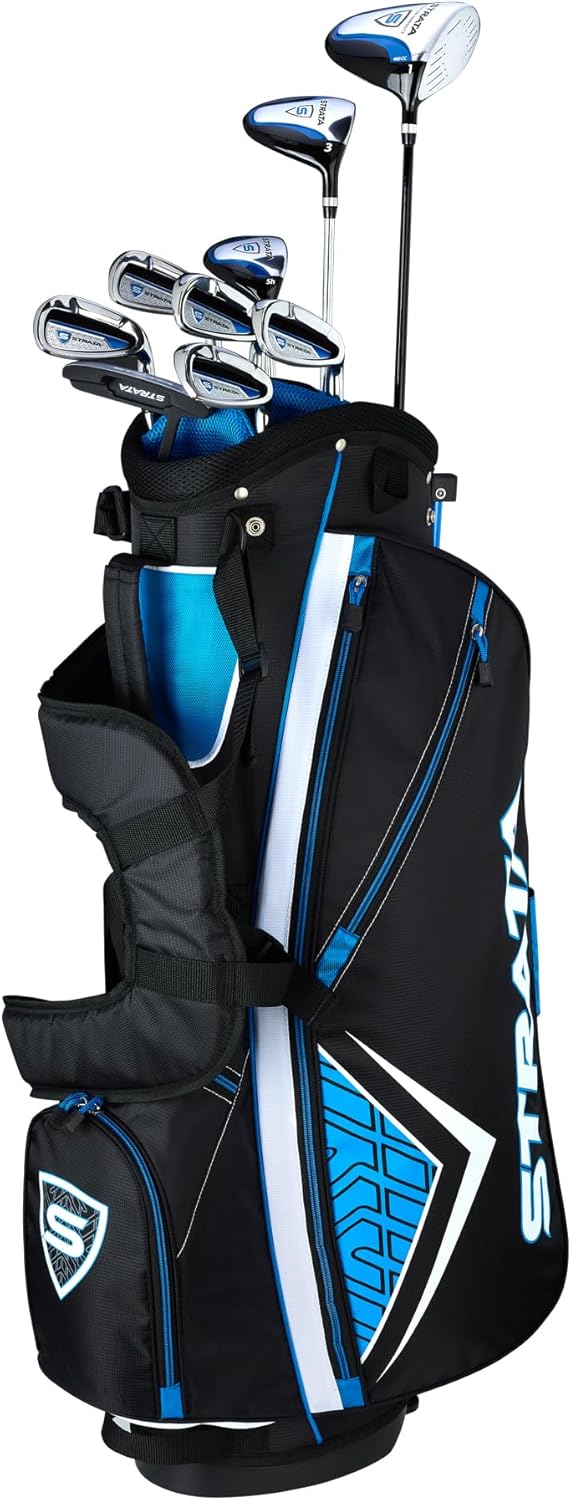
The Callaway Strata has been the go-to recommendation for beginner golfers for years, and for good reason. It consistently ranks as the #1 best-selling complete set on Amazon with over 10,000 reviews and a 4.5-star rating.
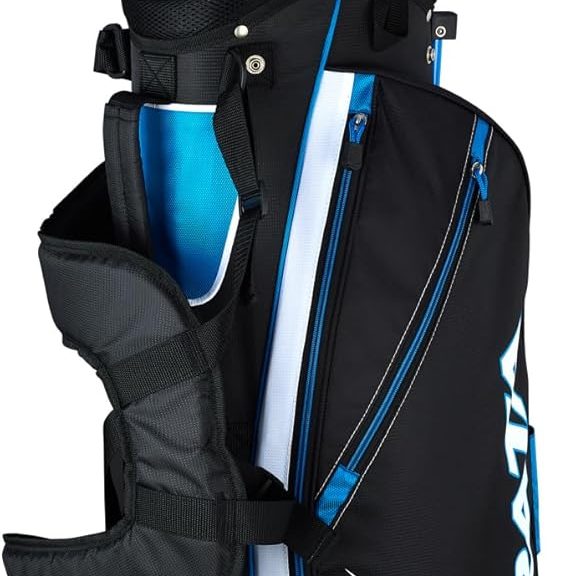
The 12-piece set includes a driver, 3-wood, 5-hybrid, 6-9 irons, pitching wedge, putter, and a stand bag with two headcovers. Callaway has engineered these clubs specifically for forgiveness—the oversized driver and irons have larger sweet spots that help minimize the punishment from off-center hits.
What I like most about the Strata set is the quality-to-price ratio. You’re getting Callaway’s name and engineering at a fraction of what their regular clubs cost. The driver and fairway wood are particularly good for beginners—easy to launch and surprisingly forgiving.
Price: ~$350-400 | Includes: 12 clubs + bag
- The Strata 12-Piece Men's is designed to give you maximum performance right out of the box for more confidence from tee-to-green. The lightweight 460cc forged driver, fairway wood, hybrid, irons and putter make up a set that provides a great combination of distance, forgiveness and control, and is very easy to hit.
Best for Custom Fit: Wilson Profile SGI
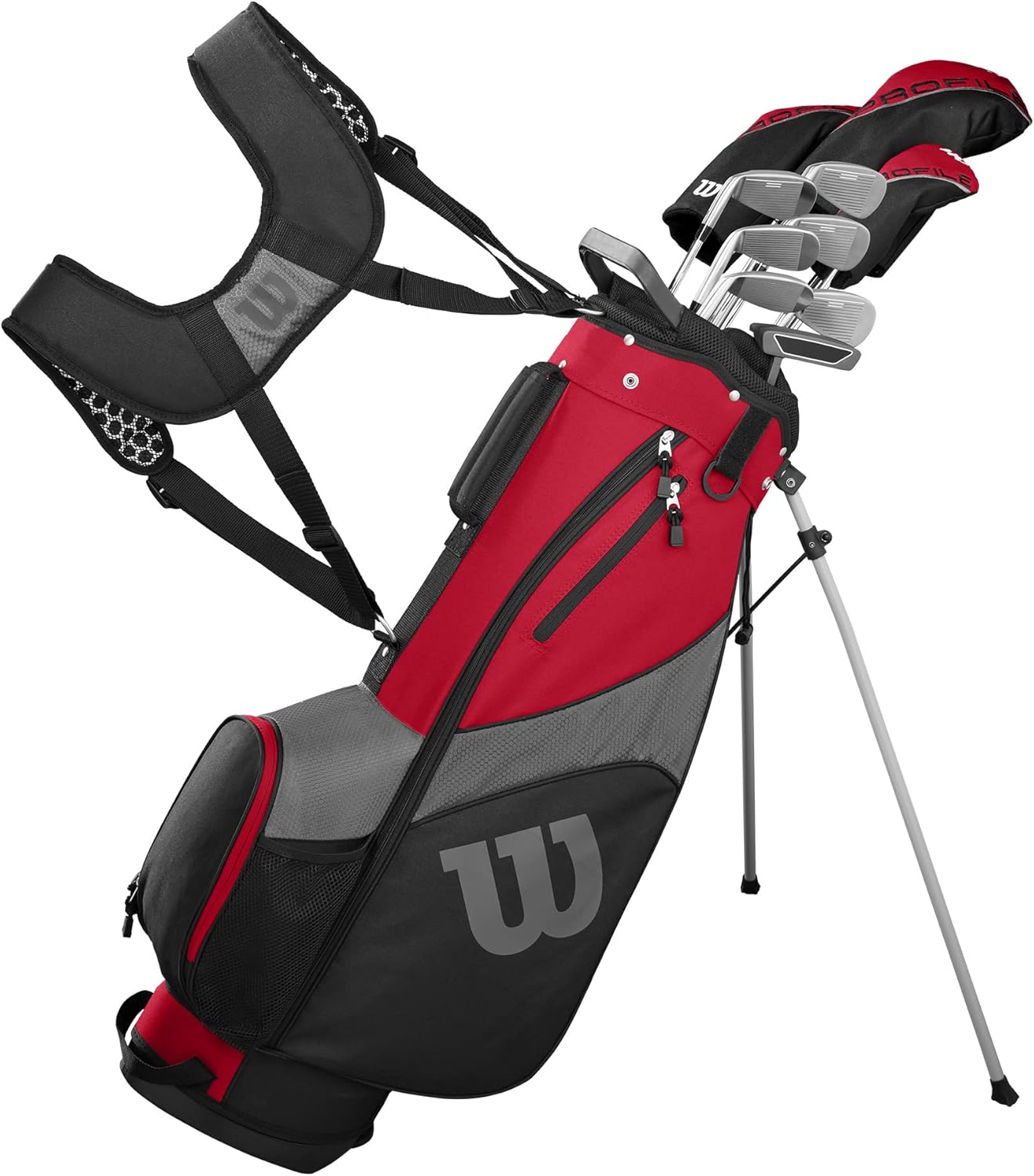
Wilson’s Profile SGI set stands out for one major reason: it’s the only “custom fit in a box” system available. Wilson offers this set in multiple length, flex, and grip size options, so you can get closer to a proper fitting without the custom club price tag.
The SGI (Super Game Improvement) technology in these clubs is designed to make golf easier for high-handicappers. The deep cavity-back irons are extremely forgiving, and the lightweight graphite shafts help generate clubhead speed even with slower swings.
This is an excellent choice if you’re taller or shorter than average, or if you’ve already taken a lesson or two and know you need something specific. The ability to choose your specs puts this set a notch above most competitors.
Price: ~$400-500 | Includes: 11-12 clubs + bag

- Custom fit in a box™ system
- Deep cavity back irons for improved accuracy
- Aggressive design focuses on distance and control
- Engineered for faster swing speeds
- High-launch fairway wood and lightweight stand bag
Best Budget Option: Top Flite XL Complete Set
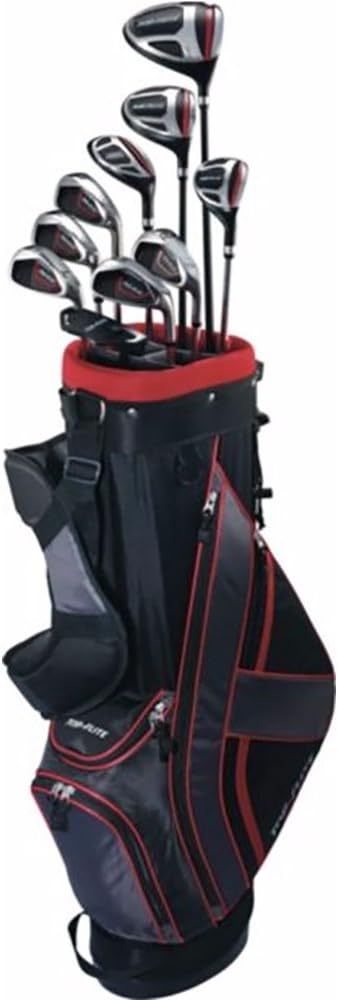
If you want to minimize your initial investment while still getting reliable equipment, the Top Flite XL 13-piece set delivers solid value. It’s typically priced $50-100 less than the Callaway Strata while offering similar specifications.
The set includes a 460cc titanium composite driver, fairway wood, two hybrids, five irons (6-PW), sand wedge, putter, and stand bag. Having two hybrids instead of long irons is particularly helpful for beginners—these clubs are much easier to hit than traditional 4 and 5 irons.
Top Flite is owned by Dick’s Sporting Goods, so you can often find this set in stores where you can actually swing them before buying. Not quite as refined as the Callaway or Wilson sets, but absolutely capable of helping you learn the game without breaking the bank.
Price: ~$300-350 | Includes: 13 clubs + bag
What Clubs Do You Actually Need as a Beginner?
Here’s something most golf stores won’t tell you: you don’t need 14 clubs to start playing golf. In fact, many beginners would be better off with fewer clubs while they’re learning.
The Essential Clubs
If I were building a minimal bag for a true beginner, here’s what I’d include:
- Driver or 3-wood: For tee shots (a 3-wood is actually easier to hit)
- 5 or 6-hybrid: Your go-to club for longer approach shots
- 7-iron: The most versatile iron in the bag
- 9-iron: For shorter approach shots
- Pitching wedge: For chips and short shots around the green
- Sand wedge: For bunkers and higher soft shots
- Putter: Non-negotiable for every round
That’s just seven clubs, and you can absolutely play a full round of golf with them. In fact, some courses offer “short course” rates for golfers carrying fewer clubs.
Why Fewer Clubs Can Be Better
Learning to hit one club well is more valuable than having fourteen clubs you can’t hit consistently. When you limit your options, you spend more time with each club and develop feel and consistency faster.
Many teaching pros recommend beginners start with 7-9 clubs and add more as their skills develop. Complete sets are still a good buy because you have the clubs available when you’re ready for them—just don’t feel obligated to use every club in your bag from day one.
Frequently Asked Questions
How much should I spend on my first golf clubs?
For most beginners, $300-500 hits the sweet spot. This range gets you quality clubs from reputable brands without overspending on features you won’t benefit from as a new golfer. Spending less than $200 often means compromising on quality, while spending more than $500 is usually unnecessary until you’ve been playing for a year or two.
Should beginners use graphite or steel shafts?
Most complete beginner sets come with graphite shafts in the woods/hybrids and steel in the irons. This is a good combination. Graphite is lighter and helps generate more clubhead speed, which is why it’s preferred in longer clubs. Steel provides more feedback and control in shorter clubs. Some senior or ladies sets use graphite throughout, which is fine if swing speed is a concern.
Are expensive clubs really that much better?
For a beginner, honestly not significantly. Premium clubs offer benefits in feel, adjustability, and fine-tuned performance—things that matter more as your swing becomes consistent. A $1,000 driver won’t fix a slice, and a $300 putter won’t hole more putts than a $30 one if your stroke needs work. Invest in lessons before investing in expensive equipment.
Do I need to get fitted for my first set?
A full custom fitting isn’t necessary for beginners and adds significant cost. However, getting basic measurements right—particularly club length based on your height and wrist-to-floor measurement—is helpful. Some brands like Wilson offer sets in multiple lengths, which is a good middle ground. Save the full fitting for when you’re upgrading to your second set.
Can I mix and match clubs from different brands?
Absolutely. Your putter, driver, and wedges can all be different brands if you prefer. Most golfers eventually end up with a mix as they upgrade individual clubs. Starting with a matched set is convenient and ensures consistency, but there are no rules requiring you to play all one brand.
What’s the difference between men’s and women’s clubs?
Women’s clubs are typically shorter, lighter, and have more flexible shafts than men’s clubs. They’re designed for slower swing speeds and smaller frames. However, these are generalizations—a taller woman might do better with men’s clubs, and a smaller man might benefit from women’s specs. Focus on what fits your body rather than the label.
Ready to Hit the Course
Choosing your first set of golf clubs doesn’t need to be overwhelming. Here’s what to do next:
- Set your budget – Aim for $300-500 for the best value-to-quality ratio
- Consider your height – If you’re outside the 5’5″ to 6’1″ range, look for sets with length options
- Pick a quality starter set – The Callaway Strata, Wilson Profile SGI, or Top Flite XL are all solid choices
- Book a lesson – Even one or two lessons will help you more than any equipment upgrade
- Get out and play – Don’t wait until you’re “good enough”—that’s what beginner sets are for
Remember, the best clubs for you are the ones that get you excited to play. Golf is a game you can enjoy for a lifetime, and starting with the right equipment—not the most expensive equipment—sets you up for success.
See you on the first tee.