Best Putters 2026: 7 Top Picks for Any Putting Style
The Right Putter Changes Everything
Here’s a stat that should get your attention: putting accounts for roughly 40% of your strokes in a typical round. You can stripe it all day off the tee and still shoot an 85 if you’re three-putting every other hole. That’s why finding the best putters 2026 has to offer is more important than almost any other club in your bag. We’re not talking marginal gains here — we’re talking about shaving real shots.
The problem is that the market is absolutely packed. Every major brand dropped something new or refined something old this year, and the options go from “entry-level blade” to “AI-designed face insert with a price tag that stings.” So we cut through the noise. We put in the reps with seven of the standout putters available right now — different shapes, different feels, different price points — and this is what we actually think.
Whether you’re a blade purist, a mallet convert, or someone who just wants their ball to go in the hole more often, there’s a pick for you below. Let’s get into it.
Quick Picks: Best Putters 2026 at a Glance
Short on time? Here’s the fast breakdown. We’ll go deep on each one further down, but this table covers who each putter is for and how we’d rate it overall.
| Product | Best For | Our Pick | Price Range |
|---|---|---|---|
| Scotty Cameron Super Select Newport 2 | Straight-back-straight-through stroke, feel addicts | ⭐⭐⭐⭐⭐ Best Blade Overall | Around $400+ |
| TaylorMade Spider GT Rollback | Arc stroke players, high MOI seekers | ⭐⭐⭐⭐⭐ Best Mallet Overall | Around $200–$250 |
| Odyssey White Hot OG #7 | Classic feel + modern forgiveness | ⭐⭐⭐⭐½ Best Mid-Range | Around $140–$180 |
| Cleveland HB Soft Milled | Budget-conscious players wanting milled quality | ⭐⭐⭐⭐½ Best Value Milled | Around $100–$130 |
| Ping PLD Milled Oslo | Tour-level feel, custom fitting fans | ⭐⭐⭐⭐⭐ Best Premium Mallet | Around $350–$400 |
| Odyssey Ai-ONE | High handicappers, mishit forgiveness | ⭐⭐⭐⭐½ Most Forgiving | Around $180–$200 |
| Wilson Infinite Bucktown | Golfers on a tight budget | ⭐⭐⭐⭐ Best Budget Pick | Around $60–$80 |
How We Picked These Putters
We didn’t just look at spec sheets and call it done. We actually spent time with each of these on the practice green and during rounds. Here’s what we were evaluating:
Feel
Feel is subjective, but it matters enormously. The feedback you get through the grip on a struck putt — or a missed putt — tells you a huge amount about what’s happening at impact. We paid attention to whether putters felt solid and muted, soft and cushioned, or somewhere in between. A good-feeling putter builds confidence, and confidence is everything on the greens.
Forgiveness
Unless you’re a scratch golfer hitting the sweetspot 90% of the time, forgiveness should be a major factor in your putter selection. We tested each putter with both centered and off-center strikes to evaluate how much distance and direction suffered on mishits. High-MOI designs (typically mallets) showed a clear advantage here, though some blade putters surprised us.
Alignment Aids
You can have the best stroke in the world, but if you’re aimed two feet right of your line at address, it doesn’t matter. We looked at how each putter’s alignment system worked in practice — whether the lines, dots, or shapes actually translated to consistent setup on the course under pressure.
Value for Money
Price range in this list goes from around $60 to over $400. We’re not here to tell you the most expensive one is the best — that would be lazy. We evaluated each putter against others at a similar price point. Is the Cleveland HB Soft Milled worth it compared to what else you can get for $100–$130? Absolutely. Is the Scotty Cameron worth the premium? For the right player, yes. We’ll break it all down.
Stroke Compatibility
Not every putter suits every stroke. A face balanced putter tends to work better for straight-back-straight-through strokes, while a toe hang putter suits a more arcing stroke. We’ll call this out clearly for each pick so you can match the tool to your actual putting motion.
Best Putters 2026: Full Reviews
Here’s where we get into the real detail. Seven putters, real opinions, no fluff.
1. Scotty Cameron Super Select Newport 2 — Best Blade Putter 2026

- Titleist Super Select Newport 2
- The Newport 2 retains its tri-sole design and incorporates the Tour-inspired I-beam plumbing neck.
- New dual-milled face technology - a milling process inspired by deep milled models, but with a second pass of the mill to level, or smooth, face grooves to deliver the feedback associated with mid-mill putters and a highly consistent putter face
- The Super Select Newport 2 carries through with the line's new graphics, shaft band, headcover and new textured Pistolini Plus grip
If you follow professional golf at all, you already know the Newport 2. This is the putter that’s won more major championships than perhaps any other model in history, and Scotty Cameron’s Super Select version is the most refined iteration yet. It’s the gold standard blade putter — and for the right player, it’s genuinely hard to beat.
The Super Select Newport 2 is built from a 303 stainless steel body, machined to tolerances most manufacturers can only dream about. What sets the Super Select range apart from earlier Scotty Cameron models is the multi-material weight ports — small weight screws in the heel and toe that allow for subtle balance and swing weight adjustments. It’s not a gimmick; the weight placements affect feel and trajectory in meaningful ways.
The face on this thing is sublime. That classic milled finish delivers a sound and feel at impact that’s immediately satisfying. You know instantly whether you’ve struck it pure or caught it slightly off the sweetspot. That feedback is what blade putter fans live for, and the Newport 2 delivers it better than almost anything else out there.
From a stroke compatibility standpoint, this is a toe hang putter with slight toe droop — enough to suit players with a gentle arc in their stroke, but not so dramatic that it becomes difficult for SBST putters to use. A lot of Tour pros who technically have a straight stroke still use this head shape and get on fine. It’s versatile within the blade category.
The price is the honest conversation you need to have with yourself. At around $400 or more depending on where you buy and the shaft/grip configuration, this is a serious investment. You are paying for the craftsmanship, the Tour heritage, and the brand reputation. Is there a cheaper putter that performs as well? For certain players, yes. But if you’re a feel-obsessed golfer who’s tried every other blade and still isn’t happy, the Newport 2 might be the last putter you ever buy.
- Pros: Elite feel and feedback, adjustable weights, proven Tour pedigree, timeless design that holds resale value
- Cons: Premium price point, limited forgiveness compared to mallets, requires a fairly consistent stroke to get the most out of it
Verdict: The best golf putter you can buy if you’re a blade player who prioritizes feel above everything else. Hard to justify for a 20-handicapper, but for mid-to-low handicappers? This is the one.
2. TaylorMade Spider GT Rollback — Best Mallet Putter 2026

- with non matching headcover
- Choose Hand: Right or Left
- Choose Length: 33, 34, 35, or 36 Inches
- Slant Neck
TaylorMade’s Spider line has been a Tour staple for years, and the Spider GT Rollback represents the latest evolution in their pursuit of maximum forgiveness and consistent ball roll. If you’ve been on the fence about switching from a blade to a mallet putter, this is the one that might finally push you over.
The headline feature on the GT Rollback is Pure Path technology — a face and hosel design engineered to produce a more consistent ball start line across the entire face, including on those slightly mishit putts where a lesser putter would send your ball spinning offline. Combined with the high-MOI body design, this thing is remarkably stable through impact.
The construction is an aluminum frame with a steel sole insert — a smart combination that keeps weight low and toward the perimeter (maximizing MOI) while maintaining the dense feel that better players want from a golf putter. It’s a true face balanced putter, meaning the face points straight up when you balance the shaft on your finger. That makes it ideal for straight-back-straight-through stroke players or arc players who want the putter face to do less rotating through the ball.
Alignment is excellent. The triple-track lines across the top of the head are some of the clearest alignment aids available, and they make it noticeably easier to set up square on straight putts and read the break on angled ones. TaylorMade clearly put thought into how the visual look at address translates to actual lined-up putts.
At around $200–$250, the Spider GT Rollback sits in that sweet spot where the technology is genuinely meaningful and the price isn’t completely terrifying. You’re getting Tour-level engineering without the Tour-level price tag of a Cameron or Ping PLD.
- Pros: Outstanding forgiveness, excellent alignment aids, face-balanced design, proven technology used by Tour pros, strong value at the price point
- Cons: Mallet shape isn’t for everyone aesthetically, larger putter head can feel unwieldy for players used to blades
Verdict: Among the best putters available in 2026 for players who want max forgiveness without sacrificing tech or feel. If you’re a habitual three-putter, this putter could genuinely change your game.
3. Odyssey White Hot OG #7 — Best Mid-Range Putter 2026

- Item Package Dimension: 36.3L x 6.9W x 3.2H inches
- Item Package Weight - 1.45 Pounds
- Item Package Quantity - 1
- Product Type - GOLF CLUB
The White Hot insert is one of the most storied technologies in putting history. When Odyssey brought it back for the White Hot OG line, the golf world paid attention — and for good reason. The #7 model takes that legendary insert putter feel and wraps it in a semi-mallet head shape that bridges the gap between old-school blade aesthetics and modern forgiveness.
The “7” in the name is a reference to the head shape — it’s reminiscent of a 7-iron sole when you look at it from behind at address. It gives the putter a bit more footprint than a traditional blade (adding some stability) without going full mallet. It’s a surprisingly versatile shape that looks clean and uncomplicated behind the ball.
The White Hot insert itself is the star. It’s a soft polymer insert that produces a muted, cushioned feel at impact — the kind of feel that makes you want to putt all day. The sound is softer than a steel-faced putter, and the ball seems to just roll off the face rather than pop off it. Distance control becomes more intuitive because the feel gives you so much feedback about how hard you hit it.
The #7 has slight toe hang, which suits a gently arcing stroke well. It’s forgiving enough that SBST players can use it too — the insert and the semi-mallet shape give you some margin for error. At around $140–$180, this is one of the strongest value propositions in the best putters category.
The alignment on the OG #7 is simple but effective — a single white line down the center of the top flange. Not overly fussy, gets the job done. Some players want more elaborate alignment systems; others prefer clean and simple. This is firmly in the latter camp.
- Pros: Legendary White Hot insert feel, great mid-price value, versatile semi-mallet shape, simple clean look, approachable for all handicap levels
- Cons: Alignment is minimal compared to competitors, not as forgiving as a full mallet, insert feel isn’t for everyone
Verdict: If you love classic feel but need a little more help than a pure blade offers, the White Hot OG #7 is the sweet spot. One of the best putters under $200 you’ll find anywhere. Pair it with some of the best golf grips on the market and this setup punches well above its price tag.
4. Cleveland HB Soft Milled — Best Value Milled Putter 2026

- MILLED HEADS - First cast, then CNC Milled for precise weighting and crisp lines. It’s smarter milling that reduces waste for an attainable cost.
- SPEED OPTIMIZED FACE TECHNOLOGY - Ensures consistent speed control and distance performance by normalizing ball speed across the face of the Putter. Now with more responsive feel.
- STROKE-FIT ALIGNMENT & GRIP - Each shape features a specific alignment scheme and grip designed to fit the stroke of that Putter.

Here’s the honest truth about milled putters: five years ago, if you wanted a CNC milled face, you were spending $300 minimum. The Cleveland HB Soft Milled changed the conversation. This thing delivers genuine milled performance at a price that won’t make your wallet cry, and that’s worth celebrating.
The face is CNC milled with deep speed-optimized grooves and a HydroBlast surface finish — a micro-blasted texture that Cleveland developed to promote a more consistent, end-over-end roll right from impact. Most players don’t think about what happens in the first six inches after the ball leaves the face, but that’s where a lot of puts go wrong. The HydroBlast finish genuinely helps here.
The milling on the face isn’t just for show. Those grooves actually promote topspin faster at impact, which means the ball gets into its rolling motion quicker and is less susceptible to skidding off line on slightly off-center hits. It’s the same philosophy Tour players benefit from on $400+ putters — just delivered at around $100–$130.
The HB (Huntington Beach) line has always been Cleveland’s precision-focused offering, and the Soft Milled name is accurate — there’s a softer, more muted feel here than you’d get from a purely steel face. The milling takes some of the sharpness off the impact sound without eliminating that satisfying feedback you want from a milled surface.
The shape is a traditional blade-to-mid-blade design, clean and workmanlike. Nothing flashy, but honest. The alignment lines are functional without being distracting. If you’re a no-frills golfer who just wants a well-made, well-performing putter at a price that makes sense, the HB Soft Milled is genuinely hard to beat.
- Pros: CNC milled face at an exceptional price, HydroBlast surface for consistent roll, solid feel, clean design, great for developing golfers and budget-conscious players alike
- Cons: Limited head shape options, less brand cachet than Scotty or Ping, not as much MOI as full mallet designs
Verdict: One of the most overachieving putters on this list. At around $100–$130, you’re getting tour-quality milling for a fraction of the price. If you’ve always wanted a milled putter but couldn’t stomach the premium prices, this is your answer.
5. Ping PLD Milled Oslo — Best Premium Mallet Putter 2026
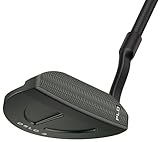
- PLD Milled Oslo 3 Gun Metal
- "Graphite"
- Putterflex
- Standard
Ping’s PLD (Putting Lab Design) line is their statement that they’re serious about the premium end of the putter market — and the Oslo model is one of the most impressive pieces of engineering in golf right now. This is a putter designed from the ground up for golfers who want a tour-quality instrument with genuine customization options, and it delivers on every promise.
The Oslo starts with a 303 stainless steel body — the same high-grade steel used by Scotty Cameron and other premium makers — precision milled to exacting tolerances. The subtle geometric design on the top of the head is distinctive without being distracting, and it looks absolutely stunning at address. This is a putter that feels like a precision tool the moment you pick it up.
What sets the PLD Milled Oslo apart from most putters at this price point is the WRX sole insert. This is a sole channel that Ping designed specifically to tune the sound and feel at impact — the cavity behind the face interacts with the sole material to create a feel profile that’s been tuned in Ping’s putting lab. The result is a sound and sensation that’s rich and solid without being harsh.
Ping also offers genuine custom fitting for the PLD line — loft, lie, length, grip, and shaft options that most manufacturers either don’t offer or charge significantly extra for. For serious golfers who’ve had a proper putter fitting, this matters. You’re not just buying a putter off the rack; you’re getting something dialed into your setup.
Ping staff players put this one through its paces on Tour, which isn’t just marketing — it means the design has survived real-world scrutiny at the highest level. The Oslo is a mallet putter design with enough visual stability to inspire confidence, plus alignment features that work well on both straight and breaking putts.
- Pros: Premium milled feel and construction, WRX sole for sound/feel tuning, genuine Tour-level pedigree, excellent custom fitting options from Ping, stunning looks
- Cons: Expensive at around $350–$400, custom fitting requires a fitting appointment for best results, less widely available than mass-market putters
Verdict: For the serious golfer who wants the best putters 2026 has to offer in the premium mallet category, the Ping PLD Milled Oslo is right at the top. Pair it with a proper fitting and you’ve got a putter that could genuinely be in your bag for the next decade.
6. Odyssey Ai-ONE — Most Forgiving Putter 2026

- Ai-ONE Insert. Designed using Artificial Intelligence, we’ve created contours on the aluminum backer of the insert to promote consistent ball speed across the face. We’ve co-molded a grooved White Hot urethane layer into that aluminum backer for the classic White Hot feel that Tour players and amateurs love.
- Ai Window. Our designers and engineers developed a Panlite window, which is a unique automotive grade polymer, that allows us to showcase the unique topology of the back of the insert.
- SL 90 Shaft. A lightweight steel shaft with 20-30 grams (depending on the grip) of counterbalance weight in the butt end. This is an evolution of our Stroke Lab Weighting that will appeal to even more golfers.
- Unique Navy Blue PVD Finish. These putters all feature a beautiful navy blue PVD finish that really sets them apart and gives them a premium look.
- Interchangeable Front Weights. Available in 5, 10, 15, and 20 grams these removable weights allow you to dial in your head weight to your exact preference.
Artificial intelligence has made its way into putter design, and Odyssey’s Ai-ONE is the proof. The face insert on this putter was designed with machine learning — Odyssey used AI to analyze thousands of data points about off-center hits, ball speed, and roll consistency to engineer a face that’s genuinely more forgiving than anything they’ve built before. That’s a bold claim, and in our testing, it mostly holds up.
The Ai-ONE face insert is a multi-layer construction with variable thickness zones across the face. The AI-optimized design means the zones that golfers most commonly miss-hit are specifically engineered to recover more ball speed and direction than a conventional insert putter face would. On putts struck toward the toe or heel, the difference in distance variance between the Ai-ONE and a standard insert is noticeable.
This is a massive mallet putter head — seriously, it’s one of the bigger heads on the market — and the size isn’t just for show. The extreme perimeter weighting creates an MOI that’s among the highest we’ve tested. Miss-hits that would have been obvious with a blade barely register as off-center with the Ai-ONE. If you’re someone who struggles with consistency off the face, this putter is genuinely built for you.
The alignment aids are excellent, featuring Odyssey’s triple-track system that gives you multiple reference lines to square up your aim. At address, the visual footprint is confidence-inspiring — there’s a lot of putter head back there, and it looks stable even before you’ve taken the putter back.
At around $180–$200, the Ai-ONE sits at a price point that makes the technology genuinely accessible. You’re getting real AI-driven engineering at a fraction of what you’d expect to pay for anything described as “AI-designed.” This is without question one of the best putters for high handicappers in 2026, and it’s worth checking out the full Odyssey 2026 putters lineup if you’re shopping in this range.
- Pros: AI-engineered face insert for maximum forgiveness, huge MOI head, excellent alignment system, accessible price for the technology, ideal for inconsistent putters
- Cons: Very large head shape isn’t for everyone, minimal feedback on mishits (which is a feature for some, a drawback for feel-seekers), can feel bulky compared to blades
Verdict: The best option on this list for golfers who consistently mishit putts and want technology to cover for them. The AI-designed face is a real engineering advancement, not just a marketing term, and the forgiveness shows up in practice.
7. Wilson Infinite Bucktown — Best Budget Putter 2026

- Wilson 2024 Infinite Bucktown Golf Putter - Men's Right Hand, 34"
- DOUBLE-MILLED FACE: Our double-milled face pattern ensures a consistent feel, roll and perfect distance control no matter the strike location.
- FOCUS ACTIVATION PARALLEL ALIGNMENT LINES: A thick middle line, with two thinner support lines to either side, optimizes focus allowing you to get dialed in on every single putt.
- PVD ANTI-GLARE FINISH: Two tone PVD anti-glare finish reduces distraction, allowing the player to focus solely on the ball as it falls into the hole.
Not everyone can drop $300 on a putter, and honestly, you don’t need to. The Wilson Infinite Bucktown proves that a well-designed, properly built mallet putter can be had for around $60–$80 without making any embarrassing compromises. This is the budget pick that actually earns its place on a list of the best putters — not a charity inclusion.
The Bucktown uses Wilson’s Infinity Edge design — a perimeter weighting system that pushes mass to the extreme edges of the putter head, maximizing MOI within the mallet form factor. The result is a golf putter that’s remarkably stable on mishits for its price class. We’ve tested “value” putters that punish you on off-center strikes; the Bucktown isn’t one of them.
The face is machine-milled, which is noteworthy at this price. You’re not getting CNC milled to the same tolerances as the Cleveland HB Soft Milled, but the face is consistent and the roll it promotes is clean. The ball comes off the face with good speed consistency across the face, which is genuinely all you need for a recreational game.
The head shape is a proper mallet — the kind that inspires confidence at address, with a clear sightline and alignment aid that’s simple but functional. The overall aesthetic is clean and modern without trying too hard to look expensive. It looks like a solid golf putter at address, and that matters for confidence.
Beginners, juniors, weekend warriors, or anyone who doesn’t want to invest seriously in their bag right now will find the Bucktown a totally honest option. There’s no shame in playing a Wilson putter — the company has been making quality equipment for over a century, and the Infinite line takes their heritage seriously.
- Pros: Exceptional value at around $60–$80, Infinity Edge design for solid forgiveness, machine-milled face, clean mallet look, great for beginners and casual golfers
- Cons: Not as refined as premium options, less feedback and feel than milled putters higher on this list, limited shaft/grip customization
Verdict: The best budget putter in 2026 isn’t a compromise — it’s a genuinely good golf putter at an accessible price. If you’re new to the game or just don’t want to spend big on the flatstick, the Wilson Infinite Bucktown is where to start.
How to Choose the Right Putter
We’ve given you seven solid options. Now let’s help you figure out which one actually belongs in your bag. Here’s what you actually need to think about:
Understand Your Stroke Type First
This is non-negotiable. If you don’t know whether you have an arcing stroke or a straight-back-straight-through stroke, get yourself to a practice green and watch what your putter does naturally. Better yet, get a putter fitting — many golf shops offer them free or for minimal cost. The USGA’s rules on equipment define legal putter conformance, but within those parameters, there’s a huge range of options.
As a general rule: if your stroke arcs, look for a toe hang putter. If you putt more straight, go face balanced putter. Getting this right is more important than brand or price.
Blade vs. Mallet: Know What You’re Getting
A blade putter is small, compact, and gives you maximum feedback — both on good strikes and bad ones. It rewards consistency but punishes inconsistency. Typically better for lower handicappers with repeatable strokes.
A mallet putter has more mass, higher MOI, and more forgiveness on mishits. The alignment aids are usually more elaborate. Better for golfers who want help squaring the face and recovering from off-center strikes. This is why most instruction advice pushes mid-to-high handicappers toward mallets.
Don’t Ignore Putter Length
Standard putter length is 34 or 35 inches, but that might not be right for you. If you’re hunched over the ball, you might need a shorter putter. If you’re tall and upright, you might need something longer. Your eyes should be directly over or slightly inside the ball at address — if they’re not, the length is probably wrong.
Feel Is Personal — Trust Yours
You can read every review on the internet and still make the wrong choice if you don’t get your hands on the putter. Before you buy anything on this list, try to hit some putts with it. Whether that’s at a store demo day, a fitting, or borrowing one from a buddy on the range — actual hands-on time with a golf putter is irreplaceable. Working on your technique? Check out the best golf training aids to complement whatever putter you choose.
Budget Honestly
There’s a real performance gap between a $70 putter and a $200 putter. The gap between a $200 putter and a $400 putter is mostly feel, brand prestige, and incremental refinement. Set your budget, identify the best putters in that range, and don’t guilt yourself into overspending. The most expensive putter doesn’t make the most putts — the right putter for your stroke does.
Putter FAQs
What’s the difference between a blade and a mallet putter?
A blade putter is the traditional style — compact, minimal, and precise. It has a thin profile and a small putter head. A mallet putter is larger with more mass spread around the perimeter of the head, creating higher MOI and more stability on off-center hits. Blades tend to suit better players with consistent strokes; mallets are generally more forgiving and suit a wider range of golfers. Most modern mallet designs are also easier to align at address.
What is a face balanced putter and who should use one?
A face balanced putter is one where, when you balance the shaft on your finger, the face points straight up toward the sky. This means the face has no tendency to rotate open or closed during the stroke. Face balanced putters are best suited for golfers with a straight-back-straight-through stroke, where the face stays square throughout. If you have a pronounced arc in your stroke, a toe hang putter — where the toe drops toward the ground when balanced — will typically suit you better because it naturally wants to rotate open and then square through impact, matching your stroke path.
How often should I replace my putter?
Putters last essentially forever from a durability standpoint — unlike irons and wedges, the face doesn’t wear out significantly with normal use. Most golfers should replace their putter when either: (a) the putter no longer suits their stroke after the stroke has evolved, (b) they get professionally fitted and discover a better option, or (c) their mental relationship with the putter has gone sour (more common than you’d think). If you’re putting well and you love your putter, don’t fix what isn’t broken. Upgrading the rest of your equipment with something like the best game improvement irons might yield bigger score improvements anyway.
Does putter fitting actually matter?
Yes, more than most golfers realize. The key fitting variables are length, loft, lie angle, and head style/weight. Many amateur golfers play putters with the wrong lie angle, which means the toe or heel is digging into the turf at address and the face direction isn’t what they think it is. Getting fitted for loft matters too — dynamic loft at impact affects whether the ball skips and skids or rolls immediately. The best putters in the world won’t perform to their potential if they’re not fitted to your setup. Even a basic fitting at a good pro shop can make a meaningful difference.
Final Verdict
After spending real time with all seven of these, here’s the bottom line on the best putters 2026 has available:
If budget isn’t a concern and you’re a feel-first blade player, the Scotty Cameron Super Select Newport 2 is still the gold standard. Nothing else in the blade category comes close for pure sensory feedback and Tour-tested refinement.
For mallet players who want the best combination of forgiveness and technology without paying Scotty money, the TaylorMade Spider GT Rollback is our top overall pick. The Pure Path technology is real, the MOI is genuinely impressive, and the price is fair.
The Ping PLD Milled Oslo is the premium mallet for serious golfers who want custom fitting and tour-level engineering in a precision package. If you’re investing in your game long-term, this is money well spent.
Mid-range? The Odyssey White Hot OG #7 remains one of the best putters you can buy for around $150. That insert feel is worth paying for. And if you want a milled face without the milled price, the Cleveland HB Soft Milled is a legitimately great golf putter at a price point that’s hard to argue with.
High handicappers who need maximum forgiveness should seriously consider the Odyssey Ai-ONE. The AI-designed face insert isn’t marketing fluff — it shows up in performance. And if you’re on a tight budget, the Wilson Infinite Bucktown is a proper putter that punches well above its weight class.
Whatever you choose, make sure it fits your stroke. The right technique plus the right putter is the formula — not just the most expensive one. While you’re upgrading your short game, don’t overlook how much grip choice affects feel and control; our guide to the best golf grips is worth a read. And if you want to build a complete game overhaul, our breakdown of the best golf balls for distance will help you dial in from tee to green.
Now go make some putts.
You Might Also Enjoy
- Odyssey 2026 Putters Review — Full breakdown of every new Odyssey model this year, including the Ai-ONE and White Hot OG lineup
- Best Golf Grips 2026 — The right grip transforms how any putter feels in your hands. Here are the top picks for every player type
- Best Golf Training Aids 2026 — The tools that actually help you build a better stroke on and off the course
- Best Game Improvement Irons 2026 — Once your putting is sorted, here’s how to upgrade the long game
- Best Golf Balls for Distance 2026 — Because the right ball matters from the tee box all the way to the cup