Best Golf Wedges 2026: 7 Top Picks for Every Skill Level
Why Your Wedge Game Is Costing You Strokes (And How to Fix It)
Here’s the honest truth about golf: most amateur rounds aren’t lost on the tee box or even in the fairway. They’re lost inside 120 yards. That chip that rolls off the green. The flop you skulled over the back. The bunker shot that took three tries. Sound familiar? I’ve been there, and so has every golfer who’s walked off an 18th green thinking “I left at least five shots out there.”
The wedge is the single most important scoring club in your bag. Full stop. Your driver is fun, your irons set the table, but your wedges are where strokes are made or thrown away. A great wedge gives you spin, stopping power, versatility, and — most importantly — the confidence to attack pins instead of laying up to the safe side of the green every time.
For 2026, the wedge market is stacked with serious options across every price point and skill level. Whether you’re a mid-handicapper looking to stop chunking your chips or a low-handicap player who needs tour-level spin and control, there’s something on this list for you. I’ve spent time with all seven of these clubs — on range mats, tight fairways, and fluffy bunker sand — so let me break down exactly what each one does well, who should buy it, and who should pass.
Before we get into the picks, here’s a quick checklist of what actually matters when shopping for a wedge:
- Loft: You need gaps of roughly 4–6 degrees between wedges. A 46° pitching wedge followed by a 52° gap wedge, a 56° sand wedge, and optionally a 60° lob wedge is the classic setup.
- Bounce: Low bounce (4–6°) is better for firm conditions and players with a shallow attack angle. High bounce (10–14°) helps in soft conditions and for players who dig into the turf.
- Grind: The sole shape affects how the club interacts with the turf. More grind = more versatility for creative shots. Less grind = cleaner contact on firm surfaces.
- Groove technology: Raw faces rust over time and actually grip the ball better. Finished chrome looks cleaner but may sacrifice a bit of spin longevity.
- Feel: This is personal, but if a wedge doesn’t feel right in your hands at impact, you won’t trust it. And an untrusted wedge is a handicap, not a tool.
Alright, let’s get into the picks. Here’s what I think are the seven best golf wedges heading into 2026.
Quick Comparison: 2026 Best Golf Wedges at a Glance
| Wedge | Type | Loft Featured | Bounce | Price Range | Best For |
|---|---|---|---|---|---|
| Titleist Vokey SM10 Tour Chrome | Tour / Blade | 56° | 10° (M grind) | $179–$200 | Low-to-mid handicappers who want max spin |
| Cleveland RTX 6 Zipcore Tour Satin 52° | Tour / Mid | 52° | 10° | $150–$175 | All skill levels, gap wedge specialist |
| Callaway Jaws RAW Chrome 60° | Tour / Blade | 60° | 8° (S grind) | $170–$190 | Skilled players needing lob shot versatility |
| TaylorMade Milled Grind Chrome 52° | Tour / Milled | 52° | 9° | $180–$200 | Better players chasing tour-level precision |
| Cleveland CBX4 Zipcore 58° | Game Improvement | 58° | 11° | $130–$160 | Mid-to-high handicappers, easy forgiveness |
| Cleveland CBX4 Zipcore 56° | Game Improvement | 56° | 13° | $130–$160 | High-bounce players, soft conditions |
| TaylorMade Milled Grind 5 Black 56° | Tour / Milled | 56° | 12° (SB grind) | $190–$210 | Aggressive diggers, versatile sand play |
The 7 Best Golf Wedges for 2026: Full Reviews
1. Titleist Vokey Design SM10 Tour Chrome 56° — The GOAT of Sand Wedges
If you’ve played golf for more than a year, you already know the Vokey name. Bob Vokey has been shaping wedges that tour players trust with their livelihoods, and the SM10 is the latest evolution of that legacy. The SM10 Tour Chrome 56° is the sand wedge that belongs in just about every serious golfer’s bag. It’s not the flashiest, it’s not the cheapest, but when you need a wedge that delivers tour-level spin with predictable ball flight from a range of lies, this is the one you reach for.
What’s new in the SM10? Titleist has refined the progressive center of gravity across lofts, so the 56° version gives you a slightly lower CG than the SM9, which translates to a higher launch from tighter lies. The micro-groove pattern in the face is still one of the best in the business — those sharp, aggressive grooves grip the ball and generate spin even from light rough. The M grind on this version (medium bounce, mid-level sole relief at the toe and heel) makes it one of the most versatile all-around grinds Titleist offers. It handles a full swing, a chip-and-run, a standard bunker blast, and even a halfway-decent flop if you’re confident opening the face.

- Chrome Finish
- 2025 Model
- BV Wedge Flex
What I love:
- Spin. Serious, stopping spin. On a crisp strike from 80 yards, this thing bites and doesn’t move.
- The feel at impact is soft but connected — you can hear and feel exactly how pure the strike was.
- The M grind handles everything from fluffy bunker sand to tight hardpan better than most.
- Available in a massive range of lofts and grinds so you can build out a full Vokey set if you want.
What’s not perfect:
- It’s a blade, and blades don’t love miss-hits. If you frequently catch it thin or fat, you’ll feel every single one.
- Price is premium — this is a “you get what you pay for” club, but it stings a little at checkout.
Who should buy it: Single-digit to mid-handicap golfers who want the best short game tool money can buy. If you’re a 15+ handicap who’s still learning impact position, this isn’t your club — the CBX4 further down this list is a better fit. But if you’re shooting in the low-to-mid 80s and want to get to the 70s, the Vokey SM10 is how elite short game starts.
2. Cleveland RTX 6 Zipcore Tour Satin 52° — The Gap Wedge That Does Everything
The gap wedge is the most underrated club in most amateur bags. It lives in that awkward zone between your pitching wedge and sand wedge — usually 100 to 115 yards for most players — and it’s often an afterthought. Throw whatever came with your iron set in there and forget about it. That approach is costing you strokes, and the Cleveland RTX 6 Zipcore in 52° is the fix.
Cleveland has been one of the most consistent wedge manufacturers for decades, and the RTX 6 Zipcore is genuinely one of their best efforts yet. The “Zipcore” refers to a lightweight, low-density core material that runs down the center of the club, shifting weight to the perimeter and lower in the head. The result is a higher MOI than you’d expect from what looks like a blade-style wedge. You still get tour-level spin from the laser-milled face, but miss it slightly toward the toe and the ball still behaves — it doesn’t go sideways on you.
The Tour Satin finish is also worth mentioning. It looks sharp, it reduces glare at address, and it will gradually develop a patina that many players — myself included — love. It’s not a raw face, so you won’t get quite the friction of bare steel over time, but out of the box it’s a seriously grippy face.
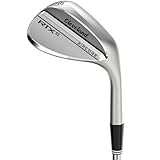
- HydraZip A new, dynamic blast and laser-milled line system creates roughness to enhance friction—maximizing spin in any conditions and from anywhere around the green. Visually, RTX 6 ZipCore Wedge faces are more matte than last generation, reducing glare at address and standing out more from the hosel and toe par.
- ZipCore Our proprietary, low-density core technology has exponentially evolved for RTX 6 ZipCore, with up to 95% more ZipCore material. And by setting the CG right where you strike the ball, plus increasing MOI by up to 20%, this generation offers players increased spin, distance, consistency, feel, and control on every shot.
- UltiZip UltiZip features grooves that are sharper, deeper, and more tightly spaced. They slice through debris and bite harder for enhanced spin and control; channel more debris for better shot consistency; and are set closer together (compared to past TourZip Groove designs) so we can fit two more on the face for greater edge contact and absolute spin performance.

What I love:
- The Zipcore technology genuinely makes this more forgiving than a traditional blade gap wedge — toe strikes are manageable.
- Versatile enough for a full swing gap shot, a punch shot under trees, or a 70-yard finesse pitch.
- That Tour Satin finish ages beautifully and plays well in all lighting conditions.
- Excellent value for the quality — this is near tour-level performance at a mid-market price.
What’s not perfect:
- At 52°, this is specifically a gap wedge — you’re not building your full short game around this club alone. You’ll need something in the 56–60° range alongside it.
- The face doesn’t have the raw steel bite that the Callaway Jaws RAW has fresh out of the box.
Who should buy it: Basically everyone. Seriously. If you don’t have a dedicated gap wedge or you’ve been playing with a stock one that came with your iron set, the RTX 6 Zipcore 52° is one of the smartest upgrades you can make. Works for mid-handicappers all the way down to scratch players who just need a reliable workhorse in that 100–115 yard range.
3. Callaway Jaws RAW Chrome 60° — Ridiculous Spin, Built for Lob Specialists
The name “JAWS” is not marketing fluff. The Callaway Jaws RAW is legitimately one of the spiniest, most aggressive lob wedges available to recreational golfers, and the 60° version is the one tour players have been sneaking into their setups for exactly the shots you see on TV — the high, soft lob that lands and stops like it hit concrete. If you’ve ever wanted to throw a 60° shot up near a pin and watch it check up, this is your club.
The “RAW” part of the name is key. Callaway intentionally leaves the face on this wedge without a rust-resistant coating. The bare carbon steel face oxidizes over time, developing a natural rust that actually increases surface friction and spin. Right out of the box, the face is already extremely aggressive. After a few weeks of play, it gets even grippier. It’s one of the few wedge innovations in recent years that genuinely backs up the marketing claims with real-world results.
The S grind on this 60° version gives you a relatively narrow sole with moderate toe relief, which makes it easy to open the face for flop shots without the leading edge digging in. That said, this is absolutely a shot-maker’s wedge. If you open the face on a flop shot, you need to know what you’re doing — this club will do exactly what you tell it to, for better or worse.

- Innovative JAWS groove designed with extremely sharp edge radius to impart more spin for precise control.
- Shaped by Roger Cleveland, these premium heads exude quality and superiority from every angle, while also delivering a soft and satisfying feel no other wedge can match.
- The popular S and W grind are available in a multitude of loft and bounce combinations
- Head shaping progresses from traditional shaped lob and sand wedges to a compact player preferred design in the gap wedge.
What I love:
- The RAW face spin is the real deal — even from light rough, this thing grabs the ball like Velcro.
- Incredibly versatile in the short game — bump-and-runs, flops, bunker blasts, half shots. It handles everything a 60° should handle.
- The look of that raw face aging into rust is legitimately cool, and the performance gets better over time.
- The S grind is a great all-around grind for average conditions and medium attack angles.
What’s not perfect:
- This is not a forgiving wedge. A mishit with a 60° lob wedge can go anywhere, and the Jaws RAW punishes bad technique.
- The raw face requires a bit more maintenance attention — rinse it off after rounds and dry it to control the rust. A little rust is good; a lot of rust is a mess.
- 60° is a specialty club. Some golfers can live without it. If you’re a high handicapper, save your money and invest it in a better 56° instead.
Who should buy it: Low handicappers and mid-handicappers with strong short game fundamentals who want maximum spin control around the greens. If you’ve mastered the basic chip and standard bunker shot and you’re ready to add the lob wedge to your arsenal, this is one of the best 60° options on the market. Don’t buy this as your first dedicated wedge.
4. TaylorMade Milled Grind Wedge Chrome 52° — Precision-Engineered for Better Players
TaylorMade doesn’t mess around when it comes to the Milled Grind line. Every face on these wedges is individually milled — meaning a CNC machine carves the grooves and face texture on each club individually rather than stamping them out. The result is a level of consistency from club to club that you can feel: every Milled Grind 52° should play identically to the next one. That kind of precision matters when you’re dialing in distances and trying to repeat shots under pressure.
The Chrome 52° is a sharp-looking gap wedge with a classic blade profile. If you look at it behind the ball, there’s nothing fancy going on — just a clean, traditional shape that inspires confidence at address. But it’s the performance off the face that earns the price tag. The milled face texture combined with the sharp groove edges produces exceptional spin rates, and the 52° loft makes this a genuine weapon from 95 to 115 yards depending on your swing speed.
At 9° of bounce, this version sits in that comfortable middle ground — it’s not so low that you’ll dig trenches on firm fairways, and it’s not so high that you’ll struggle from tight lies. The chrome finish keeps it looking clean and premium round after round.

- Milled Grind soles ensure precision where it matters most. The milling process maximizes consistency, maintaining tolerance levels difficult for a human to repeat.
- Mass placement higher in the club head for enhanced feel while raising the center of gravity (CG) for controllable launch angle with high spin rates for precision wedge control.
- Machine milled face and grooves enhance spin for consistent control from any lie.
- A classic full sole design with constant trailing edge relief. Tour proven 4-way camber with versatility is designed for most swing types who commonly play with the face square to the target.
What I love:
- The individual CNC milling means face consistency is genuinely excellent — you know what you’re getting every time.
- Classic, clean address look. No gimmicks, no funky shaping — just a proper wedge profile.
- The 9° bounce is a great sweet spot for most course conditions and swing types.
- Spin rates are legitimately tour-level — distance control from 100 yards is outstanding.
What’s not perfect:
- It’s a premium-priced blade — better players only. High handicappers won’t get the most from this club.
- Chrome finish means no natural rust enhancement over time — spin performance may decline slightly after heavy use compared to a raw face.
Who should buy it: Single-digit handicappers and strong mid-handicappers who want a precision gap wedge that matches the quality of a tour-level set. If you’ve already got a great sand wedge and you want a gap wedge that can keep up, the TaylorMade Milled Grind Chrome 52° is a serious contender.
5. Cleveland CBX4 Zipcore Tour Satin 58° — The Best Game-Improvement Wedge for Mid-Handicappers
Okay, let’s talk about the golfer who needs forgiveness but doesn’t want a wedge that looks like it was designed for a total beginner. The Cleveland CBX4 Zipcore line threads that needle beautifully. The CBX4 has a wider sole and more perimeter weighting than the RTX 6, which makes it significantly more forgiving on off-center hits — but it still looks like a real wedge, not a chipper with a cartoon sole.
The 58° version is the lob-to-sand wedge angle that a lot of mid-handicappers are moving toward. If your current setup is a 52° gap and a 56° sand wedge, adding a 58° gives you that extra loft for those tight-pin situations where you need the ball to pop up and stop quickly. And because the CBX4 has that wider, more forgiving sole, you can make your normal, slightly chunky swing and still get the ball up in the air and onto the green.
The Zipcore technology is the same as in the RTX 6 — low-density core material that shifts mass to the perimeter — but in the CBX4 it’s even more pronounced because this club is specifically built to maximize MOI. The result is a wedge that’s genuinely forgiving from thick rough, from bunkers, and from those half-skulled chip attempts that every 15-handicapper hits at least twice a round.

- HydraZip Our proprietary dynamic blast and laser-milled line system creates roughness to enhance friction on the face—maximizing spin in wet or dry conditions, and from anywhere around the green—while also reducing glare at address.
- ZipCore Set in the heart of CBX 4 ZipCore Wedges, this lightweight and low-density core technology works in concert with the cavity back design—reducing vibrations while also shifting weight and boosting MOI for increased feel, control, consistency, and forgiveness over last generation.
- UltiZip UltiZip’s network of sharp, deep, and tightly spaced face grooves maximizes performance at contact. By slicing through and channeling debris to bite harder, UltiZip offers purer spin, more control, and more consistency.
- Dynamic Sole Grinds CBX 4 ZipCore Wedges come automatically paired with a dynamic V-, S-, or C-Shaped sole, depending on the Wedge’s loft, each selected by our engineering team to help improve your greenside shotmaking ability.
What I love:
- The forgiveness is real and immediately noticeable — toe strikes and slight fats stay on target better than any blade wedge would.
- Still generates respectable spin for a game-improvement design — it’s not mushy or dead-feeling.
- The wider sole actually helps in bunkers, skimming through sand rather than digging in.
- Tour Satin finish looks and performs well in all conditions.
- Price point is genuinely accessible — this doesn’t cost as much as the Vokey or TaylorMade Milled Grind.
What’s not perfect:
- Advanced players will feel the difference between this and a tour blade — the feedback is softer and less precise.
- The wider sole can catch in certain lies — specifically very tight, hardpan fairway lies where a narrower sole glides through more cleanly.
Who should buy it: Mid-to-high handicappers (12–22 range) who are frustrated with inconsistent wedge contact and want a forgiving option that still looks like a proper wedge. This is also a great choice for senior golfers whose swing speed has dropped and who need a bit more help getting the ball airborne from tight spots.
6. Cleveland CBX4 Zipcore Tour Satin 56° — High-Bounce Hero for Soft Conditions
The sibling to the 58° version above, the CBX4 56° is specifically the variant you want if you play on courses with softer turf — think thick rough, fluffy fairways, and bunkers with deep, heavy sand. The 56° loft at 13° of bounce is a lot of bounce, and that’s the whole point. When you’ve got a club with that much bounce, the sole literally skips off the turf rather than digging in, which translates to cleaner contact from fluffy lies and much, much better bunker performance.
A lot of weekend golfers have been burned by low-bounce wedges that dig on soft turf — you catch it heavy, the leading edge digs in, and you duff it 20 yards. The CBX4 56° with 13° of bounce is essentially the antidote to that problem. Slightly heavy contact? The sole skips through instead of stopping. Buried in a fluffy bunker? The wide sole and high bounce blast the ball out with authority instead of getting stuck.
You also get all the same Zipcore forgiveness and the laser-milled grooves that Cleveland has been putting on their wedges for years. The Tour Satin finish is consistent with the rest of the CBX4 family, so if you’re building a CBX4 set, these two (56° and 58°) pair beautifully together.
- HydraZip Our proprietary dynamic blast and laser-milled line system creates roughness to enhance friction on the face—maximizing spin in wet or dry conditions, and from anywhere around the green—while also reducing glare at address.
- ZipCore Set in the heart of CBX 4 ZipCore Wedges, this lightweight and low-density core technology works in concert with the cavity back design—reducing vibrations while also shifting weight and boosting MOI for increased feel, control, consistency, and forgiveness over last generation.
- UltiZip UltiZip’s network of sharp, deep, and tightly spaced face grooves maximizes performance at contact. By slicing through and channeling debris to bite harder, UltiZip offers purer spin, more control, and more consistency.
- Dynamic Sole Grinds CBX 4 ZipCore Wedges come automatically paired with a dynamic V-, S-, or C-Shaped sole, depending on the Wedge’s loft, each selected by our engineering team to help improve your greenside shotmaking ability.
What I love:
- 13° of bounce is exactly what soft-course players need — fat contact becomes a playable shot instead of a disaster.
- Bunker performance is excellent — slides through sand with authority and pops the ball out high and soft.
- Pairs perfectly with the CBX4 58° for a two-wedge game-improvement short game setup.
- The forgiveness of the Zipcore design is front and center in this version — it’s as easy to hit as any wedge I’ve tested.
What’s not perfect:
- On firm, dry conditions — links-style courses, baked summer fairways — 13° of bounce is too much. The sole will bounce off the hard turf and you’ll thin it more than you’d like.
- Opening the face reduces effective bounce, so if you’re a player who likes to open the clubface for flops, this high-bounce setup isn’t ideal.
Who should buy it: Mid-to-high handicappers who play on consistently soft, lush courses and struggle with fat shots. If you’re the golfer who routinely gets the club stuck in the turf behind the ball, a 13° bounce CBX4 might literally be the single biggest improvement you can make to your short game this year.
7. TaylorMade Milled Grind 5 Wedge Black 56° — The Tour Pro’s Secret Weapon
The TaylorMade Milled Grind 5 is the latest iteration of TaylorMade’s flagship tour wedge line, and the Black 56° is the one that’s been turning heads. The black PVD finish immediately sets it apart visually — it’s aggressive-looking, almost military in its aesthetic, and on the course it gives you a clean look at address with zero glare on sunny days. But this isn’t just a style flex; the Milled Grind 5 brings serious performance upgrades over its predecessor.
The big news in the MG5 line is the improved groove geometry. TaylorMade’s engineers went back to basics and optimized groove depth, sharpness, and spacing specifically for each loft angle. The 56° version is designed to handle full shots from the fairway all the way down to delicate chips from tight lies, with grooves calibrated to produce maximum spin across that full range of shot types. Paired with the SB (Super Bounce) grind on this 56° version — 12° of bounce — it’s especially effective for players who tend to attack the ball with a steeper angle of attack.
The “Milled” part still applies here: every face is individually CNC milled, meaning raw consistency from club to club. TaylorMade tour staff don’t get any special treatment — they pull a club off the same line, and it plays the same as what you’re buying. That kind of quality control is genuinely impressive and directly impacts your ability to dial in distances and rely on this club under pressure.

- Forged Feel In order for your short game to shine, world-class feel is a must. That’s why MG5 wedges are fully forged from ultrasoft carbon steel to provide you consistent soft feel and responsiveness when everything is on the line.
- More Spin and Control MG5 wedges employ all-new aggressive saw-milled grooves to help take your short game to the next level. Redesigned with ultra-tight tolerances, steeper walls and sharper radii, the grooves produce more spin for maximum control on every shot.
- Consistent Performance in All Conditions MG5 wedges utilize Spin Tread Technology and a RAW face finish to help you maintain more spin and control, even in wet conditions. Just like tire treads keep your car connected to the road, Spin Tread Technology redirects water away from the clubface and increases friction with the ball at impact.
- Tour-Inspired Grinds for Maximum Playability The MG5 line of wedges was inspired by feedback from the world’s best players, and designed by our world-class wedge craftsman, Greg Cesario. Consisting of six different precision-milled grinds for all matter of swing types and playing conditions, MG5 wedges allow golfers to build the perfect wedge makeup for their game.
What I love:
- The black PVD finish is stunning — no glare, great contrast, and it ages well with a slightly worn look that feels earned.
- The MG5’s groove technology is legitimately a step up — spin consistency across a range of shot types is excellent.
- 12° of SB bounce makes this perfect for diggers and players with a steep angle of attack who always seem to take too much turf.
- Individual CNC milling means every face is precise and consistent — no manufacturing variances messing with your wedge fitting numbers.
- Pairs beautifully with the TaylorMade Milled Grind Chrome 52° for a matching, tour-quality two-wedge system.
What’s not perfect:
- The SB grind and 12° bounce means this isn’t ideal for firm, dry conditions or players with a shallower attack angle.
- The black PVD finish will show wear marks over time — not a performance issue, but it can look rough if you’re particular about pristine equipment.
- Premium pricing puts this in the “investment” category — not the buy for someone still learning the basics.
Who should buy it: Better players — sub-15 handicappers — who attack the ball steeply, take big divots, and want a tour-quality sand wedge with serious bounce to handle that swing style. Also a great pick for anyone who plays in soft conditions frequently and wants all the precision of the Milled Grind line with high-bounce relief.
How to Choose the Right Wedge for Your Game
Now that we’ve covered the individual clubs, let’s talk strategy. A lot of golfers buy wedges based on what they see tour players using or what looks coolest in the shop. That’s fun, but it’s not how you actually improve your scoring. Here’s how to think about it properly.
Get Your Loft Gaps Right First
This is the starting point. Most modern pitching wedges are lofted between 43° and 46°. Check yours — it should be stamped on the club. From there, you want to cover the distance range with no gaps bigger than 5–6° between each club. A typical setup might look like:
- 45° Pitching Wedge (comes with your irons)
- 50° or 52° Gap Wedge
- 56° Sand Wedge
- 60° Lob Wedge (optional — only add this if your short game is already solid)
Where people go wrong is skipping the gap wedge entirely and jumping from a 45° PW straight to a 56° sand wedge. That’s an 11-degree gap, which translates to roughly 25–30 yards of uncovered distance. Huge hole in your game. Fill it with a proper gap wedge.
Understand Bounce for Your Conditions and Swing
Bounce is the angle between the leading edge of the clubface and the lowest point of the sole. More bounce = the sole rides higher above the turf. Less bounce = the leading edge sits closer to the ground.
Low bounce (4–8°): Best for firm fairways, tight lies, and players with a shallow, sweeping swing. Links-style courses. Fast fairways. Sweepers who take very thin divots.
Mid bounce (8–12°): The all-rounder. Works on most courses, for most swing types. If you can only own one sand wedge, mid bounce is the safe bet.
High bounce (12°+): Best for soft turf, fluffy rough, heavy sand bunkers, and players who take deep, aggressive divots. If you’re the type who leaves a trench behind the ball, get high bounce and stop fighting the turf.
Think About Grind Options
Grind refers to how the sole of the wedge is shaped — specifically how much material is removed from the heel, toe, and center of the sole. A heavier grind (more material removed) creates a smaller effective sole footprint, which makes it easier to open the face without the sole digging in. A lighter grind (less material removed) gives you a fuller sole that’s more predictable on standard shots.
Most game-improvement wedges like the CBX4 line have wider, less-ground soles that make standard shots easy. Tour blades like the Vokey SM10 and TaylorMade Milled Grind offer multiple grind options precisely because skilled players have specific preferences for how they want the club to interact with different turf types and shot shapes. If you’re still developing your wedge game, don’t get too caught up in grinds — pick the right bounce for your conditions and learn the club.
How Many Wedges Should You Carry?
You’re allowed 14 clubs. Most players carry a driver, 3-wood, hybrid or long iron, 7 irons (4i–PW), and then fill the remaining slots with wedges and a putter. That typically leaves room for 2–3 dedicated wedges beyond your pitching wedge.
If you’re a high handicapper, two wedges (a 52° gap and a 56° sand) is plenty. Learn those two clubs cold before adding a 60° lob wedge — too many players add the lob wedge prematurely and spend the round topping it or holing out from 60 yards when they should have used a safe chip.
Mid-handicappers benefit from a three-wedge setup: 52°, 56°, and 60° or a 50°, 54°, 58° combination. Choose based on your PW loft and fill the gaps evenly.
Low handicappers often carry three or even four wedges, including specialist lob wedge configurations, and have enough control to know exactly when to use each one.
Final Verdict and Recommendations
If you came here looking for a single recommendation, here it is: there is no one-size-fits-all answer, but there are clear “best for” categories that should make the decision easy.
Best overall tour wedge: Titleist Vokey Design SM10 Tour Chrome 56°. If you want the wedge that the most tour players, club fitters, and serious amateurs trust for their sand wedge slot, the SM10 is it. The spin, the feel, the grind options, the track record — it all adds up. This is the standard that everyone else is chasing.
Best gap wedge: Cleveland RTX 6 Zipcore Tour Satin 52°. The Zipcore technology gives this an edge in forgiveness over similarly priced tour blades, and the spin performance is genuinely excellent. Perfect fit for most golfers from mid-handicap down to scratch.
Best lob wedge: Callaway Jaws RAW Chrome 60°. The raw face is a real differentiator, and for skilled players who want to stop it on a dime from inside 50 yards, nothing in this price range matches it.
Best for game improvement: Cleveland CBX4 Zipcore — either the 56° or 58° depending on your existing setup. The forgiveness is real, the price is right, and mid-to-high handicappers will see an immediate improvement in consistency.
Best for aggressive diggers: TaylorMade Milled Grind 5 Black 56°. The SB grind and high bounce combined with tour-level milling precision makes this the ideal sand wedge for players who take big divots and play on soft turf.
Best precision gap wedge for better players: TaylorMade Milled Grind Chrome 52°. The individual CNC milling and clean profile make this the choice for low handicappers who want tour-level accuracy in their gap wedge.
Whatever you end up choosing, do yourself a favor and spend an hour on the practice green and in the short game area with your new wedges before you take them onto the course. Dial in your carry distances. Practice the bump-and-run. Hit some bunker shots. Wedge performance is as much about feel and familiarity as it is about technology — give yourself time to build that relationship with the club, and it’ll pay dividends all season long.
Oh, and one more thing: replace your wedges regularly. Most golfers hang onto their wedges for 5–7 years. After 75–100 rounds, those grooves are worn down and you’re losing significant spin performance. If you haven’t replaced your sand wedge in the last two to three years and you’re playing regularly, this might be the single biggest equipment upgrade you can make right now.
You Might Also Enjoy
Building out your bag doesn’t stop at wedges. Check out these other gear guides from TheGolfingLad to make sure every club in your bag is pulling its weight:
- Best Golf Drivers 2026 — Start the hole strong with the right driver off the tee
- Best Putters Under $200 for 2026 — Because the flat stick is where rounds are won and lost
- Best Irons for Mid Handicappers 2026 — Set the table for your wedge game with the right sticks
- Best Golf Balls for Beginners — The right ball makes every club in your bag perform better