Best Golf Rangefinders Under $150 2026: Budget Distance Made Easy
Best Golf Rangefinders Under $150 in 2026: Budget Distance Made Easy
Let me be straight with you: you don’t need to spend $400 on a rangefinder to know how far you are from the pin. That’s the laser the tour pro uses. You’re playing a $35 Saturday Nassau with your buddies. The gap between a $150 rangefinder and a $400 one is mostly bells and whistles — and at this price point, the core job gets done just as well.
I’ve spent time with a lot of rangefinders across every price tier, and what’s happened in the under-$150 segment over the last couple of years is genuinely impressive. Slope mode used to cost extra. Fast target lock used to cost extra. Even decent optics used to cost extra. Now you’re getting all three in budget-friendly packages that’ll last you years on the course.
The best golf rangefinders under $150 in 2026 do one thing really, really well: they give you accurate yardage in a hurry so you can stop second-guessing your club selection and start playing. That’s the whole job. And the five rangefinders on this list are all genuinely good at it.
Whether you’re a weekend hacker who wants to stop guessing, a newer golfer building out your bag, or a more experienced player who just refuses to spend $400 on a device that tells you a number — this list is for you.
Let’s get into it.
The Best Golf Rangefinders Under $150: Our Top Picks
- Best Overall: Gogogo Sport Vpro GS24
- Best Budget Pick: REDTIGER GolfVue Series 1
- Best for Beginners: Callaway EZ Laser
- Best Established Brand: Callaway 300 Pro
- Best Mid-Range Value: Gogogo Sport Vpro GS19
Full Reviews: Best Golf Rangefinders Under $150
1. REDTIGER GolfVue Series 1 — Best Budget Pick

- [Golf Rangefinder All Leveled Up] Redtiger range finder golf features slope switching, a magnetic mount, a 1200 yards maximum measurement range, and USB-C charging. It is a class 1 laser product which is safe and appropriate for golfing. Nice Christmas gift for your golfer friends!
- [High Accuracy Measurement] This golf rangefinder has a range of 5-1200 yards with an accuracy of 0.5 yards (yards/meters). It also has a transflective LCD display and a 7x magnification, which ensure clear and quick reading. The slope switch makes it legal for competition golf play while slope correction ensures even more precise distance.
- [6 Measurement Modes] Golf laser rangefinder with a brief press of the button, you can change between measuring modes on a golf laser rangefinder. You can choose from six different modes:slope compensation, golf flag locking, horizontal and height ranging, speed measuring,and continuous scan measurement.
- [Reliable and Portable with Magnetic Stripe] This portable golf range finder is simply attached to metal objects, such as your clubs or cart, thanks to an included magnetic strip. Additionally, a magnetic belt clip is included so you can attach it to your belt or golf bag and carry it around with you. The water-resistant grade of the golf rangefinder is IP54.
- [Rechargeable Support and Aftersales Service] Golf rangefinder supports USB-C charging,output 5V/2A,30000 times available.You can make most of it for your golf training or playing.Redtiger always provide 2-year assurance and lifetime technical support for its golf range finders. If you have any problem with this range finder, please reach out to our after-sale team.
REDTIGER is a name more people associate with dash cams than golf gear, but don’t let that put you off. The GolfVue Series 1 is a legitimately solid rangefinder that punches well above its price tag — and if you’re hunting for the best golf rangefinders under $150 without spending close to the ceiling, this one deserves serious consideration.
The optics are clean and bright. At 6x magnification, you’re getting a clear sight picture even when the flag is 150+ yards out, and the laser acquisition is snappy — no hunting around trying to get a read on a tucked pin. The slope-compensated distance mode works well too, and flipping between slope and non-slope (for tournament play) is straightforward.
Where does it fall short? The build quality feels a touch plasticky compared to the Callaway options, and the carrying case is pretty basic. But for pure on-course functionality, it gets everything right that matters.
Pros: Accurate yardages, quick target acquisition, slope mode included, great price-to-performance ratio.
Cons: Build quality isn’t premium, basic accessories in the box.
Who it’s for: Golfers who want maximum performance per dollar and aren’t fussed about having a name brand on their rangefinder.
2. Gogogo Sport Vpro GS19 — Best Mid-Range Value
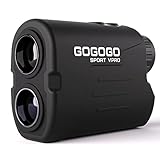
- BIG STEP FOR GOGOGO SPORT GS03 - We are very pleased to announce that Gogogo Sport GS03 model has made some significant upgrades!!! 1.Max measuring distance: 650 yards→1000 yards; 2. Flagpole Lock distance: 150 yards→250 yards: 3.Optics: normal optocs→upgarded ultra-clear lens: 4.Interface: Old interface → Brand-new exclusive Gogogo Sport interface; 5.Measurment unit: Yard,Meter→Yard,Meter,Feet.....
- THE MOST VALUABLE GOLF/HUNTING RANGEFINDER - Comes with 3 functional modes, perfect for 1000yds max distance/target measuring, Slope Distance Correction function, Vibration, 250 yards flagpole lock, 300 yards flag-lock, upgraded ultra-clear optics lens, brand-new Ggogog Sport interface. All of this makes the GS03 the most valuable and high-performance rangefinder on the market.
- EASY TO USE - Fast and accurate measurement with 1-yard accuracy, one-button measurement switching (Yard/Meter/Feet). One button to change 3 modes. Only 184g net weight, compact and portable small size: 106 x 40 x 71mm(L x W x H), very convenient to carry with strap and after-use storage with a solid waterproof pouch.
- GREAT GIFT – This GS03 rangefinder could be an awesome gift for a father/husband/children. It's not only ideal for golfing/hunting but also could be used as a 6X single-tube monocular for bird-watching/sight-viewing. Come with rich packing: waterproof storage case strap, clean lens cloth, multilingual operation manual, and one CR2 battery.
- GOGOGO SPORT WORRYFREE SHOPPING PROGRAM - We firmly stand behind our product, providing a one-year warranty and 24/7 customer service. Any customer whether in the pre-purchase or after-purchase has any questions, we will give satisfactory solutions.

The GS19 is what happens when a budget rangefinder brand figures out what golfers actually want and delivers it at a fair price. Gogogo Sport Vpro has built a loyal following in the under-$150 space, and the GS19 is a big reason why — it’s one of the most reliable laser rangefinders in this tier and has been for a few years running.
The 6x magnification gives you a solid, stable view, and the pin-seeker technology (they call it “Flag-Lock with Vibration”) is genuinely useful — you feel a small buzz when it locks onto the flag, which takes the guesswork out of knowing whether you’ve measured the pin or something behind it. That’s a feature you used to pay a lot more for.
Slope mode is included and works well on hilly courses. The accuracy is consistently within a yard at typical playing distances, which is all you really need. Battery life is strong — you’ll get multiple rounds out of a single CR2 battery without worrying about it dying on the 14th hole.
Pros: Flag-lock vibration feedback, reliable accuracy, solid battery life, proven track record.
Cons: Slightly older design compared to the GS24, optics not quite as crisp in low light.
Who it’s for: Golfers who want a dependable, proven performer with vibration feedback at a fair price.
3. Gogogo Sport Vpro GS24 — Best Overall

- Long-Range Measurement: With TrueMeasure Technology, the ZeroIn rangefinder achieves enhanced sensitivity, measuring distances up to 1500 yards (Golf & Disc Golf Modes) and 2500 yards (Hunting Mode), ensuring exceptional performance and precise targeting of thin objects like golf flags in any environment
- 500-Yard Flag Lock with Vibration Feedback: Easily lock onto flags within 500 yards (300 yards for flagpole) with ±0.1-yard accuracy, while the built-in vibration confirmation ensures you've precisely locked onto your target for more confident shots.
- Magnetic & Rechargeable Design: Easily attaches to golf carts for convenient access and features a Type-C rechargeable lithium-ion battery, allowing you to charge it while securely mounted
- High-Transmittance LCD + New LCD Display: The Gogogo Sport Vpro ZeroIn Laser Rangefinder is equipped with an advanced high-transmittance LCD and a newly designed display, making readings and target acquisition easier than ever
- Slope Compensation with On/Off Function: Whether you're hitting uphill or downhill, the ZeroIn range finder intelligently adjusts for slope changes, providing the true, effective distance. With a simple slide of the switch, you can easily enable or disable slope compensation, ensuring precise measurements while staying tournament-legal
If I had to pick one rangefinder from this entire list to hand to a golfer and say “just use this,” it’d be the GS24. Gogogo Sport Vpro took everything that worked about the GS19 and improved the optics, refined the ergonomics, and made the whole package feel more polished — all while keeping the price right in the sweet spot.
The 6x magnification is clear and bright, and the fast focus system makes it easy to dial in quickly, even if your hands aren’t perfectly steady. The pin-lock vibration is still here and still works great. Slope mode with angle compensation gives you the adjusted distance for uphill and downhill shots, which is a genuine standout pick on courses with elevation change.
What sets the GS24 apart from its predecessor is the overall feel. The display is sharper. The target acquisition feels more confident. And the ergonomics are slightly better — it sits in the hand more naturally, which matters more than it sounds when you’re trying to lock a flag quickly between shots.
At this price point, the GS24 represents the best combination of features, accuracy, and build quality you can find in the best golf rangefinders under $150 category. It’s our top recommendation for a reason.
Pros: Excellent optics for the price, fast target lock, slope mode, vibration flag-lock, improved ergonomics over GS19.
Cons: Brand recognition is low (though performance is high), not waterproof.
Who it’s for: Any golfer who wants the best all-around package under $150. This is the one.
4. Callaway 300 Pro — Best Established Brand

- Precise Slope Measurement: Our highly accurate laser rangefinder accounts for elevation changes and measures the angle of incline/decline, then calculates the slope adjusted distance
- Superior Magnification and Accuracy: Equipped with 6x magnification, our rangefinders feature a range of 5-1000 yards with +/- 1 yard accuracy; measures in yards or meters. The external Slope On/Off Switch is legal for tournament play
- Pin-Locking Technology: Our precise laser measure with Pin Acquisition Technology (P.A.T.) allows you to lock onto the pin up to 300 yards away; Pulse feature will emit short vibrating "burst" confirming your distance.
- Magnahold Cart Mount: Strong integrated magnet allows you to securely affix unit to cart frame for convenient access during play.
- Premium Molded Hard Carry Case with carabiner and elastic "quick-close" band. Units sold in the US come with a battery included.
Callaway is one of the most trusted names in golf, and the 300 Pro is their entry into the budget laser market. If the idea of handing over money for a rangefinder from a brand you’ve never heard of makes you uneasy, the 300 Pro solves that problem without blowing your budget.
The specs are competitive: 6x magnification, a 1,000-yard range (though you’ll realistically use 50-300 on the golf course), and slope technology that Callaway markets as their “Pin Acquisition Technology” or P.A.T. In practice, it locks onto flags quickly and accurately, and the slope-adjusted readings are solid on courses with meaningful elevation changes.
One standout feature: a built-in magnetic strip so you can stick it to your cart’s metal frame. That sounds like a small thing, but if you’ve ever spent 30 seconds rummaging in your bag for your rangefinder while the group behind you is waiting, you’ll appreciate it.
The optics are slightly behind the GS24 at this price, and the 300 Pro does feel a bit dated compared to newer budget options. But for a golfer who specifically wants a Callaway product and wants to stay under budget, this is the move. You can also check out our thoughts on rangefinders at the next tier up in our best golf rangefinders under $300 guide.
Pros: Trusted brand name, magnetic cart attachment, accurate pin acquisition, 1,000-yard range.
Cons: Optics slightly outclassed by newer budget competitors, older design.
Who it’s for: Brand-conscious golfers who want Callaway quality without spending Callaway premium prices.
5. Callaway EZ Laser — Best for Beginners

The name says it all: this is the easiest rangefinder on the list to use. The Callaway EZ Laser strips away the complexity and gives you a point-and-shoot experience that’s genuinely friendly for golfers who are new to rangefinders or who just want something dead simple.
It’s a no-frills unit — 5x magnification (slightly less than the others), a range out to 1,000 yards, and a simple targeting system that doesn’t require much technique to get a read. There’s no slope mode here, which keeps the price low and means it’s tournament-legal out of the box without having to flip any switches.
The tradeoff for that simplicity is performance. At 5x magnification, distant targets are a little harder to see clearly. And without slope, you’re getting raw yardage — which is fine for flat courses but less useful when you’re playing a layout with serious elevation. If your home course has a lot of uphill and downhill shots, you’ll quickly wish you had slope.
But here’s the thing: for a beginner who has never used a rangefinder before, the EZ Laser is a great introduction to the technology. It’s easy, it’s accurate enough for recreational golf, and it’s from a brand your playing partners will recognize.
Pros: Super easy to use, tournament-legal without adjustment, trusted Callaway brand, good for flat courses.
Cons: No slope mode, lower 5x magnification, less feature-rich than the competition.
Who it’s for: New golfers, casual players on flat courses, anyone who wants the simplest possible rangefinder experience.
Golf Rangefinder Buying Guide: What to Look for Under $150
Buying your first rangefinder — or upgrading from a basic model — can feel overwhelming when you start comparing specs. Here’s what actually matters when you’re shopping for the best golf rangefinders under $150.
Slope vs. No Slope
This is the single biggest decision you’ll make. Slope-adjusted rangefinders calculate the “plays-like” distance accounting for elevation change — so if you’re 150 yards from the pin but the green is 20 feet above you, a slope rangefinder might tell you it plays like 158. That’s genuinely useful information that helps you pick the right club.
The catch: slope mode is not permitted during official competitions under USGA rules. Most modern rangefinders with slope have a toggle that disables the function for tournament play (and often a visual indicator so you can prove it’s off). All of the slope-equipped options on this list have that feature.
If you play mostly recreational rounds and the occasional club competition, get slope. You can always turn it off when you need to. If you primarily play in tournaments or prefer keeping things simple, a no-slope model like the Callaway EZ Laser keeps the decision-making out of the equation.
Magnification
Most rangefinders in this price range sit at 6x magnification, with a few 5x options on the lower end. The difference matters more than it sounds. At 5x, a flag 180 yards away appears relatively small in your view. At 6x, it’s meaningfully larger and easier to lock onto with the laser.
For the courses most recreational golfers play — including par-3s where precision really matters — 6x is the sweet spot. I wouldn’t go below 5x if you can avoid it, and anything above 7x starts to be more than you need at normal playing distances.
Target Lock and Stabilization
Target lock (also called pin lock or flag lock) is the technology that helps the laser distinguish the flag from the background trees or hazards behind it. Most budget rangefinders prioritize the closer target, which is usually the flag you’re trying to measure. Better target lock means fewer false reads.
Vibration feedback — a short buzz when the device locks onto the flag — is a genuinely useful feature that takes the uncertainty out of the process. You don’t have to guess whether you’ve locked the right target. When you feel the vibration, you know. The Gogogo GS19 and GS24 both have this; it’s worth having.
Image stabilization is less critical at typical golf distances but nice to have. If you’ve got shaky hands or tend to rush your reads, a stabilized unit will give you more consistent results.
Battery Life
Almost all rangefinders in this price range use CR2 lithium batteries. A single battery should last you anywhere from 1,500 to 3,000 uses, which translates to many rounds of golf before you need a replacement. Keep a spare CR2 in your bag — they’re cheap and small — and you’ll never have to worry about this.
A few things drain batteries faster: cold weather, heavy slope calculation use, and leaving the device in the sun (heat degrades batteries faster). Standard care will see most budget rangefinders through a full season on one battery without issue.
Range and Accuracy
You’ll see maximum range figures of 600, 800, or 1,000 yards on budget rangefinders. Here’s what those numbers actually mean for golf: almost nothing. Realistically, the longest shot you’ll ever need to measure is a par-5 tee shot where the green is 500 yards away — and even then, you’re not measuring the green from the tee. You’re measuring your target landing zone, which is probably 220-250 yards out.
What matters more than maximum range is accuracy within your realistic use range of 30-300 yards. Any reputable rangefinder in this guide will be accurate within ±1 yard at those distances, which is more than adequate for course management. The accuracy claims on spec sheets are generally reliable from established brands.
Waterproofing
Most budget rangefinders are water-resistant rather than truly waterproof. They’ll handle a light rain without issue, but they’re not going to survive being submerged in a water hazard. If you play a lot in wet conditions, this is worth noting — but in practice, you’d likely keep your rangefinder in your bag or pocket during heavy rain anyway.
Comparison: Best Golf Rangefinders Under $150 — Key Specs at a Glance
| Rangefinder | Magnification | Max Range | Slope Mode | Vibration Lock | Battery | Best For |
|---|---|---|---|---|---|---|
| REDTIGER GolfVue Series 1 | 6x | 600 yds | ✅ Yes | ✅ Yes | CR2 | Value seekers |
| Gogogo GS19 | 6x | 650 yds | ✅ Yes | ✅ Yes | CR2 | Proven reliability |
| Gogogo GS24 ⭐ Top Pick | 6x | 700 yds | ✅ Yes | ✅ Yes | CR2 | Best all-around |
| Callaway 300 Pro | 6x | 1,000 yds | ✅ Yes | ✅ Yes | CR2 | Brand-loyal golfers |
| Callaway EZ Laser | 5x | 1,000 yds | ❌ No | ❌ No | CR2 | Beginners & simplicity |
Do You Actually Need a Rangefinder at All?
Short answer: yes, if you’re even moderately serious about your scores. Here’s the honest case for spending money on a rangefinder.
The number one shot killer for recreational golfers isn’t swing mechanics — it’s poor distance control from club selection mistakes. You can hit a solid 7-iron and still make bogey if you were actually facing a 6-iron shot. A rangefinder eliminates that variable entirely. You know the exact yardage. You pick the right club. You play the shot.
According to data published by the USGA, golfers who regularly use distance measurement tools tend to play faster and more confidently — which has knock-on benefits for pace of play and enjoyment. It’s also just more fun to know your exact number rather than pacing off yardage from a sprinkler head like it’s 1995.
If you’re trying to decide between a laser rangefinder and a GPS watch, the tradeoff is this: GPS watches give you continuous, at-a-glance yardage to the front/center/back of the green without pointing at anything. Laser rangefinders give you precise on-demand distance to any specific target — the flag, a bunker carry, a tree you need to cut around. Serious golfers often use both. Our best budget GPS watch guide covers the watch side of the equation if you want to compare.
What About Rangefinders Over $150?
Once you push past $150 and into the $200-$300 range, you start getting meaningful upgrades: better optical quality, faster and more accurate pin acquisition, more robust weatherproofing, and features like JOLT technology (Bushnell’s name for their vibration lock) or slope modes that toggle via the lens cap.
If you play 2-3+ times per week and care deeply about your game, spending more makes sense. We break down those options in our best rangefinders under $300 guide, and for those who want the full picture across every tier, our complete best rangefinders for 2026 covers it all.
But for most recreational golfers? The under-$150 tier is plenty. The gap in real-world performance between a $150 and a $350 rangefinder is much smaller than the price difference suggests.
Frequently Asked Questions
Are cheap rangefinders accurate enough for golf?
Yes. Budget rangefinders from reputable brands — including all five options on this list — are consistently accurate within ±1 yard at realistic golf distances (30-300 yards). That level of precision is more than adequate for club selection. The difference between budget and premium rangefinders is more about features, build quality, and optics clarity than raw accuracy.
Is slope mode worth it on a budget rangefinder?
Absolutely. Slope-adjusted distance is genuinely useful on courses with elevation changes, and it’s now standard on most mid-range budget options. Just make sure you can toggle it off for tournament play — every rangefinder on this list with slope mode has that capability.
Can I use these rangefinders in tournaments?
Most USGA-conforming tournaments allow distance-measuring devices, but not slope mode. The Callaway EZ Laser is ready out of the box. The other four units have slope modes that can be disabled — just confirm the slope function is off before your round, and you’re good to go.
What’s the difference between the Gogogo GS19 and GS24?
The GS24 is the newer, upgraded model with improved optics, sharper display, slightly better ergonomics, and a marginally longer range. If the price difference is small, go with the GS24. If the GS19 is significantly cheaper at time of purchase, it’s still a solid choice — the core performance is very similar.
How long do CR2 batteries last in a rangefinder?
Expect 1,500-3,000 activations per battery, which typically translates to a full golf season or more of regular use. Cold weather reduces battery life. Keep a spare CR2 in your bag — they’re inexpensive and small.
Is a rangefinder better than a GPS watch for golf?
Different tools, different strengths. GPS watches give continuous, automatic distance to the green without any aiming. Laser rangefinders give precise, on-demand yardage to any specific target. Many serious golfers use both. If you’re choosing one, rangefinders typically give more accurate pin distance while GPS watches are better for casual pace-of-play awareness. See our GPS watch guide for the full comparison.
Final Verdict: Which Budget Rangefinder Should You Buy?
Here’s the honest breakdown by golfer type:
Buy the Gogogo GS24 if: You want the best all-around package under $150. It has the best combination of optics, speed, slope mode, and vibration feedback at this price point. It’s our top pick for good reason — this is the one most golfers should get.
Buy the REDTIGER GolfVue Series 1 if: You’re on a tight budget and want maximum performance per dollar. It does the job well, doesn’t ask you to pay for brand recognition, and delivers accurate yardages reliably. A smart buy.
Buy the Gogogo GS19 if: The GS24 is out of stock or the GS19 is significantly cheaper — it’s still a proven performer with vibration lock and slope, just slightly older in design.
Buy the Callaway 300 Pro if: Brand name matters to you and you want a recognizable logo on your device. The 300 Pro is a solid unit from a trusted name in golf, and the magnetic cart mount is genuinely handy.
Buy the Callaway EZ Laser if: You’re completely new to rangefinders, play mostly flat courses, or want the simplest possible experience without any learning curve. It’s also tournament-ready without any fiddling.
Whatever you choose from this list, you’re going to play better golf. Knowing your exact yardage eliminates one of the most common causes of unnecessary bogeys. Stop guessing, start laser-ing, and watch your scores tighten up.
And if you want to pair your new rangefinder with some gear that’ll genuinely improve your game, check out our roundup of the best golf training aids for 2026 — some solid picks in there that work well alongside distance measurement.