Best Golf Putters for Mid Handicappers 2026: 7 Top Picks to Drain More Putts
If you’re shooting somewhere between 80 and 95, you already know the painful truth: you’re leaving more shots on the green than anywhere else on the course. The average mid-handicapper three-putts more than 20% of the time — and that’s not a swing problem, that’s a putter problem. Finding the best golf putters for mid handicappers 2026 has become one of the most impactful equipment upgrades a 10-to-20 handicapper can make. The right putter can shave 3-5 shots per round without changing a single thing about your full swing.
We’ve tested, rolled, and debated every major putter on the market to bring you this no-fluff list. Whether you’re an arc stroke player who needs some toe hang, a straight-back-straight-through guy who needs face balance, or someone who just needs better alignment because your eyes lie to you on every 8-footer — there’s a putter in here for you. Let’s get into it.
How We Picked the Best Putters for Mid Handicappers
Mid handicappers aren’t beginners, but they’re not scratch golfers either. The gear requirements are specific. We focused on a few non-negotiable criteria when building this list:
- Forgiveness on off-center strikes — Mid-handicappers don’t hit the sweet spot every time. High MOI (moment of inertia) designs keep misses rolling true.
- Alignment aids that actually work — Visual feedback matters. The best putters for this handicap range give you a clear line to your target without being distracting.
- Consistent face insert feel — Soft inserts help take the sting out of faster greens and give better distance control feedback.
- Stroke type compatibility — Some putters want you to arc, others want you straight. We’ve noted stroke preference for every pick.
- Value at the price point — We’ve included options from $80 all the way to $500+ so every budget is covered.
We also cross-referenced our picks with USGA equipment standards to make sure everything on this list is tournament-legal. No gimmicks, no gadgets — just putters that hole more putts.
The 7 Best Golf Putters for Mid Handicappers in 2026
Here are our top picks for the best golf putters for mid handicappers, ranked by overall performance, versatility, and value. We’ve got blade putters, mallet putters, and a few surprises in between — something for every stroke type and budget.
1. Odyssey White Hot OG #2 — The Classic That Still Delivers
The Odyssey White Hot insert is genuinely legendary in golf. The White Hot OG #2 brings back that buttery soft feel that made Odyssey the most-played putter on Tour through the 2000s, rebuilt with modern construction standards. For a mid-handicapper who wants trustworthy roll consistency and a feedback-rich feel, this is the starting point.
The #2 head shape is a traditional blade with a plumber’s neck hosel — it suits players with a slight arc in their stroke. The White Hot insert softens the impact significantly, which means you get better distance feedback on greens of varying speeds. That’s huge when you’re playing a course you’ve never seen before and you’re trying to judge a 40-footer on fast, sloping bent grass. The alignment line is clean and simple, no over-engineering.
The only real knock is it’s not going to bail you out if your path is all over the place. Blades punish inconsistency more than mallets. But for a mid-handicapper who’s got their stroke reasonably dialed in and wants to feel the difference between a pure roll and an off-center hit, this putter teaches you something every single round.
- Pros: Outstanding soft feel, classic head shape, excellent roll consistency, great feedback, widely available in multiple lofts and lies
- Cons: Less forgiving on mishits than a mallet, best suited for arc strokes only

- Item Package Dimension: 36.3L x 6.9W x 3.2H inches
- Item Package Weight - 1.45 Pounds
- Item Package Quantity - 1
- Product Type - GOLF CLUB
2. TaylorMade Spider ZT — Built for the Modern Mid-Handicapper
TaylorMade’s Spider line has been their flagship putter platform for years, and the Spider ZT is the most refined version yet. The name stands for “Zero Torque” — a nod to the engineering work TaylorMade put into the face and hosel design to minimize face rotation through impact. For a mid-handicapper with a straight-back-straight-through stroke, this thing is almost self-correcting.
The sightline system on the Spider ZT is genuinely impressive. You get a white center bar running down the crown with red alignment wings flanking it — from address, it’s almost impossible to set up misaligned. The high-MOI mallet design means heel and toe mishits barely cause the ball to deviate offline. If you’re someone who hits it all over the face (and be honest with yourself, most mid-handicappers do), the Spider ZT will hide a lot of sins.
The pure aluminum face insert gives you a firm-yet-controlled sound at impact. It’s not the softest feel on this list, but it’s satisfying. Weighing in at 360 grams with a 70-gram grip, the total system weight promotes a smooth tempo — something mid-handicappers who get “handsy” with their stroke will absolutely appreciate. Pair this with some time on a practice green and you’ll start rolling in those 6-to-10 footers you used to miss.
- Pros: Exceptional alignment system, very high MOI, great for straight-back-straight-through strokes, promotes consistent tempo
- Cons: Premium price, firm feel isn’t for everyone, head can look bulky behind the ball if you prefer traditional shapes

- LOW TORQUE DESIGN The KBS putter shaft is bored directly toe-ward near the CG at a 1° shaft lean with 25mm onset behind the face allowing golfers to realize the benefits of a new stable, toe up design.
- UNIQUE SOLE SHAPING New and improved sole shaping to work specifically with this unique hosel configuration, engineers worked tirelessly to find new ways to improve accuracy from the moment the putter is placed behind the ball. The new sole curvature accommodates different player types and ball positions, giving golfers the ability to find a consistent and repeatable stroke.
- SPIDER STABILITY Combining high density stainless steel and low-density aerospace quality aluminum provides the perfect foundation for a design that is high MOI and allows for a shaft orientation that sits closer to the face.
- MILLED TRUE PATH ALIGNMENT Based on tour player feedback, we were tasked to find a new premium alignment system. Building on the classic TaylorMade True Path technology, milled lines the width of the golf ball were added helping golfers properly index to center face.
- PURE ROLL INSERT Made from a combination of Surlyn and aluminum, the black Pure Roll insert creates a softer feel. Grooves are angled at 45° to encourage optimal forward roll as well as better sound, feel and overall roll characteristics.

3. Cleveland HB Soft 2 (Model 11) — The Forgiveness Pick
Cleveland’s HB Soft line doesn’t get the marketing budget that Odyssey and TaylorMade throw at their putters, but it absolutely deserves a place on your shortlist. The HB Soft 2 Model 11 is a mid-mallet design that splits the difference between blade feedback and full mallet forgiveness — and it does it at a price point that makes it one of the best value putters for mid handicappers in 2026.
The Soft Feel insert in the HB Soft 2 uses a multi-layer design that absorbs impact energy while still transmitting enough feedback to tell you whether you’ve caught it pure. The Model 11 shape features a rounded rear section and a clean sightline on top. It’s face-balanced, which makes it ideal for golfers with minimal arc in their stroke. The single-bend hosel positions your hands comfortably at address.
What really stands out is the Stroke Lab shaft option — a graphite and steel composite shaft that Cleveland claims helps regulate stroke tempo by shifting weight to the grip end. Whether you buy the science fully or not, there’s no question the putter feels different in your hands compared to a standard steel shaft. For a golfer who tends to rush their putting stroke under pressure, it’s worth trying.
- Pros: Excellent value, soft feel insert, good forgiveness for the head size, face-balanced for straight strokes
- Cons: Not as premium-feeling as Scotty or Odyssey, less visual drama behind the ball

- Speed Optimized Face Technology A dynamic groove milling pattern on the face of every HB SOFT 2 Putter, SOFT normalizes ball speed across an enlarged striking area—ensuring more consistent, predictable distance performance.
- Stroke Specific Designs HB SOFT 2 features nine all-new Putters carefully assembled for straight or slight arc stroke types, each synced with its complementing hosel style, toe hang, alignment system, and grip.
- Consistent Swing Feel To ensure each HB SOFT 2 Putter has a consistent swing feel—model to model—no matter which shaft length you choose, a 20g weight is included within the butt end of the shaft on all models 35" and over.
4. Scotty Cameron Super Select Newport 2 — The Aspirational Blade
Yes, it’s expensive. Yes, it’s a blade, which means less forgiveness. And yes, the Scotty Cameron Super Select Newport 2 is still worth it for the right mid-handicapper. If you’ve got a consistent stroke, you want to feel every nuance of your roll, and you care about having a putter that makes you stand a little taller on the first green — this is it.
The Super Select Newport 2 is the most refined version of the iconic Newport 2 head shape that Scotty Cameron has ever produced. The face is milled from 303 stainless steel with a precision-milled face pattern that’s engineered for optimal ball speed consistency across the face. The feel at impact is genuinely different from any other putter at this price — there’s a solid “click” that translates immediately into confidence.
The real practical argument for this putter for mid-handicappers: if your stroke is already decent and your miss is mostly on short putts due to anxiety and overthinking, a putter you love looking at and love the feel of can genuinely improve your performance. Golf is mental, and Scotty Cameron putters have a psychological edge that’s hard to quantify but very real. The heel-toe weighting is excellent and the toe hang suits arc stroke players well.
- Pros: Best-in-class feel and craftsmanship, tour-proven design, excellent for arc strokes, confidence-inspiring look
- Cons: Premium price, less forgiving than mallets, demands a consistent stroke to perform at its best

5. Wilson Infinite Buckingham — Best Budget Pick
If you want a proper, high-performing putter without spending $200+, the Wilson Infinite Buckingham is the answer. Wilson’s Infinite line gets overlooked because Wilson Staff doesn’t have the marketing machine of Callaway or TaylorMade, but the engineering here is genuinely solid — and the Buckingham in particular punches well above its weight class.
The Infinite tech refers to Wilson’s Counterbalance technology — they’ve shifted weight to the grip end of the club using a heavier grip and butt section, which increases the total weight of the putter system and reduces wrist/hand involvement in the stroke. This is the same concept premium brands charge big money for, and Wilson has made it accessible. The result is a smoother, more repeatable stroke arc for mid-handicappers who tend to get “flippy” through impact.
The Buckingham is a mallet-style head with a strong alignment line and a consistent face insert feel. It’s not going to feel like a Scotty Cameron — let’s be honest about expectations here. But it rolls the ball well, it aligns well, and it makes up-and-down from 6 feet feel achievable. For a golfer who’s still figuring out whether they’re a mallet or blade player, or who doesn’t want to spend $250 on a putter until they’re sure, this is the smart play.
- Pros: Best value on this list, counterbalance tech for smoother strokes, clean alignment, great for high-handicappers upgrading to mid-handicap play
- Cons: Feel isn’t premium, less head weight variety vs. major brands, not as prestigious at the course

- Wilson 2024 Infinite Buckingham Golf Putter - Men's Right Hand, 35"
- DOUBLE-MILLED FACE: Our double-milled face pattern ensures a consistent feel, roll and perfect distance control no matter the strike location.
- FOCUS ACTIVATION PARALLEL ALIGNMENT LINES: A thick middle line, with two thinner support lines to either side, optimizes focus allowing you to get dialed in on every single putt.
- PVD ANTI-GLARE FINISH: Two tone PVD anti-glare finish reduces distraction, allowing the player to focus solely on the ball as it falls into the hole.
6. Odyssey Tri-Hot 5K One — Maximum Forgiveness for Mid-Handicappers
If the White Hot OG is Odyssey’s classic, the Tri-Hot 5K One is their modern science experiment — and for mid-handicappers who struggle with off-center contact, it’s one of the most forgiving putters in the game. The “5K” refers to the 5,000+ putter face dimples that Odyssey engineered to optimize friction at impact, creating more consistent roll even on contact closer to the toe or heel.
The Stroke Lab shaft is standard on the Tri-Hot 5K, and it genuinely changes how the putter feels in rhythm. The counterbalancing creates a pendulum-like motion that’s especially useful when you’re nervous — say, three-footers to save par after a bad approach. The head shape is a mid-mallet Two (meaning narrower front-to-back than a full mallet), which gives you more visual feedback about face angle without the full visual bulk of a Spider-style mallet.
The face insert feel is different from the White Hot OG — a little firmer, a little more modern. The triple-dimple face pattern creates a slightly different sound and feel that some golfers love immediately and others need time to adjust to. But the data on off-center roll consistency is compelling: this putter genuinely minimizes the damage of mishits in a way that makes short-game scoring more consistent. For a mid-handicapper trying to break 85, this putter is a serious weapon.
- Pros: Exceptional off-center forgiveness, Stroke Lab shaft for tempo, good for any stroke type, modern looks
- Cons: Firmer feel than traditional White Hot insert, some golfers need adjustment period, higher price point
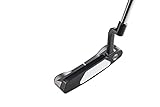
- Improves performance by reducing side spin on off-center hits, with a 303 stainless steel front section including the hoseland face. This is finish milled to the exact shape and weight, keeping the CG forward so putts stay closer to their line.
- Odyssey precisely positioned massive amounts of tungsten (>120 grams) behind the face in the toe and heel of the clubhead. They’ve moved CG forward for improved roll, while also increasing forgiveness in a standard size blade.
- Available in aluminum, steel and tungsten, these removable weights allow you to dial in your head weight to your exact preference.
- The most popular insert of all time is back with the original formulation, feel, sound, and performance.
- The newest generation of their proven multi-material Stroke Lab shaft features even better performance, shortening the steel section, and reducing weight by seven grams. It’s stiffer and more stable for improved consistency.
7. Ping PLD Milled Anser 2D — The Precision Option
Ping’s PLD (Putting Lab Design) line represents their highest-end putter craftsmanship, and the PLD Milled Anser 2D is a work of art for players who want tour-level feel and precision without going full Scotty Cameron. The Anser 2 shape is iconic — Karsten Solheim’s original design from the 1960s that still influences 80% of blade putters made today — updated with Ping’s modern milling and weighting technology.
The “2D” designation refers to dual tungsten weights in the heel and toe, providing precise face balance control and high MOI for a blade design. This is unusual — most blades sacrifice forgiveness for feel, but Ping has managed to give you both. The face milling is extraordinary under any examination; every groove is cut to exact tolerance to promote consistent ball speed regardless of where on the face you make contact.
The PLD Anser 2D is built for mid-to-low handicappers who want a tour-quality putter that rewards a developed stroke. If you’re a mid-handicapper who’s been playing for years and your stroke is your strong suit, this is the putter that rewards that consistency with better feel feedback than anything else on this list. It’s an investment in your game that appreciates in value as your handicap drops.
- Pros: Tour-level craftsmanship, dual tungsten weighting for unique blade forgiveness, exceptional feel for skilled players
- Cons: Premium price, traditional blade shape means less beginner-friendly, best for mid-handicappers with established strokes

- PLD Milled Anser 2D Gun Metal
- Putterflex
- Standard
What to Look for in a Mid-Handicapper Putter
Buying a putter isn’t like buying a driver. You can’t just pick the highest-rated option and expect it to transform your game. The best golf putters for mid handicappers depend heavily on your individual stroke mechanics, your visual preferences, and how you perform under pressure. Here’s what actually matters when you’re choosing between the options on this list:
Stroke Type: Arc vs. Straight-Through
The most important fit variable in putting is your stroke arc. A straight-back, straight-through stroke (also called SBST) works best with a face-balanced putter — the Spider ZT, the HB Soft 2, and the Tri-Hot 5K are all excellent here. An arc stroke (where the putter face opens and closes slightly relative to the path) needs toe hang — blades like the White Hot OG, the Scotty Cameron Newport 2, and the Ping PLD Anser are built for arc players.
How do you know which you are? Hold your putter in the air with just two fingers in the middle of the shaft. If the toe drops naturally, you have a toe-hang putter suited for arc strokes. If the face stays horizontal, it’s face-balanced and suited for SBST strokes. Match your putter to your stroke type before worrying about anything else.
Head Shape: Blade vs. Mallet
Blades look traditional, give better feedback, and suit golfers who already have consistent contact. Mallets are more forgiving, usually have more alignment help, and suit golfers who miss the sweet spot more often. Most mid-handicappers benefit from a mallet or mid-mallet design — there’s zero shame in playing a Spider or a Tri-Hot 5K if it means you make more putts.
Face Insert vs. Milled Face
A face insert (like the White Hot or Soft Feel inserts) softens the feel at impact and provides better distance control feedback, especially on faster greens. A milled face (like the Scotty Cameron or Ping PLD) gives a firmer, more precise feel that experienced players prefer. Neither is objectively better — it’s about what gives you the most consistent distance control.
Alignment Aids
Alignment aids on putters have gotten genuinely sophisticated. Single-line putters (like the Newport 2) are clean and simple. Multi-line systems (like the Spider ZT’s sightline) give you more reference points. The best alignment aid is the one you can actually use under pressure. Try several on a practice green before committing.
Putter Length
Standard putter length is 34-35 inches. Shorter putters (32-33 inches) suit golfers who bend over more at address; longer putters suit more upright postures. Getting the length wrong means your eyes won’t be directly over the ball at address — which throws off your aim on every single putt. Worth getting a proper fitting if you’re investing $150+.
Counterbalance Technology
Putters with counterbalanced designs (heavier grips, extra weight in the shaft) reduce wrist and hand involvement in the stroke. For mid-handicappers who get “handsy” under pressure — especially on short putts — counterbalanced putters promote a more mechanical, repeatable stroke arc. The Wilson Infinite line and the Odyssey Stroke Lab line both use counterbalancing effectively at different price points.
Mid Handicapper Putter FAQ
What loft should a putter have for mid-handicappers?
Most putters come with 3-4 degrees of loft, which is standard for normal putting conditions. This small amount of loft helps lift the ball slightly at impact to get it rolling cleanly on top of the grass, rather than skipping. Unless you’re adjusting for a very specific green condition, stick with the manufacturer standard loft — usually 3.5 degrees.
Should mid-handicappers use a mallet or blade putter?
In most cases, mid-handicappers benefit more from a mallet putter due to the higher MOI and better alignment aids. The exception is a mid-handicapper who already has a very consistent stroke and wants better feedback from impact — in that case, a quality blade like the White Hot OG or the Scotty Cameron will reward the consistency. When in doubt, test both on a practice green and go with whichever makes you feel more confident.
How often should mid-handicappers replace their putter?
Putters don’t wear out like irons or drivers — the face doesn’t take the same kind of impact stress. You should replace your putter when: (a) you’re consistently losing distance control due to face wear, (b) your stroke has fundamentally changed (e.g., you’ve gone from arc to straight), or (c) a newer putter fits your current stroke better. Many tour pros play the same putter for a decade or more. Don’t fix what isn’t broken.
Does putter weight matter for mid-handicappers?
Yes, more than most golfers realize. A heavier putter (360g+) promotes a more pendulum-like stroke and reduces the temptation to “hit” at the ball. Most mid-handicappers are better served by a slightly heavier putter head — it keeps the stroke smooth, especially on shorter putts where anxiety creeps in. Standard putter head weight is around 330-350 grams; tour-weighted options go 360-370g.
Final Verdict
For most mid-handicappers, the TaylorMade Spider ZT is the best all-around pick in 2026 — the alignment system is the best in the game, the forgiveness is elite, and it suits the most common stroke type in this handicap range. If you want something more traditional with better feel and don’t mind slightly less forgiveness, the Odyssey White Hot OG #2 is the classic choice that still delivers.
Budget-conscious players should look hard at the Cleveland HB Soft 2 and the Wilson Infinite Buckingham — both deliver real performance at prices that don’t require a special occasion to justify. And if you’re a mid-handicapper with a developed stroke looking to step up to tour-quality iron, the Scotty Cameron Super Select Newport 2 and the Ping PLD Anser 2D reward that investment.
The bottom line: the best golf putters for mid handicappers are the ones you’re confident standing over and that match your stroke type. Test before you buy, get the head style right, and stop leaving shots on the green that should be in the hole. Your scorecard will thank you.
You Might Also Enjoy
- Best irons for mid handicappers in 2026 — upgrade the whole iron set
- Best drivers for mid handicappers — pick up distance off the tee
- Best golf balls for mid handicappers — the right ball makes a real difference
- Best putters for beginners — buying for a new golfer? Start here
- Best golf rangefinders — know your exact distance on every shot