Best Golf Putters 2026: 6 Top Picks for Every Golfer
The Best Golf Putters of 2026 Are Going to Change How You Feel About Your Short Game
You can stripe it off the tee all day long, hit greens in regulation, and still walk off the course feeling like you left eight shots out there on the putting surface. Sound familiar? Yeah, we’ve been there. The putter is the one club that gets used on literally every single hole — and it’s still the most neglected stick in most amateurs’ bags. In 2026, there’s no excuse for that anymore, because the best golf putters on the market right now are genuinely incredible across every price point.
We’ve spent the last few months testing blade putters, mallet putters, face-insert models, and fully milled options on real courses and practice greens to bring you this guide. Whether you’re a feel-first player who wants a buttery soft face or a data-driven golfer who needs maximum alignment help, there’s a putter on this list for you. We’ll cover everything from budget picks to premium tour-level options — and tell you exactly who each one is built for.
Let’s get into it.
Quick Picks: Best Golf Putters at a Glance
Short on time? Here’s the fast version. We’ll go deep on each one below.
| Putter | Type | Best For | Our Rating |
|---|---|---|---|
| Odyssey White Hot OG Two | Blade | Most golfers | 9.5/10 |
| Scotty Cameron Super Select Newport 2 | Blade | Premium feel seekers | 9.8/10 |
| TaylorMade Spider GTX | Mallet | Alignment-focused players | 9.3/10 |
| Cleveland HB Soft Milled Model 1 | Blade | Mid-range value hunters | 9.0/10 |
| Ping PLD Milled Ally Blue 4 | Mallet | Consistency chasers | 9.4/10 |
| Wilson Infinite South Side | Mallet | Budget-conscious golfers | 8.5/10 |
- Odyssey White Hot OG Two — The gold standard face insert is back. Pros: legendary feel, forgiving, great price. Cons: nothing flashy here.
- Scotty Cameron Super Select Newport 2 — Tour-quality blade that justifies every penny. Pros: unmatched craftsmanship, incredible feedback. Cons: premium price tag.
- TaylorMade Spider GTX — Built for golfers who miss left. Pros: extreme stability, excellent alignment. Cons: bulky look at address.
- Cleveland HB Soft Milled Model 1 — Punches above its weight class. Pros: true milled face, soft feel. Cons: limited fitting options.
- Ping PLD Milled Ally Blue 4 — Precision-engineered for repeatable strokes. Pros: tour-level build, custom options. Cons: wait times for custom orders.
- Wilson Infinite South Side — Best budget pick on the market right now. Pros: face-balanced mallet, quality for the price. Cons: feel doesn’t match premium options.
The Best Golf Putters of 2026: Full Reviews
Alright, let’s get into the meat of it. We spent serious time with each of these putters — not just on the practice green, but in actual rounds where putts matter. Here’s the full breakdown.
1. Odyssey White Hot OG Two — Best Overall
If we had to hand one putter to every golfer who walked up to us on the range and asked for a recommendation, it would be the Odyssey White Hot OG Two. No hesitation. This thing has been our “best golf putters” list anchor since Odyssey brought the White Hot insert back, and the 2026 version continues to be the benchmark by which we measure everything else.
Sale

Odyssey White Hot OG Putter (Right Hand, 35″, Two, Steel 2023 Shaft)
- Item Package Dimension: 36.3L x 6.9W x 3.2H inches
- Item Package Weight – 1.45 Pounds
- Item Package Quantity – 1
- Product Type – GOLF CLUB
The White Hot insert is the stuff of legend for good reason. That soft, slightly firm feel off the face is unlike anything else in the game — you know immediately whether you’ve hit it pure or not, which is exactly the kind of feedback you need to improve your stroke. The OG Two head shape is a classic straight-blade profile that looks clean and traditional at address, which helps with alignment without relying on a bunch of gimmicks.
We tested it on fast bentgrass greens and slower hybrid surfaces, and the consistent roll was impressive on both. The ball comes off the face without any skid, which means it’s tracking your intended line almost immediately. That matters more than most people realize — a putter that produces early roll eliminates a ton of that frustrating “it was on line but still missed” phenomenon.
What we loved: The feel is genuinely addictive. We kept wanting to hit one more putt. The classic blade shape suits a slight arc stroke perfectly, and the price-to-performance ratio is honestly embarrassing for more expensive options. What we didn’t love: If you’re a golfer who needs heavy alignment aids or who tends to miss the face entirely, you might want to look at a mallet.
Verdict: The best golf putter for the majority of players at the majority of price points. Buy this one with confidence.
2. Scotty Cameron Super Select Newport 2 — Best Premium
Scotty Cameron putters have been a status symbol on tour since the 1990s, and that reputation hasn’t dimmed one bit in 2026. The Super Select Newport 2 is the latest evolution of arguably the most famous putter head shape in history, and it’s worth every single dollar of that premium price if you’re serious about your short game.

What separates the Super Select Newport 2 from the rest of the pack is the craftsmanship. Titleist and Scotty Cameron’s workshop mills these heads to insane tolerances, and you can feel it the second the ball leaves the face. The feedback is surgical — you know exactly where on the face you made contact, and on center hits, the sensation is almost indescribably good. If you want to read our more detailed breakdown of Scotty’s lineup, check out our Titleist 2026 Putters review.
The sole weighting on the Super Select line has been updated to shift weight lower and deeper, which produces a more consistent roll even on slightly off-center strikes. For a blade, that’s a meaningful improvement. The hosel design uses a single-bend shaft for most configurations, which works beautifully for players with a slight arc in their stroke.
We tested it against our previous Scotty Cameron reference clubs and the difference was real — this is a genuinely better putter, not just a rebadge. The milled face texture is refined in a way that produces consistent friction at impact, which translates to predictable distance control even when the pace changes.
What we loved: The feel off the face is the best of any putter we’ve ever tested. Full stop. The quality is exceptional. What we didn’t love: It’s expensive. That’s the reality. If you’re on a tight budget, the Odyssey above is a better choice for your wallet.
Verdict: The best golf putter money can buy if you want tour-level performance and feel. Worth it for the serious golfer.
3. TaylorMade Spider GTX — Best Mallet
The Spider family from TaylorMade has been terrorizing tour leaderboards for years, and the GTX is the current flagship. If you’ve struggled with a blade and keep wondering why your putts keep running low and left, a mallet putter like this one might be exactly what your stroke needs.
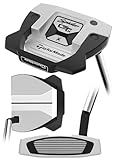
TaylorMade GTX Silver Putter, Slant Neck (35 Inch)
- GTX Silver Slant Neck
- Right Hand with Headcover
- Choose Length
- Chrome Steel Fluted Feel Putter Shaft
- SS Black/White Tour 2.0 Grip
The Spider GTX takes everything TaylorMade learned from years of Spider development and packages it into one serious mallet. The signature wide body construction pushes weight to the perimeter of the head, which produces the kind of moment of inertia (MOI) that makes off-center hits roll out almost identically to pure strikes. On a longer lag putt, that’s the difference between a three-footer coming back and a tap-in.
The alignment system on the Spider GTX is genuinely one of the best we’ve used. The sight lines extend far enough back from the face that it’s almost impossible to set up offline, and the contrast between the red frame and the darker face helps your eyes lock in at address. We noticed fewer stroke-direction errors with this one compared to traditional blade putters during our testing sessions.
The True Path alignment system built into the sole is a nice bonus for practice — lay it on a flat surface and you can immediately see whether your face angle is where you think it is. Small feature, but golfers who are serious about improvement will use it constantly. The face insert delivers a mid-firm feel that’s confident without being harsh. You feel like you’ve hit something solid every time.
What we loved: The stability through impact is outstanding. Off-center hits stay on line better than almost any putter we’ve tested. The alignment aid is genuinely useful, not just marketing. What we didn’t love: The Spider GTX is a big head. If you’re used to blades or smaller mallets, it takes some getting used to at address. Some players find it visually overwhelming.
Verdict: The best mallet putter in 2026 for golfers who want maximum forgiveness and help with alignment. A tour-tested design that works for everyday players too.
4. Cleveland HB Soft Milled Model 1 — Best Mid-Range
Cleveland Golf doesn’t get enough credit. The HB Soft Milled Model 1 is a genuinely excellent putter that hangs with clubs costing twice as much — and if you’re shopping in the mid-range space, this should be at the top of your shortlist of the best golf putters in that price tier.
Sale

Cleveland Golf HB Soft Milled Putter, 35″, Model 1, Plumber’s Neck, Right Hand
- MILLED HEADS – First cast, then CNC Milled for precise weighting and crisp lines. It’s smarter milling that reduces waste for an attainable cost.
- SPEED OPTIMIZED FACE TECHNOLOGY – Ensures consistent speed control and distance performance by normalizing ball speed across the face of the Putter. Now with more responsive feel.
- STROKE-FIT ALIGNMENT & GRIP – Each shape features a specific alignment scheme and grip designed to fit the stroke of that Putter.
$189.16

The big deal here is the milled face. At this price point, most manufacturers are using face inserts or molded faces. Cleveland went ahead and milled the face on the HB Soft, which produces a much more precise surface texture and better feedback than you’d normally expect at this price. The “HB” stands for Heel-Balanced, which is designed for players with an arcing stroke who want the toe to release naturally through impact.
The soft carbon steel construction gives the face a wonderful touch — not quite as refined as the Scotty Cameron above, but genuinely impressive for what you’re paying. We found that distance control felt more intuitive with this one than with some more expensive competitors, which is honestly a little humbling.
The Model 1 head shape is a traditional plumber’s neck blade that keeps things clean and classic. No distracting alignment lines, no extra weighting cartridges — just good old-fashioned putter design executed with real attention to detail. For golfers who hate visual clutter at address, this is a breath of fresh air compared to some of the more aggressively engineered options out there.
Pairing a great putter with the right best golf training aids will seriously speed up your improvement on the greens. We’d strongly suggest adding a putting mirror or gate trainer to your practice routine alongside any of these recommendations.
What we loved: The milled face delivers feel and feedback that punches well above the price. The classic look is genuinely beautiful. What we didn’t love: The fitting options are more limited than premium brands — you don’t get as many hosel configurations or length options right off the shelf.
Verdict: The best golf putter in the mid-range category. If your budget caps out before you reach Scotty Cameron territory, this is where to put your money.
5. Ping PLD Milled Ally Blue 4 — Best for Consistency
Ping has been quietly building one of the best putter lineups in the game, and the PLD Milled series is where they flex their engineering muscle. The Ally Blue 4 is their take on a modern mallet with a unique aesthetic and a focus on pure, repeatable performance.
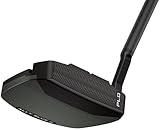
PING PLD Milled Ally Blue 4 Gun Metal Putter 34 Inches
- PLD Milled Ally Blue 4 Gun Metal
- Putterflex
- Standard
PLD stands for Ping’s custom fitting program, and the whole line is built around the idea that fit matters as much for a putter as it does for irons. The Ally Blue 4 features a face-balanced mallet head design that suits golfers with a straighter, more gate-like stroke path. If your Ping fitting reveals a face-balanced preference (and many recreational golfers do benefit from it), this head shape could be transformative for your short game.
The milling on the PLD line is done in-house by Ping, and it shows. The face has a distinctive texture that creates exceptional friction at impact, producing the kind of consistent roll you normally only see from expensive custom shops. We noticed a real reduction in variance on distance control during our testing — putts from the same distance were clustering much tighter than we’ve experienced with other putters in the mallet category.
The Ally Blue 4’s distinctive angular body with the blue anodized finish isn’t just for looks (though it does look sharp). The blue coloring on the top line and sightline creates strong visual contrast that makes alignment much easier at address. The sole also has weight ports that Ping can tune during the fitting process for your ideal swing weight and feel preferences.
What we loved: The consistency this putter produces is genuinely impressive. Stroke after stroke, distance control was more predictable than almost anything else we tested. The custom fitting options through Ping are a real advantage. What we didn’t love: If you want one tomorrow, you might be waiting. Custom orders through PLD take time, and the fitting process requires a trip to a certified Ping fitter.
Verdict: The best golf putter for data-driven golfers who want maximum consistency and are willing to invest in a proper fitting. The wait is worth it.
6. Wilson Infinite South Side — Best Budget Pick
Not everyone has $300-$500 to drop on a putter, and that’s completely fair. The Wilson Infinite South Side exists for exactly that golfer — someone who wants a serious mallet putter with real performance features without taking out a second mortgage. And honestly? We were impressed.

Wilson 2024 Infinite South Side Golf Putter – Men’s Right Hand, 35″
- Wilson 2024 Infinite South Side Golf Putter – Men’s Right Hand, 35″
- DOUBLE-MILLED FACE: Our double-milled face pattern ensures a consistent feel, roll and perfect distance control no matter the strike location.
- FOCUS ACTIVATION PARALLEL ALIGNMENT LINES: A thick middle line, with two thinner support lines to either side, optimizes focus allowing you to get dialed in on every single putt.
- PVD ANTI-GLARE FINISH: Two tone PVD anti-glare finish reduces distraction, allowing the player to focus solely on the ball as it falls into the hole.
$138.47
The South Side is a face-balanced mallet, which makes it a natural fit for golfers with a straighter-through putting stroke. The oversized mallet head provides a ton of MOI at a price point where you’d normally be looking at much simpler construction. Wilson’s Infinite face insert uses a deep milling pattern designed to reduce skid and get the ball rolling end-over-end faster, which is the exact same performance goal that more expensive manufacturers are pursuing with their premium face technologies.
We were genuinely surprised by how the South Side performed on the practice green. It’s not going to feel like a Scotty Cameron — let’s be real about that. But the feedback is adequate, the alignment aids are clear and helpful, and the consistent roll we got from the face insert was better than we expected at this price. For a beginner or high-handicapper who just wants a solid mallet to replace whatever came in their starter set, this is an excellent choice.
The South Side also features an infinity sight line that runs the full length of the putter, which makes it easy to aim even for golfers who have historically struggled with alignment. Combined with the face-balanced design, this putter is actually quite forgiving of minor stroke imperfections — exactly what a budget buy should be.
What we loved: The price. The alignment system. The face-balanced design that helps straight-stroke players. The forgiveness on off-center hits is genuinely solid for this tier. What we didn’t love: Feel is functional but not inspiring. You won’t be gushing about the sensation of this putter — it gets the job done without the emotional reward of premium options.
Verdict: The best budget golf putter in 2026. If money is the primary consideration, the Wilson Infinite South Side gives you more putter for the dollar than anything else in this price range.
How to Choose the Right Putter
Finding the best golf putters for your specific game isn’t just about picking the one your favorite tour pro uses. There are a handful of key factors that will genuinely affect how well you putt, and getting them right can save you several strokes per round without changing anything about your swing mechanics.
Blade vs. Mallet: What’s the Real Difference?
This is the first question most golfers face when shopping for a new golf putter. Blade putters are the traditional, thinner head style that’s been around since the game began. They suit golfers who have an arcing stroke — where the putter face opens slightly on the backswing, squares at impact, and closes through the follow-through. Blade putters tend to offer better feedback and feel, which is why tour pros disproportionately use them. The trade-off is that they’re less forgiving of off-center strikes.
Mallet putters have a larger, wider head with more mass distributed away from the face. This produces higher MOI, which means the head is more resistant to twisting on mishits. Golfers with a straighter, more pendulum-style stroke tend to putt better with mallets. If you consistently miss putts to the same side despite feeling like you aimed correctly, a face-balanced mallet might be the solution. According to research highlighted by Golf Digest, the majority of recreational golfers benefit from some degree of mallet stability.
Face Insert vs. Milled Face
Most putters either have a soft polymer face insert or a milled metal face, and this affects feel more than almost anything else. Face inserts — like the White Hot insert in the Odyssey — are designed to produce a soft, muted feel at impact. They tend to be more consistent across a range of temperatures and are excellent for golfers who want maximum feel feedback without harshness.
Milled faces — like those on the Scotty Cameron and Ping PLD — are machined directly into the metal head. They produce a firmer, crisper feel with exceptional feedback on where exactly you struck the ball. Tour players and serious amateurs tend to prefer milled faces because the feedback helps them diagnose and correct stroke issues in real time. The best golf putters in each category execute their chosen face technology to a high standard — the real question is which feedback style you prefer.
Putter Length: More Important Than You Think
Standard putter length is 34 inches for most men and 33 inches for most women, but those are starting points, not rules. Your ideal putter length depends on your height, your posture at address, and where your eyes end up relative to the ball when you set up. Eyes directly over the ball (or just inside) is generally ideal. If your standard 34-inch putter has you standing too upright with your eyes way inside the ball, try a 33-inch. If you’re bent over dramatically, try 35 inches.
Getting length right is one of the easiest fitting wins available. Many golfers have been using the wrong length putter for years and don’t realize it. A proper fitting takes about 20 minutes and can eliminate compensations you’ve been making in your stroke without knowing it.
Hosel Types and Stroke Arc
The hosel is how the shaft connects to the head, and different hosel configurations affect how the putter hangs when you hold it in your natural putting grip. Putters that hang with a toe-down position (toe hang) suit golfers with an arcing stroke. Putters that hang face-balanced suit golfers with a straighter stroke. Common hosel types include plumber’s neck, single-bend, double-bend, and center-shaft — each producing different amounts of toe hang. If you’re serious about finding the best golf putters for your stroke, a putter fitting where they measure your actual arc is the most efficient path to the right hosel configuration.
Pair your new putter with the right equipment on the course — check out our guide to the best on-course golf accessories for everything else you need in your bag.
Putter FAQs
What makes a putter the “best” for an amateur golfer?
The best golf putters for amateurs are ones that offer forgiveness on off-center strikes, clear alignment aids, and a feel that gives useful feedback without punishing you for mishits. For most recreational golfers, a mid-to-high MOI design — whether a forgiving blade or an entry-level mallet — will outperform the tour-spec blade their favorite pro uses. The best putter is always the one that suits your actual stroke, not the one that looks coolest in a YouTube video.
Is it worth spending more than $200 on a putter?
Yes, with conditions attached. Premium putters from Scotty Cameron, Ping PLD, and TaylorMade’s high-end Spider line are built to much tighter tolerances and use better materials than budget options. The face milling, the weighting precision, and the fitting options available at higher price points do translate to real performance differences. That said, a $150 putter that fits your stroke correctly will beat a $500 putter that doesn’t. Spend on fit first, then on quality within your budget. The best golf putters aren’t always the most expensive ones.
How do I know if I need a blade or mallet putter?
The simplest test: put a putter in your normal grip and let it hang freely in front of you. If the toe points straight down (toe hang), you likely have an arcing stroke and will benefit from a toe-hang blade or semi-mallet. If the face stays parallel to the ground (face balanced), you likely have a straighter stroke and will do better with a face-balanced mallet. A trained fitter can measure your actual arc with video analysis and give you a definitive answer, which is worth doing before you invest in one of the best golf putters on this list.
What length putter should I buy?
If you’re between 5’8″ and 6’1″, a 34-inch putter is a reasonable starting point. Under 5’8″, consider 33 inches. Over 6’1″, try 35 inches. But these are just guidelines — the real test is whether your eyes are directly over the ball at address when you’re in your natural posture. Getting fit for length is genuinely one of the highest-ROI things you can do for your putting. Many golf shops will measure you for free.
Can a new putter really lower my scores?
It can — but only if you’re switching to a better-fitting putter. The placebo effect is real in putting (confidence matters), but a better-fitting putter with improved alignment aids and the right head weight for your tempo will produce measurably better results over time. We’ve seen handicaps drop by 2-3 strokes after a proper putter fitting, just because the golfer stopped fighting equipment that was working against their natural motion. Among all the best golf putters in this guide, each one is built to help a specific type of golfer putt better. The key is matching yourself to the right one.
Should I get fitted for a putter?
Absolutely, and sooner than you think. Most golfers get fitted for their driver and irons and then grab whatever putter feels okay off the rack. That’s backwards — the putter is the one club you use on every hole, and it’s the one that has the most direct impact on your score. A putter fitting covers length, lie angle, head style, hosel type, and grip thickness. Many manufacturers like Ping (through PLD) and Scotty Cameron offer fitting events at partner retailers. If you want to see the full picture of your iron game alongside your short game improvement, also check out our best golf irons 2026 guide for the complete bag refresh.
Final Thoughts on Finding the Best Golf Putters
The short game is where scores are made and broken. You can improve your driving distance all offseason, work on your ball striking until your irons are striped tight — and then throw it all away with three-putts on every other green. The best golf putters on this list give you a real edge, whether you’re putting on a slow muni course or a lightning-fast private club.
Our overall pick stays the Odyssey White Hot OG Two for most golfers. The feel is iconic, the performance is proven, and the price makes it an easy yes. If budget is no object, the Scotty Cameron Super Select Newport 2 is genuinely the finest golf putter we’ve tested — it’s as good as it looks. And if you need maximum stability and alignment help, the TaylorMade Spider GTX is the mallet that delivers.
Whatever you choose from our best golf putters guide, pair it with real practice. Even the best golf putter in the world won’t fix a fundamentally broken stroke — but a good training aid can. Check out our full rundown of the best golf rangefinders for the rest of your gear upgrade, and make sure your wedge game is dialed in with our guide to the best golf wedges of 2026. The short game is a complete system — might as well build it right.
Now get out there and make some putts. We’ll see you on the green.
You Might Also Enjoy
- Titleist 2026 Putters Review — Is the Scotty Cameron Worth It?
- Best Golf Wedges of 2026 — Our Top Picks for Every Budget
- Best Golf Training Aids of 2026 — Practice Smarter, Score Lower
- Best Golf Rangefinders of 2026 — Know Your Distance Every Time
- Best Golf Irons of 2026 — Top Picks From Blade to Game Improvement
- Best On-Course Golf Accessories of 2026 — Everything Else You Need in the Bag