Best Golf Irons for Mid-Handicappers 2026: 6 Forgiving Sets Tested
The Best Golf Irons for Mid-Handicappers in 2026: 6 Picks That Actually Deliver
Let’s cut straight to it — if you’re playing off a handicap somewhere between 10 and 20, you’re in a tricky spot when it comes to buying irons. You’ve outgrown the ultra-chunky, max-forgiveness blades that scream “beginner,” but you’re not quite ready to punish yourself with a set of muscle backs that demand Tour-level ball striking every time. Finding the best golf irons for mid-handicappers is genuinely one of the trickier equipment decisions in the game, because you need a club that rewards the good swings you’re starting to string together while still bailing you out on the ones that aren’t quite there yet.
That’s the whole tension with being a mid-handicapper. You hit enough pure irons to know what a well-struck 7-iron feels like. You also hit enough heeled, toed, and generally wayward shots to know that forgiveness still matters — a lot. The golf irons for mid-handicappers on this list were chosen because they genuinely walk that line. Whether you’re a 12 who’s sneaking up on single figures or an 18 who just wants to stop leaving 40 yards out on the table with your long irons, there’s something here for you.
I’ve gone through six of the best iron sets available right now — everything from max-forgiveness game improvement irons to hollow body designs that look a bit sharper in the bag — and broken down exactly what you get, who each one suits best, and where each set has its limitations. No brochure copy here. Just honest takes.
What Mid-Handicappers Actually Need in Irons
Before we get into the individual picks, it’s worth spending a minute on what separates a mid-handicapper from a beginner or a scratch player, because the iron that’s right for you depends on understanding your own game pretty clearly.
A mid-handicapper — and for the purposes of this guide, we’re talking handicap range of 10 to 20 — is someone who can get the ball airborne consistently, has a repeatable-enough swing to benefit from some workability, and yet still misses enough greens in regulation that distance and forgiveness remain high priorities. You’re not hitting 14 greens a round. More like 5–8 on a decent day. That means your irons need to give you a fighting chance even when contact isn’t perfect.
Distance and Forgiveness: The Balancing Act
The biggest thing the best golf irons for mid-handicappers get right is the balance between distance and forgiveness. Pure forgiveness irons — the stuff aimed at 25+ handicappers — tend to be so chunky and offset that they start to feel clunky when your swing actually improves. They also tend to launch the ball so high that distance gapping goes to pot. On the flip side, players irons punish off-center strikes brutally. A mid-handicapper who grabs a set of forged cavity back irons designed for scratch golfers is going to bleed shots all over the course.
The sweet spot for mid-handicapper irons sits in the game improvement and hollow body iron categories, with a few of the stronger player’s distance irons making sense for the lower end of the handicap range. You want a wide enough sole to get through the turf cleanly, a center of gravity that’s low and deep enough to launch the ball properly, and a face that’s forgiving on mishits — but not so offset that the club looks like a snow shovel at address.
Workability vs. Pure Forgiveness
Here’s where mid-handicappers need to be honest with themselves. Workability — the ability to shape the ball left or right on command — sounds great, but how often are you actually doing it intentionally? For most mid-handicappers, the answer is “occasionally at best.” If you’re making an occasional conscious effort to draw or fade the ball, a mid-forgiveness iron with a modest amount of shot-shaping potential will serve you fine. If you want the ability to work the ball more as your game develops, you might lean toward the slightly more compact heads on this list. Either way, don’t sacrifice real forgiveness chasing workability you’re not ready to use yet.
Shaft Considerations for Mid-Handicappers
The shaft debate is one you’ll want to think through carefully. Most mid-handicappers swing between 80–95 mph with a 6-iron, which generally puts you in the regular or stiff flex zone for steel shafts. If your club head speed is on the lower end or you have any swing faults that cost you shaft efficiency, graphite can add meaningful distance. We cover this in more detail in our guide to steel vs graphite shafts, but the short version is: don’t automatically assume steel just because you’ve always played it. A properly fitted graphite shaft can make a meaningful difference for a mid-handicapper, especially in the longer irons where shaft flex matters most.
Now, onto the irons themselves.
1. TaylorMade Qi10 Irons — Best for the Upper End of Mid-Handicap Range

- Experience Unmatched Forgiveness: The Qi10 driver is engineered for optimal performance, offering golfers a blend of distance and forgiveness through advanced multi-material constructions, maximizing your game with every swing
- Enhanced Distance with Proven Technology: The TaylorMade driver features a lower CG and higher MOI, ensuring optimal flight for your golf balls. Achieve longer shots while complementing your other TaylorMade golf clubs for top-notch performance
- Superior Energy Transfer for Maximum Efficiency: The innovative 60X Carbon Twist Face enhances energy transfer at impact, allowing for improved ball speeds on off-center strikes. Combine with your favorite golf tees for better consistency
- Sleek Design for Confident Alignment: The Infinity Carbon Crown offers a clean and stylish view at address, boosting your confidence. Its mass redistribution enhances forgiveness, making the Qi10 driver a vital element in your golf bag
- Customizable Performance for Every Golfer: With a 4° adjustable loft sleeve, the Qi10 driver lets you fine-tune your shot preferences to match your unique style. Improve your scores and enhance your golfing experience
TaylorMade has been on a serious run with its Qi series, and the Qi10 irons are arguably the best game-improvement iron the brand has ever made. For mid-handicappers sitting in the 14–20 range — or anyone who’s tried players irons and realized they’re just giving up too many shots — the Qi10 is worth serious attention.
Sale
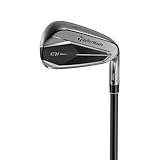
TayIorMade Golf Qi Irons Gunmetal 5-PW,AW Steel Shaft Regular Right Handed
- A rich gunmetal PVD finish and updated design theme gives the Qi Gunmetal Edition iron a new technical, elegant look that will turn heads for both its looks and performance.
- The majority of game improvement irons are designed in a way that exaggerates the right miss (left miss for left handed players). The Qi Iron features TaylorMade’s patented face technology designed to control face flexibilty and eliminate “cut” spin for straighter shots through the whole set.
- Each head has been designed to deliver specific performance for that individual iron. Starting with a foundation of maximum distance and forgivness, the face design is tailored to deliver the launch and spin needed for straight, consistent shots with each iron.
- FLTD CG strategically positions the center of gravity (CG) lowest in the long irons anad progressively shifts it higher throughout the set. The design produces better launch and playability in long irons with precision and control in the scoring clubs.
The standout technology here is TaylorMade’s Speed Pocket, a slot cut into the sole that flexes at impact to generate ball speed across a wider section of the face. What this means in practice: even your heel shots and toe shots are going to fly longer and straighter than they have any right to. For mid-handicappers who are still dialing in their contact, that kind of face tech makes a tangible difference round to round.
The Qi10 also uses a hollow body construction with a polymer core filling, which dampens the feel at impact and gives the irons a softer sound than you might expect from a game-improvement iron. They don’t feel like blades — nothing in this category does — but they don’t sound like a tin can being hit either. Distance is genuinely strong: most mid-handicappers pick up 5–10 yards over a more compact iron set, particularly in the longer irons where the face speed boost is most noticeable.
Performance Notes
- Feel: Solid, dampened, better than you’d expect from a pure GI iron
- Distance: Strong — one of the longer irons in this category
- Forgiveness: High — Speed Pocket keeps mishits in play
- Workability: Limited, as expected from a game-improvement iron
Who the TaylorMade Qi10 Is Best For
Mid-handicappers in the 15–20 range who want maximum performance out of a game improvement iron set, and golfers coming off older irons who want a noticeable upgrade in distance and forgiveness. Also a great fit for mid-handicappers who’ve played players irons and given up shots they didn’t need to give up.
Drawbacks
The Qi10 sits on the bigger end of the game-improvement iron spectrum. If you’re a 10-handicapper with decent ball striking who cares a bit about how your irons look at address, you might find the head size a touch bulky. The offset is visible, which some mid-handicappers are fine with and others aren’t. Check out the TaylorMade Qi4D irons if you want something in between from the same brand.
2. Callaway Apex AI300 Irons — Best All-Around Iron for Mid-Handicappers
No products found.
If there’s one iron on this list I’d point most mid-handicappers toward without needing to know a whole lot more about their game, it’s the Callaway Apex AI300. These are genuinely excellent golf irons for mid-handicappers, and the AI-designed face technology is more than just marketing language — it actually changes how the iron performs.

Callaway Golf Apex AI300 Iron Set (Right, Steel, Stiff, 5 Iron – PW)
- A forged cavity-back combined with a forged 455 face creates a tour-level sound and feel. This advanced forged construction is coupled with a stunning, premium design that will captivate you more than ever before.
- In addition to enhanced feel, the forged 455 Face Cup delivers outstanding power across the face. This unique combination of power and feel seperates the Apex Ai300 from the rest.
- The Apex Ai300 achieves incredible consistency through the Ai Smart Face. Using real golfer swing data combined with artificial intelligence, the Ai Smart Face generates outstanding speed and spin consistency with tight dispersioin into greens.
$1,242.00

Callaway used machine learning to optimize the face geometry of the AI300 for a wider range of impact locations than a human engineer could reasonably map. The result is an iron that produces remarkably consistent ball speed even when you catch it a little thin, a little fat, or off the heel. Combine that with the hollow construction and the urethane microspheres in the cavity — which absorb unwanted vibration — and you’ve got an iron that feels almost inexplicably good for a game-improvement iron. The feel is buttery for this category. Mid-handicappers who are used to the clunky feedback of cheaper GI irons will notice the difference immediately.
Distance with the AI300 is also excellent. The hollow design and AI face work together to push ball speeds up, and you’ll likely find you’re hitting a club less into greens compared to your current set. For a mid-handicapper, that’s a serious advantage.
Performance Notes
- Feel: Excellent for the category — the urethane microspheres really do make a difference
- Distance: Very strong — expect to gain distance across the set
- Forgiveness: High — AI face design maintains ball speed on mishits
- Workability: Modest — these are designed to fly straight and high, not to be worked
Who the Callaway Apex AI300 Is Best For
This is probably the best all-around pick for the majority of mid-handicappers. If you’re in the 10–18 handicap range and want a premium iron that gives you forgiveness, distance, and feel without feeling like you’re swinging a shovel, the AI300 is it. It’s also a great choice for mid-handicappers who play a lot and care about how the club feels, not just how it performs on a data sheet.
Drawbacks
At the premium price point, the AI300 is an investment. And like the Qi10, it doesn’t offer much workability — these are irons designed to go straight, and if you’re the type of mid-handicapper who’s developed a reliable draw and wants to use it, you might feel like these irons work against you slightly. For most mid-handicappers, though, “goes straight” is a feature, not a bug.
3. Ping G440 Irons — Best for Consistency and Reliability

- G440
- Stiff
- 5-PW, UW
Ping doesn’t do flashy. They do engineering, and they do it well. The G440 irons are the latest chapter in Ping’s long history of making some of the most reliable game improvement irons available to mid-handicappers, and they bring a couple of genuinely useful improvements over the G430 that make them worth considering for 2026.
Ping G440 5-PW, UW Iron Set Stiff Steel Black Dot Excellent
- G440
- Stiff
- 5-PW, UW
The key technology in the G440 is Facewrap — Ping’s approach to wrapping the face material around to the back of the iron head, increasing the effective flexing area of the face and generating more ball speed across a larger impact zone. This is particularly useful for mid-handicappers because the sweet spot on a GI iron is already reasonably large, but Ping has found a way to make it even more forgiving.
What sets the G440 apart for mid-handicappers, though, is how reliable the gapping is across the set. Ping’s engineers obsess over consistent distance gaps between each iron, which means when you pull a 7-iron or a 6-iron, you know exactly how far it’s going. For mid-handicappers who are working on their course management and trying to get more precise with distances, this consistency is genuinely valuable. It’s not just about how far the 7-iron goes — it’s about how reliably it goes that far.
Performance Notes
- Feel: Solid and stable — Ping’s tuning is precise
- Distance: Good — not the longest iron on this list but very consistent
- Forgiveness: High — Facewrap technology and wide sole work well together
- Workability: Low — these are engineered to fly straight and predictably
Who the Ping G440 Is Best For
Mid-handicappers who prioritize consistency over raw distance. If you’ve been playing a set where the gapping is all over the place — where your 7-iron and 6-iron carry roughly the same distance — the G440 will feel like a revelation. Also a strong pick for mid-handicappers who get custom fit, since Ping’s fitting program is one of the best in the business and the G440 is available in a wide range of shaft and grip options.
Drawbacks
If pure distance is your main priority, the G440 isn’t the longest iron on this list. The Callaway AI300 and TaylorMade Qi10 both edge it out in raw ball speed. The G440 also has a very traditional Ping look — slightly chunky, with visible offset — that not every mid-handicapper loves. But if you want an iron set that just works, round after round, the G440 delivers.
4. Titleist T350 Irons — Best for Mid-Handicappers Wanting a Step Up in Class
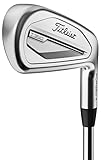
Titleist occupies a unique spot in the iron market. They’re known as a serious brand — Tour players use Titleist — and for a long time their irons weren’t really aimed at mid-handicappers. The T350 changed that. It’s Titleist’s most forgiving iron, built specifically for golfers in the 12–20 handicap range who want a proper, premium iron set that still bails them out on the mishits.
The T350 uses a hollow body design with a polymer core that absorbs vibration and contributes to a sound and feel that’s much softer than you’d expect from a forgiving iron. At address, it looks considerably more refined than the pure game-improvement iron options on this list — there’s less offset, a slightly smaller head, and the kind of clean top line that makes mid-handicappers feel like they’re playing something serious. For golfers who care about the visual at address, the T350 just looks right.
Performance-wise, the T350 is genuinely impressive. The polymer core contributes to distance, the hollow design pushes the center of gravity low and deep for high launch, and the face speed is strong enough that you don’t feel like you’re giving up yards for the cleaner look. Ball flight is higher than you might expect — Titleist has built a proper high-launching iron here, not a flat-trajectory players iron that most mid-handicappers would struggle with.
Performance Notes
- Feel: Premium — among the best-feeling irons at this forgiveness level
- Distance: Strong — polymer core and hollow design produce excellent ball speed
- Forgiveness: Good — more forgiving than it looks at address
- Workability: Moderate — slightly more shapeable than pure GI irons
Who the Titleist T350 Is Best For
Mid-handicappers in the 12–18 range who want something that performs like a game-improvement iron but looks like a proper Titleist at address. Also a great fit for golfers who are motivated by the gear they carry — if pulling a Titleist out of the bag is going to give you confidence, the T350 earns that right. Great choice for mid-handicappers who are aspiring to single figures and want an iron set that can grow with them.
Drawbacks
The T350 isn’t as forgiving as the TaylorMade Qi10 or the Callaway AI300. For mid-handicappers closer to the 18–20 end of the range, there are more forgiving options that will probably perform better for them. The premium price point is also real — Titleist doesn’t do budget. But if the forgiveness level fits your game, you’re getting one of the best-feeling iron sets in this category.
5. Cleveland Launcher XL Halo Irons — Best Budget Pick for Mid-Handicappers

- XL HEAD DESIGN - This is huge: a bigger head means an MOI of 2,908 g-cm2 in the 7-Iron—our most ever in a Cleveland Golf Hybrid-Iron. It’s maximum distance with maximum fun.
- RAIL TO V-SHAPED SOLE DESIGN - Gliderail in the long Irons gradually transitions to a V-Shaped sole in the short Irons and ultimately a 3-Tiered Sole on the Dual and Sand Wedges.
- MAINFRAME - Designed using Artificial Intelligence, MainFrame variable face technology increases ball speed while unique weight pad designs ensure maximum forgiveness across the face.
- ACTION MASS CB - An 8g weight placed inside the end of the grip delivers better balance for more control without extra effort.
- HIBORE CROWN STEP - Our stepped crown drops the center of gravity for high-launching shots.
Not everyone wants to spend top dollar on golf irons, and honestly, you don’t have to. The Cleveland Launcher XL Halo irons are proof that mid-handicappers can get genuine game-improvement performance without raiding their savings account. These are some of the best-value golf irons for mid-handicappers available right now, and they regularly come in well under what the premium options on this list cost.

Cleveland Launcher XL Halo Iron Set RH 5-DW Steel Reg
- XL HEAD DESIGN – This is huge: a bigger head means an MOI of 2,908 g-cm2 in the 7-Iron—our most ever in a Cleveland Golf Hybrid-Iron. It’s maximum distance with maximum fun.
- RAIL TO V-SHAPED SOLE DESIGN – Gliderail in the long Irons gradually transitions to a V-Shaped sole in the short Irons and ultimately a 3-Tiered Sole on the Dual and Sand Wedges.
- MAINFRAME – Designed using Artificial Intelligence, MainFrame variable face technology increases ball speed while unique weight pad designs ensure maximum forgiveness across the face.
- ACTION MASS CB – An 8g weight placed inside the end of the grip delivers better balance for more control without extra effort.
- HIBORE CROWN STEP – Our stepped crown drops the center of gravity for high-launching shots.
Cleveland put real engineering into the Launcher XL Halo. The MainFrame face — a variable-thickness face design — maintains ball speed across a wide impact zone, similar in concept to what you see in more expensive irons. The HiBore Crown is the standout design feature: a crown that extends down from the top rail, pushing the center of gravity lower and deeper. The result is high launch, long carry, and a very forgiving trajectory that suits mid-handicappers perfectly.
In terms of feel, the Launcher XL Halo is a bit more firm than the premium hollow body options on this list. That’s the honest trade-off at this price point. But performance-wise — distance, launch, and forgiveness — Cleveland has closed the gap considerably. If you’re a mid-handicapper who’s been playing old hand-me-down irons or entry-level sets, stepping into a set of Launcher XL Halos will feel like a genuine upgrade, and you won’t be embarrassed by them in the bag.
Performance Notes
- Feel: Firm but not unpleasant — solid and stable
- Distance: Very good for the price — MainFrame face generates real ball speed
- Forgiveness: High — HiBore Crown and wide sole are very effective
- Workability: Low — these are pure distance and forgiveness irons
Who the Cleveland Launcher XL Halo Is Best For
Mid-handicappers on a budget who don’t want to compromise on the core performance metrics that matter most: distance and forgiveness. Also a great option for golfers who are still figuring out their game and don’t want to sink a big chunk of money into an iron set until they know exactly what they need. If you’re picking up the game later in life or coming back to golf after a long break, the Launcher XL Halo is an excellent starting point for the mid-handicapper range.
Drawbacks
The feel gap between the Launcher XL Halo and the premium irons on this list is real. The Callaway AI300 or Titleist T350 simply feel better at impact — that’s what the premium pricing buys you. The Launcher XL Halo also looks a bit more utilitarian in the bag compared to the Titleist or Callaway options. Neither of these things affects your scorecard much, but they’re honest trade-offs worth knowing about.
6. Srixon ZXi 5 Irons — Best Underrated Pick for Mid-Handicappers

- i -FORGED Condensed Forging stretching from the high-toe area and along the topline of the Iron blade enhances overall strength, durability, and feel. Then the forged faces on ZXi5 are softened to improve this already exceptional feel.
- MAINFRAME MainFrame saves additional weight and adds more MOI through an enhanced network of milled channels on the back side of the Iron face. At impact, this system amplifies ball speed and adds forgiveness.
- TOUR V.T. SOLE Our Tour V.T. Sole’s proprietary combination of sole widths, bounce angles, and notches to ensure a smooth glide through fairway, rough, and sand without any loss of speed.
- PROGRESSIVE GROOVES The 3i-7i feature wider grooves, while the 8i-AW have deeper, closer-set grooves to ensure consistent spin across the set. Laser milling between each groove, on every loft, enhances adds bite on every strike.
- PLAYERS DISTANCE SHAPES ZXi5 features a slightly wider sole with moderate blade length and offset, giving attuned golfers enhanced distance, forgiveness, and workability—all with an ultra-clean look at address.
Srixon doesn’t get the marketing budget that TaylorMade or Callaway throws at their iron releases, which means a lot of mid-handicappers walk past the ZXi 5 without giving it a second look. That’s a mistake. The Srixon ZXi 5 is a seriously impressive iron for mid-handicappers, and it brings a combination of forged-like feel and genuine game-improvement forgiveness that you don’t often find in the same package.

Srixon ZXi 5 Iron Set, 5-PW/AW, Steel, Stiff, Right Hand
- i -FORGED Condensed Forging stretching from the high-toe area and along the topline of the Iron blade enhances overall strength, durability, and feel. Then the forged faces on ZXi5 are softened to improve this already exceptional feel.
- MAINFRAME MainFrame saves additional weight and adds more MOI through an enhanced network of milled channels on the back side of the Iron face. At impact, this system amplifies ball speed and adds forgiveness.
- TOUR V.T. SOLE Our Tour V.T. Sole’s proprietary combination of sole widths, bounce angles, and notches to ensure a smooth glide through fairway, rough, and sand without any loss of speed.
- PROGRESSIVE GROOVES The 3i-7i feature wider grooves, while the 8i-AW have deeper, closer-set grooves to ensure consistent spin across the set. Laser milling between each groove, on every loft, enhances adds bite on every strike.
- PLAYERS DISTANCE SHAPES ZXi5 features a slightly wider sole with moderate blade length and offset, giving attuned golfers enhanced distance, forgiveness, and workability—all with an ultra-clean look at address.
$1,349.99
Srixon released the ZXi 5 in 2025 as part of their refreshed ZXi lineup, and it’s targeted squarely at mid-handicappers who want something that performs like a game improvement iron but feels more refined than the typical chunky GI. The thin cup face construction flexes across a large area at impact, generating impressive ball speed, while the speed groove along the leading edge adds an extra kick to the launch. The face technology is genuinely strong — this iron keeps up with the big names in terms of ball speed.
What makes the ZXi 5 feel different from many cast irons is the forged-like quality of the feedback at impact. Srixon uses a specific grain structure in their casting process that produces a softer, more forgiving feel than typical cast irons, without the cost premium of actual forging. For mid-handicappers who care about feedback — who want to feel the difference between a pure strike and a mishit — the ZXi 5 gives you more of that information than most pure game-improvement irons do.
Performance Notes
- Feel: Excellent — genuinely forged-like for a cast iron
- Distance: Strong — thin cup face and speed groove produce good ball speeds
- Forgiveness: Good — wide enough sole and low CG work well for mid-handicappers
- Workability: Moderate — slightly more workable than pure GI irons
Who the Srixon ZXi 5 Is Best For
Mid-handicappers in the 10–16 range who want better feedback from their irons without moving into full players iron territory. If you’re the kind of golfer who wants to know what you’re doing right and wrong on the course — not just see the ball go somewhere — the ZXi 5 delivers more feel information than most irons at this forgiveness level. Also a strong pick for mid-handicappers who are skeptical of overly-hyped releases and want to buy based on performance rather than marketing.
Drawbacks
The ZXi 5 isn’t quite as forgiving as the TaylorMade Qi10 or Callaway AI300 on the really bad mishits. It sits in a sweet spot between game-improvement and player’s-distance irons, which means it’s not the absolute max forgiveness option if that’s your priority. Srixon’s retail availability is also more limited than the major brands — you might need to order online rather than trying them at your local big-box golf store.
How to Choose Golf Irons as a Mid-Handicapper
Picking the right iron set when you’re a mid-handicapper involves a few decisions that are worth making consciously rather than just grabbing whatever looks good or whatever your buddy plays. Here’s what to think through.
Steel vs. Graphite Shafts
The default assumption that “serious golfers play steel” is outdated. Steel shafts are heavier, which generally produces a more stable, consistent delivery of the clubface through impact — and for mid-handicappers with higher club head speed or more consistent swings, steel is often the right call. But for mid-handicappers with lower swing speeds, or those coming back from injury or playing into their 50s and beyond, graphite shafts can add meaningful yards without requiring a swing change. Get fitted rather than guessing. You can read more about this in our detailed breakdown of steel vs graphite shafts.
Set Makeup: How Many Irons Do You Actually Need?
Most standard iron sets run from a 5-iron through pitching wedge (or even gap wedge). But for mid-handicappers, the long irons — particularly the 3 and 4-iron — are genuinely hard to hit consistently. Consider replacing those with best golf hybrids instead. A hybrid 3 or 4 is easier to launch, more forgiving on mishits, and more versatile around the course. Most mid-handicappers carry a 5-iron as their longest iron and fill out the long end of the set with hybrids or fairway woods. This isn’t giving up — it’s smart course management.
Getting Fitted: Not Just for Tour Players
A proper iron fitting — shaft flex, lie angle, length, grip size — can make a meaningful difference for mid-handicappers. Lie angle in particular is something a lot of players overlook. An iron that’s too upright or too flat encourages miss patterns that are hard to correct, no matter how good the technology in the head. If you’re spending real money on a new iron set, spend the extra bit on a fitting session. Most golf retailers offer basic fittings for free with a purchase, and independent club fitters are worth paying for if you want a truly dialed result.
Don’t Get Distracted by What Tour Players Use
Tour pros are not mid-handicappers. When you see a Tour player carrying blades or compact player’s irons, remember they’re making 17 out of 18 regulation swings with near-perfect ball striking. A mid-handicapper swinging those same irons would hemorrhage strokes on mishits. The best golf irons for mid-handicappers are the ones that make you shoot lower scores — and for the vast majority of golfers in the 10–20 handicap range, that means a game-improvement or hollow body iron, not what you see on the telecast.
Frequently Asked Questions
What’s the difference between game improvement irons and players distance irons for mid-handicappers?
Game improvement irons are designed specifically for higher forgiveness — they have wider soles, more offset, larger heads, and face technology optimized for mishit performance. Players distance irons sit between traditional players irons and GI irons; they look cleaner at address and offer some workability, but still use hollow construction and face technology to push distance and maintain some forgiveness. For most mid-handicappers in the 14–20 range, game improvement irons are the smarter choice. For mid-handicappers closer to single figures, a players distance iron might be worth considering.
Should mid-handicappers buy a full iron set or piece together a bag?
Most mid-handicappers are best served by buying a matched iron set from a single manufacturer rather than mixing and matching. Gapping is more consistent, the shafts are matched, and the lie angles are set up as a system. The exception is the long irons — as discussed above, replacing your 3 and 4 irons with hybrids is smart for most mid-handicappers and won’t hurt your gapping if you choose your hybrids carefully. Once you’re a stronger player with a clear sense of exactly what you need, piecing together a mixed set makes more sense.
How much should a mid-handicapper spend on irons?
Current-generation game improvement irons range from around $400–$500 for good value options like the Cleveland Launcher XL Halo up to $1,200–$1,400 for premium sets like the Callaway Apex AI300 or Titleist T350. For most mid-handicappers, spending in the $600–$900 range gets you genuinely excellent performance without paying the premium for marginal differences at the top of the market. The most important thing is getting the right iron for your game — a well-fitted set in the mid-price range will outperform an ill-fitted premium set every time.
When should a mid-handicapper consider moving to players irons?
When you’re consistently playing off a 9 or better, striking the ball with real consistency, and finding that game-improvement irons are actually limiting your ability to shape shots or control trajectory on approach shots, it might be time to look at a more compact design. But don’t rush that transition. Many scratch golfers play hollow body irons and perform brilliantly. The best iron is the one that fits your current ball striking — not the one that you think signals you’ve “made it.”
The Bottom Line: Which Iron Is Right for You?
After going through all six picks, here’s how I’d break it down for mid-handicappers trying to figure out where to start:
If you want the absolute best all-rounder and budget isn’t a constraint, the Callaway Apex AI300 is my top pick for golf irons for mid-handicappers in 2026. The feel is exceptional for the category, the distance is strong, and the AI-designed face genuinely performs. It suits a wide range of mid-handicap players and will hold its value if you eventually want to move to a more compact design.
If you want maximum forgiveness and you’re on the higher end of the mid-handicap range, the TaylorMade Qi10 is the play. Speed Pocket technology and the hollow body construction combine to give you some of the best mishit performance available in a game-improvement iron.
If you want premium feel and a Titleist badge and you’re in the 12–16 range, the Titleist T350 is the right choice — it looks serious at address, feels premium at impact, and will grow with your game as you push toward single figures.
If budget is a real consideration, don’t hesitate on the Cleveland Launcher XL Halo. The value-for-performance ratio is genuinely impressive, and no one on the course is going to know you didn’t spend top dollar.
And if you want something a bit different — a bit more feel and feedback than the typical game-improvement iron — the Srixon ZXi 5 is the underrated pick of the bunch. Go hit them before you dismiss them based on brand recognition.
Whatever you end up in, make sure you get fitted. The right shaft flex and lie angle will do more for your ball striking than any technology in the clubhead. These are tools — the best golf irons for mid-handicappers are the ones that are properly matched to your swing. Get that right, and any of the six options on this list will help you shoot lower scores.
You Might Also Enjoy
- Best irons for high handicappers — if you’re not quite a mid-handicapper yet, start here
- Best new golf irons of 2026 — every significant iron release this season, ranked
- Best golf balls for mid-handicappers — new irons deserve a ball that matches your game
- Best golf hybrids — replace those long irons with something you can actually hit
- Mizuno JPX 925 Hot Metal — one of the best-feeling irons at any price, worth knowing about