Best Golf Balls Under $30 (2026): 8 Budget Picks That Actually Perform
You Don’t Need to Spend $50 a Dozen to Play Good Golf
Let me be straight with you: the best golf balls under $30 have gotten genuinely good. Not “good for the price” good — just good. I’ve watched the budget golf ball category grow up over the past few years, and honestly, the gap between a $50 Pro V1 and a well-engineered $25 ball has never been smaller — at least for most recreational golfers.
Here’s the thing — if you’re shooting in the 80s, 90s, or higher, the ball you’re playing is maybe responsible for 1-2 strokes per round. The other 10-15 strokes? That’s technique. Fit. Club selection. Smart course management. So while the tour pros are obsessing over urethane cover feel and greenside spin rates, the rest of us are better off finding an affordable golf ball that goes straight, feels decent, and doesn’t make us wince when it splashes into the water on 14.
I spent time this season testing and researching the top affordable golf balls on the market to put together this guide. We’re looking at eight of the best budget golf balls for 2026 — covering feel, distance, compression, cover construction, and who each ball is actually built for. Whether you’re a high-handicapper looking for forgiveness, a mid-handicapper wanting a bit more control, or just someone who refuses to pay premium prices, there’s something on this list for you.
If you’re brand new to the game and figuring out what ball to start with, check out our guide to the best golf balls for beginners — it overlaps nicely with what we’re covering here. Now let’s get into it.
Callaway Supersoft 2025: Best for Soft Feel and Short Game Touch
The Callaway Supersoft has been one of the most popular cheap golf balls in the game for years, and the 2025 version gives you even more reason to love it. This is a two-piece ball with an ultra-low 38 compression rating — meaning it squishes against the face a bit more at impact, which produces a noticeably softer feel off the driver, the irons, and especially the putter. If you’ve been playing a rock-hard distance ball and wondering why your putting feels like you’re stroking a hockey puck, switch to the Supersoft and you’ll feel the difference immediately.
What Callaway has done well here is balance that soft feel with better-than-expected distance. The HEX Aerodynamics pattern on the cover reduces drag and helps the ball fly higher with a strong carry, even on slower swing speeds. Honestly, this is one of the best golf balls for seniors and slower-swing players on the market — you don’t need to muscle it to get distance. The ionomer cover isn’t as grippy as a urethane cover around the greens, but for an affordable golf ball at this price point, the short game control is genuinely decent. Check current price before stocking up — this one moves a lot and deals pop up regularly.
The Supersoft is best suited for high-handicappers and anyone with a swing speed under 95 mph who wants a forgiving, easy-to-hit ball that won’t punish mishits. If you’re someone who prioritizes feel over everything else and wants to spend less than $30 on a dozen, this is your ball. It’s soft, it’s straight, and it’s been around long enough that Callaway clearly knows how to make it right.

- Increased Ball Speed with Soft Feel. The HyperElastic SoftFast Core is engineered for faster driver and iron speed, with soft greenside feel.
- Exceptional Feel, Control and Spin with Long Distance. Supersoft’s Hybrid Cover combines maximized distance with soft feel and durability.
- Greenside Spin and Control. New cover system for enhanced control on approach shots and short game shots.

Srixon Soft Feel 14: Best for Mid-Handicappers Who Want More Ball
The Srixon Soft Feel 14 is, in my opinion, the most underrated budget golf ball on the market. Srixon doesn’t get the same marketing budget as Callaway or TaylorMade, but trust me on this one — these things are seriously good. The 14th generation of the Soft Feel gets a 60 compression rating (firmer than the Supersoft but still solidly in the soft camp), an updated 338-speed dimple pattern for better trajectory, and a FastLayer Core that’s softer in the center and firmer toward the outside. That construction gives you a responsive feel off the driver without the mushy sensation some two-piece balls have.
Where the Srixon Soft Feel 14 really separates itself from the rest of the affordable golf ball field is its consistency. Round after round, this ball behaves predictably — the trajectory is repeatable, the feel off irons is satisfying, and the spin numbers are sensible without being uncontrollably high or low. For a mid-handicapper who’s starting to think about ball flight and shot shaping, the Soft Feel 14 gives you a platform to actually work with. It’s not a premium three-piece urethane ball, but it performs like it has more going on than the price tag suggests.
If you’re in the 10-20 handicap range and you’ve been defaulting to whatever was in the bargain bin, do yourself a favor and try a sleeve of these. The Soft Feel 14 also tends to check up reasonably well on short pitches, which is more than you can say for a lot of cheap golf balls at this price. This is one of the best golf balls for mid-handicappers who don’t want to pay tour ball prices — period.

- Soft Without Compromise: If feel is what matters most to you, play Soft Feel for maximum all-around performance. Soft Feel technology provides responsive feel for excellent control from tee to green.
- Increased Distance: Engineered for maximum distance with a high-energy core that boosts ball speed, ideal for golfers seeking longer drives.
- Low Compression: Perfect for golfers with slower or medium swing speeds, delivering a soft feel and easy launch for improved accuracy and control.
- 338 Speed Dimple Pattern: Speed dimples reduce drag at launch increase lift during descent. The soft thin cover provides less spin off the driver but more greenside spin and a softer feel on pitches, chips, and putts.
- Affordable Performance: Offering premium features at an exceptional value, the Soft Feel golf balls deliver great performance without the premium price tag.
Wilson 2025 Duo Soft: Best for the Lowest Compression Feel in Golf
The Wilson Duo Soft has a reputation to live up to — it’s been marketed as the lowest compression golf ball available for years, sitting at just 29 compression. The 2025 version continues that tradition, and honestly, if you’ve never hit a ball this soft before, it’s a bit of a trip. Off the putter face especially, it feels like you’re rolling a marshmallow. Some golfers love that; others take a few rounds to adjust. I’d put it in the “you need to try it” category because the feel is genuinely unique.
Here’s the thing about ultra-low compression balls — they’re not just for slow swing speeds, though they do benefit those players the most. The Duo Soft’s DUO construction uses a large, soft core with a thin ionomer cover that flexes significantly at impact. That flex is what produces the soft feel and helps transfer energy efficiently so you don’t sacrifice as much distance as you might expect. For players who tend to tense up and swing stiff, the Duo Soft’s forgiveness on off-center hits is noticeable — mishits don’t feel punishing the way a firmer ball would.
Where the Duo Soft falls slightly short is around the greens — the cover doesn’t grip as much as you’d want for delicate chip shots, and spin control on approach shots from 100 yards in is modest. But if your priorities are feel, softness, and keeping your per-round ball cost down, Wilson has been making quality affordable golf balls long enough to know exactly what they’re doing with this one. Check current price — Wilson often runs this at a price point that makes stocking up a no-brainer.

- Wilson 2025 Duo Soft Golf Balls - White, 12 Balls
- WORLD'S SOFTEST GOLF BALL: Industry-leading feel that delivers exceptional feedback on all shots.
- HIGH ENERGY CORE: Delivers maximum distance off the tee.
- STRAIGHTER FLIGHT: Two-layer construction reduces spin on longer shots.
Titleist Velocity: Best for Pure Distance on a Budget
Yes, Titleist makes a ball under $30. No, it’s not the Pro V1. But the Titleist Velocity is a legitimate distance-focused ball from a company that knows ball construction better than almost anyone, and it shows. The Velocity runs a higher compression than the soft-focused balls on this list — which means faster swing speeds translate into more distance, but slower swingers might not compress it as effectively. If you’re hitting it 240+ off the tee and you want a ball that rewards that speed, the Velocity is worth your attention.
The 2024-2025 Velocity features a large, high-speed LSX core that Titleist specifically engineered for low long game spin — which is exactly what you want for maximum distance off the driver. It pairs that with a spherically-tiled 350 octahedral dimple pattern that promotes a high, piercing trajectory. The net result is a ball that genuinely flies far. I’ve seen players surprised when they pick up 5-10 yards compared to what they were playing before. The NAZ+ cover is durable enough for range sessions and course play without scuffing up after three holes.
Around the greens, the Velocity is predictably average — it doesn’t have the urethane cover that you’d need for serious spin control, so don’t expect to zip wedge shots back 10 feet. But honestly, for a pure distance ball that comes from one of the most respected names in golf and costs less than $30 a dozen, the Velocity punches well above its weight. If you’ve been curious about playing a Titleist ball but can’t justify Pro V1 prices, this is your entry point.
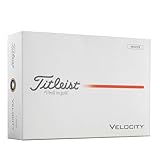
- Full throttle speed for maximum distance.
- Fast speed on full swing shots from a high speed LSX core; designed for maximum distance
- High ball flight trajectory from a spherically-tiled 350 octahedral dimple design
- Playable greenside feel from the fast NAZ plus cover
TaylorMade Soft Response: Best for Feel and Greenside Control
The TaylorMade Soft Response is the ball I’d recommend to someone who wants the feel of a premium ball but refuses to pay premium prices. This is a three-piece construction — unusual at this price point — with a soft urethane-blend cover that gives you more greenside grip than a standard ionomer cover. It’s not a full-on cast urethane cover like you’d find on a TP5, but the Response cover gets you noticeably closer to that premium feel and spin response than most budget golf balls even attempt.
The 40 compression rating keeps this firmly in the soft camp, so slower and moderate swing speeds will feel the difference off the face. What I really like about the Soft Response is that it behaves predictably on pitch shots and chip shots around the green — the soft cover digs into the grooves on your wedge a little more than your average two-piece ionomer ball, which translates to slightly more spin and more consistent distance control. It won’t match a Pro V1 around the greens, but it’s genuinely a step up from most balls at this price.
The Soft Response is a great pick for mid-handicappers who are starting to dial in their short game and want a ball that rewards good wedge play. If you’re the type who tracks your GIR and scrambling stats and actually cares about how the ball behaves on bump-and-runs and flop shots, this is probably the most well-rounded affordable golf ball on this entire list. It’s one of those balls where the more you play it, the more you appreciate what TaylorMade built into it. Check current price — it tends to move in and out of stock, so grab a few boxes when you see it.
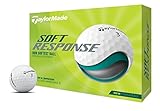
- Shallower U-Shape dimples: Increases volume ratio
- Seamleass 322 Dimple Pattern: Increases dimple coverage
- Product Type - RECREATION BALL
- Item Package Quantity - 1
Bridgestone e6: Best for High-Handicappers Who Struggle with Slices
The Bridgestone e6 has one job it does exceptionally well: fly straight. If you’re fighting a slice or a hook and you’re losing two or three balls a round to the trees, playing the right ball can genuinely help reduce that curve. The e6 uses a three-piece construction with a large core and a soft cover designed to produce low side spin — which is the specific type of spin responsible for banana-ball slices and duck hooks. Less side spin equals a straighter ball flight, full stop.
Bridgestone actually does serious research on ball fitting and player types — they’ve been matching golfers to ball models based on swing speed and ball flight data for years. The e6 is specifically engineered for golfers who generate above-average side spin, and the results are real. I’ve seen high-handicappers pick this ball up mid-round and notice their shots tracking straighter by the back nine. The 50 compression puts it in the medium-soft range, so it still feels reasonably good off the putter and irons without being as pillowy as the Wilson Duo Soft.
The e6 is also a smart choice if you’re looking at our guide to the best golf balls for high-handicappers — it ticks most of the boxes for that player type: straight, forgiving, soft enough to feel good, and priced where you won’t stress about losing one on a blind par-3. The ionomer cover doesn’t offer premium spin control around the greens, but honestly, if you’re working on fixing your ball flight first, worrying about greenside spin is putting the cart before the horse. Get the Bridgestone e6, straighten out your tee shots, and thank me later.

- Engineered for power and feel
- Soft feel, long distance golf ball
- Hyper Elastic SoftFast Core delivers more distance, forgiveness, and incredible feel through the bag
- Soft seamless cover for better spin and feel
- Balls are availble in White and Yellow
Kirkland Signature Performance Plus: Best Bang for Your Buck, Period
Alright, let’s talk about the Costco ball. The Kirkland Signature Performance Plus is the ball that broke the internet a few years back when Kirkland first started selling tour-quality balls at warehouse prices, and the Performance Plus version is the best one they’ve made yet. This is a three-piece construction with a urethane cover — yes, actual urethane, the same cover material used on the Pro V1 and other premium balls — at a price that makes most golf ball manufacturers a little nervous.
The Performance Plus features a soft urethane cover over an ionomer mantle and a large core, giving you a 75 compression mid-feel ball that works across all parts of the game. The urethane cover provides genuine greenside spin — you can actually generate some check on wedge shots, which is something you simply can’t do with a pure ionomer ball at any price. Off the driver, the ball launches with a mid-high trajectory and mid-spin that works for a wide range of swing speeds. This is a remarkably well-engineered ball for the price, and I’d stack it up against many balls that cost twice as much.
The catch? You need a Costco membership, and availability can be spotty — they sell out fast. If you’ve been curious about how Kirkland compares to the premium competition, we did a full deep-dive in our Kirkland golf balls vs Pro V1 comparison — the results might surprise you. For raw value, nothing on this list touches the Kirkland Signature Performance Plus. If you can get your hands on them, buy two or three boxes.

- 3 Piece Golf Balls, USGA Certified
- CORE - Soft, high elastic core provides distance
- Mantle - Soft-cover interaction generates proper spin for irons and wedge shots
- Cover - Durable urethane cover for spin and greenside control
TaylorMade Noodle Long & Soft: Best for Beginners and Casual Rounds
The TaylorMade Noodle Long & Soft has been around in various forms since what feels like the dawn of recreational golf, and there’s a reason it keeps coming back — it does exactly what it says on the tin. If you’re brand new to the game, playing your first season, or just heading out for a casual weekend round where score is secondary to fun, the Noodle is an honest, unfussy ball that won’t break the bank and won’t frustrate you.
The Noodle runs a 34 compression — very soft — with a two-piece design that prioritizes distance and feel over technical performance. The IOTHANE cover is extremely durable, which matters a lot when you’re a beginner who might be hitting cart paths, trees, and range mats more than the fairway. This thing can take a beating. The low compression means even slower swingers will compress the ball properly and get solid distance, and the aerodynamic dimple pattern helps keep ball flight stable even on mis-hits. It’s forgiving in the truest sense of the word.
Honestly, the Noodle doesn’t pretend to be something it’s not — it’s a budget golf ball for recreational golfers, and it delivers on that promise reliably. Don’t expect short game spin or premium feel. Do expect a durable, soft, straight-flying ball that you can buy in bulk without stressing. If you’re just getting started and want to check out more options in this category, our guide to the best golf balls for beginners has a few more picks worth considering. For pure beginner value, though, the Noodle is hard to argue with.
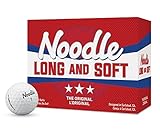
- Durable and soft IOTHANE cover
- Impact propulsion core for longer carry
- Great feel and increased spin around the greens
- Patented dimple design for straighter flight
How We Picked These Golf Balls
I’m not going to pretend we have a full launch monitor lab and robot swing machine in the backyard. What we do have is a lot of range time, a lot of rounds played, and a genuine obsession with figuring out what actually works for real golfers — not tour pros.
For this list, we considered performance data from manufacturer specs and third-party testing sources, real-world player feedback across multiple handicap levels, and value assessment — meaning how much ball you actually get for the price. We looked at construction (two-piece vs. three-piece), cover material (ionomer vs. urethane blend vs. urethane), compression rating, and how each ball performs in the three key areas: off the tee, on iron shots, and around the green.
Every ball on this list has to actually be available for under $30 a dozen at standard retail. We excluded balls that occasionally dip under $30 on clearance but are regularly priced higher. We also specifically targeted balls from reputable manufacturers with proven track records in ball design — not no-name brands whose construction quality is a mystery. The result is a tight list of eight balls that genuinely represent the best budget golf balls available right now for 2026.
What to Look for in a Budget Golf Ball
Shopping for affordable golf balls can feel overwhelming when you’re staring at a wall of options. Here’s a quick breakdown of the key factors that actually matter, so you can make a smart decision without needing a golf science degree.
Compression
Compression is a measure of how much a golf ball deforms at impact. Low compression balls (under 50) are softer and tend to work better for golfers with slower swing speeds — typically under 90 mph. They squish more against the face, which helps transfer energy efficiently even without a fast swing. High compression balls (70+) are firmer and reward faster swing speeds with more distance, but they can feel like hitting a rock if you don’t swing hard enough to properly compress them.
For most recreational golfers, a soft to mid-compression ball (40-70) is the sweet spot. It feels responsive without requiring a tour-level swing to get the most out of it. The good news is that most of the best cheap golf balls on the market today are built in this range — manufacturers know their audience.
Cover Material: Ionomer vs. Urethane
This is the big divide in golf ball construction. Ionomer covers are the standard for budget golf balls — they’re durable, they produce a bit less spin (which helps keep shots straighter), and they hold up well over many rounds. The downside is reduced greenside spin and feel compared to urethane. Urethane covers are the premium option, softer and grippier, producing more spin on short game shots and a more responsive feel overall. Most balls under $30 use ionomer, but a few — like the Kirkland Performance Plus and TaylorMade Soft Response — manage to get closer to urethane feel at a fraction of the cost.
Two-Piece vs. Three-Piece Construction
Two-piece balls are simple: a large core wrapped in a cover. They’re easy to manufacture consistently, tend to be more durable, and prioritize distance and low spin. Most of the best budget golf balls are two-piece. Three-piece balls add a mantle layer between the core and cover, which allows engineers to tune feel and spin independently across different types of shots. A few balls on this list (TaylorMade Soft Response, Bridgestone e6, Kirkland Performance Plus) are three-piece at budget prices, which is a genuine engineering achievement.
Spin and Trajectory
Low-spin balls fly straighter and tend to roll more on landing — great for distance, less great for stopping approach shots on greens. High-spin balls generate more backspin on iron shots and wedges, giving you more control but also more risk of curving off-line on errant swings. For most high-handicappers and beginners, a low-to-mid spin affordable golf ball is the safer play. Mid-handicappers who are dialing in their iron game can start thinking about medium-spin options to get better control on approach shots.
Durability
Cheap golf balls that scuff up after six holes aren’t saving you money. Look for balls from established manufacturers — Callaway, Srixon, Wilson, Titleist, TaylorMade, Bridgestone — that have quality control behind their products. The balls on this list are all durable enough to hold up for multiple rounds under normal playing conditions.
FAQ: Budget Golf Balls
Are cheap golf balls worth it, or should I just save up for Pro V1s?
For most golfers, cheap golf balls are absolutely worth it. If your handicap is above 10, the performance difference between a $50 Pro V1 and a quality $25 ball is smaller than the difference between one bad swing and one good one. The best budget golf balls from reputable brands are engineered well enough that they won’t hold your game back. Save the premium balls for when your short game is good enough to actually take advantage of urethane spin control — usually that means being able to consistently land approach shots within 20 feet of the flag and shape shots intentionally.
What compression golf ball should I be playing?
A simple rule: if your driver swing speed is under 85 mph, go low compression (under 50). If you’re between 85-100 mph, mid compression (50-70) will serve you well. Above 100 mph, you can start thinking about higher compression balls that reward that speed. Most of the best golf balls under $30 fall in the soft to mid range, which covers the majority of recreational golfers. If you’re not sure about your swing speed, ask at your local golf shop — many will measure it for free.
Can a better golf ball help fix my slice?
To a degree, yes. Low-spin golf balls like the Bridgestone e6 are specifically designed to reduce side spin, which is what causes a slice. Switching from a high-spin ball to a low-spin one can straighten out your ball flight noticeably. But it’s not a cure — if your swing path is way outside-in, even the best low-spin ball will curve. Think of a straight-flight ball as a helpful aid, not a fix. Pair it with some lessons or range work on your swing path and you’ll see real improvement faster.
How many golf balls should I buy at once?
Buying in bulk almost always saves you money per ball. If you’re confident in a model, buying two or three dozen at once brings the per-ball cost down significantly. That said, try a sleeve (3 balls) first before committing to a full case — you want to make sure the feel and flight match your game before going all in. Most of the best affordable golf balls on this list are available in bulk packs that make stocking up easy on your wallet.
Final Verdict: Our Pick for Best Golf Ball Under $30
If I had to pick one ball for most recreational golfers right now, I’d go with the Srixon Soft Feel 14 as the overall best value golf ball under $30 for 2026. It hits the right compression for a wide range of swing speeds, it behaves consistently round after round, it feels genuinely good off the face, and Srixon’s ball construction is legitimately world-class. You’re not compromising by playing this ball — you’re making a smart choice.
That said, the right pick depends on your game. If you want the absolute softest feel, go Callaway Supersoft or Wilson Duo Soft. If you need straighter shots, the Bridgestone e6 is your answer. If distance is priority one, Titleist Velocity delivers. If you want the most “premium” ball at a budget price and can get your hands on it, the Kirkland Signature Performance Plus is in a class of its own for the money.
The bottom line: there has never been a better time to play quality golf balls without spending a fortune. The best budget golf balls of 2026 are genuinely impressive, and any of the eight on this list will serve you well on the course. Pick the one that matches your game, buy a couple dozen, and go play. That’s what this game is supposed to be about.
Looking to upgrade more than just your ball? Our guide to the best golf drivers for beginners is a solid next stop if you’re building out your bag on a budget.
You Might Also Enjoy
- Best Golf Balls for Beginners 2026 — Just starting out? Here’s what to play.
- Best Golf Balls for Distance 2026 — If you want to bomb it, these are the ones.
- Best Golf Balls for High Handicappers 2026 — Forgiving options built for the rest of us.
- Best Golf Balls for Mid-Handicappers 2026 — Ready to level up your ball game.
- Kirkland Golf Balls vs Pro V1 — Does the Costco ball actually hold up? We found out.