
Bamboo vs Wood vs Plastic Golf Tees: Which Material is Best?
It’s funny how golfers obsess over drivers, irons, and putters, but rarely give much thought to the humble golf tee. I’ll admit—I was the same way for years. Then one day, a playing partner handed me a bamboo tee after I’d snapped my third wooden tee of the round. “Try this,” he said. That moment sent me down a rabbit hole of tee research that I’m about to share with you.
Whether you’re eco-conscious, budget-minded, or just want something that won’t break every other swing, choosing the right tee material actually matters more than you might think. Let me break down everything I’ve learned about bamboo, wood, and plastic golf tees.
The Traditional Choice: Wooden Golf Tees
Wooden tees are the granddaddy of all golf tees. They’ve been around since the 1920s and remain the most popular choice on courses worldwide. Most are made from birch or other hardwoods, and there’s a reason they’ve stood the test of time.
Durability
Let’s be honest—wood tees break. A lot. On average, you’ll get 1-3 good drives before a standard wooden tee snaps. Some premium brands like Pride’s Titanium Strength line claim to last longer, and in my experience, they do hold up slightly better. But if you’re looking for longevity, wood isn’t your best bet.
Eco-Friendliness
Here’s where wood shines. Traditional wooden tees are 100% biodegradable. Leave one on the course (though you shouldn’t), and it’ll break down naturally within a few months. They’re made from renewable resources and have a minimal environmental footprint during manufacturing.
Cost Per Tee
Wooden tees are incredibly affordable—usually around $0.03-0.08 per tee when buying in bulk. However, since you’ll burn through them quickly, your actual cost per round can add up if you’re breaking one every few holes.
Performance
Wood offers excellent stability. The ball sits firmly on a wooden tee without wobbling, which gives many golfers confidence at address. There’s no significant performance advantage or disadvantage compared to other materials—they simply do the job they’ve always done.
Pros:
- Classic feel and appearance
- Completely biodegradable
- Very affordable upfront
- Readily available everywhere
Cons:
- Break frequently
- Higher consumption rate
- Can splinter and scratch clubs
The Sustainable Alternative: Bamboo Golf Tees
Bamboo tees have exploded in popularity over the past decade, and for good reason. Bamboo isn’t technically wood—it’s a grass—and that distinction gives it some unique advantages.
Durability
This is where bamboo really shines. Bamboo’s natural fiber structure makes it significantly stronger than traditional hardwood. I typically get 5-10 uses from a quality bamboo tee, sometimes more. They’re far less likely to snap on impact because the fibers bend rather than break.
Eco-Friendliness
Bamboo is the sustainability superstar. It’s the fastest-growing plant on Earth, regenerating without replanting after harvest. It requires no pesticides, minimal water, and absorbs more carbon dioxide than equivalent stands of trees. Plus, bamboo tees are fully biodegradable. If you want the greenest option, this is it.
Cost Per Tee
Bamboo tees typically cost $0.08-0.15 per tee—slightly more than wood upfront. But here’s the thing: since they last 3-5 times longer, your actual cost per round is often lower than wood. It’s a classic case of spending more to save more.
Performance
Some golfers report that bamboo tees reduce friction at impact, which could theoretically add a few yards. I haven’t noticed a dramatic difference personally, but the reduced surface contact area on some bamboo designs does seem to allow the ball to launch slightly cleaner. At minimum, they perform identically to wood.
Pros:
- 3-5x more durable than wood
- Most eco-friendly option
- Biodegradable
- Better long-term value
- Won’t scratch your driver
Cons:
- Higher upfront cost
- Less available in pro shops
- Some golfers find them “different”
The Modern Option: Plastic Golf Tees
Plastic tees represent the technology-forward approach to teeing up. They come in countless designs—from simple traditional shapes to elaborate 3-prong and 5-prong configurations that promise reduced friction and more distance.
Durability
Plastic wins the durability contest hands-down. A quality plastic tee can last an entire round, sometimes multiple rounds. The 3-prong designs from brands like Zero Friction can go 50+ drives without showing significant wear. If you hate constantly reaching for new tees, plastic is your answer.
Eco-Friendliness
This is plastic’s Achilles heel. Traditional plastic tees aren’t biodegradable and can persist in the environment for hundreds of years. Lost plastic tees contribute to microplastic pollution on courses. Some manufacturers now offer biodegradable plastic alternatives, but they’re not as widely available.
Cost Per Tee
Plastic tees cost $0.15-0.40 per tee depending on the design. That sounds expensive, but factor in reusability and they often work out to the cheapest option per round. Buy a pack of 30 prong-style tees and they could last you a full season.
Performance
Here’s where it gets interesting. Prong-design plastic tees (like Zero Friction) genuinely reduce ball-tee contact, which can decrease spin and potentially add distance. PGA Tour players have won multiple events using 3-prong plastic tees. Whether that translates to measurable gains for amateurs is debatable, but the reduced friction is real.
Pros:
- Extremely durable
- Potential performance benefits
- Lowest cost per round
- Won’t scratch clubs
- Various innovative designs
Cons:
- Not eco-friendly
- Can fly farther when hit (harder to find)
- Some golfers find them “gimmicky”
- Not allowed in all tournaments
Head-to-Head Comparison
Here’s how the three materials stack up across key factors:
| Factor | Wood | Bamboo | Plastic |
|---|---|---|---|
| Durability | 1-3 uses | 5-10 uses | 20-50+ uses |
| Eco-Friendliness | ⭐⭐⭐⭐ | ⭐⭐⭐⭐⭐ | ⭐ |
| Upfront Cost | $0.03-0.08/tee | $0.08-0.15/tee | $0.15-0.40/tee |
| Cost Per Round | $0.50-1.00 | $0.30-0.60 | $0.10-0.30 |
| Performance | Standard | Standard-Good | Good (reduced friction) |
| Availability | Everywhere | Good | Good |
| Club Friendly | Can scratch | Very safe | Very safe |
Which Golf Tee Material Should You Choose?
After testing all three extensively, here’s my advice based on what matters most to you:
Choose Wood If…
- You’re a traditionalist who loves the classic feel
- You want something readily available at any course
- Upfront cost is your primary concern
- You don’t mind breaking tees frequently
Choose Bamboo If…
- Environmental impact matters to you
- You want the best balance of durability and eco-friendliness
- You’re tired of breaking wooden tees constantly
- You want biodegradable tees that actually last
Choose Plastic If…
- Maximum durability is your priority
- You want potential performance benefits
- You’re focused on lowest cost per round
- Environmental concerns aren’t your top priority
My personal pick? I’ve switched to bamboo for my everyday rounds. The durability upgrade over wood is dramatic, and I feel better about not leaving plastic on the course. For serious competition rounds, I’ll sometimes switch to plastic prong tees for the reduced friction—every little bit helps when there’s money on the line.
Recommended Products
Best Bamboo Golf Tees
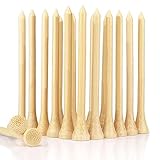
- 【Professional Dual Sizes】 2 3/4 inch for irons/hybrids & 3 1/4 inch for drivers — 150 tees per size (300 total) provide optimal tee height across all clubs.
- 【Eco-Friendly Bamboo】 Made from durable natural bamboo — stronger than plastic, more sustainable than traditional wood tees.
- 【Unbreakable Design】 Reinforced structure resists splitering. Includes 300 tees (2 sizes) in a recyclable paper box for easy storage.
- 【Smooth Performance】 Glide-resistant surface protects clubfaces. Tournament-approved for all skill levels.
- 【Perfect Golf Gift】 Ready-to-gift paper box packaging makes this a great choice for golfers.

- The ZFTour Hybrid is great for Par 3's.
- The ZFTour features Zero Friction's patented 3-prong design that allows for less surface coverage between the ball and tee, creating longer, straighter drives.
- Established as the No. 1 Performance Tee on the PGA TOUR in 2005 and has stayed there since with over 70 TOUR victories and 370 top ten finishes.
- Every package comes with a bonus Zero Friction item.
- Place one prong at the target for optimum performance.

- 3-1/4 Inch (3.25") Titanium-Strength Wood Tees
- Tee lengthe best for Drivers over 360cc
- One 65-count bag
- Durable wood golf tee
- Thicker shaft for a longer-lasting tee

- REDUCE FRICTION:The glossy cup design minimizes the surface contact between golf tee and ball, effectively reduces friction and side spin for optimal accuracy & distance.
- STABLE SUPPORT:The tee CUP head measures 0.43 inch in diameter,enough to offer a stable support for the ball,designed for better durability and performance.
- STRIPE MARKING:Stripe marking help you freely customize the height of golf tees which helps you achieve consistent golf shots and make golf games easier.
- WELL PACKAGED: All golf tees are packaged well in the outer bag,include 25 pcs brown (2-3/4") and 25 pcs black white (3-1/4"),it will be a long time before you run out our golf tees.

- Bamboo Golf Tees Bulk: The Juvale Bamboo Golf Tees Bulk Set features 300 wooden golf tees, perfect for golfers seeking reliable and sustainable golf accessories. These wood golf tees blend seamlessly into any golfing environment, enhancing every round
- Versatile For All Occasions: Suitable for tournaments or casual games, these natural wood tees elevate your golfing experience. This bulk golf tees set ensures you are always prepared, making them indispensable for enthusiasts and professionals alike
- Durable Bamboo Construction: Crafted from resilient bamboo, these tees withstand repeated use and offer eco-friendly benefits. Their durability ensures they remain reliable golf accessories, providing a sturdy platform for all your golf balls
- Optimal Size and Fit: Each wooden golf tee measures 2.75 inches, providing a stable base for golf balls and improving performance. The standard size accommodates all types of clubs, including drivers and woods, making them essential for any golfer's toolkit
- Comprehensive Set Included: This set includes 300 natural bamboo tees, eliminating the worry of running out during key games. Whether used at country clubs or practice sessions, these bulk golf tees are a must-have for any dedicated golfer
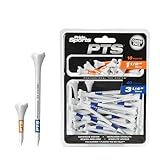
- #1 Tee on the Tour – Use the brand the pros trust and up your game with Professional Tee System (PTS) Pride Plastic Tees.
- 100% Plastic for Better Durability - Our proprietary plastic tees last longer than the leading wooden tees.
- Low-Resistance Tips – Less friction on the ball on impact means reduced side spin and further drives, keeping you on your way to a more manageable second shot.
- Combo Pack - 40 3 1/4” tees and 10 1 1/2” tees ensure you have a tee for every shot on the course no matter what club you're using.
- Perfect for Gifts – Whether buying for yourself or the golf enthusiast in your life, these tees are sure to hit the spot.


- The ZFTour Hybrid is great for Par 3's.
- Established as the No. 1 Performance Tee on the PGA TOUR in 2005 and has stayed there since with over 70 TOUR victories and 370 top ten finishes.
- Every package comes with a bonus Zero Friction item.
- Place one prong at the target for optimum performance.
- A product made with bio-composite materials.
Juvale 300 Pack Bamboo Golf Tees (2-3/4″) — Outstanding value for bulk buyers. 300 tees at an affordable price, and they’re surprisingly durable. Perfect for golfers who want to try bamboo without a big investment.

- REDUCE FRICTION:The glossy cup design minimizes the surface contact between golf tee and ball, effectively reduces friction and side spin for optimal accuracy & distance.
- STABLE SUPPORT:The tee CUP head measures 0.43 inch in diameter,enough to offer a stable support for the ball,designed for better durability and performance.
- STRIPE MARKING:Stripe marking help you freely customize the height of golf tees which helps you achieve consistent golf shots and make golf games easier.
- WELL PACKAGED: All golf tees are packaged well in the outer bag,include 25 pcs brown (2-3/4") and 25 pcs black white (3-1/4"),it will be a long time before you run out our golf tees.
MAZEL Natural Bamboo Golf Tees Variety Pack — Includes multiple sizes (1-1/2″, 2-1/8″, 2-3/4″, and 3-1/4″) so you have the right tee for every club. Great quality and excellent for golfers who use different tee heights.
Best Wooden Golf Tees

- #1 Tee on the Tour – Use the brand the pros trust and up your game with Professional Tee System (PTS) Pride Plastic Tees.
- 100% Plastic for Better Durability - Our proprietary plastic tees last longer than the leading wooden tees.
- Low-Resistance Tips – Less friction on the ball on impact means reduced side spin and further drives, keeping you on your way to a manageable second shot.
- Perfect for Teeing Your Ball High - 3 1/4" Tees allow you to get extra height on your ball for big drivers but also able to work with a variety of drivers, woods, and hybrids. Pairs perfectly with a 1 1/2 inch tee for par 3s and shorter par 4s.
- Perfect for Gifts – Whether buying for yourself or the golf enthusiast in your life, these tees are sure to hit the spot.
Pride Professional Tee System (PTS) Golf Tees – 100 Count — The gold standard in wooden tees. Color-coded bands help you achieve consistent tee height every time. Used by more tour players than any other wooden tee.
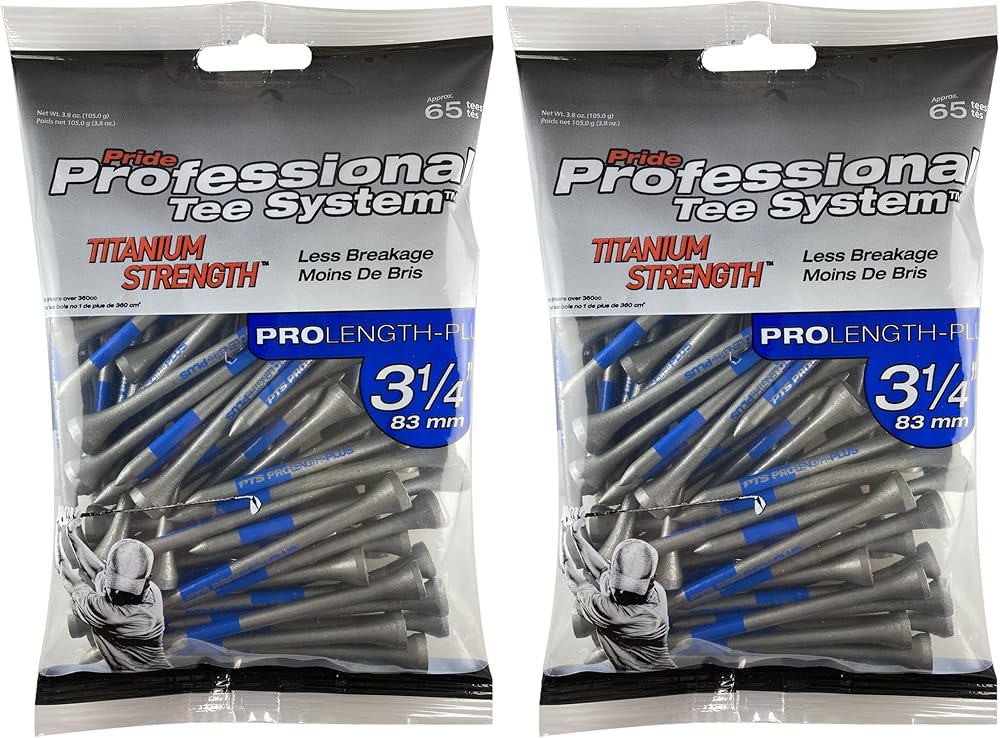
Pride Titanium Strength Wood Golf Tees – 2 Pack — Pride’s premium offering with enhanced durability. If you’re committed to wood but want something that lasts longer than standard tees, these are worth the upgrade.
Best Plastic Golf Tees
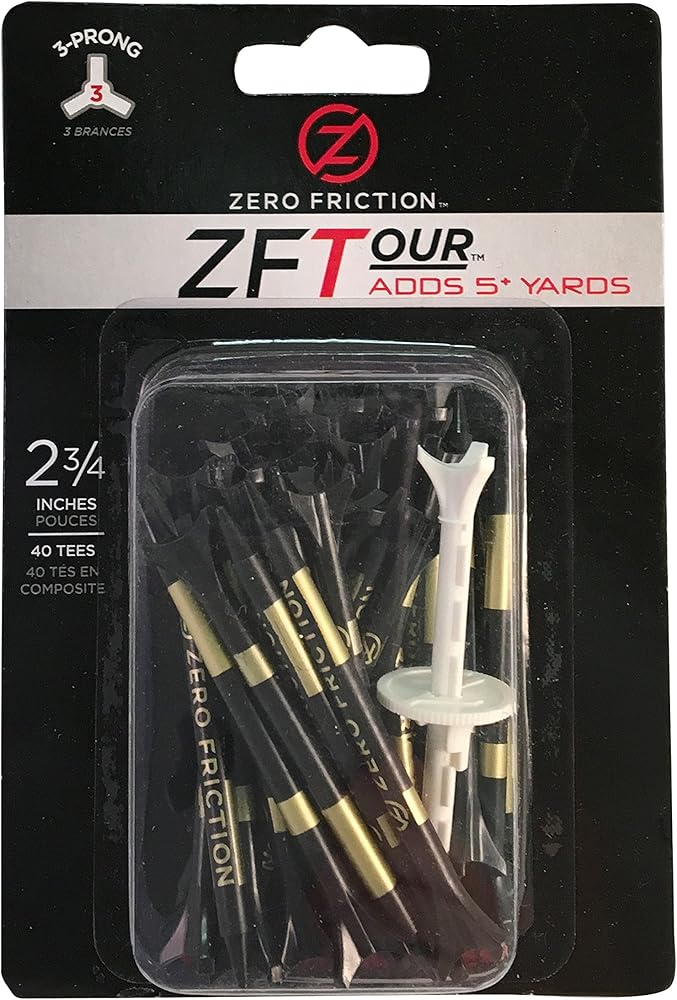
Zero Friction Tour 3-Prong Golf Tees — The most popular prong tee on tour. The 3-prong design genuinely reduces friction and these tees last forever. Multiple PGA Tour wins behind this design.
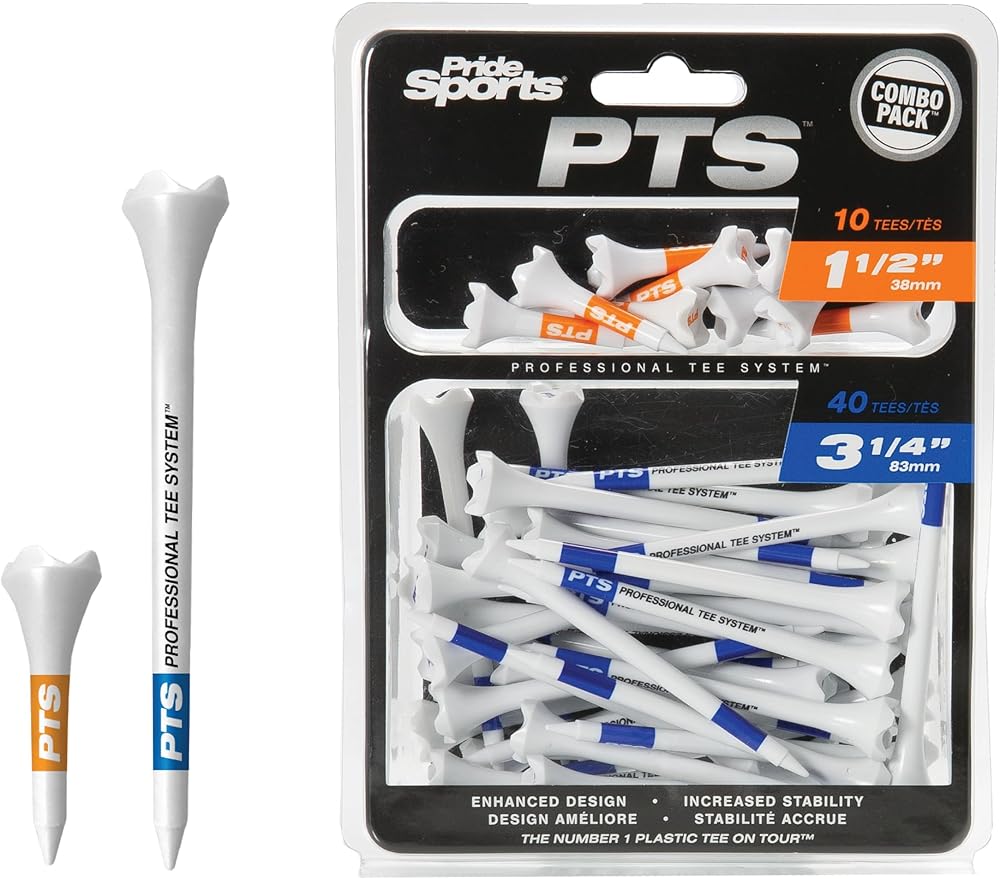
PrideSports PTS Plastic Golf Tees – Combo 50 Pack — From the same company that dominates wooden tees. This combo includes 40 long tees and 10 short tees. Traditional cup design but with the durability of plastic.
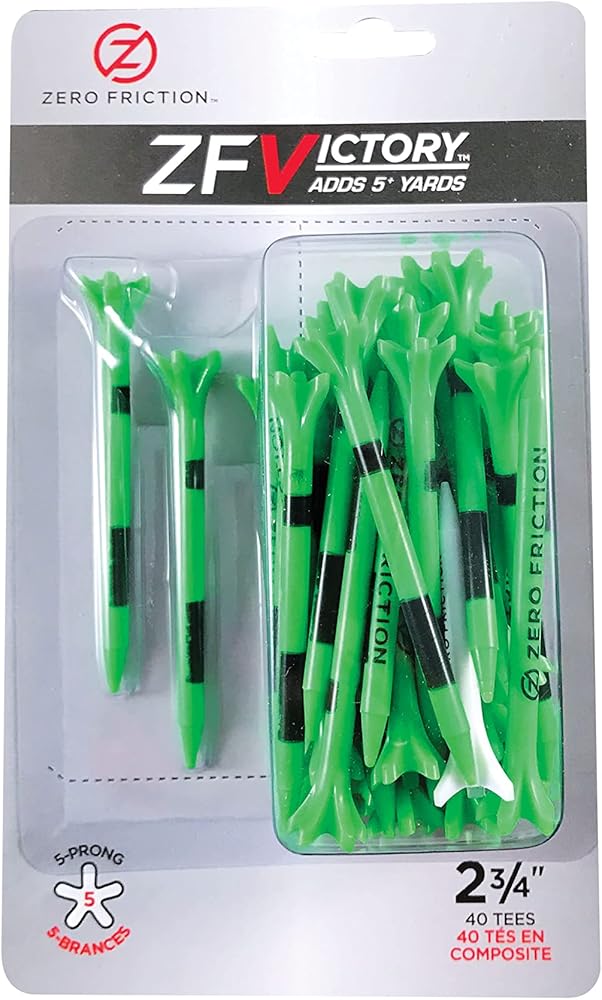
Zero Friction Victory 5-Prong Golf Tees — The 5-prong design offers even less contact than the 3-prong version. Some golfers swear by these for maximizing distance off the tee.
Frequently Asked Questions
Do golf tee materials actually affect distance?
The difference is minimal but real. Reduced-friction plastic tees (like 3-prong designs) can decrease backspin slightly, potentially adding 1-3 yards for high swing speed players. For most recreational golfers, the difference is negligible compared to other swing factors.
Are bamboo tees really stronger than wooden tees?
Yes. Bamboo’s parallel grain structure and natural silica content make it approximately 2-3 times stronger than birch wood. In practical terms, expect 3-5 times more uses from a bamboo tee compared to a standard wooden tee.
Are plastic golf tees legal for tournaments?
Yes, plastic tees conform to the Rules of Golf and are legal in virtually all tournaments. However, some club competitions may have local rules about tee types, so check before competing.
What’s the most environmentally friendly golf tee?
Bamboo is the clear winner. It’s biodegradable, comes from a rapidly renewable resource that doesn’t require replanting, and has a smaller carbon footprint than both wood and plastic during manufacturing.
Why do some golfers avoid plastic tees?
Main reasons include environmental concerns, the perception that plastic tees feel “cheap” or “gimmicky,” and the fact that plastic tees can fly farther when struck, making them harder to retrieve. Some traditionalists also simply prefer the classic look and feel of wood.
How many tees should I carry per round?
For wood: 15-20 tees. For bamboo: 8-12 tees. For plastic: 4-6 tees. These numbers account for breakage, loss, and giving one to a playing partner.
The Bottom Line
There’s no universally “best” golf tee material—it depends on your priorities. Wood offers tradition and availability, bamboo delivers sustainability and durability, and plastic provides longevity and potential performance benefits.
My recommendation? Buy a small pack of each and see what feels right for your game. You might be surprised—I certainly was when I made the switch from wood to bamboo. That simple change has saved me money, reduced my environmental footprint, and eliminated the frustration of constantly snapping tees.
Whatever you choose, the best tee is the one you have confidence in. Now get out there and stripe one down the middle!