Best Golf Irons for Mid Handicappers 2026: 7 Top Sets Tested and Ranked
Still Leaking Shots With the Wrong Irons? Here Are the Best Golf Irons for Mid Handicappers in 2026
Let’s be straight with you: if your handicap sits anywhere between 10 and 20, you’re in the most interesting — and frustrating — part of this game. You’re good enough to know exactly what a pure iron strike feels like. You’re also consistent enough to notice when your equipment is holding you back. That’s the mid-handicapper’s curse, and also the opportunity.
The best golf irons for mid handicappers aren’t the blade-style clubs your scratch buddy swings, and they’re not the chunky, over-offset game improvement irons your uncle bought back in 2011. You need something in between — a club that rewards solid contact with workability, but doesn’t punish a slightly thin strike with a 40-yard miss-right. Players distance irons. Cavity back irons built with forgiveness baked into the design, not bolted on as an afterthought.
I’ve been through more sets than I’d like to admit over the last few years, and I’ve hit everything on this list on the course and at the range. Whether you’re trying to break 80 for the first time or just stop the yips on your 7-iron, this guide has something for you. Let’s get into it.
Looking for something more forgiving? Check out our picks for the best golf irons for beginners in 2026. And if you’ve gotten your handicap down and you’re thinking about making the leap, we’ve also covered the best golf irons for low handicappers.
Quick Comparison: Best Golf Irons for Mid Handicappers 2026
Not sure where to start? Here’s a quick look at all seven irons side by side so you can see how they stack up at a glance before diving into the full reviews.
Invalid table id.The 7 Best Golf Irons for Mid Handicappers in 2026
These aren’t just the shiniest new releases or whatever’s getting the most hype on Golf Channel. Every club on this list earned its spot because it genuinely serves the 10-to-20 handicap range. Some are distance monsters. Some are feel machines. Some are the most forgiving irons you can swing without sacrificing playability. All of them will make you a better ball-striker if you put in the reps.
1. Callaway Paradym Ai Smoke Irons — Best Overall for Mid Handicappers

- The Paradym Ai Smoke model is best suited for golfers with average to high swing speeds looking to maximize distance and improve dispersion.

If I could only recommend one set of irons to a mid-handicapper in 2026, it would be the Callaway Paradym Ai Smoke. Full stop. Callaway used actual artificial intelligence to design the face of this club — not as a marketing bullet point, but as a genuine engineering tool that optimized ball speed across more of the face than any previous Callaway iron. The result is an iron that feels like you’re hitting pure even when you’re not.
The Paradym Ai Smoke sits in that sweet spot between game improvement and players distance that mid-handicappers desperately need. The face is a forged 450 steel construction with a full-face A.I.-designed variable thickness pattern. That means when you catch one off the toe at 7 AM after zero warmup — which, let’s be honest, happens — the ball still goes. It doesn’t just limp forward. It goes.
The cavity back design keeps the center of gravity low and back, promoting a high launch without requiring a perfect dynamic loft at impact. You’ll see carry distances you might not have expected from an iron this forgiving. Mid-handicappers who have tested these typically pick up 5-10 yards of carry over their previous set without swinging any harder. The wide sole design also helps through the turf — you’re not digging, you’re skimming, and that translates into tighter turf interaction and more consistent contact depth.
The feel isn’t mushy. That’s worth saying because a lot of high-forgiveness irons sacrifice feedback to the point where you can’t tell a solid hit from a toe-job. The Paradym Ai Smoke gives you a satisfying, slightly muted thump on center hits, with just enough vibration difference on misses to tell you what went wrong. For a mid-handicapper trying to improve, that feedback loop is genuinely useful.
- Pros: Elite ball speed across the face, excellent forgiveness, high launch, feels premium despite being game improvement in nature, works for a wide range of swing speeds
- Cons: On the pricier end, some players may find the offset hosel more than they want as they improve, not as workable as a players iron
Bottom line: The best golf irons for mid handicappers who want maximum performance with minimum frustration. If you’re serious about dropping shots, start here.
2. TaylorMade Qi35 Combo Set — Best Mixed Iron Set for Mid Handicappers

- TaylorMade Qi35 Combo (2025)
- The Qi35 Rescue is constructed with state-of-the-art chromium carbon, steel and aluminum, delivering a versatile club engineered for consistent performance, enhanced speed and forgiveness.
- Driven by organic face geometries, Cap Back Design and the Speed Pocket, this comprehensive approach tunes the performance of each head to promote ideal gapping, exemplary ball speeds as well as consistently straighter shots throughout the set
- The shape of Qi35 Rescue is clean and sleek. Each head incorporates proven TaylorMade technologies including Twist Face, Thru-Slot Speed Pocket and a lightweight Carbon Crown.
- This innovative construction blends the advantages of a hollow-body iron with those of a traditional cavity back. In addition to optimizing mass properties, it works in unison with the HYBRAR Echo Dampers to reduce unwanted vibrations and deliver a satisfying sound and feel
Here’s the thing about mid-handicappers that most generic iron guides miss: you probably hit your long irons worse than your short irons. A lot worse. Which means playing the same iron design from 4-iron through gap wedge is doing you a disservice. TaylorMade figured this out a long time ago with their combo sets, and the Qi35 takes that concept to the next level.
The TaylorMade Qi35 Combo Set pairs the more forgiving, hollow-body long irons (typically 4-6 iron) with the more precise, cavity back short irons (7-PW). The long irons use a Speed Pocket and a thin, flexible face to launch the ball high and fast — basically doing for your 4-iron what a hybrid would. Then as you move into the scoring clubs, the design gets tighter and more workable, giving you the precision you need when you’re inside 150 yards and trying to attack a flag.
This is genuinely smart engineering for the handicap range 10-20 player. You get high launch and maximum forgiveness where you need it most (long irons), and proper feedback and feel where it matters most (short irons). The transition between the two designs is subtle enough that you’d never notice it mid-round — the set flows visually and the performance gap is filled rather than amplified.
TaylorMade’s Thru-Slot Speed Pocket is a defining feature in the long iron end of the combo set. It’s a slot behind the leading edge that allows the face to flex at impact, keeping ball speed high even on shots that aren’t caught perfectly. Pair that with a forged face insert in the short irons and you’ve got a set that punches above its weight at both ends.
The Qi35 Combo is also a fantastic option if you’re transitioning out of a full set of game improvement irons. It gives you training wheels where you still need them and proper equipment where you’ve already grown into it.
- Pros: Intelligent design splits forgiveness and precision exactly where mid-handicappers need them, excellent long iron launch, great feel in scoring clubs, visually clean at address
- Cons: Combo sets take a bit of getting used to, not ideal if you like absolute uniformity across your set, some players prefer a single-design iron set for simplicity
Bottom line: The smartest pick when searching for the best golf irons for mid handicappers who’ve been fighting their long irons. The combo design solves a real problem rather than just selling you more of the same.
3. Ping G430 Iron Set — Most Consistent Iron Set for Mid Handicappers

- G430
- "Alloy Steel"
- Stiff
- 5-PW, AW
Ping doesn’t make bad irons. That’s not a hot take — it’s just the truth. But the G430 set isn’t just good by Ping’s consistently high standards. It’s genuinely one of the best golf irons for mid handicappers that money can buy, and it’s been that way since it came out. The reason? Ping nailed the balance between forgiveness, distance, and feel in a way that holds up round after round.
The G430 uses a custom maraging steel face that’s thin enough to flex at impact but robust enough to last tens of thousands of swings without degrading. The result is consistent ball speed — meaning the gap between your best 7-iron and your average 7-iron shrinks significantly. For a mid-handicapper, that consistency is often worth more than raw distance. You can plan around consistent yardages. You can’t plan around a 15-yard spread.
The cavity back design is deep and visible from address, but Ping has done a nice job keeping the overall profile clean. The topline isn’t chunky, the offset hosel is present but not aggressive, and the soles have a reasonable width that helps through the turf without looking like you’re swinging a shovel. Mid-handicappers who care about aesthetics — and plenty do — will be happy at address.
Ping’s Hydropearl chrome finish is worth calling out specifically. It’s not just a cosmetic thing — the finish reduces friction between the face and the ball in wet conditions, giving you more consistent spin even when the ball or clubface picks up moisture. If you play early morning rounds in dewy conditions, that’s a real performance benefit.
The feel is classic Ping: slightly firm, very precise feedback, with a sound that’s satisfying without being overly loud. You know when you’ve hit it well. The G430 doesn’t lie to you.
- Pros: Outstanding consistency shot to shot, excellent wet-weather performance, premium build quality, forgiving without looking bulky, great resale value
- Cons: Not the longest iron on this list, slightly conservative design may not appeal to golfers who want a flashier look, price sits at the premium end
Bottom line: If consistency is what you need from the best golf irons for mid handicappers, the Ping G430 delivers it better than almost anything else at this price. Consistency is its superpower.
4. Cobra DARKSPEED Iron Set — Best Speed-to-Price Ratio for Mid Handicappers

- Powerful ball speed and distance
- Tuned Acoustics and feel
- Extreme accuracy
Cobra doesn’t get the credit they deserve. Seriously. While everyone argues about Callaway vs TaylorMade vs Ping, Cobra is sitting there making some of the most technically impressive irons in golf at prices that don’t require a second mortgage. The DARKSPEED Iron Set is a perfect example of what makes Cobra so underrated for mid-handicappers.
The name is a bit aggressive, but the performance backs it up. Cobra engineered the DARKSPEED around a PWR-COR technology — a high-COR insert bonded directly into the face to maximize deflection at impact. In plain English: the face springs back harder, and the ball comes off faster. Cobra claims some of the highest COR values in the game improvement category, and the on-course results support that. These irons are long. Noticeably long compared to what most mid-handicappers are currently gaming.
The hollow body construction in the long irons gives you a low, deep center of gravity that launches the ball high without needing a perfect angle of attack. The short irons tighten up to give you the precision you need for approach shots. Sound familiar? Cobra arrived at a similar solution to TaylorMade’s combo concept, but integrated it within a single iron design rather than a true combo set.
The sole design deserves a mention. Cobra went wide and designed the sole with a specific camber to reduce turf interaction resistance. For mid-handicappers who sometimes hit it fat — because we all do — a wide cambered sole is forgiving in a way that a narrower sole simply isn’t. The club glides through the turf instead of digging, and you’re punished less for slightly heavy contact.
Visually, the DARKSPEED is one of the sharper-looking irons on this list. The dark PVD finish is genuinely cool at address, and it reduces glare in bright conditions. You feel like you’re playing something premium even when the price tag says you’re not.
- Pros: Exceptional ball speed for the price, wide forgiving sole, sleek dark finish, good launch across the set, excellent value for mid-handicappers on a budget
- Cons: Less brand prestige than some competitors (though performance is there), feel is slightly firmer than forged options, not the best option if you want to shape shots
Bottom line: If budget matters and you still need the best golf irons for mid handicappers with top-tier distance and forgiveness, the Cobra DARKSPEED is the move. Best value pick on this list, no question.
5. Srixon ZX4 MkII Iron Set — Best Feel Among Forgiving Irons for Mid Handicappers

- MAINFRAME MainFrame is a variable thickness pattern of grooves, channels, and cavities carefully milled into the backside of the Iron face that maximizes flex at impact.
- HOLLOW IRON SHAPES Moderate sole width, our longest blade length, and our highest offset maximize the forgiveness of ZX4 Mk II hollow Irons while still offering an appealing look at address.
- PROGRESSIVE GROOVES The 4i–7i feature wide grooves, ideal for longer shots in all conditions. The 8i–AW have deeper, closer set grooves which cut through grass and debris to enhance spin on approach shots. Laser milling between each groove, on every loft, enhances friction in all conditions.
- TOUR V.T. SOLE Tour V.T. Sole takes turf interaction to a whole new level of detail with a proprietary combination of sole widths, bounce angles, and notches that encourages a smooth glide through fairway, rough and sand to strike the ball solidly without losing speed.
Let me tell you something about the Srixon ZX4 MkII that nobody talks about enough: it feels better at impact than irons that cost twice as much. That’s not hyperbole — it’s something you notice in the first five minutes on the range. The ZX4 MkII has a forged face cup construction that delivers a soft, buttery impact sensation that you usually only get from blades or players irons. Getting that level of tactile feedback in a forgiving cavity back iron is genuinely rare.
Srixon engineered the face cup to extend over the topline and down the sole, dramatically increasing the size of the flex zone at impact. The larger flex zone means more consistent ball speed across misses, but it also means the face can be thinner and softer in construction — and that’s where the feel advantage comes from. You’re not sacrificing forgiveness for feel. You’re getting both, which is a trick very few iron makers have pulled off at this price point.
The cavity back design is relatively thin-topline compared to competitors — it looks more like a players distance iron than a full game improvement model. At address, there’s nothing intimidating or chunky about it. Mid-handicappers who feel self-conscious about playing “beginner” looking irons will appreciate the cleaner profile. It looks like you know what you’re doing, even if your last round was a disaster.
The main engine driving distance in the ZX4 MkII is the HT1770 maraging steel in the face. This is some of the strongest steel Srixon has ever used, and it’s thin enough to generate real face flex without worrying about durability. Add in a hollow cavity design in the long irons and you’ve got a set that launches consistently high with genuine stopping power on greens.
For mid-handicappers who are working on their ball-striking and want real feedback from their irons — rather than a club that masks every mistake — the ZX4 MkII is exceptional. You’ll know your good shots and your bad ones, and that information will make you better.
- Pros: Outstanding feel for a game improvement iron, forged face delivers exceptional feedback, players distance iron look and profile, strong value for the technology included
- Cons: Not as well known as Callaway/TaylorMade/Ping (though performance is competitive), slightly lower launch than some competitors in the long irons, limited custom fitting options compared to major brands
Bottom line: Among the best golf irons for mid handicappers who prioritize feel, the ZX4 MkII stands alone in this price range. If you care about the sensation of a pure strike, this iron punches way above its price class.
6. Titleist T350 Iron Set — Best for Mid Handicappers Ready to Level Up
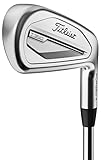
The Titleist T350 is for the mid-handicapper who’s been getting better — steadily, seriously — and wants irons that won’t hold them back as their game continues to improve. Titleist positions the T350 as their most forgiving iron, but “most forgiving Titleist” doesn’t mean the same thing as “most forgiving iron ever made.” It means maximum Titleist forgiveness, which still comes with a healthy dose of feedback, workability, and that clean, compact Titleist profile that players distance iron fans love.
At the heart of the T350 is a hollow cavity construction with a Max Impact insert inside the body of the club. The insert — a polymer material sandwiched between the face and the hollow body — acts as a vibration damper and a second source of energy transfer at impact. The result is a club that feels softer than it has any right to feel, while still being fast off the face.
The T350’s high launch characteristics come from a low, deep CG position achieved through redistributing mass away from the face and into the perimeter of the club. The wider sole (by Titleist standards — still not as wide as Cobra or Cleveland) helps with turf interaction, though it’s worth saying that mid-handicappers who really struggle with fat contact might find the T350 slightly less forgiving in that department compared to the Cobra or Cleveland options on this list.
Where the T350 absolutely earns its place is in the scoring clubs. The 7-iron through pitching wedge in this set are genuinely special — they give you the distance and forgiveness of a game improvement iron but the feel and control of something much more refined. Inside 150 yards, you’ll start to feel like you can actually work the ball a little. Hold it into the wind. Draw it around a tree. The T350 won’t hold you back when your game gets there.
The look is quintessentially Titleist: clean, compact, understated. No wild finishes or aggressive branding. Just a well-made iron that lets your game do the talking.
- Pros: Excellent scoring club performance, premium Titleist construction quality, Max Impact insert delivers outstanding feel, workable when you need it, looks like a player’s iron
- Cons: Not the most forgiving iron on this list, wide sole by Titleist standards is still narrower than dedicated game improvement options, premium price point
Bottom line: If you want the best golf irons for mid handicappers on an upward trajectory — irons that don’t become obsolete as you improve — the Titleist T350 is that club. It grows with you.
7. Cleveland Launcher XL Halo Irons — Best Budget Irons for Mid Handicappers

- XL HEAD DESIGN - This is huge: a bigger head means an MOI of 2,908 g-cm2 in the 7-Iron—our most ever in a Cleveland Golf Hybrid-Iron. It’s maximum distance with maximum fun.
- RAIL TO V-SHAPED SOLE DESIGN - Gliderail in the long Irons gradually transitions to a V-Shaped sole in the short Irons and ultimately a 3-Tiered Sole on the Dual and Sand Wedges.
- MAINFRAME - Designed using Artificial Intelligence, MainFrame variable face technology increases ball speed while unique weight pad designs ensure maximum forgiveness across the face.
- ACTION MASS CB - An 8g weight placed inside the end of the grip delivers better balance for more control without extra effort.
- HIBORE CROWN STEP - Our stepped crown drops the center of gravity for high-launching shots.
Not everyone playing to a 15 handicap has $1,200 to drop on irons. That’s just reality, and it’s a reality Cleveland has always understood better than most of the big brands. The Launcher XL Halo is Cleveland’s answer to the mid-handicapper on a budget, and it’s one of the most genuinely forgiving irons you’ll find at any price — let alone at this one.
The star of the show is the HiBore Crown — a thin, lightweight crown section on top of the clubhead that dramatically lowers the center of gravity. When your CG is lower, the ball launches higher with less effort. For mid-handicappers who struggle to get long irons airborne, the Launcher XL Halo is almost magically easy to hit. We’re talking high launch and high ball flight even on off-center contact, which is something most of us are dealing with more often than we’d like to admit.
The MainFrame variable-thickness face adds another layer of forgiveness by maintaining ball speed across the face — including the low and off-center hits that plague mid-handicappers. Cleveland has quietly been one of the best companies in golf at face engineering, and the MainFrame technology in the Halo proves it. You’re not sacrificing speed when you miss the sweet spot.
The wide sole design is genuinely wide — wider than anything else on this list. That translates to significant forgiveness on fat contact. If you’re the kind of mid-handicapper who occasionally gets the leading edge into the ground before the ball, the Launcher XL Halo will save you shots that other irons would turn into complete disasters. The sole glides, it doesn’t dig, and it’s remarkably stable through the turf.
The feel is firmer than the Srixon or Titleist options, and the feedback isn’t quite as nuanced. But here’s the thing: at this price, you’re getting technology that competes with irons that cost significantly more. If you’re coming from a set of older, worn-out irons or a beginner golf club set, the Launcher XL Halo will feel like a genuine step up in performance.
- Pros: Outstanding forgiveness for the price, high launch from the HiBore Crown, wide sole is very forgiving on fat contact, MainFrame face keeps ball speed up on misses, accessible price point
- Cons: Firmer feel than premium options, less refined feedback on misses, wider sole design is polarizing visually, not as workable as higher-end irons on this list
Bottom line: The go-to for anyone searching for the best golf irons for mid handicappers at an honest price. Cleveland continues to over-deliver at this price point, and the Launcher XL Halo is no exception.
What to Look for When Buying the Best Golf Irons for Mid Handicappers
Shopping for the best golf irons for mid handicappers is different from shopping at either end of the skill spectrum. You’re not just looking for maximum forgiveness (that’s a beginner’s priority), and you’re not just looking for maximum workability (that’s a low handicapper’s priority). You need a blend that actually serves the inconsistency and improvement arc of the 10-to-20 handicap game. Here’s what actually matters.
Forgiveness vs. Workability Balance
The biggest mistake mid-handicappers make when buying irons is buying the same clubs their scratch buddy plays. Blade-style irons and players irons are fantastic for golfers who consistently hit the center of the face — but if you miss the sweet spot even 20% of the time, you’re hemorrhaging distance and direction. Cavity back irons with perimeter weighting exist for a reason: they keep off-center hits in play instead of turning them into penalty-adjacent disasters.
That said, pure game improvement irons designed for beginners can feel limiting once you’re a genuine mid-handicapper. You want to be able to draw the ball, hold it into a headwind, and hit a punch shot when you’re under the trees. Players distance irons sit at the intersection of these needs — they look and feel like better clubs while still offering the forgiveness architecture that most mid-handicappers need.
Launch Characteristics
Mid-handicappers often struggle with the long irons. The combination of low loft, slower-than-pro swing speeds, and dynamic loft loss from slightly steep angles of attack makes the 4 and 5-iron genuine problem clubs. Look for irons — or combo sets like the TaylorMade Qi35 — that feature hollow-body long iron construction with lower CG positioning. High launch in your long irons means more carry, softer landings, and less roll-out on approach shots from distance.
Sole Width and Turf Interaction
A wider sole is your friend if you tend to hit it fat. A wider sole with a cambered design (rounded rather than flat) glides through the turf rather than digging into it, reducing the penalty for slightly heavy contact. This is especially relevant for players who play on courses with soft, thick rough or who play in wet conditions regularly. The Cleveland Launcher XL Halo and Cobra DARKSPEED are standouts here.
Offset Hosel
Offset hosel designs move the leading edge of the clubface slightly behind the shaft, giving players a few extra milliseconds to square the face at impact. For mid-handicappers who fight a slice — and plenty do — a moderate amount of offset hosel can be genuinely helpful. Be careful though: too much offset can become a crutch, and it can look awkward at address for players who are actively working to reduce their slice rather than work around it.
Shaft and Fitting
The irons in this guide are referenced with their standard shaft options, but getting custom fit for shaft flex and length is one of the highest-ROI investments a mid-handicapper can make. A shaft that’s too stiff will cost you distance and launch; one that’s too soft will kill your accuracy. If you’re going to spend money on irons, spend an extra $50-100 on a basic fitting first. It will change which iron you buy and how you set it up.
Feel and Feedback
This matters more for mid-handicappers than it does for beginners, because you’ve developed enough feel in your hands to actually use the feedback. An iron that masks all mishits with a dead, uniform thud is doing you a disservice if you’re trying to improve. Look for irons that tell you something — where you made contact, how clean the strike was. The Srixon ZX4 MkII and Ping G430 are both excellent in this department.
How We Picked the Best Golf Irons for Mid Handicappers
These aren’t just the brands with the biggest marketing budgets. Every iron on this list was selected based on a specific set of criteria designed to serve the real-world needs of the handicap range 10-20 golfer.
On-course testing: All seven iron sets were hit on the course and on the range, not just on a launch monitor in a controlled environment. Real-world performance includes turf interaction, wind behavior, and shot shaping capability — none of which a simulator captures fully.
Mid-handicapper feedback: We specifically sought input from golfers in the 10-20 handicap range, not from scratch players or beginners. The things that matter to a 7-handicapper and a 22-handicapper are genuinely different, and this guide was written for the player in the middle.
Technology evaluation: We looked at face construction (forged vs. cast, insert vs. solid), CG positioning, sole design, offset hosel amount, and cavity depth. These engineering decisions directly impact forgiveness, launch, and feel in ways that matter for mid-handicappers.
Value assessment: We included irons across a price range because budget is real. The best golf irons for mid handicappers don’t need to cost $1,500 per set to perform at a high level — the Cleveland Launcher XL Halo proves that. We weighted performance-per-dollar in our assessments, not just absolute performance.
Longevity: How long will these irons serve a mid-handicapper as they improve? Sets that would become inadequate at a 10 handicap were weighted less favorably than sets that remain genuinely useful into the single-digit range. If you’re on an improvement arc, you want irons that don’t become obsolete in two years.
We also cross-referenced our findings with current launch monitor data, manufacturer specs, and feedback from club fitting professionals at multiple facilities. No iron made this list on hype alone.
Frequently Asked Questions
What are the best golf irons for mid handicappers overall in 2026?
For most mid-handicappers, the Callaway Paradym Ai Smoke is the best all-around option. It delivers elite ball speed across the face, strong forgiveness, and a premium feel that holds up round after round. If you only want to pick one iron set and move on, the Paradym Ai Smoke is the safest, highest-confidence choice on the market right now. That said, the best golf irons for mid handicappers really depend on your specific needs — if you’re budget-conscious, the Cleveland Launcher XL Halo is an outstanding alternative. If you want better feel, go with the Srixon ZX4 MkII.
What’s the difference between game improvement irons and players distance irons for mid handicappers?
Game improvement irons prioritize forgiveness above everything else — wide soles, deep cavities, aggressive offset hosels, and hollow bodies designed to get the ball airborne easily. They’re fantastic for beginners and high-handicappers but can feel limiting for mid-handicappers who’ve developed some real ball-striking ability. Players distance irons are a newer category that bridges the gap: they look and feel more like traditional irons (cleaner profile, less offset, tighter topline) but include modern forgiveness and distance technology under the hood. Most of the best golf irons for mid handicappers in 2026 — including the Paradym Ai Smoke, T350, and ZX4 MkII — fall into the players distance category.
Should mid-handicappers use cavity back irons or forged irons?
For most mid-handicappers, cavity back irons are the right choice. The perimeter weighting in a cavity back design keeps off-center strikes in play, which is important when you’re making contact in different parts of the face from shot to shot. Forged irons — typically associated with players irons and blades — offer exceptional feel but a much smaller sweet spot. The good news is that the two aren’t mutually exclusive in 2026: brands like Srixon (ZX4 MkII) and Titleist (T350) use forged face construction within a cavity back architecture, giving you the feel of forged steel with the forgiveness of a cavity design. That’s the ideal setup for serious mid-handicappers.
How many irons should a mid handicapper carry?
The standard set for a mid-handicapper is typically 4-iron through pitching wedge (7 or 8 irons), plus additional wedges and a putter. Most mid-handicappers replace the 4-iron and sometimes the 5-iron with hybrids, since those clubs are significantly easier to hit for the handicap range 10-20 golfer. If you’re considering replacing your long irons with hybrids, pair them with a combo iron set like the TaylorMade Qi35, which has forgiving hollow-body long irons that close the gap between your mid-irons and your hybrids. Don’t forget you’ll want dedicated wedges too — check out our guide on the best golf drivers for mid handicappers to round out your bag setup.
What shaft should a mid handicapper use in their irons?
Most mid-handicappers perform best with a Regular or Stiff steel shaft, depending on swing speed. If your driver swing speed is under 90 mph, Regular flex steel (or graphite equivalent) is likely your best bet. If you’re consistently above 95 mph, Stiff flex will tighten up your dispersion. Graphite iron shafts have improved dramatically in recent years and are a legitimate option for mid-handicappers — they reduce vibration fatigue on longer rounds and can actually help with launch. The most important thing, though, is getting custom fit. No guide can tell you with certainty which shaft is right for your specific swing — that takes a launch monitor, a fitting professional, and about 45 minutes of your time. It’s worth every minute. Pairing the right shaft with the best golf irons for mid handicappers will make a bigger difference than most equipment decisions.