Best Golf Irons for Low Handicappers 2026: 6 Top Picks for Scratch-Ready Golfers
Why Low Handicappers Need Different Irons (And Why It Really Matters)
Here’s the thing most gear guides won’t tell you straight: the best golf irons for low handicappers are genuinely different animals from what the rest of the bag-carrying public should be swinging. Not because you’re a snob (well, maybe a little), but because your swing is consistent enough to feel — and exploit — every single design decision baked into a set of irons.
When you’re playing off a scratch or low single figures, you don’t need a wide sole scooping the ball up for you. You don’t need a chunky cavity back bailing you out on mishits. What you need is a club that talks back to you. One that tells you exactly what you did wrong when you hit it a half-inch off the sweet spot. One that rewards you with that pure, buttery compression when you flush it. And one that lets you flight the ball, work it left or right, and attack pins from every angle on the course.
The best golf irons for low handicappers in 2026 sit at the sweet spot between feedback, workability, and just enough forgiveness to not make Sundays miserable. In this guide, I’ve rounded up six iron sets that genuinely deliver — from forged players irons to performance-oriented muscle back blades — so you can find the right set for your game, your ego, and your back nine ambitions.
If you’re playing off a 10-15 handicap and wondering if these are right for you, check out our guide to the best golf irons for mid handicappers in 2026 instead — these sets are purpose-built for the sharper end of the field.
What to Look for in Irons for Low Handicappers
Before we get into the individual picks, let’s get on the same page about what separates good irons for low handicappers from the game improvement stuff cluttering most retail shelves.
Feel and Feedback
This is non-negotiable. The best irons for low handicappers need to communicate. Forged irons — made from a single billet of carbon steel pressed into shape — are the gold standard here. The grain structure of a forged iron creates a softer, more responsive feel at impact that lets you know instantly whether you’ve caught it pure or slightly off. Cast irons can still feel great (and some on this list prove it), but forged construction is why feel irons have been the weapon of choice for tour pros for decades.
Workability and Shot Shaping
Can you hit a controlled draw into a tucked left pin? Can you cut a long iron off a tight lie under a branch? If you’re a low handicapper, the answer to both should be yes — but only if your irons allow it. Workability is about the club’s ability to respond to intentional swing changes. Muscle back and blade irons are the kings of workability, while thicker-soled cavity back designs tend to straighten out shot shape and reduce the amount of movement you can intentionally put on the ball.
Distance Control
Low handicappers don’t just want to hit it far — they want to hit specific distances consistently. A set that launches every iron high and hot with a hot face sounds great until you’re flying every approach 10 yards long. Controlled, predictable distance with a descending ball flight is far more valuable to a scratch player than raw speed.
Offset and Topline
Minimal offset. Thin topline. That’s what players irons look like at address. Heavy offset and a thick topline might inspire confidence at a 15-handicap, but for a single-figure player they look chunky and can actually promote the very bad habits you’ve spent years eliminating. Clean, compact heads are part of the low handicapper experience.
Sole Width and Turf Interaction
Narrower soles give you more versatility on different lies. You’re not relying on bounce to help the club through the turf — you want to be able to hit flush off tight lies, firm fairways, and awkward angles. Most proper players irons have a narrower, more cambered sole for exactly this reason.
Best Golf Irons for Low Handicappers in 2026
Right, let’s get into it. These six iron sets represent the best of what’s available for low handicap players in 2026 — I’ve broken them down honestly, including who each one is actually for, because even within the low handicap bracket there’s a big difference between a 7-handicapper who plays twice a week and a scratch player grinding four rounds a week with aspirations of playing amateur events.
1. Titleist T100 3G — Best Overall for Low Handicappers
If you want the definitive answer to “what are the best golf irons for low handicappers,” start here. The Titleist T100 3G is the kind of iron that makes very good golfers play even better, and it’s not even subtle about it.
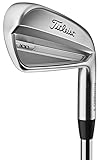
The T100 3G is the third generation of Titleist’s benchmark players iron, and they’ve refined things nicely without losing what made the original T100 such a hit. The forged carbon steel construction delivers exactly the kind of feedback you’d expect from Titleist’s top-shelf players iron — crisp, informative, and immediately telling you whether you’ve caught it pure or not.
What’s new in the 3G is the Dual Pocket Technology in the long irons, which adds some much-needed speed without softening the feel across the set. The result is a set where the 4 and 5 irons are actually enjoyable to hit (properly rare for true players irons), while the mid and short irons feel like classic muscle backs with just enough cavity help in the right places.
Workability: Exceptional. You can flight these irons low, high, left, right — they respond to exactly what your hands tell them. Shot shaping is about as good as it gets outside of a full blade.
Who It’s For: Anyone playing off scratch to about 6 handicap who wants the benchmark players iron. Tour-inspired looks, genuine feedback, and the Titleist pedigree that comes with knowing half the tour trusts these for a reason.
- Pros: Exceptional feel and feedback, outstanding workability, clean compact head, consistent distance gapping, long irons are surprisingly playable
- Cons: Premium price, long irons demand a consistent strike, not the most forgiving on heel/toe mishits
The T100 3G sits at the top of this list because it does everything a low handicapper needs without compromise. If your ball striking is where it should be, these irons will reward you every single time you flush one. They’re genuinely the gold standard for best golf irons for low handicappers right now.
2. TaylorMade P770 (2024) — Best for Low Handicappers Who Want Distance Too
The TaylorMade P770 has always been the “players iron that doesn’t hate you” of the lineup, and the 2024 version leans even further into that identity. If you’re a low handicapper who generates tour-level ball speed and wants irons that combine players iron aesthetics with meaningful distance performance, the P770 is your answer.

- Improved for a more solid feel like never before. The 2024 P770 has been strategically tuned using a player's forged construction and modal analysis to create a notable improvement and the best feeling P770 to date.
- Precision milled face and grooves coupled with TaylorMade’s FLTD CG deliver the launch and spin modern players demand.Long and high launching forgiveness in the long irons with accuracy and workability in the scoring irons.
- Consistent ball striking and accurate shot making from a forged iron construction designed with meticulous mass optimization and an updated tungsten weight design for more forgiving long irons.
- Refined shaping for a cleaner look and improved turf interaction. The 2024 P770 has a thinner topline visual balanced with a confidence inspiring, compact head shape.

The 2024 P770 uses a hollow-body construction in the long irons — essentially a forged face over a hollow head, with a polymer core to tune the feel. What this means in practice is that you get noticeably more ball speed from the long irons without the whole set feeling like a game improvement iron in disguise. The short irons remain more traditional in construction and feel properly compact and workable at address.
Workability: Very good. Not quite at T100 3G levels for pure shot shaping, but for most low handicappers it’s more than enough. The mid and short irons work the ball well; the long irons are slightly more forgiving by design.
Distance Control: Excellent. TaylorMade’s gapping is precise on the P770 — you’ll know your distances quickly and trust them on the course. The added length in the long irons is real but not unpredictable.
Who It’s For: Low handicappers who want the look and feel of proper players irons but also generate enough speed that they want the long iron performance to match. Also great for 5-8 handicappers stepping up from game improvement irons who want a set that bridges the gap.
- Pros: Great looks, impressive long iron performance, solid feel in mid/short irons, good shot shaping ability, slightly more forgiving than the T100
- Cons: Hollow construction changes feel in long irons vs. short irons, not the last word in pure blade-like feedback, price is significant
The P770 2024 has earned its reputation as one of the best golf irons for low handicappers who want a bit of both worlds. You get the players irons look that won’t embarrass you in the locker room, combined with enough performance assistance that you’re not fighting the long irons on every swing. For the majority of club-level low handicappers, this might actually be the smartest buy on this list.
3. Callaway Apex Pro 2024 — Best for Low Handicappers Who Want Forged Feel with Tech
Callaway has been quietly building one of the better players iron lineups in the game, and the Apex Pro 2024 is the strongest argument yet that they belong in the same conversation as Titleist and Mizuno at the top of the market. These are genuinely elite forged irons that deserve serious consideration from any low handicapper.

- EXCEPTIONAL DISTANCE WITH TOUR-LEVEL PRECISION.
- ADVANCED FORGED PERFORMANCE
- NEW PROGRESSIVE FACE DESIGN FOR INCREDIBLE DISTANCE WITH ADDED CONTROL
- DYNAMIC SOLE DESIGN FOR ENHANCED TURF INTERACTION
The Apex Pro 2024 is forged from 1025 carbon steel — that classic soft forging alloy that Callaway has been using to brilliant effect. The result is a genuinely soft, responsive feel that communicates clearly at impact. Callaway has also incorporated their urethane microsphere technology between the face and the body, which takes off the tiny bit of harshness you sometimes get with forged irons without killing the feedback that makes feel irons special.
Workability: Very high. The Apex Pro has a moderately thin topline and minimal offset — it looks proper at address and responds well to intentional shot shaping. You can work the ball left and right without fighting the club.
Distance Control: Precise. These aren’t hot face irons chasing yardage — they’re calibrated for consistent, controllable gapping. The ball comes off with a mid-high flight that gives you good stopping power on approach shots.
Who It’s For: Low handicappers who want the forged feel and workability of a traditional players iron with slightly more tech under the hood. Also great for anyone who’s been loyal to older Titleist or Mizuno players irons and wants to see what Callaway’s modern forged lineup can do.
- Pros: Beautiful forged feel, excellent workability, urethane microsphere tech improves sound and feel, clean compact head, strong tour pedigree
- Cons: Slightly less forgiving on big mishits than the P770, premium price bracket, Callaway’s branding is prominent (matters to some)
The Apex Pro 2024 is a serious iron that rewards serious ball strikers. Among the best golf irons for low handicappers currently available, it punches above its name recognition — a lot of mid-handicap brands have overshadowed how good Callaway’s players iron range has become. If you haven’t tried the Apex Pro, you’re missing out on one of the genuinely great forged irons of this generation.
4. Mizuno JPX 925 Hot Metal Pro — Best for Low Handicappers Who Want Speed Without Sacrificing Looks
Right, let’s talk about the interesting one. The Mizuno JPX 925 Hot Metal Pro isn’t a traditional players iron — it’s a performance iron engineered for ball speed — but it’s earned its place on this list because it does something genuinely impressive: it delivers hot face performance with a compact head profile that doesn’t look out of place in a low handicapper’s bag.

- Designed for golfers seeking a more compact profile
- CORTECH Design: Optimized face thickness distribution to maximize COR AREA
- Variable Sole Thickness: Increase overall face flex area for add CORAREA
- Harmonic Impact Technology: Fine tuned head geometry delivers ideal impact feel and feedback
- Acoustic Sound Ribs: Precisely dial in specific vibration patterns for a solid, explosive impact sound
The Hot Metal Pro uses Mizuno’s Chromoly 4140M face, which is incredibly thin and generates exceptional ball speed across the face. This is not a soft, whispery forged iron — it’s a precision-engineered performance iron that’s been dialled in for better players who want to actually gain distance without giving up the mid and short iron precision they’ve spent years developing.
Feel: Different from a traditional forged iron, but not bad. The Hot Metal Pro has a more lively, springy feel at impact compared to the soft thud of carbon steel forged irons. Some low handicappers love this; some find it too much. Worth hitting on a launch monitor before committing.
Workability: Good but not exceptional. This is where the Hot Metal Pro trades a little away compared to the T100 or Apex Pro. Shot shaping is possible, but the hot face design biases slightly toward straight, high launches. For the majority of low handicappers, it’s still plenty workable.
Who It’s For: Low handicappers who genuinely need more distance — perhaps players who have lost swing speed over the years but don’t want to switch to a chunky game improvement iron. Also strong for mid-5 to 8 handicappers who want a compact head with more performance help than a true players iron provides.
- Pros: Outstanding ball speed and distance, compact head profile looks great, precise distance gapping, more forgiving than pure players irons, Mizuno quality throughout
- Cons: Feel is less “pure” than traditional forged irons, slightly less workable than blade-style irons, not for purists who prize feedback above all else
The JPX 925 Hot Metal Pro proves that the best golf irons for low handicappers don’t have to be soft forged blades to earn a spot in the conversation. Mizuno’s engineering here is exceptional, and for any low handicapper who wants to gain meaningful distance while keeping a players iron look, this is one of the smartest options available in 2026.
5. TaylorMade P7MB — Best Pure Blade for Scratch Golfers and Tour-Level Players
Alright, here’s where we get properly serious. If you’re a scratch player, a plus-handicap, or you just want the most demanding, most rewarding, most brutally honest iron on the market — the TaylorMade P7MB is waiting for you. This is a true muscle back blade iron, and it does not apologise for it.

- Taylor Made P7MB 2023
- A shorter blade length, narrower sole width, and progressive offset create a minimalist profile that�s designed to control shot shape and trajectory.
- TaylorMade�s Compact Grain Forging process uses 2,000 tons of pressure, more than double the industry standard. The additional force gives us precision control of the forging�s microstructure and produces a tighter grain structure, creating the best possible feel.
- Inspired by Tour, P�7MB fits the eye of discerning players. The backbar geometry positions mass directly behind the face to support the point of impact and elevate feel. A symmetrical design delivers artful aesthetics that create aspiration and inspire confidence.
- Precision is paramount. Machine milling the face ensures superb quality and our most aggressive score lines for precision shot making. Meticulously crafted grooves deliver the spin and control needed to create your desired shape and trajectory.
The P7MB is forged from soft 1025 carbon steel in a pure muscle back profile. There is no cavity. There’s no polymer fill. There’s no hot face technology. It’s just a beautiful, precisely shaped block of steel that tells you exactly — exactly — what you did on every single shot. Flush it and you’ll feel nothing, just that ethereal compression that reminds you why you play this game. Miss it by three millimetres and you’ll feel it up your arms like you’ve hit a fence post.
Workability: Best on this list. Bar none. A true muscle back blade responds to every hand and wrist adjustment you make. Shot shaping with the P7MB is a conversation, not a fight — you can flight it low, hit a soft draw, a hard cut, a stinger — whatever the shot requires, these irons deliver it if your swing is good enough.
Distance Control: Precise but demanding. You need to hit these in the middle of the face consistently to get proper distance control. If your ball striking is at scratch level, the distance gapping will be excellent. If you’re occasionally spraying shots, the P7MB will punish the inconsistency hard.
Who It’s For: Scratch handicappers and better. Tour aspirants. Purists. Anyone who considers blade irons to be the only real irons and takes their ball striking seriously enough to earn them. Not for players still working on their consistency — this is an advanced tool for an advanced game.
- Pros: Unmatched feedback and feel, supreme workability and shot shaping, stunning muscle back aesthetics, forces you to improve your ball striking, tour-level pedigree
- Cons: Very unforgiving on mishits, no tech assist whatsoever, long irons are genuinely difficult, requires consistent pure ball striking, expensive for what is essentially a block of steel
The P7MB represents the pinnacle of what the best golf irons for low handicappers can be when pushed to the extreme. If you want to find out exactly how good your ball striking really is, put a set of these in your bag. They’ll make you better, or they’ll humble you completely — and honestly, either outcome is useful. These are proper players irons in the most uncompromising sense of the phrase.
6. Srixon ZX5 MkII — Best Value Option for Low Handicappers
Every list needs a “why are you sleeping on this” pick, and in 2026 that iron is the Srixon ZX5 MkII. While everyone debates Titleist vs TaylorMade, Srixon has been quietly making some of the most technically impressive and genuinely underrated irons on the market, and the ZX5 MkII is the best proof yet.

- MAINFRAME MainFrame is a variable thickness pattern of grooves, channels, and cavities carefully milled into the backside of the Iron face that maximizes flex at impact.
- PLAYERS DISTANCE IRON SHAPES A slightly wider sole with moderate blade length and offset help ZX5 Mk II cavity back Irons give attuned golfers enhanced distance, forgiveness, and workability while displaying a clean look at address.
- PROGRESSIVE GROOVES The 3i–7i feature wide grooves, ideal for longer shots in all conditions. The 8i–AW have deeper, closer set grooves which cut through grass and debris to enhance spin on approach shots. Laser milling between each groove, on every loft, enhances friction in all conditions.
- TOUR V.T. SOLE Tour V.T. Sole takes turf interaction to a whole new level of detail with a proprietary combination of sole widths, bounce angles, and notches that encourages a smooth glide through fairway, rough and sand to strike the ball solidly without losing speed.
The ZX5 MkII is a compact cavity back iron — firmly in players iron territory, not game improvement — with a Tour V.T. Sole design that genuinely works on a wide variety of turf conditions. The construction uses a forged grain flow process and a thin, high-strength steel face that generates impressive ball speed without compromising the feedback profile. It sits at a slightly lower price point than Titleist and TaylorMade’s top offerings, which makes it one of the best value entries among the best golf irons for low handicappers this year.
Feel: Genuinely impressive. The Srixon irons have historically been slept on partly because the brand doesn’t carry the same prestige cachet as the Japanese pure forged market, but in terms of actual at-impact feel, the ZX5 MkII is excellent. Solid, communicative, and satisfying on the flush shots.
Workability: Very good for a cavity back iron. The compact head profile and minimal offset mean you can shape shots effectively. It won’t win against a true muscle back for pure shot shaping, but for the vast majority of low handicappers it’s more than enough.
Who It’s For: Low handicappers who want proper players iron performance without the premium price tag. Anyone who’s been bagging the same set for five years and wants to step up to something current without breaking the bank. Also strong for mid-to-low handicappers — say 5 to 10 — who want a set that can grow with them as they improve.
- Pros: Excellent value, great feel for the price, compact players iron look, forgiving enough to be playable, strong gapping and distance consistency
- Cons: Less brand prestige than Titleist/Mizuno, not quite as workable as the pure blades, finish doesn’t hold up as long as some competitors
The Srixon ZX5 MkII earns its spot on this list because it delivers genuine players iron performance at a price that doesn’t require you to sell a kidney. If you’re evaluating the best golf irons for low handicappers on a tighter budget, or you simply want to try something different from the usual suspects, Srixon deserves a serious look. Don’t let the brand name fool you — the performance is real.
How to Choose the Right Irons for Your Low Handicap Game
Right, you’ve read the reviews. Now let’s make sure you actually buy the right set. Here’s how to think through the decision properly.
Assess Your Ball Striking Honestly
This is where most golfers go wrong — they buy aspirational irons before their ball striking earns them. Be brutally honest with yourself. If you’re still occasionally catching it fat or thin, the P7MB is not for you right now. The T100 3G or the P770 will reward you more and punish you less. If you’re genuinely scratching it and hitting 15 out of 18 greens on a good day, then by all means step into the blades.
A good way to test this: book a session on a launch monitor and hit the prospective irons with your actual swing, not your range swing. Real data about consistency, dispersion, and ball speed will tell you which category of players irons you’re actually ready for.
Decide Where You Stand on Feel vs. Performance
There’s a spectrum among the best golf irons for low handicappers: at one end you have the P7MB pure muscle back blade — all feel, all feedback, minimal forgiveness. At the other end sits the JPX 925 Hot Metal Pro — compact enough to look like a players iron, but genuinely performance-oriented. Everything else on this list sits somewhere in between.
Think about what matters more to you on the course. Do you obsess over the feel of a pure strike? Go forged and go compact. Do you need to carry the 5 iron 200 yards to score well on your home course? The Hot Metal Pro might actually be the smartest play.
Think About Your Full Set Configuration
Most low handicappers these days don’t play a matched set 3-iron through wedge. You might be bagging hybrids or fairway woods in the long iron slots, then going into players irons from 5 or 6 iron down. If that’s your setup, you have more flexibility — the unforgiving long irons on a blade set don’t matter if you’re not carrying them. Check out our guide to the best fairway woods for 2026 for the top end of your bag.
Try Before You Buy
Every single set on this list is expensive enough that you should hit it before committing. Most good pro shops will let you hit irons on a launch monitor or trackman before purchase. If they won’t, find a shop that will. The difference between how irons look in a review and how they feel in your hands is always significant.
Get Properly Fitted
Low handicappers arguably need custom fitting more than anyone else — not because they need help, but because small variations in shaft, lie angle, and length have much bigger performance impacts on consistent ball strikers. A proper fitting takes maybe 90 minutes and can add 10-15 yards of accuracy to your dispersion pattern. That’s free shots. Don’t skip it.
Don’t Ignore Shaft Selection
The iron head is only half the story. For low handicappers, shaft selection — weight, flex, and profile — is critical. Most players irons are sold with good stock shafts, but if your swing speed is at the extreme ends of the spectrum (very fast or slower due to age), exploring aftermarket shafts in the same fitting session is worth the investment.
And don’t forget your short game — once you’ve got your irons sorted, complement them with the right scoring tools. Our roundup of the best golf wedges in 2026 covers the wedge options that pair perfectly with players iron sets.
Quick Comparison: Best Golf Irons for Low Handicappers at a Glance
| Iron Set | Construction | Best For | Workability | Forgiveness |
|---|---|---|---|---|
| Titleist T100 3G | Forged Carbon Steel | Best Overall | ★★★★★ | ★★★☆☆ |
| TaylorMade P770 (2024) | Hollow Body / Forged Face | Distance + Players Feel | ★★★★☆ | ★★★★☆ |
| Callaway Apex Pro 2024 | Forged 1025 Carbon Steel | Forged Feel + Tech | ★★★★★ | ★★★☆☆ |
| Mizuno JPX 925 Hot Metal Pro | Chromoly 4140M Face | Speed + Compact Look | ★★★☆☆ | ★★★★☆ |
| TaylorMade P7MB | Forged Muscle Back Blade | Scratch / Tour Players | ★★★★★ | ★★☆☆☆ |
| Srixon ZX5 MkII | Forged Grain Flow | Best Value | ★★★★☆ | ★★★★☆ |
Final Verdict: Which Are the Best Golf Irons for Low Handicappers in 2026?
If I had to put one set in your bag without knowing anything else about your game, I’d hand you the Titleist T100 3G. It’s the benchmark for best golf irons for low handicappers for good reason — the combination of forged feel, genuine workability, and that Titleist polish make it the default answer when someone with a low single-figure handicap asks what to bag.
But here’s the honest breakdown by player type:
- Scratch player who values feel above all: Titleist T100 3G or Callaway Apex Pro 2024
- Plus-handicap or tour aspirant who wants blades: TaylorMade P7MB — no question
- Low handicapper who also wants distance performance: TaylorMade P770 (2024)
- Low handicapper who’s lost some swing speed: Mizuno JPX 925 Hot Metal Pro
- Low handicapper on a tighter budget: Srixon ZX5 MkII — genuinely excellent value
- Callaway loyalist or someone wanting something different: Apex Pro 2024
The truth is, all six sets on this list represent the best golf irons for low handicappers available in 2026. Picking the best golf irons for low handicappers is ultimately a personal decision — you won’t go wrong with any of them — but you will go wrong if you buy a set that doesn’t suit your actual game, your actual swing speed, and your actual ball striking consistency. Use this guide to narrow it down, then get yourself properly fitted. That’s the move.
One more thing: if you’re evaluating irons for the rest of your playing group, we also have guides covering the best golf irons for mid handicappers, the best irons for high handicappers, and the best game improvement irons if your mates need something a bit more forgiving. Point them in the right direction.
You Might Also Enjoy
- Best Golf Irons for Mid Handicappers 2026 — Great picks for the 10-18 handicap range
- Best Irons for High Handicappers 2026 — Maximum forgiveness for those still working on consistency
- Best Game Improvement Irons 2026 — Hot faces, big cavity backs, and serious forgiveness
- Best Fairway Woods 2026 — Complete the top end of your bag
- Best Golf Wedges 2026 — The scoring clubs that complement your new irons
- Best Golf Balls for Mid Handicappers 2026 — Because the right ball matters too