Best Golf Wedges 2026: 8 Top Picks for Every Golfer
The Short Game Weapons You Actually Need
Here’s a stat that should make you put down the driver: roughly 65% of all golf shots happen within 100 yards of the flag. Yet most golfers spend 90% of their practice time on the range bombing balls with their irons and woods. If you’re serious about dropping your handicap, the best golf wedges in your bag will do more work than almost any other club. We’re talking about the scoring clubs — the tools that separate a 10-handicap from a 5, and a 20 from a 15.
The golf wedge market in 2026 is as competitive as it’s ever been. Tour players are shaping 60-yard check-ups out of tight lies, amateurs are finally getting access to tour-spec grooves, and manufacturers are pushing groove geometry and face technology to the legal limit. Whether you need a lob wedge that bites like a bulldog, a forgiving sand wedge that helps you escape bunkers without a prayer, or a gap wedge that covers that ugly 90-yard distance — there’s a perfect wedge in this list for you.
We’ve tested, hit, and obsessed over everything on the market so you don’t have to. These are the best golf wedges you can put in your bag right now.
Quick Comparison: Best Golf Wedges at a Glance
| Wedge | Best For | Lofts Available | Price Range |
|---|---|---|---|
| Titleist Vokey SM10 | Best Overall | 46°–62° | $179–$199 |
| TaylorMade Hi-Toe 3 | Versatility / Open Face Shots | 50°–60° | $169–$189 |
| Cleveland CBX Full Face 2 | High Handicappers | 46°–60° | $139–$159 |
| Callaway JAWS Raw | Maximum Spin | 48°–60° | $169–$189 |
| Cleveland RTX 6 ZipCore | Best Value | 46°–60° | $139–$159 |
| Ping s159 | Feel / Tour Players | 46°–62° | $189–$209 |
| Mizuno S23 | Forged Feel | 46°–62° | $169–$189 |
| Cleveland RTX ZipCore | Budget Pick | 46°–60° | $99–$129 |
Best Golf Wedges 2026: Our Top Picks Reviewed
1. Titleist Vokey SM10 — Best Overall
If you ask any tour caddie what the gold standard golf wedge looks like, nine times out of ten they’ll say Vokey. The SM10 continues that legacy and then some. Bob Vokey and his team spent years refining this model, and the result is a wedge that gives you complete confidence from inside 100 yards. The micro-groove technology is the real headline here — tighter, more precise grooves that generate serious spin even when the ball is sitting in damp morning grass. Pair that with the tour-proven grinds (F, S, M, D, L, and K) and you’ve got a wedge that fits virtually every swing type and course condition. The SM10 is the benchmark for the best golf wedges on the market, period.

- Titleist Vokey SM10 (Tour Chrome)
- Your swing is unique and requires the right tools. Finding your ideal mix of grinds will provide you with flawless contact and maximum versatility so you can be prepared for everything the course demands.
- Every SM10 groove is cut to the edge to maximize spin. Each Vokey wedge is 100% inspected for utmost quality and performance, and a localized heat treatment is applied to the impact area to double the durability of the grooves
- SM10 Wedges are available in Tour Chrome, Nickel, Jet Black and Raw finishes so you can pick the look that best fits your eye and your game.
What separates the SM10 from previous Vokey generations is the refined sole geometry. The progressive center of gravity placement means better distance control across the full loft range — from a 46° pitching wedge all the way up to a 62° lob wedge. The feel at impact is that familiar Vokey “click” that tour players have trusted for decades, and the chrome finish ages beautifully as the grooves wear in. If you’re only going to buy one premium golf wedge this year, make it this one.
- Lofts: 46°–62° in 2° increments
- Grinds: F, S, M, D, L, K
- Face: Micro-groove technology for enhanced spin
- Best for: All skill levels wanting tour-level short game control
- Finish Options: Tour Chrome, Brushed Steel, Jet Black
2. TaylorMade Hi-Toe 3 — Best for Versatility
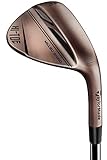
The TaylorMade Hi-Toe 3 is built for golfers who love to get creative around the greens. The defining feature is the full-face groove coverage that extends all the way to the toe — which means when you fan that face open for a flop shot from thick rough, you’re still making proper groove-to-ball contact. Most wedges lose effective spin once you open the face past 10 or 15 degrees because the grooves on the toe are smooth or non-existent. Not the Hi-Toe 3. This is hands-down one of the best golf wedges for players who like to play Phil Mickelson-style shots without Phil’s 30 years of practice.
- See below for description
The raw face finish on the Hi-Toe 3 also deserves a mention. Raw steel oxidizes over time, creating micro-texture that adds friction and spin — especially in wet conditions where chrome faces can get a bit slippery. The sole design has been updated with a wider, more versatile relief that handles a broader range of lies than its predecessor. Whether you’re playing off tight fairways or navigating gnarly rough, this golf wedge has an answer. It’s the tool in your bag for when the normal shot just won’t do.
- Lofts: 50°, 54°, 58°, 60°
- Face: Full-face grooves including toe area
- Finish: Raw face (oxidizes for extra spin)
- Best for: Creative shot-makers, open-face specialists
- Standout feature: Full-face groove coverage for open shots from rough
3. Cleveland CBX Full Face 2 — Best for High Handicappers
Not every golfer needs a blade-style wedge. If your handicap is north of 15 and your short game is the reason you’re losing bets, the Cleveland CBX Full Face 2 is the golf wedge that will genuinely help your scorecard. It’s cavity-backed — meaning there’s a cutout on the back of the head that moves weight to the perimeter — and that forgiveness on off-center hits is massive. Hit a chip shot a half-inch toward the toe? A blade wedge punishes that. The CBX Full Face 2? Barely notices it. The ball still goes roughly where you aimed and lands with reasonable spin.

- HydraZip A new, dynamic face blast and laser-milled line pattern, HydraZip maximizes friction for improved spinconsistency in wet or dry conditions. Visually, CBXFull-Face 2 Wedge faces are much more matte than past Tour Satin offerings, noticeably reducing glare at address.
- ZipCore Set in the heart of the Wedge, ZipCore is a new addition for CBX Full-Face 2. Our proprietary, lightweight and low-density core technology, ZipCore reduces vibrations while also perfecting the CG and boosting MOI for increased feel, control, consistency and forgiveness over last generation.
- UltiZip UltiZip’s full-face network of sharp, deep, and tightly spaced grooves maximizes performance at contact. By slicing through and channeling debris to bite harder,UltiZip offers purer spin, more control, and more consistency.
- Larger Full-Face Profile Hit more extreme, open-face shots with a larger facesize—the largest contact area ever on a CBX Wedge. More face means more grooves from hosel-to-toe and more forgiveness, no matter where you strike it.
- Forgiving Sole Designs A new Full Sole design on the 50 ̊–52 ̊ lofts provides forgiving performance on full swing shots. For theC-Shaped Sole featured on 54 ̊–60 ̊ lofts, we added bounce in the center yet shaved material off the heel for the ideal combination of forgiveness and versatility. And all lofts also feature a new bounce chamfer neart heir leading edge to reduce chunking around the green.

The “Full Face” part of the name matters too. Cleveland extended the grooves across the entire face, so even when you open the face in a bunker or play a high flop, you’re getting usable spin. The CBX Full Face 2 is the gateway drug to a proper wedge game for players who’ve been struggling with half-chili-dips and shanks. It doesn’t demand the precision of tour-style wedges, but it still gives you the spin and stopping power you need to get up and down more often. Easily one of the best golf wedges for weekend warriors looking to get better fast.
- Lofts: 46°, 48°, 50°, 52°, 54°, 56°, 58°, 60°
- Construction: Cavity-back for maximum forgiveness
- Face: Full-face grooves for open-face shots
- Best for: 15+ handicappers, players new to wedge play
- Key benefit: Perimeter weighting reduces the penalty for mishits
4. Callaway JAWS Raw — Best for Spin
If spin is your obsession — and for serious golfers, it absolutely should be — the Callaway JAWS Raw is the golf wedge you want in your hands. “JAWS” stands for Just A Wedge Spin, and Callaway delivers on that promise with some of the most aggressive groove geometry you’ll find in a legal golf wedge. The raw face finish is the real magic trick. Raw steel creates more surface friction than a polished chrome finish, and that extra friction translates directly into higher spin rates, especially from dewy morning fairways and damp rough where the ball can hydroplane off a smooth face.

- Jaws Raw brings raw scoring performance to your wedge game. Featuring the most aggressive grooves in golf, with a raw face that promotes maximum spin. For the first time ever, Callaway is bringing tungsten technology to a wedge, for a weight balanced club that offers both feel and control. These new technologies are balanced with the craftsmanship honed from Roger Cleveland's 40+ years of designing some of the most sought-after wedges in golf.
The JAWS Raw oxidizes over time, developing a dark rust patina that looks aggressive and genuinely performs better than day one. Callaway’s groove geometry is as sharp as the legal limit allows, cutting into the ball cover to create that snapping backspin you see tour players use to stop it on a dime. The JAWS Raw is a player’s golf wedge — it rewards good ball striking with ridiculous stopping power. The feel is solid and satisfying, and the control from inside 50 yards is genuinely tour-level. If you’re an 8-handicap or better who wants the most spin possible, this is your weapon.
- Lofts: 48°, 50°, 52°, 54°, 56°, 58°, 60°
- Face: Raw steel — oxidizes for maximum friction and spin
- Grooves: JAWS groove geometry at the legal spin limit
- Best for: Mid-to-low handicappers prioritizing spin and stopping power
- Key benefit: Exceptional spin in wet and damp conditions
5. Cleveland RTX 6 ZipCore — Best Value
The Cleveland RTX 6 ZipCore might be the best value you’ll find among the best golf wedges of 2026. Cleveland has been making seriously good wedges for decades, and the RTX 6 ZipCore is arguably their finest work yet. The headline tech is the ZipCore — a lightweight, low-density core material positioned low and deep in the head that raises the center of gravity. That sounds complicated, but the result is simple: more spin, more consistent launch, and better feel at impact. The Rotex face texture adds another layer of spin-generation on top of the groove geometry, making this golf wedge punch well above its price point.
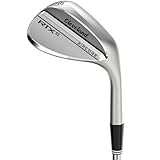
- HydraZip A new, dynamic blast and laser-milled line system creates roughness to enhance friction—maximizing spin in any conditions and from anywhere around the green. Visually, RTX 6 ZipCore Wedge faces are more matte than last generation, reducing glare at address and standing out more from the hosel and toe par.
- ZipCore Our proprietary, low-density core technology has exponentially evolved for RTX 6 ZipCore, with up to 95% more ZipCore material. And by setting the CG right where you strike the ball, plus increasing MOI by up to 20%, this generation offers players increased spin, distance, consistency, feel, and control on every shot.
- UltiZip UltiZip features grooves that are sharper, deeper, and more tightly spaced. They slice through debris and bite harder for enhanced spin and control; channel more debris for better shot consistency; and are set closer together (compared to past TourZip Groove designs) so we can fit two more on the face for greater edge contact and absolute spin performance.
What really sells the RTX 6 ZipCore as the best value golf wedge is the grind options available at this price. Cleveland offers multiple sole grinds — Full, Low, Mid, and High — so you can match the wedge to your attack angle and typical course conditions without paying Vokey prices. The feel is tour-quality, the spin numbers are legitimately impressive, and the looks are clean and professional. If you’re on a tighter budget but still want a proper performance golf wedge that’ll hold its own against clubs costing twice as much, the RTX 6 ZipCore is the move.
- Lofts: 46°–60°
- Technology: ZipCore low-density core + Rotex face texture
- Grinds: Full, Low, Mid, High
- Best for: All handicaps seeking tour performance at a fair price
- Key benefit: Premium spin technology at a mid-range price point
6. Ping s159 — Best Feel
Ping has always been the brand that quietly builds elite equipment while the flashier names get the headlines. The s159 is their most sophisticated golf wedge to date, and it’s specifically engineered for feel obsessives and tour-level ball-strikers. The standout feature is the 3D-printed geometry options — Ping uses additive manufacturing to create face textures and sole designs that simply aren’t possible with traditional CNC milling. The precision is extraordinary, and it translates to a soft, responsive feel at impact that blade wedge purists will love.

- s159 Chrome H Grind
- Wedgeflex
- Lob Wedge
The s159 comes in a range of grind options (W, T, S, C, and E grinds) that are thoughtfully designed around real swing data from Ping’s fitting system. The W grind is a wide, high-bounce option for bunker specialists. The T grind is a tour-thin sole for tight lies and firm turf. The fit between golfer and grind genuinely matters with this club, and Ping has made sure you have enough choices to get it right. From a pure feel standpoint, this is one of the best golf wedges money can buy — the feedback from each shot is exceptional, and the distance control from 40–80 yards is surgical.
- Lofts: 46°–62°
- Technology: 3D-printed face geometry for precision and feel
- Grinds: W, T, S, C, E
- Best for: Low handicappers, tour players, feel-focused golfers
- Key benefit: Exceptional feedback and precision via 3D-printed face geometry
7. Mizuno S23 — Best Forged Feel
Ask a forged-iron loyalist what the best golf wedge for pure feel is, and there’s a good chance they’ll say Mizuno. The S23 is forged from a soft carbon steel and then treated with Mizuno’s proprietary copper diffusion process — a heat treatment that infuses copper into the steel at a molecular level, creating a face that feels absolutely buttery at impact. We’re not exaggerating when we say that striking a crisp pitch shot with the Mizuno S23 is one of the most satisfying experiences in golf. The ball seems to melt into the face for a split second before launching off with perfect feedback.

- Grain Flow Forged HD: One-piece Grain Flow Forged HD from 1025E Pure Select mile carbon steel at Mizuno's iconic facility in Hiroshima, Japan. Where Mizuno irons have been produced since 1968.
- 1044 Boron : A carbon steel that features 30% greater strength.
- Harmonic Impact Technology: Fine tuned head geometry delivers ideal impact feel and feedback
- Quad Cut Grooves: Milled narrow/deep grooves optimized for stronger lofts and wide/shallow grooves optimized for higher lofts
- Hydroflow Micro Grooves: Laser etched microscopic grooves help channel away moisture for maximum spin in wet conditions
Beyond the feel story, the S23 is a genuinely excellent performer. The grain flow forging process aligns the metal’s grain structure along the face, which contributes to consistent feel and exceptional shot feedback across the entire hitting area. The grind options — C Grind, D Grind, S Grind, U Grind, and X Grind — cover everything from narrow soles for firm conditions to wider, higher-bounce soles for soft courses and bunkers. If you play blade irons and want a wedge that matches that same premium forged feel, the Mizuno S23 is among the best golf wedges on the market for your game.
- Lofts: 46°–62°
- Construction: Grain flow forged + copper diffusion treatment
- Grinds: C, D, S, U, X
- Best for: Better players who prioritize forged feel and feedback
- Key benefit: Copper diffusion treatment delivers unmatched soft feel
8. Cleveland RTX ZipCore (Classic) — Best Budget Pick
Want the ZipCore technology that makes the RTX 6 so impressive, but don’t want to spend full freight? The classic Cleveland RTX ZipCore is still on shelves, still performs brilliantly, and you can find it at significantly reduced prices now that the RTX 6 has launched. For golfers building out their wedge setup on a budget — or for players who want to add a dedicated specialty loft (like a 58° or 60° lob wedge) without breaking the bank — this is absolutely one of the best golf wedges for value-conscious buyers.
![Cleveland Golf Wedge RTX Full-FACE [Catalog Genuine Shaft Mounted Model] Dynamic Gold Shaft Men's Right Handed Loft Angle: 56° Lie Angle: 64° Bance Angle: 9° Flex: S, Silver](https://m.media-amazon.com/images/I/31eue0m6TaS._SL160_.jpg)
- Loft: 56 Degree
- Lie Angle: 64 degrees
- Hair Angle: 9 Degree
- Release Year/Model Year: 2021
The ZipCore technology is no gimmick. That low-density core material genuinely improves the launch and spin numbers compared to conventional wedge construction, and Cleveland’s Rotex face texture is still generating excellent friction from tight lies and rough. The feel isn’t quite at Vokey or Mizuno levels, but it’s honest and workable. You know exactly what the ball is doing. At the price points you’ll find the classic RTX ZipCore at in 2026, it’s nearly impossible to beat for golfers who want real performance without real pain at checkout. This is the smart play if you’re adding a third or fourth wedge to your bag without a big budget to work with.
- Lofts: 46°–60°
- Technology: ZipCore low-density core + Rotex face
- Best for: Budget-conscious golfers, wedge set completers
- Key benefit: Tour-inspired ZipCore technology at a significantly reduced price
- Pro tip: Buy the 58° or 60° loft as a lob wedge complement to any bag
How to Choose the Right Golf Wedge
Picking the best golf wedge for your game isn’t just about brand loyalty or which tour player’s name is stamped on the bottom. There are four key factors that should drive your decision: loft gapping, bounce, grind, and shaft. Get these right, and your short game will transform. Get them wrong, and even the most expensive golf wedge in the world won’t save you.
Loft Gapping
The most common wedge setup mistake golfers make is leaving distance gaps in their short game. Your pitching wedge probably sits around 44°–46°, depending on the iron set. If you then jump straight to a 56° sand wedge, you’ve got a roughly 10° gap with nothing in between — and that gap usually lives somewhere in the 80–100 yard range, which is exactly where precision scoring shots happen most often.
The right approach is to map out your loft sequence from your pitching wedge all the way to your lob wedge and make sure you have 4° gaps throughout. A common four-wedge setup looks like this: 46° pitching wedge, 50° gap wedge, 54° sand wedge, 58° or 60° lob wedge. That clean spacing means you have a dedicated club for every distance inside 120 yards. When you’re testing the best golf wedges for your bag, always start with your existing pitching wedge loft and work outward from there. A properly gapped wedge set is one of the fastest routes to lower scores.
Distance gaps also get thrown off when manufacturers change pitching wedge lofts. Modern game-improvement irons often come with “strong” lofts — a pitching wedge that’s actually 41° or 42°. If that’s your situation, your entire wedge gapping needs to shift accordingly. Check your PW loft before you buy anything.
Bounce Angle
Wedge bounce is the angle between the leading edge and the lowest point of the sole. It’s one of the most misunderstood specs in golf, but once you get it, you’ll never buy a golf wedge without checking it first.
Low bounce (4°–6°) is for players with a shallow attack angle — think sweepers who barely take a divot — and for firm course conditions or tight turf. A low-bounce sand wedge will slice cleanly through tight lies without digging. High bounce (10°–14°) is the opposite: designed for steep attack angles (players who take deep divots) and soft course conditions like fluffy fairway grass and bunkers with soft sand. High bounce prevents the club from digging too deep and lets the sole “bounce” through the ground properly.
Mid-bounce options (7°–10°) are versatile middle-ground choices that work across a wider range of conditions and swing types. Most recreational golfers do well with mid-bounce in their sand wedge and lob wedge. The bunkers at your home course matter too — fluffy, deep sand demands high bounce. Hard-packed, shallow sand? Low bounce is your friend. Getting wedge bounce right is the difference between your sand wedge being your best friend and your worst enemy.
Grind
Grind refers to how the sole of the golf wedge has been shaped and relieved. Different grinds let the club interact differently with the turf — and more importantly, different grinds enable different shot-shaping capabilities. A wide, full-sole grind with minimal heel and toe relief is great for full swings and basic chip shots. A crescent or C-grind with heavy heel and toe relief is built for players who love to open the face and play flop shots, because the ground relief prevents the club from catching when the face is laid wide open.
Tour players obsess over grinds because they know that the sole geometry determines whether certain shots are even physically possible with a given club. The best golf wedge manufacturers — Titleist, Cleveland, Ping, Mizuno — offer multiple grinds across their lineup specifically to match different swing styles and shot repertoires. If you’re a straight-up, square-face chip-and-run player, almost any grind will work. If you like to get creative and play open-face shots from tight lies, a C-grind or similar heel-toe relief is essential. Don’t ignore this spec.
Shaft Material
Most best golf wedges ship with steel shafts, and for most golfers that’s exactly right. Steel shafts in wedges provide consistent feel and feedback that graphite can’t quite match for short game touch shots. The added weight of steel also helps with tempo on finesse shots — swinging a light shaft through a 30-yard chip can lead to inconsistent results.
That said, there are valid reasons some players prefer graphite wedge shafts. Seniors or players with swing speeds below 80 mph may find graphite reduces vibration and joint stress without hurting performance. Players who already use graphite throughout their entire set sometimes prefer matching shafts for consistency of feel. Custom shaft options in wedges — like True Temper Dynamic Gold, KBS Hi-Rev, or Nippon Modus 115 wedge — can significantly affect spin and feel. Higher-launch, higher-spin shafts are increasingly popular among low handicappers looking to squeeze every last RPM out of their golf wedge. If you get a fitting, ask about shaft options — they matter more than most golfers think.
How Many Wedges Do You Actually Need?
This is the question every golfer eventually asks, and the honest answer depends on your handicap, your bag configuration, and how you actually score.
Most serious golfers carry three or four wedges. Here’s how to think about it:
Three-wedge setup: Pitching wedge (part of your iron set), sand wedge (54°–56°), and lob wedge (58°–60°). This leaves a gap between your pitching wedge and sand wedge, which can be covered by playing partial shots with either club. Fine for recreational golfers who prioritize having more long irons or hybrids in the bag.
Four-wedge setup: Pitching wedge, gap wedge (50°–52°), sand wedge (54°–56°), lob wedge (58°–60°). This is the setup most golf instructors and short game coaches recommend. The gap wedge is the scoring weapon that fills the dead zone between 80–100 yards, and carrying four wedges means you’re never trying to force a partial swing out of an awkward distance. This is how tour players play, and if you break 90 regularly, you should probably play four wedges too.
The lob wedge deserves special attention. A 60° lob wedge is one of the most versatile clubs in the bag — for bunker shots with a full swing, for high-spinning short chips that land softly, and for those terrifying tight-lie flop shots you sometimes have no choice but to play. It’s also the club most recreational golfers are least practiced with, which is why many coaches suggest players with higher handicaps skip the 60° and carry a 7-iron instead. If you’re carrying a lob wedge, put in the practice reps to make it work.
Wedge Fitting: Do You Need It?
Short answer on best golf wedge fitting: yes, if you’re serious about your game and spending $150+ on a golf wedge. Wedge fitting used to be reserved for tour players and low handicappers, but modern fitting technology has made it accessible and genuinely useful for mid-handicap players too.
A proper wedge fitting will measure your attack angle (critical for bounce selection), your shaft speed and spin rates across different lofts, your preferred shot shapes, and whether your current wedge gapping actually has gaps in it. Fitters will also look at where your divots are — forward, centered, or behind the ball — which reveals a ton about ideal sole grind and bounce combination.
The shaft fitting component is underappreciated. Switching from a standard Dynamic Gold S300 to a KBS Hi-Rev wedge shaft, for example, can change spin by 500–800 RPM on the same clubhead — and that’s the difference between a ball that releases three feet past the flag and one that bites and stops. If you’re investing in the best golf wedges available, a fitting session to make sure everything is properly matched to your swing is money extremely well spent.
If a formal fitting isn’t in the budget, at minimum go to a launch monitor session at a local golf shop and compare a few shaft options. Even 30 minutes of data collection can point you in the right direction and prevent an expensive mistake.
Final Verdict: Which Golf Wedge Is Right for You?
After all the testing, the range sessions, and the research, here’s the simple recommendation matrix for finding the best golf wedges for your specific game:
You’re a scratch to 5-handicap who wants tour-level control: The Titleist Vokey SM10 is the gold standard and our top overall pick. The micro-groove technology, the range of grinds, and the proven tour pedigree make it the safest choice for serious players. The Ping s159 is right alongside it if feel is your highest priority.
You play creative short game shots and like to open the face: TaylorMade Hi-Toe 3, full stop. The full-face groove coverage is a genuine performance advantage that no other golf wedge in this price range can match for open-face shots from rough.
You’re a 15+ handicapper who needs forgiveness first: Cleveland CBX Full Face 2. The cavity-back construction and perimeter weighting will save you more strokes per round than any blade wedge could. Get comfortable with it, then graduate to a player’s wedge later.
You want the most spin physically possible: Callaway JAWS Raw. The raw face and aggressive JAWS grooves are tuned for one thing — maximum spin — and they deliver.
You want excellent performance without a premium price tag: Cleveland RTX 6 ZipCore gives you tour technology at a fair price. It’s the best golf wedge for the money in 2026.
You’re a forged iron player who demands soft feel: Mizuno S23 with copper diffusion treatment. Nothing else in this list matches the buttery contact feedback of a well-struck Mizuno wedge.
You’re adding a lob wedge or sand wedge on a tight budget: Cleveland RTX ZipCore (classic) is the pick — genuine ZipCore tech at a significantly reduced price point.
The bottom line: the best golf wedges are the ones that match your swing, your typical course conditions, and your shot-making tendencies. Any of the eight picks on this list will dramatically improve your short game compared to playing with an old, worn-grooved wedge from three seasons ago. Grooves matter — worn-out grooves mean less spin, less control, and more three-putts. Whatever you pick, make the investment, put in the practice reps, and watch your handicap drop.