Best Golf Balls for Mid Handicappers 2026: 7 Picks Tested and Ranked
You’re Too Good to Play a Rock — But Do You Actually Need a Tour Ball?
Here’s the mid-handicapper dilemma in a nutshell: you’re shooting in the low-to-mid 80s, you hit greens in regulation sometimes, you’re starting to shape shots (or at least attempting to), and you’re losing maybe 3-4 balls a round. You’re well past the stage where ball choice is irrelevant — but you’re not exactly Rory McIlroy either. So what are the best golf balls for mid handicappers right now?
The answer isn’t just “buy Pro V1s” — though honestly, that’s not terrible advice. The real answer is that the best golf balls for mid handicappers are the ones that match your swing speed, prioritize what you actually care about (distance? feel? greenside spin?), and don’t cost so much that you’re fishing them out of the pond with your wedge after a big miss on the 14th.
If you’re carrying a 10-20 handicap, ball choice genuinely matters. A ball that suits a mid handicap golfer can mean a full club more distance, noticeably better control around the greens, and a feel that makes you want to spend more time on the chipping green. We’ve tested and narrowed it down to 7 top picks that cover every priority and budget. Let’s get into it.
Quick Comparison: Best Golf Balls for Mid Handicappers
Invalid table id.We evaluated each ball across four key criteria: distance off the tee, greenside control, feel on full swings and short shots, and durability over multiple rounds. Every single ball on this list features a urethane cover — because if you’re a mid handicap golfer and you’re still playing ionomer, you’re genuinely leaving short-game performance in the parking lot. Price was factored in too, because the math changes depending on how many balls you lose per round. Here’s the full breakdown.
Best Golf Balls for Mid Handicappers 2026: Our Top 7 Picks
Whether you want to squeeze more yards off the tee, stop approach shots closer to the flag, or just find a ball that feels good from tee to green, there’s something here for every type of 10-20 handicapper. These are the best golf balls for mid handicappers playing serious golf in 2026.
1. Titleist Pro V1 — The Standard Everything Gets Compared To

- Pro V1 has a softer feel, less spin and flatter trajectory than Pro V1x, which makes it the preferred model for players who like exceptionally long distance, the ability to flight shots, and score with precision and touch.
- New faster high gradient core delivers more speed and iron and wedge spin for more control
- Low long game spin from a speed amplifying high-flex casing layer
- Penetrating and consistent flight from a spherically-tiled 388 tetrahedral dimple design
- Excellent greenside spin from a soft cast urethane elastomer cover

Let’s start with the obvious one. The Titleist Pro V1 has been the benchmark tour golf ball for over two decades, and the 2026 version doesn’t mess with what works. It’s a 3-piece ball with a urethane cover, engineered to produce a penetrating ball flight with exceptional greenside spin and a consistent feel across every club in the bag. The compression sits around 87-90, which is manageable for mid handicappers with moderate-to-fast swing speeds — you don’t need a tour pro’s tempo to make this ball perform.
What makes the Pro V1 particularly well-suited as one of the best golf balls for mid handicappers is its consistency. You know exactly what you’re getting from shot to shot — a soft, responsive feel on chips and pitches, solid distance on full swings, and iron shots that check up rather than skip through the back of greens. If your driver swing speed is above 85 mph, this ball delivers exactly what the marketing claims. The 388-dimple design gives it a penetrating flight that cuts through headwinds nicely, which matters more than people give it credit for on open courses.
The feel is distinctive — that Titleist “thwack” at impact is something players either love or feel neutral about. It’s not marshmallow-soft like the Chrome Soft, but it’s not clicky or harsh either. It’s firm with purpose, giving you real feedback on your ball-striking. For a mid handicapper who’s trying to groove a swing, that tactile feedback is actually useful. You know when you’ve flushed it and you know when you’ve caught it thin.
The honest downside is the price. Pro V1s run $50-55 per dozen at full retail, and if you’re losing 4+ balls per round, that adds up to a painful monthly golf budget. But if you’re a more consistent mid handicapper — the 12-15 handicap player who’s getting their ball-striking sorted out — this is the ball that grows with your game. Many mid handicap golfers make the switch to the Pro V1 and never look back because the performance ceiling is so high.
- Pros: Outstanding shot-to-shot consistency, excellent greenside spin and control, penetrating ball flight, works for a wide range of swing speeds, proven by tour pros in every condition
- Cons: Premium price point, not ideal for swing speeds under 80 mph, can generate more tee shot spin than some players want
Best for: Mid handicappers with driver swing speeds of 85+ mph who want a proven all-rounder and are playing consistently enough to justify the price.
2. Callaway Chrome Soft — The Best Feel Ball for Mid Handicappers

- Outstanding tour performance with soft feel.
- New Hyper Fast Soft Core produces exceptionally fast ball speeds.
- New Seamless Tour Aero delivers a consistently high ball flight with low spin.
- New High-Performance Tour Urethane Soft Cover delivers outstanding greenside control with soft feel.
If the Pro V1 is firm and purposeful, the Callaway Chrome Soft is exactly what the name promises. This is one of the softest-feeling tour balls on the market, with a compression rating around 65 — significantly softer than most tour balls. That lower compression is a genuine advantage for mid handicap golfers who swing at moderate speeds, because softer balls compress more easily and can deliver better distance when you’re not generating tour-level club head speed.
The Chrome Soft is a 4-piece ball with a graphene-infused dual soft fast core, a mantle layer, and a urethane cover. That 4-piece construction is what gives it impressive greenside control — this thing stops fast. If you’ve ever watched an approach shot release through the back of a green and thought “come on, bite,” the Chrome Soft is going to scratch that itch in a serious way. Short-game spin rates are excellent, and the feel on chips and putts is almost addictive — it’s one of those balls that makes you want to practice your short game just to feel it click off the clubface.
Distance is where the Chrome Soft makes a trade-off. It’s not a bomb — it prioritizes control and feel over raw yardage. If you’re a player who values every possible yard off the tee, the TP5 or the Pro V1 might serve you better. But for the mid handicapper who values iron play and greenside precision, Chrome Soft is hard to beat. A lot of players who switch to it report hitting more greens in regulation simply because the ball is easier to control on approach shots — it doesn’t launch as high or spin as unpredictably as some firmer balls do on a hot clubface.
Durability is solid — the urethane cover holds up to cart paths better than you’d expect given how soft the ball feels. The Chrome Soft also has a Chrome Soft X variant if you want a slightly firmer feel and a touch more spin in the iron game. For most mid handicappers, the standard Chrome Soft is the sweet spot.
- Pros: Exceptionally soft feel, excellent greenside control and spin, good for moderate swing speeds, very consistent from shot to shot
- Cons: Not the longest ball off the tee, gives up some spin compared to firmer tour balls on full driver shots
Best for: Mid handicappers who prioritize feel and short-game control over distance, especially those swinging between 75-95 mph.
3. TaylorMade TP5 — Maximum Performance for Mid Handicappers Who Want It All

- New 5 Layer Progressive Construction - Our largest speed gradient optimizes spin separation between driver/long iron (low spin) and wedges (high spin). New White on White and Yellow on Yellow Cover Design - New urethane coloration designed to match paint colors for enhanced durability perception.
- Item Package Dimension: 7.59L x 5.46W x 1.88H inches
- Item Package Weight - 1.41 Pounds
- Item Package Quantity - 1
- Product Type - RECREATION BALL
The TaylorMade TP5 is TaylorMade’s answer to the question: “What if we put five layers in a golf ball?” The answer is a lot of really impressive golf shots. The TP5 features a 5-layer construction with a urethane cover, and that extra layering is what separates it from standard 3-piece tour balls. Each layer is engineered to do something specific — the dual-spin cover grabs wedge shots, the outer core creates high-speed energy transfer on full swings, and the inner core delivers the distance. It’s a lot going on inside a golf ball, and it mostly works.
For mid handicappers, the TP5’s standout quality is how it performs on partial shots. Those 80-yard wedge shots, knockdown irons into a tight flag, bump-and-runs that need to check up — the TP5 generates spin rates that are closer to tour-level than you typically expect from a ball that still performs well for a 15-handicapper. The compression sits around 85, which is playable for most mid handicap players with a decent tempo. You don’t need to swing like Dustin Johnson to get the most out of it.
Off the tee, the TP5 is genuinely long. TaylorMade has done serious aerodynamic work on the 332-dimple pattern, and the ball climbs well with a driver before flattening out into a powerful trajectory. It’s also somewhat forgiving on off-center tee shots — catches it a shade thin or toward the heel, and the TP5 still moves reasonably well. That’s a real advantage for a 10-20 handicap player whose ball-striking isn’t fully consistent yet. The TP5x is the firmer, faster sibling for players with swing speeds above 105 mph; for most mid handicappers, the standard TP5 is the right call.
The price is at the top of the range, which is the main reason it’s not everyone’s first pick. But if you’re the type of mid handicapper who wants to know you’re squeezing every bit of performance possible out of your equipment, the TP5 delivers. It’s a serious golf ball for a player who’s taking their game seriously.
- Pros: Excellent distance off the tee, outstanding partial-shot spin, 5-layer construction provides genuine performance separation, forgiving on slight mishits
- Cons: Premium price, slightly firmer feel than Chrome Soft, more ball than a higher handicapper in this range might need
Best for: Mid handicappers in the 10-15 range who want maximum performance from their ball, particularly on approach shots and wedge play.
4. Srixon Z-Star 8 — The Most Underrated Pick on This Whole List

- Maximum Greenside Spin: Z-STAR golf balls provide exceptional greenside spin for unmatched control and stopping power.
- FastLayer DG Core: New core technology starts soft in the center and firms around the edges for optimal feel, spin, and distance.
- Spin Skin+ Coating: A durable, friction-enhancing coating maximizes spin on approach shots and wedges for better control.
- Tour-Level Performance: Premium 3-piece construction offers complete performance from tee to green, ideal for skilled players.
- 338 Speed Dimple Pattern: Reduces drag and increases lift, boosting distance and flight stability, even in tough wind conditions.
Hot take: the Srixon Z-Star 8 might be the best golf ball for mid handicappers that most people aren’t seriously considering. Srixon doesn’t have the marketing budget of Titleist or TaylorMade, but what they do have is a legitimate tour ball that actual PGA Tour pros play week in, week out — and it typically comes in priced slightly below the Pro V1 and TP5. That’s a meaningful combination: real tour performance, less financial pain when you find water on the 18th.
The Z-Star 8 is a 3-piece ball with a urethane cover and a compression of around 88. The construction is deceptively straightforward — Srixon has refined this exact formula across eight generations now, and what they’ve landed on is a ball that delivers genuine tour-level greenside spin with a feel that’s softer and more approachable than you might expect from a high-compression tour ball. It’s not as soft as the Chrome Soft, but it’s not as firm as the TP5 either. It sits in a really comfortable middle ground.
What genuinely stands out is spin consistency. The Z-Star 8 uses Srixon’s SpinSkin+ coating on the urethane cover, which increases friction between the clubface and ball at impact — particularly on short-game shots. When you’re practicing those 40-yard chip shots that need to check up next to the hole, the Z-Star 8 gives you a reliable, repeatable spin rate that makes those shots predictable. For a mid handicapper trying to sharpen their short game, predictability is everything. You can’t score well from 50-100 yards if you don’t know how your ball is going to behave.
Distance is solid and competitive with other tour balls in this range. The Z-Star 8 doesn’t need to win any distance competitions — what it does is give you genuinely good mid-iron performance, where 6-iron and 7-iron approaches come in with enough spin to hold greens without being so hot that they spin back off the front. It’s a balanced, well-rounded golf ball that deserves to be in any conversation about the best golf balls for mid handicappers.
- Pros: Excellent value compared to other tour balls, exceptional short-game spin via SpinSkin+ coating, proven tour pedigree, consistent and predictable across all clubs
- Cons: Lower brand recognition among casual golfers (not a performance issue), slightly less distance than the TP5 in direct comparison
Best for: Mid handicappers who want legitimate tour ball performance at a slightly lower price, and anyone focused on sharpening their short game.
5. Bridgestone Tour B RX — The Smart Pick for Mid-Handicap Swing Speeds

- NEW REACTIV X System combines the REACTIV iQ Smart Cover Technology with XCLRNT mid-layer for INCREASED DISTANCE off the tee and IMPROVED FEEL and CONTROL around the green
- MORE DISTANCE: REACTIV X System creates intensified rebound on tee shots, delivering explosive velocity and increased distance
- MORE CONTROL: REACTIV X System stays on the face longer on approach shots, providing more spin and soft feel around the green
- The TOUR B RX delivers increased ball speed for MAXIMUM DISTANCE off the tee and HIT & SIT performance on approach shots
- Bridgestone Golf is the #1 BALL FITTER IN GOLF: The TOUR B RX is ideal for players with swing speeds UNDER 105 MPH who want additional distance
Bridgestone does something smart with their ball lineup: they actually engineer balls for specific swing speed ranges rather than pretending everyone swings 120 mph. The Tour B RX is designed specifically for golfers with swing speeds under 105 mph — which describes the vast majority of mid handicap golfers. That’s not a compromise or a consolation prize. That’s actually engineering a ball that works for your swing rather than a tour pro’s swing. There’s a real difference in philosophy here, and it shows up in performance.
The Tour B RX is a 3-piece ball with a urethane cover and a compression around 70 — softer than the Pro V1 and TP5, which means it compresses properly for moderate swing speeds. When a ball compresses correctly at impact, you get better energy transfer, which translates to more distance. For mid handicappers swinging in the 85-100 mph range, the Tour B RX often delivers comparable or better distance than higher-compression tour balls simply because it’s built for that speed range. You stop fighting the ball and start working with it.
The REACTIV urethane cover is one of Bridgestone’s standout innovations. The cover gets firmer on high-speed impacts (driver, long irons) to reduce spin and increase distance, then softens on low-speed impacts (chips, pitches, putts) to increase spin and control. It sounds like marketing copy, but you feel it in actual play — this ball has a different character off the driver than around the greens, in exactly the way you want. More distance off the tee, more spin around the green. That’s the dream.
Greenside control is very good for a ball at this compression level. The short-game spin won’t quite match the Pro V1’s bite, but it’s consistent and predictable, which serves a mid handicapper well. Bridgestone also has some of the better fitting data in the industry — they’ll tell you which of their balls actually suits your swing if you send them your numbers. For a data-minded golfer, that’s a compelling offer.
- Pros: Engineered specifically for moderate swing speeds, REACTIV cover adapts to shot type, excellent distance for the compression, genuinely good value
- Cons: Less short-game spin than higher-compression tour balls, not optimized for swing speeds above 105 mph
Best for: Mid handicappers with driver swing speeds in the 80-100 mph range who want a ball built for their game, not a tour pro’s game.
6. Vice Pro — The Budget Tour Ball That Punches Above Its Weight

- 3 Piece cast urethane cover ball construction with extra-thin cover for high short game spin
- Designed for advanced golfers with medium swing speeds to maximize driver distance and benefit from maximum wedge spin
- Outstanding spin control and soft feel off the club
- Newly designed, closed alignment line for better aiming
Vice Golf started as a direct-to-consumer brand in Germany, built on a simple premise: quality tour balls don’t need to cost $55 per dozen if you cut out the retail markups. The Vice Pro is their flagship offering — a legitimate 3-piece urethane tour ball that typically runs several dollars less per dozen than the Pro V1 or Chrome Soft. For mid handicappers who want urethane performance without the full premium price, this is a genuinely interesting option.
The Vice Pro has a compression of around 85, a thin urethane cover, and a construction philosophy that’s comparable to the Srixon Z-Star 8. Performance-wise, it delivers across all the categories that matter — greenside spin is real and usable, iron shots hold greens reliably, feel off the putter is good, and distance is competitive with other tour balls in the same compression range. It’s not a trick. The Vice Pro is a proper golf ball that just happens to cost less because of where and how it’s sold.
The value angle gets more interesting when you factor in your ball-loss rate. If you’re losing 3-4 balls per round (honest mid-handicapper math over a full season), you’re getting through a lot of dozens. Paying $40 per dozen instead of $55 per dozen adds up to significant savings over a golf season — savings that could go toward range time, a lesson, or a new wedge. Vice Golf lets you play real urethane tour ball performance without the sticker shock, and that matters for anyone building a sensible golf budget.
The main practical downside is availability — Vice Golf sells primarily online, so you can’t pop into your local pro shop and grab a sleeve between nines. You need to plan ahead and order. The color options are actually really good if you like playing a colored ball (yellow, red, lime), and the packaging quality is solid. First-time buyers are usually pleasantly surprised by how the ball performs relative to what they paid.
- Pros: Legitimate urethane tour ball at a lower price, solid across all performance categories, good color options, smart buy for mid handicappers who lose 3+ balls per round
- Cons: Online-only availability means you can’t grab them last-minute, slightly less margin-consistency than the biggest name brands at the extremes
Best for: Mid handicappers who want tour ball feel and urethane cover performance but want to be smart about their cost per round, especially if you lose balls regularly.
7. Wilson Staff Model — The Dark Horse That Belongs in This Conversation
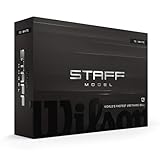
- Wilson 2026 Staff Model Golf Balls- 12 Balls, White
- FOUR PIECE URETHANE GOLF BALL: Thin cast urethane cover around a hard outer mantle results in high ball velocity and exceptional performance on approach shots.
- SEAMLESS DIMPLE DESIGN: Produces stable and consistent ball flight and maximizes distance performance.
- MID COMPRESSION CORE: Delivers a penetrating ball flight and maximum greenside spin while maintaining low spin off the tee.
Wilson Golf has had a genuine renaissance in recent years, and the Wilson Staff Model is their bid to be taken seriously in the premium tour ball conversation. It’s working. The Staff Model is a legitimate 3-piece urethane ball that deserves to be in any honest discussion of the best golf balls for mid handicappers — not because it’s cheap (though the value is excellent), but because it flat-out performs.
The compression sits around 85, the urethane cover is thin and responsive, and the overall construction prioritizes short-game control. Wilson has nailed the feel here — the Staff Model has a soft-firm character that sits somewhere between the Chrome Soft and the Pro V1. It’s responsive off irons, gives you genuine feedback on mishits (which is actually useful when you’re trying to improve your ball-striking), and feels excellent coming off a putter face. It’s the kind of ball that makes you realize you’ve been undervaluing feedback from your equipment.
The 302-dimple pattern gives the Staff Model a solid, penetrating ball flight that performs in wind and holds its line well on approach shots. It’s not the longest ball on this list, but it’s competitive, and it’s not far off the leaders. Where it earns its spot is around the green — the Staff Model produces consistent spin rates on wedge shots that are genuinely impressive for a ball at this price. Chip shots stop with authority, pitch shots hold greens, and full wedge shots behave predictably whether you’re hitting a 50-yard flop or a bump-and-run through the apron.
The best golf balls for mid handicappers aren’t always the ones with the biggest marketing campaigns, and the Wilson Staff Model is proof of that. Tour pros have quietly been testing Wilson equipment, and the Staff Model has gained real traction at higher levels of the game. If you haven’t played Wilson since the days of the Staff Duo, it’s time to give this ball a serious look. The performance-to-price ratio here is genuinely excellent.
- Pros: Genuine tour ball performance, outstanding price-to-performance ratio, excellent feedback feel, solid and consistent across all shot types
- Cons: Still fighting against brand perception built up over decades, distance is competitive but not at the very top of this list
Best for: Mid handicappers looking to step outside the usual Titleist/Callaway/TaylorMade rotation and get legitimate urethane tour ball performance at a price that won’t sting.
What to Look for in a Golf Ball if You’re a Mid Handicapper
Shopping for the best golf balls for mid handicappers can feel overwhelming when every ball on the shelf claims to be “tour-level,” “maximum distance,” and “ultimate feel” all at once. Here’s what actually matters for 10-20 handicap players who want to make a smart choice without spending hours reading compression charts.
Golf Ball Compression: Match the Ball to Your Swing Speed
Compression is the most misunderstood spec in golf ball shopping. Think of it as the firmness of the ball’s core — a 90-compression ball requires more force to compress than a 65-compression ball. When a ball compresses correctly for your swing speed, you get maximum energy transfer and optimal distance. When you’re mismatched — too firm for your speed, or too soft — you give up yards and spin consistency.
The practical guide: if your driver swing speed is under 90 mph, a softer ball in the 60-75 compression range (Chrome Soft, Bridgestone Tour B RX) will likely serve you better. If you’re swinging between 90-105 mph, mid-compression balls in the 80-90 range (Pro V1, Z-Star 8, TP5, Vice Pro, Wilson Staff Model) are in your wheelhouse. According to Golf Digest’s comprehensive ball testing, the average male recreational golfer swings the driver at approximately 93 mph — right in the sweet spot for mid-compression tour balls. So most mid handicappers are well-positioned to play any of the top picks on this list.
Spin: 3-Piece vs. 4-Piece vs. 5-Piece Construction
More layers generally means more spin separation — the ability of a ball to behave differently depending on which club you’re hitting. A 4-piece or 5-piece tour ball (Chrome Soft, TP5) can give you lower spin off the driver (longer, straighter drives) while generating higher spin on wedge shots (more greenside control). A 3-piece ball is simpler, more consistent, and typically slightly less expensive.
For most mid handicappers, the difference between a quality 3-piece and 4-piece ball is real but not dramatic. A well-designed 3-piece urethane ball like the Pro V1 or Z-Star 8 delivers very good spin separation. If driver spin is a major issue for you — say, you’re fighting a significant slice — a lower-spin multi-piece ball might actually help reduce that curve. Worth considering when you’re deciding between options at the same price point.
Cover Material: Urethane vs. Ionomer — Why It Matters More Than You Think
This is the single most impactful specification for a mid handicapper. Urethane covers produce significantly more short-game spin than ionomer (surlyn) covers, full stop. Every ball on this list has a urethane cover — intentionally. If you’re still playing an ionomer-covered distance ball as a mid handicapper, you’re giving up real, measurable short-game performance that directly costs you shots per round.
The difference is most obvious on chip shots around the green — urethane cover balls grip the clubface at impact and generate noticeably more spin and control than surlyn balls at the same swing speed. That doesn’t mean you’ll hole every chip, but it means the ball stops closer to where you intended and gives you more predictable behavior. For the best golf balls for mid handicappers, urethane is non-negotiable.
Feel: Not Just a Preference, Actually Useful Information
Feel is partly subjective, but it’s not merely a preference. “Feel” in golf ball terms refers to how the ball responds at impact — the acoustic and physical sensation through the club. A ball with good feel tells you whether you struck it well or not. That feedback loop is genuinely valuable when you’re trying to improve your ball-striking as a mid handicapper.
Softer feel (Chrome Soft, Tour B RX) is easier on the hands and can build confidence around the greens. Firmer feel (Pro V1, TP5) gives you more information on mishits — which can be helpful or deflating depending on your mental game. Spend some time with both types before committing to a full dozen, if you can.
Price Point: What’s Actually Worth Paying For
Premium tour balls (Pro V1, Chrome Soft, TP5) run $50-55 per dozen at full retail. Value-oriented tour balls (Vice Pro, Wilson Staff Model, Srixon Z-Star 8) typically come in at $35-45 per dozen. The performance difference is real but not enormous — maybe 5-10% better in the premium balls on the finer metrics. If you lose 2 or fewer balls per round, premium is worth it. If you’re losing 4+ per round, the value-oriented urethane balls on this list let you play real tour ball performance without destroying your equipment budget. Either way, you should be playing urethane.
Mid Handicapper Ball FAQ
Should a mid handicapper use a Pro V1?
Yes, with one honest caveat. The Pro V1 is a genuinely excellent choice among the best golf balls for mid handicappers — it’s consistent, it performs well across all shot types, and it grows with your game as you improve. The caveat is swing speed: if you’re swinging the driver under 85 mph, the Pro V1’s compression might actually work against you, and you’d be better served by a softer ball like the Chrome Soft or Bridgestone Tour B RX. But if your speed is in the 85-105 mph range, the Pro V1 is absolutely a legitimate choice — not something you need to “earn.” The idea that mid handicappers shouldn’t play tour balls is outdated advice that doesn’t match the reality of modern ball construction.
Does golf ball compression actually matter for a mid handicapper?
It does, though it matters more at the extremes than in the middle of the range. A mid handicapper swinging at 95 mph won’t notice a huge difference between an 85-compression and an 88-compression ball. But if you’re swinging at 80 mph and playing a 90-compression ball, you’re leaving distance on the table because the ball isn’t fully compressing at impact. Conversely, if you’re at 105 mph playing a 65-compression soft ball, you’re over-compressing it and losing energy efficiency. The best golf balls for mid handicappers are the ones with compression ratings matched to your actual swing speed — which you can measure for free at most driving ranges with launch monitors these days. Worth five minutes of your time.
What compression should a mid handicapper use?
Generally, mid handicappers benefit from compression ratings in the 70-90 range. If your driver swing speed is under 90 mph, the lower end of that range (65-75) is your target. Between 90-100 mph, mid-compression balls in the 80-90 range are ideal — which covers most balls on this list. If you’re regularly above 100 mph, you can move up to 88-95 compression without issue. The key is that compression is a guideline, not a rigid rule. If a ball in a slightly different compression range simply feels better to you and you’re making better contact, trust that feedback over the number on the spec sheet.
Is urethane worth the extra money for a mid handicapper?
Yes, and it’s not even particularly close. The jump from ionomer to urethane cover is the single biggest performance upgrade available in a golf ball for the 10-20 handicap player. The difference in greenside spin is measurable — chips stop faster, pitch shots hold greens more reliably, wedge shots have genuine bite. You don’t need to spend $55 per dozen to access urethane cover performance (the Vice Pro and Wilson Staff Model deliver real urethane performance for significantly less), but you should be playing urethane if you’re serious about improving your scores. The best golf balls for mid handicappers are all urethane balls — that’s not a coincidence.
How many golf balls should a mid handicapper lose per round?
Honest answer: 2-4 per round is typical for the 10-20 handicap range. If you’re toward the higher end (15-20 handicap), you might lose 3-5 per round on a course with water hazards or heavy rough. If you’re a solid 10-12 handicapper with good course management, you can often get through 18 holes on 1-2 balls on a good day. This matters for your equipment budget decisions — the more balls you lose per round, the more sense it makes to look at the value-oriented tour balls on this list rather than paying full premium price for every dozen.
What ball do most mid handicappers use?
Survey data and retail sales consistently show the Titleist Pro V1 and Pro V1x as the most popular balls in the mid handicapper segment, followed by the Callaway Chrome Soft and TaylorMade TP5. This is partly performance, partly brand loyalty, and partly the fact that Titleist has dominated the tour ball conversation for so long that their reputation carries into the amateur game. That said, “most popular” doesn’t always mean “best for you specifically.” The real answer to which are the best golf balls for mid handicappers comes down to your swing speed, your priorities on the course, and how often you’re buying a new sleeve. The most popular ball and the right ball for your game are sometimes the same thing, and sometimes they’re not.
The Bottom Line
All seven balls on this list are legitimate options for mid handicap golfers — any of them will outperform a budget distance ball or a beginner ionomer ball by a meaningful margin. The question is which one matches what you actually care about on the course.
Want the proven all-rounder? Go with the Titleist Pro V1. It’s the benchmark for a reason, performs at a high level for mid handicappers with swing speeds above 85 mph, and grows with your game as you improve. Year after year, it remains among the best golf balls for mid handicappers for a simple reason: it works.
Want the softest feel and best short-game control? The Callaway Chrome Soft is your pick. Especially good if your swing speed is in the moderate range and you value that buttery feel around the greens. Mid handicappers who prioritize their short game almost universally love this ball.
Want maximum performance and have the swing to match? The TaylorMade TP5 delivers tour-level spin across the whole bag and is particularly strong in the mid-iron and wedge departments. If you’re a 10-12 handicapper pushing toward single digits, this ball keeps up with your ambitions.
Want the best value tour ball? The Srixon Z-Star 8, Vice Pro, or Wilson Staff Model all punch significantly above their price point. If you’re losing balls regularly and shopping for the best golf balls for mid handicappers without hammering your golf budget, start with these three. You get real urethane tour ball performance for meaningfully less spend.
Mid swing speed and want a ball that’s actually designed for you? The Bridgestone Tour B RX is engineered specifically for swing speeds under 105 mph and often outperforms higher-compression tour balls for players in that range. It’s a ball built for the average mid handicapper’s actual game — not a tour pro’s game adapted downward.