Best Fairway Woods 2026: 7 Top Picks Tested and Ranked
The Best Fairway Woods of 2026 — Real Talk From the Range
Ask any scratch golfer what the most important club in their bag is and most of them won’t say driver. They’ll point at their 3-wood. The best fairway woods are workhorses — off the tee on tight par 4s, reaching par 5s in two, launching high iron-replacement shots from tight lies. In 2026, the technology in fairway woods has made a serious leap forward, and the gap between a good pick and a bad one can mean the difference between reaching greens in regulation and laying up all day.
We’ve put time into all seven of these clubs. Off the deck, off the tee, out of light rough, and on those tight downhill lies where every fairway wood reveals its true character. This isn’t a spec dump — it’s the kind of honest breakdown you’d get from a buddy who’s actually hit them all. Whether you’re a low handicap player shopping for precision, a mid handicapper wanting something that forgives your off-centre strikes, or a high handicapper who just needs the ball in the air and flying far, we’ve got a pick for you. These are the best fairway woods you can buy right now.
Quick Picks: Best Fairway Woods at a Glance
Short on time? Here’s a fast comparison of all seven best fairway woods in this guide.
| Club | Best For | Standout Feature | Handicap Range |
|---|---|---|---|
| TaylorMade Qi10 | Best Overall | Speed Pocket + forgiving face | All levels |
| TaylorMade Qi4D | Best 2026 Model | New face architecture, raw speed | All levels |
| Callaway Paradym AI Smoke Max | Mid Handicappers | AI-designed variable face | 10–20 |
| Ping G440 MAX | Max Forgiveness | Spinsistency, massive MOI | 12–28 |
| Titleist TSR2 | Low Handicappers | Tight dispersion, workability | 0–12 |
| Cobra DARKSPEED X | Best Value | Forged face, adjustable hosel | All levels |
| Cleveland Launcher Halo XL | High Handicappers | Extra-high launch, wide sole | 18–36 |
TaylorMade Qi10 Fairway Wood — Best Overall
If you had to pick one fairway wood for a player of any skill level — one club that checks every box without demanding you sacrifice one thing for another — the TaylorMade Qi10 is the answer. This club came out in late 2023 and it’s still the benchmark the 2026 market is measured against. TaylorMade’s Speed Pocket technology has always been a big deal in their fairway woods, and the Qi10 takes it to another level. The face flexes across a wider area at impact, meaning that thin strikes — the ones where you catch it a half-inch below the sweet spot — still come out fast and high rather than dropping dead short of the green.
The Qi10 is one of the best fairway woods for golfers who want distance without giving up too much forgiveness. The sound and feel at impact is satisfying without being clunky — there’s a nice crack to it that feels like you hit something good even on mishits. The stock shaft options cover a wide range of swing speeds, and the overall profile at address is clean and confidence-inspiring. It’s slightly pear-shaped, which helps at setup. Our one nitpick: the adjustable hosel is a bit fiddly compared to some competitors. But honestly, you’ll set it once and forget about it.
Off the tee, this club rips. It’s one of the most reliable best fairway woods options when you need to keep the ball in play off a tight tee but still want serious fairway wood distance. High handicappers will love how easy it is to get airborne; low handicappers will appreciate the control.
- Speed Pocket technology maximises distance on low-face strikes
- Excellent stock shaft selection for a wide range of swing speeds
- Clean, confidence-inspiring address profile
- Works beautifully both off the tee and off tight lies
- Adjustable hosel feels slightly stiff compared to competitors
- Premium price tag — you’re paying for the name as well as the tech
Best for: Any golfer who wants the most well-rounded fairway wood on the market without compromise.

TaylorMade Golf Qi10 Fairway 3 Wood Regular Right Handed
- To inspire confidence and generate incredible ball speed. – By shifting opti-face technology lower, we have redefined the COR area and placed it just below the center face.
- Respectively, these features boost speed on low face shots and promote consistently accurate alignment. Continuing the legacy of the V Steel technology, the Qi10 Fairway’s sole design improves turf interaction and versatility
- The Qi10 Fairway incorporates proven TaylorMade technologies such as the Thru-Slot Speed Pocket and laser etched topline. Respectively, these features boost speed on low face shots and promote consistently accurate alignment.
- This innovative approach results in high ball speeds, even when contacted low on the face. – The Qi10 Fairway incorporates proven TaylorMade technologies such as the Thru-Slot Speed Pocket and laser etched topline.
- By shifting opti-face technology lower, we have redefined the COR area and placed it just below the center face. This innovative approach results in high ball speeds, even when contacted low on the face.
TaylorMade Qi4D Fairway Wood — Best 2026 Model
TaylorMade doesn’t stand still for long, and the Qi4D is the proof. Released as their latest-generation fairway wood for 2026, this club builds on everything the Qi10 did well and then pushes further in the speed and launch departments. The face architecture has been completely reworked — TaylorMade calls it their most efficient face design yet, and after spending time with it, we’re inclined to agree. Ball speeds off the centre are genuinely impressive, and the forgiveness-to-performance ratio feels like it moved in the right direction compared to the Qi10.
What makes the Qi4D stand out among the best fairway woods of 2026 is its ability to suit different types of players through shaft and loft configuration. The 3-wood, 5-wood, and higher-loft options all have a distinct playability feel. The 3-wood off the tee is long and straight, but it’s the 5-wood where this club really shines — it produces a mid-high ball flight with excellent carry that translates into serious fairway wood distance on long approach shots. Golfers with a faster golf shaft flex (stiff or x-stiff) will want to get a proper fitting to get the most out of this one, as it can balloon a bit with the wrong shaft. The sound is crisper and slightly more muted than the Qi10, which some players will prefer.
This is the club to buy if you’re starting fresh in 2026 and want the newest technology available. It’s the best fairway wood TaylorMade has ever shipped, and that’s saying something.
- Latest-generation face tech delivers top-tier ball speeds in 2026
- Excellent 5-wood option for long approach shots
- Wide loft and shaft configuration options
- Forgiveness improvements over the already-strong Qi10
- Can balloon in flight if paired with a shaft that’s too soft — get fitted
- Very new, so availability can be spotty
Best for: Golfers who want the absolute latest fairway wood technology and are willing to invest in a proper fitting to dial it in.
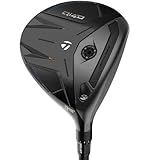
TaylorMade Golf Qi4D Fairway 3 Wood Mens Right Hand Stiff
- PROVEN RECIPE TaylorMade Fairways have dominated on Tour for over a decade because of their unique performance recipe, which enables maximum distance and versatility. The Qi4D fairway is designed for golfers who want the most advanced technology while still prioritizing versatility and control with amazing distance.
- ADJUSTABLE PERFORMANCE Utilizing a single Trajectory Adjustment System weight (8g x1) provides the golfer a more mass efficient way to adjust flight, spin and swing weight. 4° loft sleeve can be used to adjust loft, lie and face angle for optimized flight and is available in all lofts.
- REFINED ATTRIBUTES, BIG CHANGES Engineers conducted an objective analysis of all the performance attributes and discovered new methods to enhance performance and confidence.
- REAX SHAFTS Leveraging Mitsubishi Chemical’s industry-leading material expertise and production processes enables us to offer world-class shafts suitable for a diverse range of fairway applications.
- TOUR-PROVEN TECHNOLOGIES New and improved cut-through Speed Pocket protects ball speed and reduces spin on lowface strikes. Advanced CAD modeling creates a design with a clean and powerful sound, a foundation for TaylorMade fairway performance. Twist Face features corrective face curvature designed to provide straighter shots on mishits. Multi-Material Construction allows engineers to maximize performance by increasing discretionary weight.
$379.95

Callaway Paradym AI Smoke Max Fairway — Best for Mid Handicappers
Callaway’s AI-designed clubs have become a genuine selling point rather than a marketing gimmick, and the Paradym AI Smoke Max fairway wood is the clearest example of that in the fairway wood category. The face on this club was designed using artificial intelligence to map thousands of impact scenarios and optimise ball speed across the entire hitting area — not just the sweet spot. For mid handicap golfers whose ball-striking is good but not yet consistent, that matters a lot. You’re going to hit the heel a few times. You’re going to blade one occasionally. The AI Smoke Max is going to paper over a lot of those cracks.
Among the best fairway woods for mid handicappers, this one offers something the others don’t always nail: a natural, mid-high launch angle that works well without a lot of manipulation. You don’t have to swing up on it or try to help it off tight lies. The loft angle is set up to get the ball in the air efficiently from normal fairway lies, and the wide, forgiving sole glides through the turf rather than digging. That’s a big deal for mid-handicap players who sometimes have a slightly steep angle of attack. Fairway wood distance with this club is genuinely excellent — Callaway has been pushing ball speeds hard in the AI Smoke line, and it shows.
The look at address is modern and slightly more aerodynamic than traditional shapes. Some players love it; a few traditionalists might need time to adjust. Once you’re comfortable with the aesthetic, the performance more than makes up for it. The adjustable hosel lets you tune the loft angle to fit your trajectory preference.
- AI-designed face maximises ball speed on off-centre strikes
- Wide sole glides through turf, ideal for mid-handicap swings
- Adjustable hosel for loft angle fine-tuning
- Strong fairway wood distance numbers for the category
- Aerodynamic head shape takes some getting used to at address
- Not ideal for players who want to shape shots — it wants to fly straight
Best for: Mid handicap golfers (roughly 10–20 handicap) who want technology that compensates for inconsistent ball-striking.

Callaway Paradym AI Smoke Max, Fairway 3 Wood, Graphite, Regular, Standard
- With progressive shaping and the most extensive offering, Ai Smoke MAX Fairway Woods will be the optimal choice for players who want consistent launch and a neutral ball flight.
$269.99
Ping G440 MAX Fairway Wood — Best Forgiveness
Ping has been making some of the most forgiving fairway woods on the market for years, and the G440 MAX is their current crown jewel. If you’ve ever caught a fairway wood off the heel and watched it fizz sideways into the rough, this club was built specifically to prevent that moment. Ping’s engineering philosophy here is built around what they call Spinsistency — keeping spin rates consistent across the face regardless of where impact happens. In practice, it means that shots hit low on the face, out on the toe, or back toward the heel all produce a trajectory that’s much more like a centred strike than you’d expect.
The MOI (moment of inertia) on the G440 MAX is enormous. This is a physically bigger head shape designed to resist twisting at impact, and it works. Off the tee, it’s one of the most reliable best fairway woods you can buy — it’s very hard to get this club to produce a truly bad result. If you pair it with the right golf shaft flex for your swing speed, you’ll find the ball launches on a consistent, mid-high trajectory with enough spin to hold greens from distance. For golfers with high handicap numbers who are looking at the best drivers for high handicappers and want a matching fairway wood that delivers the same forgiveness promise, the G440 MAX is the obvious companion piece.
It doesn’t offer the same workability as a Titleist TSR2 or the raw speed of the TaylorMade Qi10, but it doesn’t need to. Its job is to keep you in play and give you a reasonable number to the green. On that mission, it’s arguably the best fairway wood in the world right now.
- Best-in-class forgiveness thanks to enormous MOI and Spinsistency tech
- Consistent ball flight even on significant off-centre strikes
- Great off-the-tee reliability on narrow holes
- Excellent for golfers with inconsistent swing paths
- Less workable than tour-oriented alternatives — it fights you if you want to shape shots
- Fairway wood distance is good but not class-leading
Best for: Golfers whose main priority is keeping the ball in play and reducing double-bogeys — particularly those in the 12–28 handicap range.

PING Golf Club G440 MAX 15 * 3 Wood Soft/Regular Alta CB Blue 65
- G440 MAX
- Soft / Regular
- 3 Wood
Titleist TSR2 Fairway Wood — Best for Low Handicappers
Here’s the honest truth about low handicap golfers and fairway woods: they don’t want the most forgiving club in the world, they want the most precise one. The Titleist TSR2 is built on that philosophy. This is the fairway wood for the player who actually shapes the ball, who cares about shot trajectory and spin rate, and who would rather have a club that responds accurately to what they do than one that corrects their mistakes. Among the best fairway woods for low handicap players, the TSR2 has been a firm favourite since its release and continues to be in 2026.
The face is a thin, high-strength titanium construction that generates excellent ball speed while giving you precise feedback on where you made contact. If you hit the toe, you’ll know it. That’s not a bug — it’s a feature for the calibre of player this club is designed for. The head profile at address is classic and traditional: a rounded shape with a neutral look that doesn’t push you toward any particular shot shape. Combined with the adjustable hosel (which Titleist calls the SureFit system), you can dial in the loft angle and lie angle to match your swing and preferred ball flight. Tight lies? The TSR2 glides through them beautifully. The leading edge is ground precisely to handle firm conditions without bouncing through impact.
One thing worth noting: the stock shaft in the TSR2 is tour-spec and may be too heavy or stiff for mid-speed swingers. If you’re a low handicap player with a lower swing speed, get fitted for an aftermarket shaft option to get the most out of this club’s face technology.
- Precise, tour-quality feedback on every shot
- Highly workable — shapes both ways with intention
- Adjustable hosel with genuine fine-tuning capability
- Excellent off tight lies — a true low-handicap weapon
- Stock shaft is tour-weighted — may not suit all low handicappers
- Forgiveness is average — mishits will penalise you
- Premium price that doesn’t always include the right shaft off the shelf
Best for: Low handicap players (0–12) who want a responsive, workable fairway wood they can shape and control with confidence.

Titleist TSR2 Fairway Wood 15 HZRDUS BLK 70 Stiff
- TSR2
- 6
- 3 Wood
Cobra DARKSPEED X Fairway Wood — Best Value
Let’s talk about value, because not everyone needs to spend top dollar to get a great fairway wood. The Cobra DARKSPEED X is proof that you can build a legitimately excellent club without charging a king’s ransom for it. Cobra has always punched above its weight on price-to-performance, and the DARKSPEED X is their best fairway wood effort yet. The forged face — yes, forged, not just a sticker claiming it — generates ball speeds that compete directly with clubs costing significantly more, and the overall package here is one of the most impressive value propositions in the best fairway woods category.
The adjustable hosel on the DARKSPEED X is genuinely one of the better ones in the market. Cobra’s MyFly system makes loft angle adjustments straightforward, and the range of available settings is wide enough to meaningfully change your trajectory and spin characteristics. Whether you need a lower, penetrating flight for links-style golf or a higher launch for approaching firm greens, there’s a setting for that. The low and back CG positioning creates a naturally high launch with a draw-biased flight that suits the majority of recreational golfers who tend to fight a left-to-right miss. Fairway wood distance from this club is legitimately impressive — it’ll go blow-for-blow with clubs at twice the price.
If you’re a mid-to-high handicap player looking for the best fairway woods that don’t break the bank, or if you’re a newer golfer who’s still figuring out what you need from your woods, the DARKSPEED X is the smartest buy on this entire list. Pair it with a good set of best irons for high handicappers and you’ve got a quality bag that won’t cost you a fortune.
- Excellent price-to-performance ratio — genuinely competes with premium clubs
- Adjustable hosel with wide loft angle range
- Draw-biased design helps golfers who struggle with a slice
- Forged face delivers strong ball speeds and fairway wood distance
- Slightly lower ceiling on workability than tour-oriented options
- The aggressive draw bias can overcook it for players who already hit a draw
Best for: Mid-to-high handicap players who want premium performance at a price that doesn’t sting — and golfers who fight a slice or fade.

Cobra Golf DARKSPEED X Fairway
- Refined aerodynamic design
- Tour inspired shaping
- Larger PWRShell with A.I. designed H.O.T. face
- Faster ball speed
- Max Workability with added forgiveness
$199.00
Cleveland Launcher Halo XL Fairway Wood — Best for High Handicappers
Cleveland doesn’t get enough credit in the fairway wood conversation, and that’s a shame — because the Launcher Halo XL might be the most playable high-handicap fairway wood on the market. Cleveland built this club from the ground up around one idea: make it easy. Easy to launch, easy to hit off tight lies, easy to get in the air from anywhere, and easy to trust at address. For high handicap golfers who have always struggled with fairway woods — and there are a lot of you, because fairway woods are genuinely hard to hit well — this club is the answer you’ve been looking for.
The Halo XL name refers to the Halo face cup construction, which wraps around the crown and sole of the club to flex across a massive area at impact. The result is that even shots hit near the bottom of the face — the death zone for most fairway woods — produce a respectable launch and carry distance. The wide sole is specifically designed to help the club glide rather than dig when you approach the ball from a slightly steep angle, which is the most common swing fault among high handicap players. Off tight lies, which terrorise many players with confidence issues over their fairway woods, the Halo XL is remarkably easy to hit. If you’re pairing this with the best drivers for high handicappers, you’ve got a forgiving setup from tee to green.
The loft options skew high — the 5-wood and 7-wood options are where this club really flourishes. For high handicap players who are already looking at the best golf hybrids to fill their long game gaps, the Halo XL 5-wood or 7-wood makes an excellent companion. Among the best fairway woods for high handicappers in 2026, it’s our clear pick.
- Halo face cup creates forgiving launch even on low-face strikes
- Wide sole excels off tight lies and from light rough
- High-loft options (5-wood, 7-wood) make long shots genuinely manageable
- Extremely affordable compared to premium alternatives
- Not the right club if you want to shape shots or flight the ball low
- Ball speed won’t compete with premium options at the top end
Best for: High handicap golfers (18+) who want a fairway wood that finally feels easy and forgiving from any lie.

Cleveland Golf Launcher Halo XL Fairway Wood, Graphite, Regular, 3 Wood, Right Hand
- MainFrame XL Face MainFrame XL Face Technology uses a variable thickness pattern that maximizes flex at impact to boost distance. It also repositions weight low and deep in the clubhead for added forgiveness and consistency.
- GlideRail Our proprietary GlideRail Technology gets a new, optimized design to deliver cleaner, uninterrupted swings through the turf. Two rails along the sole of the club help keep the face straight through impact.
- XL Head Design With an improved XL Head Design packing even more MOI than last generation, plus a low-and-deep weighting profile, players can enjoy long, high-launching ball flight with plenty of forgiveness.
- Rebound Frame Instead of giving it one flex zone, we’ve got two. With alternating flex zones acting in-sync, Rebound Frame directs more energy into the ball for speed and distance on every shot.
What to Look for in a Fairway Wood
With seven clubs reviewed above and hundreds more on the market, how do you actually narrow it down? Here’s what actually matters when shopping for the best fairway woods — no noise, just signal.
Loft Angle: It Changes Everything
The loft angle of your fairway wood determines launch height, spin rate, and ultimately carry distance. A standard 3-wood sits around 15 degrees of loft; a 5-wood is typically 18–19 degrees; a 7-wood runs 21–22 degrees. Higher handicap golfers almost always benefit from higher loft angles — they produce higher, softer-landing shots that are easier to stop on greens and much easier to get airborne consistently. Low handicap players often prefer lower lofts for a flatter, more penetrating flight that’s easier to control in wind.
Most of the best fairway woods today come with an adjustable hosel, meaning you can dial the loft up or down by a degree or two. That’s a useful feature, but it doesn’t replace the initial loft selection decision. If you’re unsure, go higher — most amateur golfers are playing 3-woods that are too low-lofted for their swing speed.
Golf Shaft Flex: The Most Overlooked Variable
More golfers play the wrong golf shaft flex than any other club fitting error. The shaft is the engine of your swing — it determines how the face is presented at impact, how much the shaft loads and unloads, and how the ball launches. A shaft that’s too stiff will produce low, right-missing shots with no life. A shaft that’s too soft will balloon the ball up with too much spin and lose distance dramatically.
As a rough guide: if your driver swing speed is under 85 mph, you’re in regular shaft territory. 85–95 mph is stiff territory. Over 95 mph points toward extra stiff. But this is just a starting point — the best way to nail your golf shaft flex is a proper fitting session with launch monitor data. The best fairway woods in the world are useless with the wrong shaft in them.
Face Technology: Where Speed Comes From
The face is where distance is made. Every major brand has a different name for their face technology — Speed Pocket, Halo face cup, AI-designed variable thickness — but they’re all chasing the same goal: maximising ball speed across the largest possible area of the face. Forged faces, cup faces, and variable thickness faces all approach this differently. In our testing, the clubs with the most sophisticated face technologies (the TaylorMade Qi series and the Callaway AI Smoke) delivered the most consistent ball speeds on mishits, which translates to fewer blow-up holes from poor contacts.
Forgiveness and MOI
Moment of inertia (MOI) is the engineering measure of how resistant a clubhead is to twisting at impact. Higher MOI = more forgiveness. The best forgiving fairway woods — like the Ping G440 MAX — have massive MOI numbers achieved through strategic weight placement. Tungsten weights in the heel and toe corners, deep and back CG positions, and wider soles all contribute to higher MOI.
One honest note: there is a real trade-off between forgiveness and workability. The most forgiving best fairway woods are also the least shape-able. If you’re a 5 handicap who works the ball both ways, a high-MOI club like the G440 MAX will fight you. If you’re a 22 handicap who just wants to keep the ball in the fairway, it’s perfect. Know which golfer you are.
Playing It Off Tight Lies
One of the most revealing tests for any fairway wood is tight lies — bare or tight fairway conditions where there’s no cushion beneath the ball. Some clubs handle these beautifully; others bounce and chunk. The key design features for tight lies are a shallower face angle, a more aerodynamic leading edge, and a sole that’s ground specifically to avoid digging. Clubs designed for tight lies include the Titleist TSR2 (exceptional) and the Cleveland Launcher Halo XL (surprisingly solid). If you play on firm, fast courses with thin fairways, this should be a priority in your selection.
Fairway Wood vs Hybrid — Which One Do You Actually Need?
This is a question that comes up constantly, and the honest answer is: probably both, depending on your game. But they’re not interchangeable, and understanding the difference will help you build a better bag. If you’re looking at the best golf hybrids at the same time as shopping for the best fairway woods, here’s how to think about it.
Fairway woods are built for distance and trajectory on long shots. They have larger clubheads, longer shafts, and are designed to move the ball as far as possible from good lies. The best fairway woods excel off the tee on par 4s and 5s, and from pristine fairway lies where you need to carry the ball a long way. They reward a sweeping, level-to-slightly-ascending attack angle. Off the tee, they can replace the driver when accuracy is more important than maximum distance.
Hybrids, by contrast, are designed to be hit more like irons — with a steeper, descending strike. They’re better from rough, better from awkward lies, and easier to hit accurately on shorter par 3s and approach shots inside 200 yards. Many mid and high handicap golfers replace their 3 and 4 irons with hybrids because the additional height and forgiveness is simply more useful in those situations.
A common setup for mid-to-high handicap golfers: carry both a 3-wood or 5-wood from the best fairway woods category for your long-game distance work, and then use a 5-hybrid or 6-hybrid to replace the long irons. This gives you coverage across the full distance range without leaving a gap. If you’re building out your bag alongside the best fairway woods, make sure your wedges are sorted too — check out our picks for the best golf wedges to complete the short game end of your setup.
Bottom line: if you’re between 180–230 yards out from a good lie, you want a fairway wood. Inside that, consider a hybrid. If you’re in rough or an awkward spot, go hybrid every time. The best fairway woods are not rescue clubs — they’re precision distance tools that shine when conditions are right.
Final Verdict
After all the testing, the range sessions, and the analysis, here’s where we land on the best fairway woods of 2026.
The TaylorMade Qi10 remains our Best Overall pick because it genuinely works for everyone. If you’re buying one fairway wood without a fitting and without knowing exactly what you need, this is the safe and correct choice. It’s forgiving, fast, and consistent. The TaylorMade Qi4D earns the Best 2026 Model crown because it represents the latest thinking in face engineering and, if paired with the right shaft, delivers class-leading performance.
For mid handicappers, the Callaway Paradym AI Smoke Max is the smartest choice because its AI-designed face technology genuinely outperforms traditional face designs on the off-centre strikes that mid-handicap players produce regularly. For maximum forgiveness, nothing beats the Ping G440 MAX — it’s arguably the most mistake-proof fairway wood ever built, and if you’re a higher handicapper who needs to stay in play, it’s worth every penny.
Low handicap players should stop reading and go hit the Titleist TSR2. It’s the most precise, workable option in the group and rewards skill the way the best fairway woods for skilled players should. If budget is the primary concern, the Cobra DARKSPEED X delivers genuine premium performance at a fraction of the price — it’s a remarkable club for the money. And for high handicap golfers who’ve always struggled to hit fairway woods cleanly, the Cleveland Launcher Halo XL is genuinely the most forgiving option available and could change your relationship with these clubs entirely.
Whatever your level, there’s a perfect pick in this list. The best fairway woods in 2026 cover every skill level, budget, and playing style — no excuses left for carrying a dud in your bag. If you want to get more distance across the board, also check out our guide to the best golf balls for distance — sometimes the ball is the variable holding you back, not the club.
You Might Also Enjoy
- Best Drivers for High Handicappers 2026 — Find a forgiving driver to pair with your new fairway wood
- Best Irons for High Handicappers 2026 — Complete your iron set with clubs built for your game
- Best Golf Hybrids 2026 — Fill the gap between your fairway wood and irons
- Best Golf Wedges 2026 — Lock down your short game with the right wedge setup
- Best Golf Balls for Distance 2026 — Squeeze every extra yard out of your fairway wood shots