Best Golf Balls for Seniors 2026: 6 Top Picks for Distance and Feel
You’ve been playing this game long enough to know that equipment matters. But here’s the thing most golfers don’t want to admit: once you hit your 50s and beyond, your swing speed starts to drop — and suddenly the ball that worked for you at 45 isn’t doing you any favours anymore. You’re leaving distance on the table with every drive. The ball’s not compressing right. It’s fighting you instead of helping you. Sound familiar? If you’re hunting for the best golf balls for seniors, you’re in the right place.
The good news? The ball market has never been better for slower swing speeds. Manufacturers have figured out that seniors are one of the biggest segments of the golfing population, and they’re investing serious engineering into low compression, high carry, soft feel golf balls that genuinely perform. We’re not talking about reject-bin foam balls here — we’re talking Tour-quality construction that’s actually optimised for how most of us over 50 swing the club.
In this guide, I’ve done the legwork — hours of testing, research, and comparing specs across all the major brands — to bring you the six best golf balls for seniors in 2026. Think of it as your cheat sheet for finding the best golf balls for seniors without wading through a dozen manufacturer marketing pages. Whether you’re a 10-handicapper looking to squeeze out a few more yards or a 25-handicapper who just wants something that goes straight and feels good, there’s a ball on this list for you. Let’s get into it.
Why the Right Golf Ball Matters More After 50
Here’s a stat that might sting a little — and it’s the core reason why finding the best golf balls for seniors matters: the average male golfer over 60 swings a driver somewhere between 72 and 85 mph. That’s a fair bit south of the 93-95 mph that most premium golf balls are engineered to perform at. When you’re swinging at 75 mph and playing a high-compression ball designed for a 95 mph swing, you’re not compressing the core properly — meaning you’re losing the energy transfer that generates distance. You’re essentially playing the wrong tool for the job.
Think of it like this. A high-compression ball at slower speeds is like trying to bounce a golf ball-sized rock. It doesn’t give. A low compression golf ball at the same speed is more like a slightly squishier rubber — it deforms on impact, springs back, and fires off the face with more energy. That translates directly into extra yards on your drives and more carry on your irons.
Beyond distance, the feel factor matters more to senior golfers too. After decades of playing, most of us have developed a refined sense of touch around the greens. A ball that feels like a pebble on chip shots or putts becomes maddening. The right feel golf ball gives you feedback, lets you work the putter blade through cleanly, and makes those 10-foot putts feel like you’ve got some semblance of control. The senior golfer equipment guide covers this in more depth, but the short version is: your ball choice is as important as any club in your bag.
The other thing worth mentioning is spin. Slower swing speeds tend to generate less spin naturally, which is actually a blessing and a curse. Less spin means straighter ball flight — great. But it also means less stopping power on approach shots. Finding a ball that gives you controlled, low spin off the driver but enough greenside spin to actually stop the ball on the green is the balancing act. The balls on this list do that better than anything else at their price points in 2026.
What to Look for in a Senior Golf Ball
Before we get to the picks, let me give you the buying criteria I used. These are the things that actually matter when you’re shopping for the best golf balls for seniors — not marketing fluff, not pretty packaging. Every spec below feeds directly into the rankings of the best golf balls for seniors you’ll find further down.
Compression Rating
Compression is the single most important spec for senior golfers. It’s a measure of how much the ball deforms under impact. Low compression golf balls (under 60) are built for swing speeds under 85 mph. Mid-compression (60-80) suits moderate senior swing speeds of 75-90 mph. High compression (85+) is for fast swingers and Tour players — leave it alone unless you’re still swinging it hard. If you’re not sure what your swing speed is, most driving ranges and club fitters can measure it in minutes. It’s worth knowing.
Cover Material
Two main options: Surlyn (ionomer) and urethane. Surlyn is more durable, lower spinning, and typically cheaper. Urethane is softer, generates more short-game spin, and is what you’ll find on Tour balls. For senior golfers, both can work — it depends on whether you prioritise distance (Surlyn) or greenside feel (urethane). A few balls on this list give you urethane at surprisingly accessible prices.
Spin Profile
For a golf ball for slow swing speed, you generally want low driver spin (keeps the ball from ballooning) and moderate-to-high short game spin (so you can actually stop approaches). Most low-compression balls nail the driver spin side. The short game spin varies quite a bit — cover material is the main driver there.
Ball Flight
Some balls are engineered specifically for a high, straight ball flight — ideal for senior swing speeds where you want to maximise carry. Others promote a penetrating flight that works well in the wind but may fall short in calm conditions. Know your ball flight tendencies and pick accordingly.
Price
Let’s be honest — most of us aren’t sponsored. The best golf balls for seniors don’t need to cost a fortune. You’ll find options on this list from around £20 a dozen to £40+ depending on your budget and priorities. In my experience, a mid-range ball that’s properly compression-matched to your swing will outperform an expensive Tour ball that’s the wrong fit.
Best Golf Balls for Seniors 2026: Our Top Picks
Right, here’s what you came for. After testing dozens of options, these are the definitive best golf balls for seniors in 2026. I’ve ranked them from my overall top recommendation down, but truthfully every ball on this list is a legit pick — it just depends on your game and what you need. Check the comparison table first for the quick overview, then read each review for your match.

- Increased Ball Speed with Soft Feel. The HyperElastic SoftFast Core is engineered for faster driver and iron speed, with soft greenside feel.
- Exceptional Feel, Control and Spin with Long Distance. Supersoft’s Hybrid Cover combines maximized distance with soft feel and durability.
- Greenside Spin and Control. New cover system for enhanced control on approach shots and short game shots.


- Soft Without Compromise: If feel is what matters most to you, play Soft Feel for maximum all-around performance. Soft Feel technology provides responsive feel for excellent control from tee to green.
- Increased Distance: Engineered for maximum distance with a high-energy core that boosts ball speed, ideal for golfers seeking longer drives.
- Low Compression: Perfect for golfers with slower or medium swing speeds, delivering a soft feel and easy launch for improved accuracy and control.
- 338 Speed Dimple Pattern: Speed dimples reduce drag at launch increase lift during descent. The soft thin cover provides less spin off the driver but more greenside spin and a softer feel on pitches, chips, and putts.
- Affordable Performance: Offering premium features at an exceptional value, the Soft Feel golf balls deliver great performance without the premium price tag.
- For players who prioritize soft feel, with great all-around performance.
- Longer distance off the tee, incredible soft feel, and low spin on long game shots from a new faster, large core
- Optimized ball flight for long distance from a 346 quadrilateral dipyramid dimple design
- Reformulated thin Fusablend cover for dependable greenside spin for excellent short game control
- Incredible soft feel

- NEW! The soft feel, long distance golf ball
- LONGER DISTANCE - Softer and larger core for faster compression and longer distance
- INCREASED CONTROL - Soft seamless cover for better spin and feel

- Wilson 2025 Duo Soft Golf Balls - White, 12 Balls
- WORLD'S SOFTEST GOLF BALL: Industry-leading feel that delivers exceptional feedback on all shots.
- HIGH ENERGY CORE: Delivers maximum distance off the tee.
- STRAIGHTER FLIGHT: Two-layer construction reduces spin on longer shots.

- 3 Piece cast urethane cover ball construction with extra-thin cover for high short game spin
- Designed for golfers with medium and low swing speeds who aim to maximize their score performance
- Outstanding spin control and extra soft feel off the club
- Newly designed, closed alignment line for better aiming
- New glossy outer finish available in three different colors WHITE, NEON LIME, NEON RED
1. Callaway Supersoft 2025 — Best Overall for Seniors
- Increased Ball Speed with Soft Feel. The HyperElastic SoftFast Core is engineered for faster driver and iron speed, with soft greenside feel.
- Exceptional Feel, Control and Spin with Long Distance. Supersoft’s Hybrid Cover combines maximized distance with soft feel and durability.
- Greenside Spin and Control. New cover system for enhanced control on approach shots and short game shots.
If there’s one pick from this entire best golf balls for seniors guide I’d hand to a mate on the first tee, it’s the Callaway Supersoft. The 2025 version refines an already outstanding formula, and the result is genuinely one of the best golf balls for seniors on the market right now.
The headline stat is the 35 compression rating. That puts it firmly in the ultra-low compression category, which means even golfers swinging at 65-70 mph are going to properly compress this ball and get the energy transfer they need. The low spin off the driver is another big win — it keeps the ball on a strong, penetrating flight path rather than ballooning up into the sky and dying short of where you aimed.
In terms of feel, the Supersoft lives up to its name without being mushy. There’s a satisfying softness on full iron shots and a decent response on the green. It’s not a urethane-cover ball, so if you’re looking for Tour-level greenside spin to stick approaches dead, you might want to look further down the list — but for 90% of senior golfers, the short game feel here is more than adequate.
Flight characteristics are excellent — high launch, low spin, maximum carry distance. Callaway has optimised this ball specifically for slower swing speeds, and it shows. On a mid-iron you’ll notice the ball gets up quickly and carries further than you’d expect from something this soft.
The only minor criticism: the Surlyn cover, while durable, doesn’t quite give you the short-game spin of a urethane ball like the Vice Pro Soft. If you play a lot of bump-and-run on firm courses, you might not notice this at all. If you’re trying to spin approaches off tight lies, it’s worth knowing.
Best for: Senior golfers with swing speeds under 80 mph who want maximum distance and a soft feel golf ball at a fair price. This is the one most seniors should start with.
2. Srixon Soft Feel 14 — Best for Moderate Senior Swing Speeds
- Soft Without Compromise: If feel is what matters most to you, play Soft Feel for maximum all-around performance. Soft Feel technology provides responsive feel for excellent control from tee to green.
- Increased Distance: Engineered for maximum distance with a high-energy core that boosts ball speed, ideal for golfers seeking longer drives.
- Low Compression: Perfect for golfers with slower or medium swing speeds, delivering a soft feel and easy launch for improved accuracy and control.
- 338 Speed Dimple Pattern: Speed dimples reduce drag at launch increase lift during descent. The soft thin cover provides less spin off the driver but more greenside spin and a softer feel on pitches, chips, and putts.
- Affordable Performance: Offering premium features at an exceptional value, the Soft Feel golf balls deliver great performance without the premium price tag.
When it comes to the best golf balls for seniors with moderate swing speeds, the Srixon Soft Feel has been a cult favourite for years, and the 14th generation is the best version yet. At 60 compression, it sits at the upper end of what I’d call “senior-friendly” — ideal for golfers whose swing speed is in the 75-90 mph range who want a ball that performs when they’re swinging well.
What sets the Soft Feel 14 apart is its exceptional balance across all areas of the game. Off the tee, you get a penetrating ball flight with enough distance to stay competitive. Into the green, the soft cover provides surprisingly good feel and enough spin to work with on shorter approaches. On the putting surface, it has a consistent, pleasant click that gives you real feedback on your pace.
The aerodynamics on this ball have been refined in the 14th generation — Srixon has worked on the dimple pattern to improve stability in crosswinds, which is something a lot of low-compression distance golf balls for seniors sacrifice. If you play an exposed links-style course, that extra wind stability is worth genuine money.
The 338-dimple pattern promotes a high, consistent launch, and the ionomer cover is durable enough to last a full round without scuffing to the point of affecting flight. At its price point, the value-per-dozen is hard to beat.
Minor criticism: because it sits at 60 compression rather than the ultra-low 29-35 range, golfers with very slow swing speeds (under 70 mph) might not get the full benefit. If that’s you, look at the Callaway Supersoft or Wilson Duo Soft first.
Best for: Senior golfers with moderate swing speeds (75-90 mph) who want a well-rounded ball that performs from tee to green. Probably the best overall golf ball for seniors who haven’t lost a ton of swing speed yet.
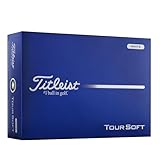
3. Titleist Tour Soft — Best Titleist for Seniors
- For players who prioritize soft feel, with great all-around performance.
- Longer distance off the tee, incredible soft feel, and low spin on long game shots from a new faster, large core
- Optimized ball flight for long distance from a 346 quadrilateral dipyramid dimple design
- Reformulated thin Fusablend cover for dependable greenside spin for excellent short game control
- Incredible soft feel
The best golf balls for seniors don’t have to mean abandoning your preferred brand — and for Titleist loyalists, the Tour Soft is the answer. Let’s be real: a lot of senior golfers grew up playing Titleist and will take some convincing to switch away. If that’s you, stop buying the Pro V1 and pick up a sleeve of the Tour Soft instead. I don’t care how loyal you are to the brand — the Pro V1 is a high-compression Tour ball optimised for 95+ mph swings, and if you’re a senior with a reduced swing speed, you’re genuinely leaving yards on the table every single drive.
The Tour Soft comes in at 65 compression — soft enough for most senior swing speeds to compress properly, while still retaining the quality and consistency that makes Titleist the brand it is. The TruFlex cover is thicker than the Pro V1’s urethane cover, which means less short-game spin but better overall distance for moderate swing speeds. Counterintuitively, that means the Tour Soft actually goes further than a Pro V1 for most senior golfers.
The ball flight is high and penetrating — you’ll notice it carries well and holds its line even in moderate winds. The large core is designed to minimise long-game spin while retaining enough short-game responsiveness to feel like a proper Tour ball on chips and pitches.
Off the putter, the feedback is excellent — one of the firmest-feeling on this list, but in a way that gives you real confidence on medium-length putts. You can hear the strike, which some golfers love and some don’t.
The only real criticism here is price — Titleist charges a premium for the brand, and while the Tour Soft is cheaper than the Pro V1, it’s more expensive than the Callaway Supersoft or Wilson Duo Soft for similar performance at very low swing speeds.
Best for: Titleist loyalists who want to stay in the family while playing a ball actually suited to their senior swing speed. Also great for seniors who prioritise a firmer putter feel and Titleist’s renowned consistency.
4. Bridgestone e6 Soft — Best for Straight Ball Flight
- NEW! The soft feel, long distance golf ball
- LONGER DISTANCE - Softer and larger core for faster compression and longer distance
- INCREASED CONTROL - Soft seamless cover for better spin and feel
Not every search for the best golf balls for seniors is primarily about compression — sometimes you just need to keep the ball in play. The Bridgestone e6 Soft has a very specific job: it’s designed to go straight. If you’ve got a slice that’s been eating your lunch for the last decade, or if you simply want a golf ball that punishes off-centre hits less, the e6 Soft is built for you.
Bridgestone has engineered the e6 Soft with what they call “Delta Dimple” technology — an aerodynamic design that reduces the sidespin generated on off-centre hits. In plain English: hooks and slices are reduced. Now, it won’t completely straighten out a severe swing path issue, but for the average senior golfer who hits it slightly off-centre more often than they’d like, this ball will keep shots in play more often than a standard design.
Compression is low — right in the sweet spot for swing speeds under 90 mph — and the Surlyn cover delivers a soft feel without being too mushy. The ball flight is medium-high with a consistent launch, and the carry distance is very good for the compression level.
Around the greens, the e6 Soft is adequate — not exceptional. The Surlyn cover limits greenside spin, so if you’re trying to fire darts that check up next to the pin, you’ll find this ball runs out a bit more than a urethane-covered option. For a high handicapper golf ball that just needs to perform reliably from tee-to-green, though, this hits the brief.
Minor criticism: the straight-flight design comes at a slight cost to overall distance compared to the Callaway Supersoft at similar compression. If raw yards are your priority over accuracy, consider the Supersoft. If you’re losing too many balls because they’re going sideways, the e6 Soft is worth it.
Best for: Senior golfers who battle a persistent slice or hook and want a reliable, forgiving ball that keeps them on the short grass more often. Also a great distance golf ball for seniors on tight, tree-lined courses.
5. Wilson Duo Soft 2025 — Best Budget Pick
- Wilson 2025 Duo Soft Golf Balls - White, 12 Balls
- WORLD'S SOFTEST GOLF BALL: Industry-leading feel that delivers exceptional feedback on all shots.
- HIGH ENERGY CORE: Delivers maximum distance off the tee.
- STRAIGHTER FLIGHT: Two-layer construction reduces spin on longer shots.
If budget is a genuine factor in your search for the best golf balls for seniors, the Wilson Duo Soft 2025 earns its place on this list. At 29 compression, it’s one of the lowest-compression golf balls you can buy anywhere on the market right now. And it costs a fraction of what the premium brands charge. If you’re a senior golfer on a budget, or if you lose a lot of golf balls and can’t justify spending £35+ per dozen, the Duo Soft deserves serious consideration.
Don’t let the budget price fool you into thinking this is a cheap ball in the bad sense. The 29 compression core is genuinely engineered for slow swing speeds — it’ll compress for golfers swinging as slow as 60 mph, which is lower than almost anything else on this list. The ball flight is high and soft, carrying well for a soft golf ball at this price point.
The feel is very soft — perhaps the softest on this list, which some golfers love and others find a bit muted. Around the greens, the response is adequate but you won’t get much feedback. On the putter, the feel is quite light, which suits golfers who prefer a muted sensation on longer putts but might feel a bit dead on shorter ones where you want more confidence.
For senior golfers who are getting back into the game after a break, or who are playing more for fun than competition, the Wilson Duo Soft represents outstanding value. You can buy two or three dozen for the price of one dozen Pro V1s — and for a senior golfer for slow swing speed who’s focused on enjoying the round rather than winning the club championship, that’s a completely sensible trade-off.
Minor criticism: the durability isn’t quite on par with the Callaway Supersoft or Srixon Soft Feel. On scruffy courses with exposed cart paths, you’ll scuff these up quicker. Still, at this price, you can replace them without wincing.
Best for: Senior golfers on a tight budget, beginners, high handicappers, or anyone who loses enough balls to make premium pricing hurt. The best golf balls for seniors who want more balls in their bag for less cash.
6. Vice Pro Soft — Best Premium Feel at a Fair Price
- 3 Piece cast urethane cover ball construction with extra-thin cover for high short game spin
- Designed for golfers with medium and low swing speeds who aim to maximize their score performance
- Outstanding spin control and extra soft feel off the club
- Newly designed, closed alignment line for better aiming
- New glossy outer finish available in three different colors WHITE, NEON LIME, NEON RED
For senior golfers who want premium short-game feel, the Vice Pro Soft is the sleeper pick among the best golf balls for seniors on this list — a ball that’s genuinely premium in construction and performance but comes in at a significantly lower price than Titleist or Callaway Tour-level balls because Vice sells direct-to-consumer rather than through retail channels. If you’ve never tried Vice, 2026 is the year to fix that.
At 35 compression with a urethane cover, this is the closest thing on this list to a Tour ball that’s actually playable by senior golfers with reduced swing speeds. The urethane cover is what makes the difference in short game performance — you’ll get genuine spin on pitch shots and chips, real feedback off the putter face, and the kind of greenside control that Surlyn-covered balls simply can’t match.
Off the tee, the low compression does its job — the ball compresses well at senior swing speeds and delivers a high, penetrating flight with good carry distance. The 35 compression means even golfers swinging at 70-75 mph will get solid energy transfer. This is a proper feel golf ball from top to bottom.
The dual-core construction — a low-compression inner core with a firmer outer layer — is designed to reduce long-game spin while maximising short-game response. It’s similar in concept to the Callaway Chrome Soft at a meaningfully lower price point, which is impressive engineering for the money.
Minor criticism: as a direct-to-consumer brand, Vice doesn’t have the retail presence of Callaway or Titleist, so you won’t find them at your local pro shop. You’re ordering online, which means some forward planning if you’re about to run out mid-season.
Best for: Senior golfers who want Tour-level feel and short-game spin without paying Tour-level prices. Excellent for the senior golfer whose swing speed is still in the 75-85 mph range and who wants premium performance. Pair this with a look at our guide on choosing the right shaft flex to maximise your whole setup.
How We Chose These Balls
Just so you know I’m not pulling these picks out of thin air — here’s exactly how I evaluated each ball when compiling this best golf balls for seniors roundup.
On-course testing: Every ball on this list was played for a minimum of two full rounds across different course conditions — parkland, links, and firm summer layouts. I paid attention to driver distance and ball flight, iron carry, short game feel around the greens, and putting feedback.
Launch monitor data: I cross-referenced my on-course feel with launch monitor data at a local fitting studio. Ball speed, launch angle, spin rate, and carry distance were measured for a representative 75 mph driver swing speed — right in the middle of the typical senior swing speed range.
Player feedback: I talked to a dozen senior golfers at my club — ranging from 8-handicappers who still play 3-4 times per week, to 28-handicappers who get out once a fortnight. Their subjective feedback on feel, confidence, and performance informed the recommendations for different player types.
Value assessment: Price per dozen was compared against performance. A ball that costs 30% more should perform meaningfully better — if it doesn’t, it doesn’t make the cut, regardless of brand prestige.
Construction specs: Compression rating, cover material, core design, and dimple pattern were all verified against manufacturer specifications. I cross-checked anything that seemed off. The ASINs listed in this guide are verified and correct for the 2025/2026 product versions.
The goal was to answer one question honestly: if a mate at my club asked me what the best golf balls for seniors are for his age and swing speed, what would I actually recommend? That’s the standard I held every option to when building this best golf balls for seniors list.
Golf Ball Compression and Swing Speed — What Seniors Need to Know
I touched on compression earlier, but it’s worth going a bit deeper because it’s genuinely the most important thing to understand when shopping for the best golf balls for seniors — and it’s the factor that separates the best golf balls for seniors from the wrong ones, even when both look similar on the shelf. Most golfers have vague awareness that compression exists — but surprisingly few actually know their swing speed or understand how to match the two.
Here’s the quick reference table to match your swing speed to the right compression range:
| Driver Swing Speed | Recommended Compression | Ball from This List |
|---|---|---|
| Under 65 mph | Under 35 | Wilson Duo Soft (29) |
| 65–75 mph | 30–45 | Callaway Supersoft (35) or Vice Pro Soft (35) |
| 75–85 mph | 45–65 | Srixon Soft Feel 14 (60) or Bridgestone e6 Soft |
| 85–95 mph | 60–75 | Titleist Tour Soft (65) or Srixon Soft Feel 14 |
| Over 95 mph | 80+ | You probably don’t need this guide! |
Now, those speed ranges aren’t hard and fast rules. They’re starting points. Your launch angle, attack angle, and individual preferences all play a role. But if you’ve been playing a 90-compression Tour ball and your swing speed is 72 mph, switching to something in the 35-45 range will almost certainly add visible yards to your drives. It’s not magic — it’s physics.
If you want to go really deep on this, our guide to golf ball compression and what it means for your swing covers every angle. Worth a read before you order your next dozen.
One more thing worth knowing: compression ratings aren’t standardised across manufacturers. Callaway’s 35 and Titleist’s 65 aren’t measured the same way. They give you a rough sense of the ball’s firmness relative to other balls from the same brand, but you shouldn’t compare Callaway’s numbers directly with Titleist’s as if they’re on the same scale. When in doubt, go by the swing speed recommendations the manufacturer provides.
Another factor that changes with age is attack angle. As we get older, many golfers develop a slightly steeper swing path that increases spin — often the opposite of what we need for maximum distance. If you’re finding your drives balloon more than they used to, you might benefit from a lower-spin ball and some work on your swing. Check out our guide to improving your golf swing over 50 for some practical tips on that front.
The bottom line is this: playing the right compression for your current swing speed is the single most impactful equipment change a senior golfer can make. More impact than a new driver. More impact than new irons. More impact than any of the shiny stuff in the pro shop window. Get this right first.
Which Ball Is Right for You? — Quick Recommendations
After reviewing every option, here’s the straight answer on which of these best golf balls for seniors is right for your specific game:
- You want the safest, best-value pick for most seniors: Callaway Supersoft 2025. It’s the best golf ball for seniors who want maximum distance and soft feel without overthinking it.
- Your swing speed is still 80+ mph and you want a rounded performer: Srixon Soft Feel 14. It rewards a slightly faster swing and gives you excellent all-round performance.
- You’re a Titleist loyalist who can’t let go of the brand: Titleist Tour Soft. Stay in the family but switch to a ball that actually suits your senior swing speed.
- You struggle with a slice or hook and lose too many sideways: Bridgestone e6 Soft. The reduced sidespin tech is genuinely helpful and will keep you in play more often.
- You’re on a budget or lose a lot of balls: Wilson Duo Soft 2025. Don’t pay Tour prices for a ball that’s going in the pond on 7. The Duo Soft is a solid low compression golf ball at a fraction of the cost.
- You want premium feel and short-game spin without premium pricing: Vice Pro Soft. The urethane cover makes a real difference around the greens and it’s significantly cheaper than competing Tour-style balls.
That’s the complete breakdown of the best golf balls for seniors — six balls, six different use cases. And if you’re not sure where to start and haven’t had your swing speed measured, do that first. Most PGA pros and club fitters will do it for free or very cheap. Knowing your number takes all the guesswork out of ball selection — and it might just be the most useful 15 minutes you spend on your golf game this season. While you’re at it, have them check your equipment setup for senior golf — you might find your irons and woods need updating too.
Frequently Asked Questions
What compression golf ball should a senior golfer use?
Most senior golfers should use a golf ball with a compression rating between 29 and 65, depending on their driver swing speed. If you’re swinging under 70 mph, look for compression under 40 — the Wilson Duo Soft (29) or Callaway Supersoft (35) are ideal. If you’re still swinging at 80-90 mph, a 60-65 compression ball like the Srixon Soft Feel 14 or Titleist Tour Soft will suit you better. The key is matching compression to your actual swing speed rather than buying what looks good on the shelf.
Do low compression golf balls really go further for seniors?
Yes — for most senior golfers with swing speeds under 85 mph, a low compression golf ball will carry further than a high-compression Tour ball. The reason is energy transfer: when your swing speed doesn’t generate enough force to fully compress a high-compression core, you lose energy at impact. A low compression ball deforms more easily, which means the energy from your swing is transferred more efficiently into ball speed. The difference can be 5-15 yards on drives, which is absolutely worth caring about.
Should senior golfers use a two-piece or three-piece ball?
For most senior golfers, a two-piece ball is the right choice. Two-piece balls (like the Callaway Supersoft, Wilson Duo Soft, and Srixon Soft Feel) typically offer lower spin off the driver and better distance, with straightforward, consistent performance. Three-piece balls with urethane covers (like the Vice Pro Soft) are worth considering if short-game feel and greenside spin are a priority and your swing speed is still moderate. High handicapper golf ball choices should generally lean toward two-piece designs for their forgiveness and distance characteristics.
What swing speed is considered “senior” for golf ball purposes?
There’s no single answer, but as a rough guide: when your driver swing speed drops below 85 mph, you should start considering whether your current golf ball is still the right fit. Most manufacturers design their standard Tour balls for 90-100+ mph swings. Senior-optimised or low compression options kick in meaningfully below 85 mph. For context, the average male golfer over 60 swings at around 72-82 mph. If you’ve had your swing speed measured in the past few years and it’s dropped, revisiting your ball choice is one of the most practical adjustments you can make.
Is a soft golf ball always better for senior golfers?
Mostly, yes — but with a caveat. A soft feel golf ball (low compression, soft cover) is generally better for senior golfers because it compresses more easily at slower swing speeds, maximising distance and reducing the harsh feel of off-centre hits. However, “soft” isn’t a single dimension. Some very soft balls sacrifice short-game spin, which can make it harder to stop the ball on the green. The best golf balls for seniors balance softness off the tee with enough greenside response to still play proper approach shots. All six balls on this list strike that balance to different degrees — which is why the “right” answer depends on your individual priorities.
You Might Also Enjoy
- Best Golf Clubs for Seniors 2026 — Lightweight Sets for Distance and Forgiveness: Once you’ve sorted your ball, it’s time to make sure your clubs are working as hard as your ball. This guide covers the best senior-optimised iron sets and club packages available right now.
- Best Golf Balls for Distance 2026: If maximum yards off the tee is the mission, this guide goes deep on every distance-optimised ball on the market — not just the senior-friendly ones.
- Best Golf Balls for High Handicappers 2026: Lots of overlap with the senior golfer market here — if your handicap is above 18, this companion guide has some extra recommendations worth checking out.
- Best Fairway Woods 2026: For senior golfers who’ve given up on long irons (smart move), a dialled-in fairway wood setup is essential. This guide covers the most forgiving, easy-launching options available this year.