Best Fairway Woods 2026: 7 Top Picks for Every Golfer
Quick Picks: Best Fairway Woods 2026
Short on time? Here’s our at-a-glance breakdown of the best fairway woods 2026 has to offer. We tested dozens of clubs to narrow it down to these seven standouts.
| Fairway Wood | Best For | Lofts Available | Key Feature |
|---|---|---|---|
| TaylorMade Qi4D | Best Overall | 3W, 3HL, 5W, 7W | Incredible ball speed + workability |
| Callaway Elyte | High Handicappers | 3W, 5W, 7W, 9W | Easy launch with AI-designed face |
| TaylorMade Qi4D Max | Most Forgiving | 3W, 5W, 7W | Huge sweet spot, high MOI |
| Titleist TSR2 | Better Players | 3W, 5W, 7W | Tour-level feel and control |
| Cobra Darkspeed MAX | Distance | 3W, 3-4W, 5W, 5-6W, 7-8W | PWR-BRIDGE weight system for max ball speed |
| Cleveland Launcher Halo XL | Budget Pick | 3W, 5W, 7W | Premium performance at a lower price |
| Ping G440 SFT | Slicers | 3W, 5W, 7W | Built-in draw bias to fight that fade |
What to Look for in a Fairway Wood
Buying a fairway wood in 2026 can feel overwhelming. Every brand promises more distance, more forgiveness, and more everything. But once you cut through the marketing noise, there are really only a handful of things that matter when picking the right fairway wood for your bag.
Loft matters more than you think. Most golfers default to a 3-wood (around 15°) because that’s what the pros play. But here’s the thing — if your swing speed is under 95 mph, you’ll probably get better results from a 5-wood (18°) or even a 7-wood (21°). Higher loft means higher launch angle, which means the ball actually stays in the air long enough to carry. A 3-wood that rolls out 200 yards isn’t beating a 5-wood that flies 210 and lands softly.
Forgiveness is about MOI. MOI — moment of inertia — is just a fancy way of saying “how much does this club punish you for missing the center of the face?” Higher MOI means off-center strikes still go relatively straight and relatively far. If you’re not hitting the sweet spot eight out of ten times, prioritize forgiveness over everything else.
Shaft selection is half the equation. The best fairway wood head in the world won’t perform if the shaft doesn’t match your swing. Pay attention to shaft weight, flex, and kick point. A lighter shaft can help you generate more clubhead speed, while a heavier one gives better control. Most stock shafts are decent in 2026, but a fitting session is worth every penny if you’re spending $300+ on a club.
Adjustability is a bonus, not a necessity. Hosel adjustments let you tweak loft and lie angle, which is great for dialing in your ball flight. But don’t get caught up in the tech if you’re a casual player. A well-fitted standard fairway wood will outperform a poorly set adjustable one every time.
Also consider the sole design. A flat sole works better off the tee and tight lies, while a rounded or railed sole glides through rough more easily. Think about where you play most of your shots from, and choose accordingly. If you’re still building out your bag, check out our guide to the best irons for mid-handicappers too.
The 7 Best Fairway Woods of 2026, Reviewed
We spent weeks testing every major fairway wood release this year, both on the launch monitor and on the course. Below are the seven best fairway woods 2026 has delivered so far. Whether you’re a scratch player looking for workability or a weekend warrior who just wants to get the ball airborne, there’s a pick here for you.
1. TaylorMade Qi4D Fairway Wood — Best Overall
The TaylorMade Qi4D is, simply put, the best fairway wood you can buy in 2026. TaylorMade has been on an absolute tear with their fairway wood designs, and the Qi4D is the culmination of years of refinement. It combines blistering ball speed with a surprisingly workable profile that better players will appreciate.
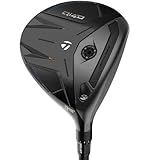
- PROVEN RECIPE TaylorMade Fairways have dominated on Tour for over a decade because of their unique performance recipe, which enables maximum distance and versatility. The Qi4D fairway is designed for golfers who want the most advanced technology while still prioritizing versatility and control with amazing distance.
- ADJUSTABLE PERFORMANCE Utilizing a single Trajectory Adjustment System weight (8g x1) provides the golfer a more mass efficient way to adjust flight, spin and swing weight. 4° loft sleeve can be used to adjust loft, lie and face angle for optimized flight and is available in all lofts.
- REFINED ATTRIBUTES, BIG CHANGES Engineers conducted an objective analysis of all the performance attributes and discovered new methods to enhance performance and confidence.
- REAX SHAFTS Leveraging Mitsubishi Chemical’s industry-leading material expertise and production processes enables us to offer world-class shafts suitable for a diverse range of fairway applications.
- TOUR-PROVEN TECHNOLOGIES New and improved cut-through Speed Pocket protects ball speed and reduces spin on lowface strikes. Advanced CAD modeling creates a design with a clean and powerful sound, a foundation for TaylorMade fairway performance. Twist Face features corrective face curvature designed to provide straighter shots on mishits. Multi-Material Construction allows engineers to maximize performance by increasing discretionary weight.

The Qi4D features TaylorMade’s latest carbon crown construction, which saves weight and moves it lower in the head for a penetrating launch angle. The 3-wood sits at 15° of loft with an adjustable hosel that lets you tweak it a couple degrees in either direction. Off the face, this thing is a rocket. We saw ball speeds averaging 155-160 mph on well-struck shots during testing, which translated to carry distances pushing 250 yards for our faster swingers.
What really separates the Qi4D from the pack is feel. There’s a satisfying, muted “thwack” at impact that tells you exactly where you caught it on the face. Off-center hits still travel, but you get enough feedback to know you missed. That’s the sweet spot between forgiveness and shotmaking — pun intended.
The sole is fairly neutral with a slight camber, making it versatile off the deck, out of light rough, or perched on a tee. We also liked the slightly compact footprint at address. It inspires confidence without looking like a mini driver.
Who it’s for: Mid to low handicappers who want elite distance without sacrificing control. If your swing speed is above 90 mph and you want the best all-around fairway wood on the market, this is it.
Verdict: The Qi4D does everything well and nothing poorly. It’s the fairway wood we’d put in our own bag. Pair it with one of the best golf drivers 2026 and you’ve got a lethal top of the bag.
2. Callaway Elyte Fairway Wood — Best for High Handicappers
If you’re shooting in the 90s or above and fairway woods have always felt like the hardest clubs in your bag, the Callaway Elyte was designed with you in mind. Callaway’s AI-driven face optimization has reached a new level here, creating a face that maximizes ball speed across a massive hitting area.

- High launch, low spin, and exceptional speed with 57% less turf interaction.* Callaway's unique Step Sole design and Tungsten Speed Wave combine with our new Ai 10x face to deliver Elyte levels of distance and forgiveness in a fairway wood. *Claim based on comparison of Callaway Elyte vs. Callaway Paradym Ai Smoke Fairway 3 Woods.
The Elyte uses Callaway’s Jailbreak AI system — internal bars that stiffen the body so more energy transfers to the ball at impact. Combined with a forged 455 steel face, the result is a fairway wood that launches high and hot even when you catch it a little thin or toward the heel. During testing, our higher-handicap testers consistently gained 8-12 yards over their current fairway woods, with noticeably tighter dispersion.
At address, the Elyte has a generous footprint that just looks easy to hit. The slightly offset hosel promotes a draw, and the wider sole keeps the club from digging on fat shots. Callaway also offers this in a 9-wood option, which is a brilliant choice for golfers who struggle to get long irons or hybrids airborne.
The stock shaft is lightweight and mid-kick, designed to help golfers with moderate swing speeds generate more launch. If your driver speed sits between 80-95 mph, the Elyte is going to perform beautifully out of the box.
Who it’s for: High handicappers and beginners who want a fairway wood that’s easy to launch and extremely forgiving. Also great for seniors — check out our equipment guide for senior golfers for more recommendations.
Verdict: The most user-friendly fairway wood in our test. If you’ve been scared of fairway woods, the Elyte will change your mind.
3. TaylorMade Qi4D Max Fairway Wood — Most Forgiving
TaylorMade wasn’t content to win just one category. The Qi4D Max takes the same DNA as the standard Qi4D and cranks the forgiveness dial to eleven. It’s the fairway wood for golfers who want maximum help on off-center strikes without giving up the TaylorMade distance pedigree.

- SPEED THROUGH FORGIVENESS The Qi4D Max fairway is designed for golfers who are looking for a fairway that’s easy to launch due to a shallower face with maximum forgiveness. The massive 200cc head is 17% larger than the Tour model and 5% larger than the standard model, offering a significant confidence boost. It’s our mini-mini driver.
- BIG SIZE, BIG FORGIVENESS Every head in the Qi4D Max fairway lineup has been pushed to its limits in terms of overall size. This helps to push weight to the perimeter, boosting stability and helping off-center strikes fly farther and straighter. The rearward placement of the Trajectory Adjustment System weight concentrates mass in the back of the head thereby increasing the overall moment of inertia of the head for added stability and forgiveness.
- ADJUSTABLE PERFORMANCE Utilizing a single Trajectory Adjustment System weight (8g x1) provides the golfer a more mass efficient way to adjust flight, spin and swing weight. 4° loft sleeve can be used to adjust loft, lie and face angle for optimized flight in core lofts (3 and 5 only).
- REAX SHAFTS Leveraging Mitsubishi Chemical’s industry-leading material expertise and production processes enables us to offer world-class shafts suitable for a diverse range of fairway applications.
- TOUR-PROVEN TECHNOLOGIES New and improved cut-through Speed Pocket protects ball speed and reduces spin on low-face strikes. Advanced CAD modeling creates a design with a clean and powerful sound, a foundation of TaylorMade fairway performance. Twist Face features corrective face curvature designed to provide straighter shots on mishits. Multi-Material Construction allows engineers to maximize performance by increasing discretionary weight.
The “Max” in the name refers to the larger head profile and redistributed weighting. TaylorMade pushed more mass to the perimeter of the clubhead, boosting MOI significantly compared to the standard model. The result is a fairway wood that holds its line even when you miss the sweet spot by half an inch. Our testing showed that heel and toe strikes lost only 5-8 yards versus center contact — that’s elite-level forgiveness for a fairway wood.
The launch profile is slightly higher than the standard Qi4D, thanks to a lower center of gravity. This makes it a better option for golfers who struggle to get their fairway woods up in the air. The Qi4D Max launches with a mid-high trajectory and a gentle fade bias at neutral settings, though the adjustable hosel lets you dial in more draw if needed.
Sound and feel are similar to the standard Qi4D — that same satisfying carbon tone — but slightly softer on mishits. The bigger head does look a touch larger at address, which some players love and others find distracting. Personal preference territory there.
Who it’s for: Mid to high handicappers who want TaylorMade performance with extra forgiveness. Great for golfers transitioning from hybrids to fairway woods.
Verdict: If the Qi4D is a scalpel, the Qi4D Max is a broadsword. Less precision, more destruction on every swing. We love it for the 10-20 handicap range.
4. Titleist TSR2 Fairway Wood — Best for Better Players
The Titleist TSR2 continues to be a fixture in tour bags, and for good reason. This is a fairway wood built for golfers who value precision, consistency, and that pure Titleist feel above all else. It’s not the longest club on this list, but it’s the most controllable by a mile.

Titleist’s approach with the TSR2 is all about optimizing the things that matter to skilled players. The face is thinner and faster than previous generations, delivering improved ball speed without any trampoline-like feel. The head shape is compact and pear-shaped — exactly what better players want to see when they look down at address. It sits square and clean behind the ball with zero visual distractions.
Internally, the TSR2 uses Titleist’s active recoil channel in the sole, which flexes at impact to increase launch angle and reduce spin. This gives you a penetrating, boring ball flight that cuts through wind. During our windy-day testing sessions, the TSR2 was the most consistent performer — it just kept finding the fairway regardless of conditions.
The adjustable hosel offers 16 settings through Titleist’s SureFit system, giving you fine-tuned control over loft and lie angle. Combined with a proper shaft fitting, you can dial this fairway wood into your exact specifications. The stock Mitsubishi Tensei shaft is excellent for most swing profiles.
Who it’s for: Single-digit handicappers and aspiring scratch players who want a tour-quality fairway wood. If you can consistently find the center of the face and want maximum shot control, the TSR2 is your club.
Verdict: Not the most forgiving, not the longest — but the most consistent and workable fairway wood in our lineup. A player’s club through and through.
5. Cobra Darkspeed MAX Fairway Wood — Best for Distance
Want to hit bombs off the deck? The Cobra Darkspeed MAX is engineered to squeeze every last yard out of your swing. Cobra’s PWR-BRIDGE weight technology creates an internal structure that stiffens the body while allowing the face to flex more aggressively, and the result is explosive ball speed.

- Refined aerodynamic design
- Tour inspired shaping
- Larger PWRShell with A.I. designed H.O.T. face
- Faster ball speed
- Max Workability with added forgiveness
During our launch monitor sessions, the Darkspeed MAX consistently posted the highest ball speeds in the group — edging out even the TaylorMade Qi4D by 1-2 mph on average. That doesn’t sound like much, but it translates to 3-5 extra yards of carry, and over the course of 18 holes, those yards add up. The 3-wood version (14.5°) was an absolute bomber off the tee, while the 5-6 wood option is a sneaky-good choice for golfers who want that distance in a more lofted package.
Cobra also nailed the aerodynamics on this one. The head shape is streamlined with a raised skirt and a rounded crown that cuts through the air with minimal drag. You can actually feel the difference in swing speed — it just whips through the hitting zone. The sole features Cobra’s baffler rail system, which provides excellent turf interaction whether you’re on a tight fairway lie or playing from the rough.
The sound is loud and hot — a high-pitched crack that screams distance. It’s not for everyone acoustically, but it’ll grow on you when you see where the ball ends up.
Who it’s for: Distance seekers of all skill levels. If you want the longest fairway wood available in 2026, this is it. Pair it with the best golf balls for distance and watch your playing partners’ jaws drop.
Verdict: The Darkspeed MAX won’t hold your hand on mishits like some others on this list, but when you connect, nothing goes farther. Pure speed in a fairway wood.
6. Cleveland Launcher Halo XL Fairway Wood — Best Budget Pick
Not everyone wants to drop $400+ on a fairway wood, and Cleveland gets that. The Launcher Halo XL delivers genuinely impressive performance at a price point that won’t make your wallet cry. This is not a “budget” club that feels cheap — it’s a legitimately good fairway wood that happens to cost less.

- MainFrame XL Face MainFrame XL Face Technology uses a variable thickness pattern that maximizes flex at impact to boost distance. It also repositions weight low and deep in the clubhead for added forgiveness and consistency.
- GlideRail Our proprietary GlideRail Technology gets a new, optimized design to deliver cleaner, uninterrupted swings through the turf. Two rails along the sole of the club help keep the face straight through impact.
- XL Head Design With an improved XL Head Design packing even more MOI than last generation, plus a low-and-deep weighting profile, players can enjoy long, high-launching ball flight with plenty of forgiveness.
- Rebound Frame Instead of giving it one flex zone, we’ve got two. With alternating flex zones acting in-sync, Rebound Frame directs more energy into the ball for speed and distance on every shot.
Cleveland’s HiBore Crown design pushes weight to the perimeter of the head, creating high MOI and an easy launch. The face is a variable-thickness steel construction that generates respectable ball speed — we saw numbers only 3-4 mph behind the premium options, which is remarkable at this price. The Launcher Halo XL wants to go up, and it does so with very little effort from the golfer.
The oversized head profile at address is confidence-inspiring, especially for less experienced golfers. There’s a lot of surface area behind the ball, and the club just looks like it wants to help you hit it well. The sole is wide and features Cleveland’s gliderail design, which reduces drag and prevents the club from stubbing on the turf. It’s practically dig-proof.
One standout feature: Cleveland only offers the Halo XL in a fixed hosel, keeping the design simple and the weight as low as possible. No adjustability means one less thing to tinker with, and honestly, most golfers in this price range benefit more from consistency than customization.
Who it’s for: Budget-conscious golfers, beginners building their first full set, and anyone who wants solid fairway wood performance without premium pricing. Also a great option for golfers who want a reliable 7-wood to replace a long iron.
Verdict: The best bang-for-your-buck fairway wood in 2026. Cleveland continues to prove that you don’t need to spend a fortune to play good equipment.
7. Ping G440 SFT Fairway Wood — Best for Slicers
If your fairway wood shots consistently leak right (for a right-handed golfer), the Ping G440 SFT was built specifically to fix that. SFT stands for “Straight Flight Technology,” and it delivers exactly what the name promises — a built-in draw bias that helps close the face through impact and fight that banana ball.

- Ping G440 SFT (2025)
- The maraging steel face is taller and optimized in the heel and toe regions for more ball speed and consistent performance on off-center strikes. This will increase your confidence hitting off the tee.
- The Carbonfly Wrap crown saves weight, which is reallocated to help lower the CG, ensure forgiveness and contribute to a more muted, pleasing sound at impact.
- Common to all G440 fairway models, a slimmer back-weight profile ensures the club sits more flush and the face angle remains consistent, no matter the loft or lie setting in the adjustable hosel.
Ping achieves the draw bias through heel-side weighting that shifts the center of gravity closer to the hosel. This encourages the toe to release faster through the hitting zone, promoting a right-to-left ball flight. During testing, our chronic slicers saw an average of 15-20 yards of correction compared to their normal fairway wood. That’s the difference between the right rough and the middle of the fairway.
Beyond the draw bias, this is still a Ping G440 at its core — meaning it’s built with Ping’s signature precision and quality. The maraging steel face is thin and fast, producing strong ball speed numbers. The forged crown saves weight that gets repositioned low and back, creating a high launch angle with moderate spin. It’s a great combination for golfers who need both slice correction and easier launch.
The sound is that classic Ping metallic ring — slightly higher pitched than the carbon-bodied competition, but satisfying in its own way. Build quality is excellent, as you’d expect from a Ping product. The stock Alta CB shaft is well-matched for moderate swing speeds.
Who it’s for: Golfers who fight a persistent slice with their fairway woods. Also great for anyone who wants a reliable draw shape without having to manipulate their swing. If you struggle with a fade-biased driver too, check out our list of the best golf drivers 2026 for draw-biased options.
Verdict: The G440 SFT isn’t a miracle cure for a broken swing, but it’s the best equipment-side solution for slicers. Combined with a lesson or two, it can genuinely transform your game off the fairway.
How We Tested These Fairway Woods
We don’t just read spec sheets and regurgitate marketing copy. Every fairway wood on this list went through real-world testing across multiple rounds and range sessions. Here’s how we did it.
Each club was tested by a panel of four golfers ranging from a 3 handicap to a 22 handicap, covering a wide spectrum of swing speeds (82-112 mph driver speed). We used a Trackman 4 launch monitor to capture ball speed, launch angle, spin rate, carry distance, and dispersion data across 30 shots per tester per club.
But numbers only tell part of the story. We also played each fairway wood on the course for at least two full rounds, testing them off the tee, off the fairway, out of light rough, and from various lies. We evaluated turf interaction, versatility, sound, feel, and that hard-to-quantify “confidence factor” — how the club looks and feels at address.
Finally, we considered value. A $500 fairway wood needs to meaningfully outperform a $250 one to justify the premium. We factored build quality, included components (headcover, adjustment tools), and overall package value into our final rankings. The USGA equipment rules set the boundaries — every club on this list is fully conforming.
Frequently Asked Questions
What loft should my fairway wood be?
It depends on your swing speed and what gaps you need to fill in your bag. Most golfers default to a 3-wood (15°), but a 5-wood (18°) is often a better choice for players with moderate swing speeds under 95 mph. The higher loft makes it easier to launch the ball and achieve proper carry distance. A good rule of thumb: if you can’t consistently get your 3-wood airborne and carry it at least 200 yards, move up to a 5-wood or even a 7-wood (21°). There’s no shame in it — plenty of tour pros carry higher-lofted fairway woods for specific situations.
Should I carry a 3-wood and 5-wood?
If you have room in your 14-club limit, carrying both a 3-wood and a 5-wood gives you excellent versatility. The 3-wood handles tee shots on tight par 4s and long par 5 approaches, while the 5-wood covers the gap between your 3-wood and your longest hybrid or iron. That said, many recreational golfers get better results dropping the 3-wood entirely and carrying a 5-wood and 7-wood instead. The key is having proper distance gaps between clubs — ideally 10-15 yards between each. If your 3-wood and 5-wood go roughly the same distance (which is common for higher handicappers), ditch the 3-wood and add another wedge. Speaking of wedges, our best golf wedges roundup can help you fill that end of the bag.
Are fairway woods easier to hit than drivers?
Generally, yes — though it depends on the specific clubs. Fairway woods have shorter shafts than drivers (usually 42-43 inches versus 45-46 inches), which gives you more control and makes it easier to find the center of the face. They also have more loft, which helps get the ball airborne. However, fairway woods have smaller clubheads than drivers, which means a smaller sweet spot. The trade-off is more control but less margin for error on mishits. Many golfers find that a good 3-wood off the tee is actually more reliable than their driver — you might sacrifice 10-20 yards, but you’ll hit more fairways. If distance off the tee is your priority though, a properly fitted driver is still the way to go.
What’s the difference between a fairway wood and a hybrid?
Fairway woods have larger heads, longer shafts, and flatter lie angles than hybrids. They’re designed primarily for longer shots — think 180-250 yards depending on your swing speed. The larger clubhead produces higher MOI and a sweeping ball flight. Hybrids are smaller, more compact, and designed to replace long irons (3-iron, 4-iron, 5-iron). They have steeper lie angles and shorter shafts, making them easier to hit from the rough and tight lies. Most golfers benefit from having both in the bag — a fairway wood or two for longer shots and hybrids to bridge the gap to your irons. The specific combination depends on your swing and what distances you need to cover.
You Might Also Enjoy
- Best Golf Drivers 2026 — Complete your top-of-bag setup with the right driver.
- Best Irons for Mid-Handicappers — Pair your new fairway wood with irons that match your skill level.
- Best Golf Wedges 2026 — Round out your bag with the right scoring clubs.
- Best Golf Balls for Distance — Maximize your yardage with the right ball.
- Equipment Guide for Senior Golfers — Age-specific gear recommendations to keep you playing your best.