Bucket List Golf Destinations – Ireland: Links Golf Paradise
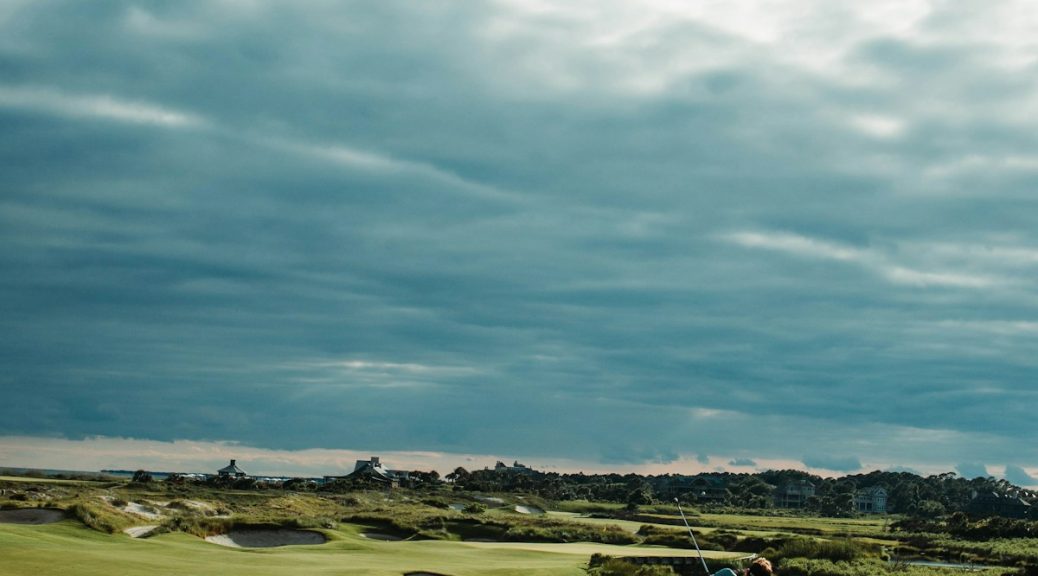
There’s a moment that happens to nearly every golfer who visits Ireland for the first time. You’re standing on the first tee at Ballybunion or Lahinch or Royal County Down, the wind is doing something rude to your hat, the Atlantic is grey and churning in the distance, and you think: This is why I came. Not for the Guinness (though that helps). Not for the scenery (though that’s extraordinary). It’s the golf. Raw, humbling, brilliant links golf on courses that have been shaped by wind and rain and centuries of play into something no architect could ever fully reproduce on purpose.
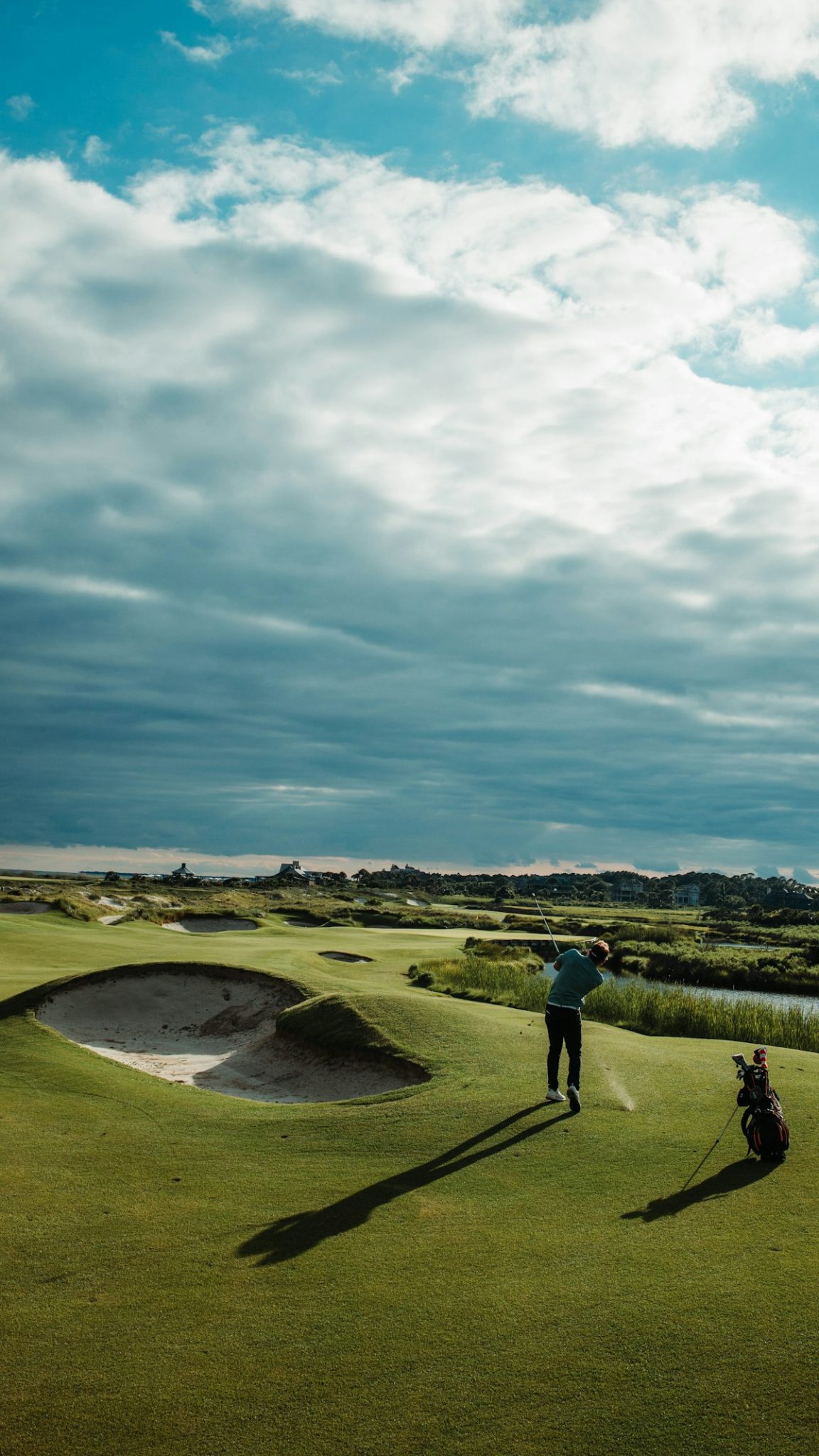
Ireland has more great links courses per square mile than anywhere else on the planet. That’s not idle boasting — it’s a geographic accident that golfers should be deeply grateful for. The island’s western and northern coastlines are lined with sandy, dune-covered terrain that is, quite simply, the ideal raw material for golf. The result is a collection of courses that range from legendary (Ballybunion, Royal County Down) to criminally underrated (Dooks, Carne, Enniscrone), all wrapped up in a culture that takes golf seriously while never forgetting that it’s supposed to be fun.
This guide is for anyone planning a serious Irish golf trip — whether you’re a first-timer trying to figure out which courses to prioritise, or a returning visitor looking to move beyond the obvious choices. We’ll cover the iconic courses, what they actually cost, when to go, how to survive the conditions, and what to do when you’re not on the course (which is also important).
Why Ireland? The Case for the Emerald Isle
Look, Scotland gets a lot of the headlines. St Andrews is iconic. The Highlands are dramatic. But Ireland has a legitimate claim to being the better golf trip — and I’ll tell you why.
First, the courses are more accessible. At most Irish links, visitors are genuinely welcome. You don’t face the lottery systems and years-long waiting lists that block access to some Scottish courses. Ballybunion, Waterville, Old Head, Lahinch — these clubs actively want you there, and they’ll make you feel it from the moment you walk through the door.
Second, the hospitality is genuinely different. Irish golf culture has a warmth and sociability baked into it. The 19th hole matters. A conversation with a local member over a pint after your round is part of the experience, not an afterthought. The craic — that untranslatable Irish blend of good humour, storytelling, and genuine warmth — is real, and it makes a round at an Irish links feel like more than just a round of golf.
Third, the variety is remarkable. You can play true seaside links battered by Atlantic storms on the Kerry coast in the morning, drive an hour, and find a completely different kind of links experience in the afternoon. No two courses feel the same. Each one has its own personality, its own routing logic, its own quirks that you’ll either love or find infuriating (often both on the same day).
And fourth — the value. Yes, the top courses charge premium green fees these days. But compared to bucket-list courses in the US or even some in Scotland, you’re still getting extraordinary golf at prices that feel almost reasonable. Especially if you travel in the shoulder season.
The Courses: Ireland’s Greatest Links
1. Ballybunion Old Course — County Kerry
Tom Watson called it the greatest golf course he’d ever played. That’s a decent reference. Ballybunion Old sits on the coast of County Kerry, its fairways carved through towering dunes above the Shannon Estuary, and it has a claim to being the finest links course in the world that is very hard to argue against.
What makes it special is the naturalness of it. The routing feels like it was discovered rather than designed — holes weave through ancient dunes, along cliff edges, past a graveyard (literally, there’s a graveyard on the course), following the land rather than imposing on it. The 11th hole is widely considered one of the best par-4s on earth: a blind drive over a ridge, then a mid-iron to a green perched above the sea. It’s brutal and beautiful in equal measure.
The conditions are proper links: firm and fast when dry, soft and testing when wet. The wind comes off the Atlantic and it will humble you. Bring your full arsenal of low shots, bump-and-runs, and whatever mental toughness you have available.
Green Fee: €250–€290 (peak season) | €180–€220 (April/October)
Best time to visit: April–May or September–October for the best balance of price and conditions
Pro tip: Book at least 6 months ahead for summer. Combine with Ballybunion Cashen for a full day on one of golf’s great properties.
2. Royal County Down — Newcastle, Northern Ireland
Royal County Down is, by most rankings, one of the two or three greatest golf courses in the world. Full stop. The Mountains of Mourne sweep down to the sea behind the 9th and 18th greens, the gorse is a violent yellow in spring, and the bunkering is so precisely placed that it looks like it was designed by someone who genuinely dislikes golfers (it was, in part, by Old Tom Morris in 1889).
It’s in Northern Ireland, which means currency is pounds sterling and you need to factor that into your budget. The Championship Links is the main event, but the Annesley Links is a genuinely enjoyable 18-hole course in its own right and a good warm-up act.
One thing to know: there are no yardage markers and no GPS systems permitted. You navigate by eye, by feel, and by the course planner you can pick up in the pro shop. It’s how golf used to be played, and it’s either maddening or liberating depending on your personality.
Green Fee: £275–£350 (Championship Links, peak season)
Best time to visit: May–September for better weather odds
Pro tip: Newcastle is a lovely town. Stay overnight, play both courses, eat fish and chips on the promenade. Perfect.
3. Royal Portrush — Dunluce Links, County Antrim
When the Open Championship returned to Royal Portrush in 2019 after a 68-year absence, Shane Lowry won it in front of the most joyous home crowd the tournament has ever seen, and the whole world was reminded what an extraordinary course this is. The Dunluce Links runs along the Antrim coast with views of Dunluce Castle ruins and the ocean on multiple holes, and the routing is genuinely spectacular.
The Valley Course next door is underrated and offers a more affordable alternative if the Dunluce is out of budget or fully booked. Together, the two courses make Portrush a two-day destination minimum.
Green Fee: £275–£315 (Dunluce, peak season) | £95–£140 (Valley Course)
Best time to visit: June–August for the longest days
Pro tip: The North Antrim coast is one of the most beautiful drives in Ireland. Build in time to visit the Giant’s Causeway and Carrick-a-Rede rope bridge. You’re already there.
4. Lahinch Golf Club — County Clare
Lahinch is often called the St Andrews of Ireland, and the comparison earns its keep. The town exists entirely around golf. The course runs right along the seafront. The clubhouse is warm and welcoming. And the course itself — especially after Alister MacKenzie’s redesign in 1927 and the subsequent restoration work — is a genuine masterpiece of links architecture.
The most famous thing about Lahinch is the goats. The club keeps a small herd of wild goats, and local tradition holds that if the goats shelter near the clubhouse, bad weather is coming. If they’re out on the course, it’ll be a fine day. It’s entirely unscientific and completely wonderful.
The Dell and Klondyke holes are Lahinch’s famous blind holes — controversial among purists, beloved by everyone else. Completely blind tee shots are rarely found on modern courses, and playing them for the first time is a disorienting, slightly magical experience.
Green Fee: €220–€275 (peak season) | €150–€190 (shoulder season)
Best time to visit: May–September, ideally mid-week
Pro tip: Lahinch village has excellent pubs with live traditional music. Plan an evening there. The Cliffs of Moher are 20 minutes away if you need to justify the trip to a non-golfing partner.
5. Waterville Golf Links — County Kerry
Payne Stewart used to come here to prepare for the Open Championship. He loved it so much that there’s a statue of him at the course. That tells you something about what Waterville means to the golfers who discover it.
Getting to Waterville takes effort. It’s on the Ring of Kerry, about two and a half hours from Cork, and the narrow roads of southwest Kerry will test your patience. But the reward is a links course of extraordinary quality in a setting of almost absurd beauty — the wild Atlantic on one side, the mountains of the Iveragh Peninsula on the other, and a routing that uses the land with remarkable intelligence.
The 11th hole, “Tranquility,” is a long par-3 that lives up to its name on the rare calm days and becomes something terrifying when the wind picks up. The back nine runs along the water in a sequence of holes that you’ll be thinking about for years.
Green Fee: €260–€340 (peak season) | €180–€220 (April/October)
Best time to visit: Late May or early September — peak season crowds are lower here than at Ballybunion
Pro tip: Drive the Ring of Kerry. Seriously. Add a day on either end of your golf. The scenery makes Ireland make sense.
6. Old Head Golf Links — County Cork
Old Head is not a traditional links course. Let’s be honest about that. Built on a diamond-shaped peninsula 300 feet above the Atlantic, it’s more “dramatic clifftop golf experience” than pure links. But it is absolutely, unarguably spectacular, and every golfer should play it at least once.
The routing takes you around the edge of the headland on multiple holes, with sheer drops to the ocean on one or both sides. It’s theatrical in a way that few courses anywhere in the world can match. Your ball will go in the sea at some point. That’s fine. It’s worth it.
It’s expensive — the most expensive course in Ireland — and the green fee has been controversial. But if you’re doing a serious Irish golf trip, Old Head belongs on the itinerary. Budget for it accordingly.
Green Fee: €295–€395 (peak season)
Best time to visit: June–August for the clearest visibility (you want to see those views)
Pro tip: Kinsale, 20 minutes away, is one of the best food towns in Ireland. Build in a proper dinner there. You’ve earned it.
7. Tralee Golf Club — County Kerry
Arnold Palmer designed this one, and it might be his finest work outside the United States. Tralee sits on the Barrow Peninsula in north Kerry, with the Slieve Mish mountains behind and the Atlantic in front, and Palmer’s routing uses the dramatic terrain to create a sequence of holes that builds to an unforgettable finish along the cliffs.
The back nine at Tralee is genuinely world-class. Holes 12 through 18 are as dramatic as anything in golf, with clifftop holes that demand both nerve and precision. The front nine is more inland and traditional, which makes the contrast even more striking when you turn for home.
Green Fee: €220–€280 (peak season) | €150–€175 (shoulder season)
Best time to visit: May–September
Pro tip: Tralee town has a good buzz and is a solid base for Kerry golf — closer to Ballybunion (45 min) than Waterville (90 min), so it works well as a hub for a multi-course trip.
8. Doonbeg (Trump International) — County Clare
Whatever you think about the ownership, the golf course at Doonbeg is exceptional. Tom Fazio built it on a stretch of Clare coastline that was essentially a ready-made links — massive dunes, pure sandy soil, native fescue grasses — and the result is a course that feels ancient even though it opened in 2002. The routing is compact and intimate, with enormous dunes creating a sense of seclusion on every hole.
The resort is luxurious and the service reflects that. If budget is a concern, this is probably the one to skip. If you want a full resort experience alongside championship-quality links golf, Doonbeg delivers.
Green Fee: €195–€395 (seasonal variation, resort guests get better rates)
Best time to visit: Mid-week in shoulder season for value
Pro tip: Doonbeg village has The Morrissey’s pub right on the beach. Non-negotiable stop.
9. Portmarnock Golf Club — County Dublin
Portmarnock is the course you play on the first or last day of your trip — close to Dublin Airport, world-class quality, easy logistics. The links sits on a spit of land between the Irish Sea and a tidal estuary, which means wind from every direction is possible and probable. It has hosted numerous Irish Opens and was considered one of Europe’s finest courses through most of the 20th century.
The Championship Links at Portmarnock Hotel next door is a separate course (designed by Bernhard Langer) and a very good alternative if the old club is fully booked or if you want an extra round in the Dublin area.
Green Fee: €260–€320 (peak season)
Best time to visit: Any time — the proximity to Dublin makes logistics easy
Pro tip: Portmarnock is 30 minutes from the city centre. A Dublin day before or after your golf trip is well spent — the Guinness Storehouse, Trinity College, the National Museum. You don’t fly all the way to Ireland and skip Dublin.
10. Ballybunion Cashen Course — County Kerry
Robert Trent Jones Sr. designed the Cashen Course in 1984, and the result divides opinion more sharply than almost any course in Ireland. Some find it bewildering — the dunes are so massive that several holes feel like playing in a canyon. Others consider it a visionary piece of design that uses the extreme terrain to create an experience unlike anything else in links golf.
The Cashen is less crowded than the Old Course and considerably cheaper, which makes it an excellent addition to any Ballybunion day. Play them both. They’re completely different experiences on the same property.
Green Fee: €170–€220 (peak season) | Combined Old + Cashen deals available
Best time to visit: Best combined with an Old Course round
Pro tip: The Ballybunion clubhouse is one of the best in Ireland. The soup and sandwiches after your round are not optional.
Quick Reference: Green Fees at a Glance
| Course | Location | Peak Green Fee | Shoulder Season | Currency |
|---|---|---|---|---|
| Ballybunion Old | Kerry | €250–€290 | €180–€220 | EUR |
| Royal County Down | Northern Ireland | £275–£350 | £200–£250 | GBP |
| Royal Portrush (Dunluce) | Northern Ireland | £275–£315 | £200–£240 | GBP |
| Lahinch | Clare | €220–€275 | €150–€190 | EUR |
| Waterville | Kerry | €260–€340 | €180–€220 | EUR |
| Old Head | Cork | €295–€395 | €250–€295 | EUR |
| Tralee | Kerry | €220–€280 | €150–€175 | EUR |
| Doonbeg | Clare | €195–€395 | €150–€250 | EUR |
| Portmarnock | Dublin | €260–€320 | €200–€250 | EUR |
| Ballybunion Cashen | Kerry | €170–€220 | €120–€160 | EUR |
Green fees fluctuate annually. Always confirm current prices directly with the club when booking.
Planning Your Ireland Golf Trip
When to Go
The honest answer is that Ireland’s weather is unpredictable at any time of year. The famous saying goes: “If you don’t like the weather, wait five minutes.” That’s not entirely untrue. But some times are better than others.
May and early June are arguably the sweet spot. The days are long (light until 10pm in June), the courses are in excellent condition after winter recovery, and the crowds haven’t hit full summer intensity. Green fees are starting to climb toward peak rates but haven’t quite reached them. The gorse is in full yellow bloom and the whole island looks its best.
July and August are peak season. Best weather odds, longest days, but also highest prices, busiest courses, and the most competition for tee times. Book 6–8 months ahead for the famous courses if you’re going in peak summer.
September and October are excellent. Prices drop, crowds thin, and the courses — which have been played hard all summer — often have the firmest, fastest conditions of the year. The light changes to a golden autumnal quality that makes everything look more dramatic. October can be windy and wet, but that’s also true in July.
November through March: possible, but you’re rolling the dice on daylight and conditions. Some courses reduce to 9-hole rounds in the depths of winter due to short days. Green fees are the lowest of the year, which is appealing if you’re flexible.
How Long to Go For
The minimum for a meaningful Irish golf trip is 5–6 days. That gets you 4–5 rounds and some recovery time. The sweet spot for most people is 10–14 days, which allows you to cover two or three regions without rushing. If you’re combining with Scotland for the ultimate links pilgrimage, three weeks is not too much.
One thing to resist: packing in too many rounds. Playing 36 holes a day sounds great in planning. On the actual trip, after walking the hills of Royal County Down and then driving two hours to your B&B and eating a big dinner and having a couple of pints (obligatory), you will not want to be back on the first tee at 7:30am. Build in rest days, driving time, and evenings that are about something other than golf.
Booking Tee Times
Here’s the timeline you need:
- Royal County Down: 6–12 months ahead for peak season. They release times year-round for visitors on Tuesday/Thursday/Friday.
- Ballybunion Old Course: 4–6 months ahead for summer
- Royal Portrush (Dunluce): 4–6 months ahead
- Lahinch, Waterville, Tralee: 2–4 months ahead is usually fine
- Old Head: 2–3 months, but verify current visitor booking policy
- Shoulder season (April/October) courses: Often bookable 4–6 weeks ahead
Most courses accept direct online bookings now. For a multi-course trip, a specialist golf tour operator can handle logistics, guarantee tee times, and sort accommodation — often for a total cost that’s competitive with DIY booking once you factor in the stress saved. Companies like Carr Golf, Golf Holidays Direct, and Celtic Golf are well-regarded.
Getting Around
Rent a car. Full stop. Ireland’s golf courses are spread across the country and public transport simply doesn’t work for this kind of trip. Driving on the left takes about 20 minutes to adjust to. The roads in Kerry and Clare can be narrow and occasionally alarming, but nothing you can’t handle.
Budget about 2–3 hours driving between major course clusters — Kerry/Clare in the southwest, Northern Ireland in the north, and Dublin in the east. Don’t try to combine all three in a single short trip without accounting for proper travel days.
Where to Stay
Ireland does B&Bs exceptionally well. A family-run B&B near the courses you’re playing will almost always be better value than a hotel, and the Irish breakfast you get in the morning — eggs, sausages, black pudding, white pudding, toast, the works — is a genuine cultural institution that will fortify you for 18 holes in the wind.
For a more luxurious experience, Ireland has some outstanding golf resort hotels: Adare Manor (golf to come, extraordinary property), Castlemartyr, The K Club, Inchydoney Island. These are expensive but special.
Luggage and Equipment
Getting your clubs to Ireland is easier than many golfers expect — most airlines allow golf bags as checked luggage with a modest fee, and all the major rental car companies can accommodate club bags. If you’re serious about protecting your equipment on the journey, a proper golf travel bag is worth having before you go. The hard-shell options have saved many a set of irons from baggage handler enthusiasm.
Links Golf Tips: How to Actually Survive (and Enjoy) Irish Courses
Here’s the thing about links golf: if you arrive with a parkland mindset, it will defeat you. The same swing that produces clean, high, stopping approach shots on a manicured American course will be punished mercilessly on an Irish links. The sooner you adapt, the better your round will be.
The Wind Is Not Your Enemy (If You Stop Fighting It)
Links golf is fundamentally about the wind. The golfers who struggle are the ones who keep trying to hit their normal shots into and across gale-force winds. The golfers who thrive are the ones who accept the wind as a design element and work with it.
Into the wind: club up significantly (two or three clubs in a strong headwind is not an overreaction), choke down, abbreviate your backswing, and swing at 80% to keep the ball low. A punch-draw that stays under the wind will get to the green. A high, full-swing iron into a 25mph headwind will balloon and land 30 yards short.
Downwind: accept that balls travel further than you expect. Don’t try to stop them with spin — you can’t, the firm turf won’t cooperate. Aim short of the green and let the ball run up. Work with the bounce, not against it.
Crosswind: use it. A draw played into a left-to-right wind is links golf at its best. If you’ve been wanting to work on a controlled draw, this guide to hitting a draw will give you a solid foundation before you go.
The Ground Is Your Friend
Links fairways are firm. Greens are often running fast and firm. Balls bounce and roll in ways that seem random until you understand that the ground contours are part of the design. Every hole on a great links has ground-game options — bump-and-run approaches, chip-and-run shots from 30 yards out, even putts from off the green are entirely reasonable choices.
Put your lob wedge back in the bag. Seriously. A well-executed chip-and-run with a 7-iron from just off the green will usually be more reliable than a high, floating wedge shot on a windy, firm-turf links. If your short game needs a rethink, these chipping techniques cover the range of shots you’ll need around Irish greens.
Manage Your Expectations and Enjoy the Ride
Your handicap doesn’t travel to links golf. Every experienced links golfer will tell you this. You will hit good shots that the wind knocks sideways. You will hit mediocre shots that bounce kindly onto the green. You will get a great lie in a fairway that turns into a muddy lie because you didn’t account for the drainage. None of this is personal.
The golfers who have the best time on Irish courses are the ones who let go of their score expectations and focus on the experience. The views, the conditions, the challenge, the walk itself — these are what you’ll remember. Not the six you made on the 14th at Ballybunion.
Walk, Don’t Ride
Most Irish links don’t have golf carts, and the ones that do will try to discourage you from using them. Walk. The walk is part of the experience — the elevation changes, the dune paths, the views from ridges, the transition from hole to hole. You came to Ireland for a genuine links experience, and that’s a walking experience. If 18 holes of walking is a concern, the caddie programs at most top courses are excellent and genuinely add to the round.
Hire a Caddie If You Can
At courses like Royal County Down, Ballybunion, and Waterville, a local caddie is worth every euro. They know the hidden breaks on the greens (and Irish greens lie). They know which blind tee shot targets actually work. They know when to aim well left of the obvious target because the wind will push it back. That knowledge typically costs €50–€80 plus tip, and it’s one of the better investments you’ll make on your trip.
Sample Itineraries
The Kerry Circuit (7 Days)
This is the classic Irish golf pilgrimage, focused on southwest Ireland’s extraordinary concentration of links courses. Fly into Cork or Shannon.
| Day | Activity | Base |
|---|---|---|
| Day 1 | Arrive Cork/Shannon, drive to Tralee area (3 hrs from Cork, 1.5 hrs from Shannon). Rest and reconnaissance. | Tralee |
| Day 2 | Ballybunion Old Course — the main event. Afternoon: Ballybunion village and pub. | Tralee |
| Day 3 | Tralee Golf Club (Arnold Palmer’s masterpiece). Evening drive to Waterville/Cahersiveen. | Waterville |
| Day 4 | Waterville Golf Links. Take the afternoon to drive part of the Ring of Kerry. | Waterville |
| Day 5 | Drive via Ring of Kerry to Kinsale area (3.5 hrs). Afternoon: arrive, explore Kinsale, excellent dinner. | Kinsale |
| Day 6 | Old Head Golf Links. Afternoon: recover, more Kinsale. | Kinsale |
| Day 7 | Drive to Shannon/Cork for departure. Optional: Lahinch (near Shannon, 90 min) if schedule allows. | Travel |
Northern Ireland Classic (5 Days)
Focused on the world-class courses of the north. Fly into Belfast International or George Best Belfast City Airport.
| Day | Activity | Base |
|---|---|---|
| Day 1 | Arrive Belfast. Drive to Newcastle (1 hr). Evening walk on the beach, dinner in town. | Newcastle |
| Day 2 | Royal County Down Championship Links. No yardage markers — embrace the chaos. Post-round: pub, debrief. | Newcastle |
| Day 3 | Royal County Down Annesley Links (morning). Drive to Portrush (2 hrs). Check in, explore town. | Portrush |
| Day 4 | Royal Portrush Dunluce Links. Afternoon: Giant’s Causeway (15 minutes away — non-negotiable). | Portrush |
| Day 5 | Royal Portrush Valley Course or Castlerock (underrated gem). Afternoon: drive to Belfast, fly home. | Travel |
The Full Pilgrimage (14 Days)
For the golfer who wants to see as much of Ireland as possible in one trip. Fly in Dublin, fly out Cork or Shannon.
| Days | Courses / Activity | Region |
|---|---|---|
| Days 1–2 | Portmarnock, The Island, County Louth (Baltray) | Dublin |
| Day 3 | Drive to Newcastle (2.5 hrs from Dublin). Evening: arrive Royal County Down area | Northern Ireland |
| Days 4–5 | Royal County Down x2, Ardglass | Northern Ireland |
| Days 6–7 | Royal Portrush (Dunluce + Valley), Castlerock | Northern Ireland |
| Day 8 | Drive to Clare (4.5 hrs). Rest day / arrive Lahinch | Clare |
| Days 9–10 | Lahinch, Doonbeg, Enniscrone (optional detour north) | Clare/Connacht |
| Days 11–12 | Ballybunion Old + Cashen, Tralee | Kerry |
| Days 13–14 | Waterville, Old Head (or Dooks for contrast). Fly Cork/Shannon. | Kerry/Cork |
The Craic: Irish Golf Culture Beyond the Course
An Irish golf trip is not just about the golf. It can’t be, and you shouldn’t want it to be. The culture around the courses — the pubs, the music, the conversations, the food, the general warmth of the Irish — is woven into the experience in a way that changes how the golf itself feels.
The 19th hole is treated seriously in Ireland. After your round at Ballybunion or Lahinch, you go into the clubhouse, you order something, and you talk about golf — your round, the holes, the ones that got away. This is not optional social ritual. It’s genuinely enjoyable, and you’ll often find yourself talking to members who have been playing the course for decades and have stories that will make you want to book a return trip immediately.
The pubs in Irish golf towns are extraordinary. In Lahinch, you have the Cornerstone and O’Looney’s. In Newcastle, the Anchor Bar. In Ballybunion, the Harty-Costello. In Portrush, the Harbour Bar. These are not tourist traps — they’re working local pubs that happen to attract golfers because the golf courses are next door. Traditional music sessions happen in many of them multiple nights a week in summer, and if you’ve never sat in a pub while a group of musicians plays a set of reels and jigs, you’re missing one of life’s better experiences.
Irish whiskey deserves its own mention. Jameson, Bushmills, Teeling, Redbreast, Green Spot — the whiskey scene in Ireland has exploded in the past decade, and the distilleries have followed. Many are on or near the golf routes (Jameson’s in Midleton near Cork, Bushmills adjacent to Portrush). A tasting or tour is a perfectly reasonable non-golf afternoon activity, and the whiskey is genuinely excellent.
The food has also improved dramatically. The stereotype of Irish food being stodgy and limited died somewhere around 2010. Kinsale near Old Head is a proper food destination. The hotel restaurants in Kerry now have menus built around local seafood — wild Atlantic salmon, Dingle Bay crab, Kenmare Bay scallops — that rival anything in Dublin. The Irish breakfast remains a national institution and, after a bracing walk around Royal County Down, feels not just acceptable but necessary.
Hidden Gems Worth Adding to Your List
The famous courses get all the attention, but Ireland has a long list of lesser-known links that offer extraordinary golf at a fraction of the price. If you have time on your itinerary, these deserve strong consideration:
- Dooks Golf Club (Kerry): Tucked on the Ring of Kerry, genuinely old-fashioned links with no pretension and wonderful golf. Green fees around €80–€120. One of the best value rounds in Ireland.
- Carne Golf Links (Mayo): Remote. Magnificent. Enormous dunes designed by Eddie Hackett that only became widely known recently. About €100–€150 for a round that will leave you baffled it’s not more famous.
- Enniscrone Golf Club (Sligo): Another Eddie Hackett gem, recently extended and improved. The dune holes on the back nine are spectacular. Green fees around €100–€140.
- County Sligo (Rosses Point): Harry Vardon, then expanded by Harry Colt. One of the finest links in the country and completely underappreciated by international visitors. Under €150 for a round.
- Ardglass Golf Club (Down): The clubhouse is a 15th-century castle. The course runs along dramatic coastal clifftops. Green fees around £50–£80. Absurdly good value.
- The Island Golf Club (Dublin): Accessible by boat from Malahide or by road via a long detour. Pure links, not particularly famous, outstanding golf. Around €200 for visitors.
Budgeting Your Irish Golf Trip
Ireland is not a cheap golf destination if you’re hitting the top courses back to back. But it’s also significantly better value than comparable bucket-list experiences elsewhere, and there are real ways to manage the budget without compromising the experience.
| Budget Level | Daily Golf Cost | Accommodation | Total Daily Budget |
|---|---|---|---|
| Value (B&B + one mid-tier round) | €100–€200 | €60–€100 | €180–€320 |
| Comfortable (B&B + one top course) | €220–€350 | €80–€130 | €350–€550 |
| Premium (hotel + top courses) | €300–€450 | €150–€300 | €550–€900 |
| Luxury (resort stays + caddies) | €400–€600+ | €250–€600 | €800–€1,500+ |
Money-saving tips that actually work:
- Travel in shoulder season (April–May or September–October) — green fees drop significantly and courses are often in their best condition
- Stay in B&Bs — they’re often better than hotels for the price and the breakfasts are genuinely superior
- Mix top courses with hidden gems — a day at Carne or Dooks between rounds at Ballybunion or Waterville costs a fraction of the price and gives you a more complete picture of Irish golf
- Walk rather than ride — most courses prefer it and caddie fees, while not cheap, are often worth it for the knowledge transfer
- Book direct with courses — tour operator packages make sense for complex multi-region trips, but if you’re doing a focused regional trip you can often save money booking direct
Practical Information
Getting There
Ireland has three major international airports: Dublin (largest, most routes), Shannon (best for Kerry/Clare courses), and Cork (good for southwest). Belfast International and George Best City Airport serve Northern Ireland. Direct flights from the US are available to Dublin and Shannon; Cork and Belfast typically require a connection via London or Dublin.
Currency
Republic of Ireland uses the Euro (€). Northern Ireland uses British Pounds Sterling (£). Both are in use on most major Irish golf trips — the Northern Ireland courses (Royal County Down, Royal Portrush, Castlerock, Ardglass) are priced in pounds.
Mobile and Data
Coverage is generally good in towns and along main roads, but can be spotty in remote coastal areas. Download offline maps before heading to Kerry or Mayo. A local SIM or a travel data plan is worth having.
Packing for Irish Weather
Pack for four seasons and assume you’ll experience all of them in one round. Non-negotiables:
- A proper waterproof jacket and waterproof trousers — not just water-resistant, actually waterproof. Ireland’s rain means business.
- Waterproof golf shoes or at minimum a second pair of dry shoes to change into
- Multiple layers — a base layer, a mid-layer fleece, and the waterproofs over the top
- Extra gloves (they get wet and lose grip quickly)
- A waterproof hat or cap
- Sunscreen — Irish sun in June is stronger than most people expect, especially on reflective sand-dune courses
Final Thoughts
Ireland’s golf is the real thing. Not a replica, not a tribute, not a designer’s interpretation of what links golf should look and feel like — the actual article, shaped by the actual land and the actual weather over actual centuries. When you stand on the 11th tee at Ballybunion or the 9th green at Royal County Down with the Mournes behind you and the sea in front, there’s no course in the world that can improve on it.
The courses will humble you. The weather will test you. The wind will steal shots you thought were perfect. And you’ll finish your round, walk into a warm clubhouse, order something restorative, and immediately start thinking about when you can come back. That’s Irish golf. That’s the trip.
Plan it properly, book early, stay flexible on the weather, hire a caddie at least once, and make time for the evenings. Ireland earns its reputation as a golf destination not just through the courses, but through everything around them. Go once and you’ll understand why people come back every year.
Planning your trip? Start with your equipment: a quality golf travel bag is worth the investment before any international trip. And before you face those links crosswinds, it helps to have a reliable controlled draw in your arsenal. Your short game will also be tested around firm, fast links greens — our guide to chipping techniques for a better short game covers the shots you’ll need.