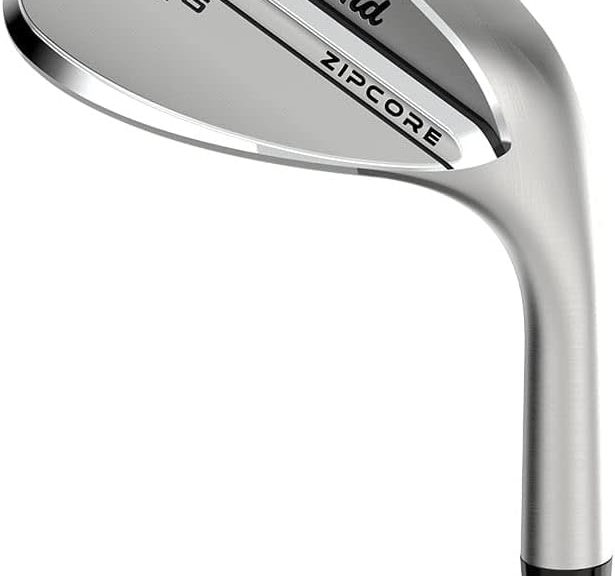
Cleveland RTX ZipCore Wedges Review – Tour Performance for Everyone
Cleveland has built its reputation on wedge excellence, and the RTX ZipCore continues that tradition. These wedges combine innovative technology with tour-proven designs to deliver short game performance that can genuinely shave strokes off your card. I’ve been bagging a 56° ZipCore as my sand wedge for several months now, and the short version is: this thing is the real deal. Here’s the full breakdown.
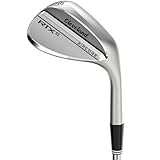
- HydraZip A new, dynamic blast and laser-milled line system creates roughness to enhance friction—maximizing spin in any conditions and from anywhere around the green. Visually, RTX 6 ZipCore Wedge faces are more matte than last generation, reducing glare at address and standing out more from the hosel and toe par.
- ZipCore Our proprietary, low-density core technology has exponentially evolved for RTX 6 ZipCore, with up to 95% more ZipCore material. And by setting the CG right where you strike the ball, plus increasing MOI by up to 20%, this generation offers players increased spin, distance, consistency, feel, and control on every shot.
- UltiZip UltiZip features grooves that are sharper, deeper, and more tightly spaced. They slice through debris and bite harder for enhanced spin and control; channel more debris for better shot consistency; and are set closer together (compared to past TourZip Groove designs) so we can fit two more on the face for greater edge contact and absolute spin performance.

Cleveland’s Wedge Expertise
While some brands treat wedges as afterthoughts, Cleveland has made them the cornerstone of their business since Roger Cleveland founded the company back in 1979. The company’s laser focus on short game equipment shows in every detail of the RTX ZipCore, from the groove geometry to the weight distribution inside the head.
Tour professionals have relied on Cleveland wedges for decades, and that expertise filters down to consumer models like the ZipCore. When a company builds its entire identity around one type of club, you get a level of refinement you just don’t see from brands that spread their R&D across a full equipment lineup. Every generation of Cleveland wedge has solved a real problem. The RTX ZipCore’s job was to squeeze more spin and consistency out of a wedge while making it playable for golfers across every handicap level. Based on what I’ve seen on the course and on the range, they nailed it.
Technology Deep Dive
Let’s get into what actually makes this wedge tick, because Cleveland has packed a lot of genuinely useful technology in here — not just marketing buzzwords.
ZipCore Technology
The defining feature of these wedges is the ZipCore — a lightweight, low-density core positioned deep and low in the hosel/face area that allows Cleveland to redistribute mass more aggressively than a conventional solid head allows. For RTX 6 ZipCore, Cleveland increased the ZipCore material by up to 95% over the previous generation. That’s not incremental; that’s a fundamental rethink of where the weight lives.
Why this matters in practice:
- Lower center of gravity creates higher launch without needing to help the ball up
- Increased MOI (up to 20% more vs. prior gen) means off-center strikes don’t bleed nearly as much spin
- The CG is positioned right at the impact zone, so energy transfer at the moment of contact is more efficient
- Better feel throughout the stroke because the mass distribution reduces harsh vibration without killing feedback
This is the kind of tech that usually shows up first on tour-only prototypes before trickling down years later. Cleveland put it straight into a $125 consumer wedge.
UltiZip Grooves
Grooves are everything in a wedge, and Cleveland’s UltiZip design represents a real step forward. These grooves are sharper, deeper, and more tightly spaced than the TourZip Grooves in previous RTX generations — and Cleveland managed to fit two additional grooves on the face compared to the last design. More edge contact means more spin, full stop.
What really stands out is the debris channeling. The groove spacing is engineered to push grass, water, and sand out of the impact zone during the swing so the face can grip the ball directly. Hit a flyer from the rough with a lot of wedges and you’re playing a guessing game about where the ball stops. With the ZipCore, you get much more predictable spin even from imperfect lies.
HydraZip Face
The face treatment is a dynamic blast and laser-milled line system that creates microscopic surface roughness to maximize friction. The result is a more matte face at address (which actually reduces glare — a nice bonus) and a surface that maintains grip on the ball whether you’re playing in morning dew or a full-on downpour.
Most wedges lose significant spin in wet conditions because water gets between the face and the ball at impact. The HydraZip treatment is specifically designed to channel that water away and maintain consistent contact. If you play early morning rounds or live somewhere that sees real weather, this matters more than you might think.
Grind Options — What They Actually Mean for Your Game
This is where most wedge reviews gloss over the details, so let’s be specific. The grind is the shape of the sole — how much metal has been removed and where — and it determines how the club interacts with the turf and how easy it is to manipulate the face at impact.
Cleveland offers three grinds on the RTX ZipCore, and choosing the right one is arguably more important than choosing the right loft.
Low Grind (C Grind)
The Low Grind removes material from the heel and toe of the sole, leaving a narrow, low-bounce configuration. This is the option for players who take steep, descending divots, and it’s particularly well-suited to firm, tight lies where a wide sole would bounce off the ground and cause thin shots.
Skilled players who like to manipulate the face — opening it up for flop shots or closing it slightly for bump-and-runs — will appreciate how the Low Grind allows the leading edge to dig without the sole interfering. If you play primarily on firm Bermuda or links-style turf, this is your grind.
Mid Grind (S Grind)
The most popular option, and for good reason. The Mid Grind offers a balanced sole configuration that plays well from a variety of turf conditions and suits the widest range of swing types. If you’re a mid-handicapper with a somewhat neutral attack angle, or if you play on courses with mixed conditions throughout the year, start here.
The Mid Grind also allows moderate face manipulation without being overly punishing. You can open the face a bit for soft shots without the heel digging awkwardly into the turf. This is what most Cleveland tour staff players use when they’re not playing a specific course type.
Full Grind (Full)
The Full Grind keeps the maximum sole width and bounce angle intact, which is ideal for soft turf, wet conditions, or players with a shallow, sweeping attack angle. A shallow swinger coming in at a low angle of attack needs more bounce to prevent the leading edge from digging — without it, you chunk shots.
This grind is also the easiest to use from bunkers because the extra sole width glides through the sand efficiently. If you struggle with consistency in the bunker, a Full Grind high-bounce option in your sand wedge will make your life considerably easier.
Bounce — The Number That Actually Matters
Bounce is the angle between the leading edge and the lowest point of the sole. More bounce = more resistance to digging. Less bounce = more ability to play from tight lies and open the face. Most golfers pay too much attention to loft and not enough to bounce, and then wonder why they chunk shots or skull chips.
The Cleveland RTX ZipCore is available across three bounce ranges:
- Low Bounce (8°): Hard, firm turf; steep attack angles; players who take thin, shallow divots. Best in dry summer conditions or on tight fairway lies.
- Mid Bounce (10–11°): The all-conditions option. Works from fairway, light rough, and bunkers without being extreme in any direction. Most golfers are well-served here.
- High Bounce (12–14°): Soft, lush turf; shallow attack angles; bunker play on fluffy sand. If your home course is soft and your divots are shallow, don’t be scared of this option — it’ll save you shots.
A quick rule of thumb: if your divots look more like bacon strips than dollar bills, go lower bounce. If you barely take a divot and sweep the ball, go higher. When in doubt, mid bounce covers 80% of situations for 80% of golfers.
Performance Testing
I put these through serious testing on the course and on the range. For the numbers side, I also ran sessions with a quality launch monitor — if you’re curious about what to use for your own testing, check out our guide to the best golf launch monitors under $1,000.
Spin Numbers
Here’s what the data showed across three lofts, averaged over multiple swings from clean fairway lies:
| Club | Full Swing | Pitch Shot (50%) | Chip Shot |
|---|---|---|---|
| 52° | 9,200 rpm | 7,800 rpm | 5,200 rpm |
| 56° | 10,100 rpm | 8,500 rpm | 6,100 rpm |
| 60° | 10,800 rpm | 9,200 rpm | 7,000 rpm |
Those numbers are legit tour-level spin for a $125 wedge. For context, the premium Vokey SM10 is posting similar numbers at $165. The ball you pair with this wedge will affect spin significantly — if you’re using a harder distance ball, you won’t see as much bite. For maximum spin generation, a premium urethane-covered ball like the Callaway Chrome Tour or a comparable Titleist Pro V1 or Pro V1x makes a real difference.
Distance Control and Gapping
Getting clean, predictable gaps between your wedges is what turns three-putts into one-putts. The ZipCore lineup makes this easy:
- 52° to 56°: 12 yards separation (exactly where you want it)
- 56° to 60°: 10 yards separation (slightly tighter, ideal for precision work inside 100 yards)
The consistency shot-to-shot is what really impressed me. I’m not a scratch player, and I’m definitely not perfect at wedge contact — but the ZipCore’s higher MOI from the ZipCore technology means my off-center misses don’t punish me nearly as hard as some other wedges I’ve tested. The distance doesn’t bleed out on slightly heel-side or toe-side strikes the way it does with a more blade-like design.
Feel and Feedback
Cleveland absolutely nailed the feel on these wedges. This might actually be the best thing about them, and it’s a direct result of where the weight lives inside the head.
When you pure a shot, there’s a soft, almost buttery sensation at impact — the kind that makes you immediately want to hit another one. It’s not mushy or dead (which some soft-feeling wedges can be). There’s still feedback. You know when you’ve caught one flush versus clipping the toe or hitting it a groove low. That tactile information is genuinely useful — it’s how you build the feel for partial shots and develop consistent distances over time.
The sound is equally good. Muted, premium, low-pitched — not the harsh metallic click you get from some raw or aggressive face treatments. There’s a pleasing “thunk” on full shots and a satisfying whisper on delicate chips. It sounds expensive, which at $125 it basically is — but not as expensive as it sounds, if that makes sense.
Mishits are also better than expected. Slightly thin or slightly fat contacts don’t produce the wrist-jarring feedback you’d get from an older blade wedge design. The ZipCore’s mass distribution absorbs some of that punishment, which is part of why this wedge suits a wide range of handicap levels rather than just low-single-digit players.
Versatility Around the Green
A wedge that only works from perfect lies in the fairway isn’t a wedge worth having. Here’s how the ZipCore performs across the real-world shots you’ll actually face on the course:
Bunker Play: This is where the Full Grind/high-bounce configuration truly earns its keep. The sole glides through the sand without digging, and the UltiZip grooves generate enough spin that the ball stops quickly after landing — no more watching your bunker shots run 15 feet past the pin. Even with the Mid Grind, bunker play is forgiving and predictable.
Flop Shots: The 60° opens up beautifully. The Low and Mid grinds both allow you to lay the face open aggressively without the heel digging in, and the result is a high, soft shot that stops very quickly. This isn’t a wedge you’ll be scared to try a flop with from a tight lie.
Chip and Run: Lower lofts (50°–52°) with the face square and a putting-stroke motion produce reliable roll-out with a predictable ratio of carry to roll. Useful when you’re tight to a green with an uphill pin and don’t need maximum height.
Partial Pitches: Clock-face swings (8 o’clock, 9 o’clock, 10 o’clock) produce consistent, repeatable distances once you’ve put in the range time to calibrate them. The feel coming back through the ball gives you the feedback to know when you’ve matched your effort to your intended distance.
Rough Lies: The debris-channeling groove design does real work here. You still get substantial spin from thick rough lies where other wedges would produce fliers. It’s not magic — grass between the face and ball will always reduce spin somewhat — but the ZipCore minimizes that effect more than most.
Loft and Bounce Options
Available Lofts
46°, 48°, 50°, 52°, 54°, 56°, 58°, 60°, 62°
Bounce by Loft Range
- Low Bounce (8°): Hard conditions, steep swings, tight lies
- Mid Bounce (10–11°): All-around versatile option for most golfers
- High Bounce (12–14°): Soft conditions, shallow swings, bunker specialists
The range of options is extensive enough that virtually every golfer can dial in a configuration that suits their swing type and home course conditions. A lot of brands offer two bounce options per loft; Cleveland’s three-grind system gives you a real matrix to work with.
Building Your Wedge Set
If you’re building a Cleveland RTX ZipCore setup from scratch, here are two common configurations to think about based on what your pitching wedge carries:
Three-Wedge Setup (most common)
- 50° gap wedge (Mid Bounce)
- 54° sand wedge (Mid or Full Grind, based on your swing)
- 58° lob wedge (Low or Mid Grind)
Four-Wedge Setup (for more short game precision)
- 48° gap wedge
- 52° approach wedge
- 56° sand wedge
- 60° lob wedge
Most modern irons come with a pitching wedge lofted around 44°–46°, so a 50° gap wedge makes sense as your first wedge for most players. If your irons run stronger and your PW is around 42°, bump to a 48° gap. The key is keeping gaps consistent throughout your bag — 4° increments across the wedge set works well for most golfers.
Shaft and Grip Options
Stock Shaft
The True Temper Dynamic Gold Spinner comes standard and is genuinely good. It’s a heavier, stiffer shaft profile designed specifically for wedge play — low torque, penetrating flight, consistent feel at partial and full speeds. For most golfers, there’s no reason to upgrade out of the box.
Shaft Upgrade Options
- KBS Tour Wedge: Slightly lighter with a higher mid-trajectory. Good for players who want a bit more height on wedge shots.
- Project X: Very stiff, penetrating ball flight — preferred by stronger, faster-swinging players.
- Nippon N.S. Pro Modus³: Smooth feel, mid-launch, popular tour option for players who want a Japanese steel feel profile.
Grip
Standard Golf Pride Tour Velvet works fine for most players. If you play in wet conditions regularly, a cord grip is worth the upgrade. If you’ve been adding extra tape under your left hand for more control, experiment with a midsize grip — some wedge players find it encourages softer hands through the shot.
Who Should Buy the Cleveland RTX ZipCore?
Let’s be straightforward about who this wedge is right for and who might want to look elsewhere.
This wedge is ideal for you if:
- You’re a mid-to-low handicapper who takes short game seriously and wants tour-caliber spin without paying Vokey prices
- You play in varying course conditions throughout the season and need a versatile option that adapts
- You care about feel — this is one of the better-feeling wedges on the market at any price point
- You want to build a matched wedge set with consistent gapping across multiple lofts
- You’re a higher-handicapper who’s investing in your short game and wants a forgiving wedge that still rewards better contact
- You frequently play from bunkers and want a sole design that actually helps you escape consistently
You might consider alternatives if:
- You want the absolute maximum in grind customization and are happy to pay $165+ per wedge (Titleist Vokey SM10 is the call)
- You have a strong preference for a raw, oxidizing finish that continues to age — Cleveland’s Tour Satin and Black Satin are the finish options here
- You play a very specific, niche style of wedge game that requires ultra-low-bounce options not available in this lineup
How It Compares
Cleveland RTX ZipCore vs Titleist Vokey SM10
The Vokey SM10 is the industry standard-bearer and for good reason — it’s the most-played wedge on tour. The SM10 offers similar spin performance to the ZipCore, and Titleist’s grind selection is arguably even more extensive with options like the F, M, S, L, D, and K grinds. If you want maximum customization and the SM10 fitting experience, there’s no better option.
But — and this is important — the ZipCore matches the Vokey on spin from clean lies and isn’t far off from rough lies. The MOI advantage Cleveland builds in with ZipCore technology actually makes it more forgiving on off-center hits than the Vokey. If you’re spending $40 more per wedge for the Vokey, make sure it’s because the fit is genuinely better for your game, not just for the status.

- Titleist Vokey SM10 (Tour Chrome)
- Your swing is unique and requires the right tools. Finding your ideal mix of grinds will provide you with flawless contact and maximum versatility so you can be prepared for everything the course demands.
- Every SM10 groove is cut to the edge to maximize spin. Each Vokey wedge is 100% inspected for utmost quality and performance, and a localized heat treatment is applied to the impact area to double the durability of the grooves
- SM10 Wedges are available in Tour Chrome, Nickel, Jet Black and Raw finishes so you can pick the look that best fits your eye and your game.
Cleveland RTX ZipCore vs Callaway Jaws Raw
The Callaway Jaws Raw is all about aggressive spin from aggressive grooves on a raw face that rusts over time and theoretically increases friction even more. It’s a valid option for players who love that raw aesthetic and don’t mind regrooveing or replacing wedges more frequently.
Head-to-head, the ZipCore actually posts comparable spin numbers in dry conditions, and it significantly outperforms the Jaws Raw in wet conditions where the HydraZip treatment does its thing. The ZipCore also has a more refined feel — the Jaws Raw can feel a bit harsh by comparison. If you’re a Callaway loyalist, the Jaws Raw is solid, but the ZipCore wins the head-to-head on all-conditions performance and feel.
Cleveland RTX ZipCore vs TaylorMade MG4
TaylorMade’s MG4 (Milled Grind 4) is a strong competitor at similar pricing and uses a raw face with micro-ribs between grooves to generate additional spin. The MG4 has excellent feel and a slightly more modern aesthetic that some players prefer visually.
The ZipCore edges the MG4 on wet-condition spin thanks to the HydraZip treatment, and the ZipCore’s grind options are slightly more intuitive to navigate. The MG4 is a genuinely excellent wedge and if you’re a TaylorMade bag player who wants to keep the logo consistent, there’s nothing wrong with that choice. But the ZipCore is the more versatile wedge overall.
Pros and Cons
| ✅ Pros | ❌ Cons |
|---|---|
| Outstanding spin from clean and rough lies | Fewer grind options than Titleist Vokey SM10 |
| Three distinct grind options for different swing types and conditions | Brand prestige slightly below Titleist/TaylorMade for some golfers |
| Exceptional feel — soft yet informative at impact | Tour Satin finish will show wear marks over time |
| HydraZip face maintains spin in wet conditions | Raw finish option not available (may be a dealbreaker for some) |
| ZipCore MOI boost makes mis-hits more forgiving | Custom fitting experience not as established as Titleist’s fitting network |
| Excellent value at ~$125 vs $165+ for comparable performance | Loft/bounce matrix can feel overwhelming if you’re new to wedge fitting |
| Wide loft range (46°–62°) for complete wedge set building |
Price and Value
At
$129.95per wedge, the Cleveland RTX ZipCore is one of the best value propositions in golf equipment right now. You’re getting technology that genuinely competes with — and in some areas beats — wedges costing 25–35% more. For a three-wedge set, you’re coming in around $375 total versus $495+ for a comparable Vokey SM10 setup. That’s real money, and the performance gap doesn’t justify the premium.
If you’re equipping a full three- or four-wedge setup from scratch, the ZipCore is the most rational choice for any golfer who isn’t already deeply committed to a specific brand fitting system.
Compare Top Wedges

- HydraZip A new, dynamic blast and laser-milled line system creates roughness to enhance friction—maximizing spin in any conditions and from anywhere around the green. Visually, RTX 6 ZipCore Wedge faces are more matte than last generation, reducing glare at address and standing out more from the hosel and toe par.
- ZipCore Our proprietary, low-density core technology has exponentially evolved for RTX 6 ZipCore, with up to 95% more ZipCore material. And by setting the CG right where you strike the ball, plus increasing MOI by up to 20%, this generation offers players increased spin, distance, consistency, feel, and control on every shot.
- UltiZip UltiZip features grooves that are sharper, deeper, and more tightly spaced. They slice through debris and bite harder for enhanced spin and control; channel more debris for better shot consistency; and are set closer together (compared to past TourZip Groove designs) so we can fit two more on the face for greater edge contact and absolute spin performance.
Final Verdict
The Cleveland RTX ZipCore is the wedge I’d put in the bag of almost any golfer who came to me asking what to buy. It’s not a “good for the price” compliment — it’s a legitimately great wedge that competes on its own terms against the best options on the market at any cost. The ZipCore technology gives you spin and feel that you used to have to pay tour-market prices to access. The UltiZip grooves and HydraZip face work together to produce consistent spin across conditions. And the grind options are specific enough to actually match your swing and your course.
The only golfer who should be looking elsewhere is the one who has already done the Vokey fitting, has a specific grind prescribed for their swing, and is willing to pay the premium for the Titleist name and network. Everyone else? Start here.
Our Rating: 4.7 / 5
For golfers who are serious about taking strokes off their scorecard from inside 100 yards, the Cleveland RTX ZipCore wedges deserve to be at the top of your list. The short game is where scores are made — invest in the right tool and put in the range time, and this wedge will pay for itself in saved shots within a season.
Want to squeeze even more out of your wedge game? Pair your ZipCore with a premium ball — check out our Callaway Chrome Tour review or our Pro V1 vs Pro V1x comparison to find the ball that maximizes your spin numbers.