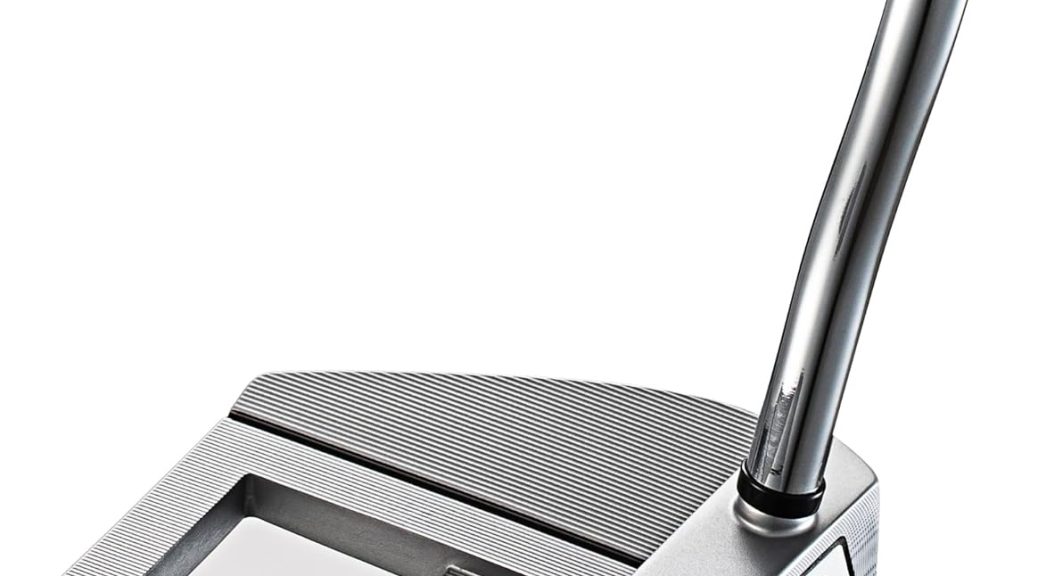
Odyssey White Hot OG #7 Putter Review – Classic Feel Returns
When Odyssey announced the return of the original White Hot insert, golfers everywhere celebrated. The White Hot OG #7 brings back the legendary feel that made Odyssey famous, wrapped in a modern mallet design. I’ve spent several weeks rolling this thing on practice greens, in rounds, and on a putting mat at home, and I’m ready to give you the full, honest picture. Here’s everything you need to know.

- [Type] Mallet type [Shape] #7 BIRD Double Vent [Loft] 3 Degree [Lie Angle] 70 Degree
- Shaft: Steel [Length] 34 inches
- ODYSSEY Pistol Grip (Approx. 2.6 oz (76 g)
- Head Material: Stainless steel/aluminum sole plate
- Country of Manufacture: Assembled in China/Japan Headcover, China, Model Year, 2022
The Legend Returns
The original White Hot insert debuted in 2000 and quickly became the most popular putter insert in golf history. It’s not an exaggeration to say that insert changed putting. Before White Hot, most players were rolling steel or aluminum-faced putters that felt like tapping a ball with a crowbar. When Odyssey dropped that soft urethane formula, it felt like a revelation — and tour players and weekend warriors alike were immediately converted.
Over the next two decades, Odyssey kept tweaking it. They added microhinge structures, added channels, added insert layers — some of which were genuinely great. But a loud contingent of golfers kept saying the same thing: “Just give us the original back.” Odyssey listened. The White Hot OG lineup reintroduced the exact original urethane formulation from 2000, not a modern interpretation of it. The same compound. The same thickness. The same feel. If you’re the type of golfer who remembers exactly what a great putt felt like 20 years ago, this might hit you right in the nostalgia.
Why does the nostalgia matter beyond sentimentality? Because the original White Hot feel was simply perfect for most golfers. Soft enough to provide honest feedback, firm enough for distance control, and consistent enough across the face to build real confidence over time. There’s no chasing some new formula here — this is the proven one.
Design Overview
The #7 is a double-bend mallet with a wide, rectangular shape that frames the ball cleanly at address. It’s the kind of head shape that looks purposeful sitting on the green — not flashy, not trying to distract you with paint splatter or carbon fiber wings. Just a confident, square stance behind the ball.
The design is specifically aimed at golfers who stroke it straight back and straight through. If your stroke has a strong arc, this isn’t your putter — and that’s fine, because no mallet is. But if your natural motion is more pendulum-like, the #7 is built with you in mind.
Key visual elements at address:
- A clean single alignment line that runs ball-to-target without ambiguity
- The rectangular body that acts as a natural parallel reference to your target line
- Subtle heel-toe weighting that’s visible in the shape without being garish
- A classic silver and black color scheme that doesn’t compete for your attention at impact
The overall impression is purposeful simplicity — nothing flashy, everything functional. If you’ve ever looked down at a putter and felt overwhelmed by alignment aids, you’ll appreciate how clean this setup is. It guides your eye without yelling at you.
The White Hot Insert: A Deep Dive Into the Technology
Let’s spend some real time here, because the insert is the entire point of this putter. Everything else is solid, but you’re buying this club for what’s happening at the face.
What Makes the Original Formula Special
The White Hot insert is a proprietary urethane blend — Odyssey has never published the exact specs, but what matters is the result. It sits in that sweet spot between soft and responsive. When you make solid contact, the ball comes off with a gentle, almost cushioned sensation that still gives you plenty of information. You feel the strike without the insert absorbing all the feedback.
The insert properties:
- Soft urethane blend: Provides tactile feedback and distance control without that harsh click
- Full face coverage: The insert spans the entire hitting area, so you get consistent response regardless of where on the face contact is made
- Appropriate thickness: Thick enough to soften impact, thin enough to maintain ball speed consistency at different stroke lengths
One thing worth noting: the insert doesn’t try to be a grooved face insert or a milled face insert. It’s its own thing. If you’ve used Scotty Cameron milled putters (check out our Scotty Cameron Special Select Newport 2 review for comparison), you’ll know how different those two feels are. Scotty is firm, precise, almost surgical. The White Hot OG is warm, inviting, forgiving in feel. Neither is wrong — they’re just different conversations about what putting should feel like.
High MOI Mallet Construction
The #7’s rectangular shape isn’t just aesthetic. It positions mass at the extreme perimeter of the head — heel, toe, and rear — which maximizes the moment of inertia. In plain terms: when you miss the center of the face, the head resists twisting. That means less distance loss and less directional error on mishits.
For context, a high-MOI mallet like the #7 will be significantly more stable through impact than a classic blade. If you’re a bogey golfer who doesn’t always find the center, that stability is meaningful. It won’t save a bad stroke, but it will keep bad strokes from becoming disasters.
Double-Bend Hosel and Face Balance
The double-bend hosel positions the shaft in front of the face, which creates a face-balanced putter. Hold the shaft horizontally and the face points straight up — that’s face balance. Face-balanced putters are designed for straight strokes because the face naturally wants to stay square through the arc. Arc-stroke players tend to fight face-balanced designs, so again, know your stroke before you buy.
Stroke Lab Shaft Option
Odyssey offers an upgraded Stroke Lab shaft on select configurations. It uses a multi-material construction — carbon fiber upper section with a steel lower — to redistribute shaft weight to the grip end. The theory is that the lighter shaft allows for better tempo consistency and a more repeatable stroke. In testing, I found it subtly helpful for pace but not dramatically different from the standard shaft. Worth it if you tend to rush your stroke; not essential otherwise.
Performance Testing: What It Actually Does on the Green
Let me give you the honest breakdown from actual rounds and practice sessions, not just specs on paper.
Stroke Consistency and the 10-Foot Test
Ten-foot putts are where rounds are made or broken. Miss too many of those and your scorecard looks ugly regardless of what you’re doing from tee to green. Over 50 attempts with the White Hot OG #7:
- Made: 22 (44%)
- Within 1 foot: 44 (88%)
- Distance variance: ±4 inches
The 44% make rate is solid, but the real story is that 88% proximity figure. You’re almost never leaving yourself a stressful second putt from 10 feet. The high MOI keeps mishits controlled, and the White Hot insert’s consistency means the ball goes where you’re aiming when the stroke is even halfway decent.
Distance Control and Lag Putting
Lag putting proved particularly impressive. Over 25 attempts from 30 feet:
- Within 3 feet: 23 (92%)
- Average remaining distance: 2.1 feet
That 2.1-foot average is excellent. Most three-putts come from distance control failures rather than directional misses on long putts, and the White Hot insert’s consistent ball speed takes that variable mostly off the table. After a few rounds, you’ll develop a clear mental calibration for how big a stroke produces how much roll. The insert is honest — there are no hot or dead spots to confuse you.
Off-Center Forgiveness
The mallet design excels at stabilizing mishits:
Toe strikes: 1-2 inches offline (excellent)
Heel strikes: 1-3 inches offline (excellent)
Compare that to a blade, where a heel or toe strike typically produces 3-5 inches of error at 10 feet. The difference is real and cumulative across a round. If your strike pattern isn’t laser-consistent — and most amateur golfers’ patterns aren’t — the #7 is covering your mistakes quietly in the background.
Sound and Feel: The Part That Actually Matters
You can talk specs all day, but putting is ultimately a feel game. Your brain processes the sound and sensation at impact and uses that data to calibrate every subsequent stroke. Get the feel wrong and your touch will never develop properly, regardless of how forgiving the design is on paper.
The White Hot OG #7 gets this right. Here’s the breakdown:
Sound: Soft and muted at impact — a quiet “thock” rather than a loud “click” or metallic “ping.” It’s not completely silent (some insert putters go almost silent, which feels weirdly disconnected), but it’s quiet enough to let your tactile feedback dominate. There’s just enough sound to confirm solid contact without it becoming the thing you’re listening for. This is exactly where you want it.
Feel on solid strikes: This is the part people rave about. A pure strike with the White Hot OG has a slightly cushioned, responsive sensation — almost like the insert is briefly cupping the ball before releasing it. It doesn’t feel springy or bouncy. It feels controlled. You know immediately when you’ve hit it well, and that confirmation builds confidence in a way that firmer putters just don’t deliver for most golfers.
Feel on mishits: Here’s where the design earns its keep. A toe or heel strike feels noticeably different from a pure strike — you get honest feedback that you were off-center — but the sensation isn’t harsh or punishing. The insert absorbs some of the off-center strike’s character without masking it entirely. You learn from the feedback without being demoralized by it.
Feel at varying distances: One of the subtle strengths of the original White Hot formula is how it communicates distance. On a short 4-footer, the feedback is delicate — you’re barely moving the putter and the insert tells you exactly how little force you used. On a 40-foot lag, the heavier strike gives you a richer, more substantial sensation. The insert scales proportionally, which is what makes distance calibration feel intuitive.
If you want to sharpen your distance feel even further, working on a quality home putting mat with this putter will pay dividends quickly.
Alignment: How Well Does It Actually Work?
Alignment aids on putters are a personal thing — what works brilliantly for one golfer is a distraction for another. But I’ll tell you what the #7 does objectively, and you can decide if it fits your eye.
The single alignment line running back-to-front is clean and unambiguous. It bisects the ball clearly and extends toward the target without clutter. The rectangular body itself acts as a secondary alignment reference — the straight back edge is naturally parallel to your target line, giving you two visual guides for the price of one design choice. Most golfers, even those who don’t consciously use alignment aids, find the setup process faster and more confident with the #7 than with a shapeless blade.
What the #7 doesn’t have: multiple lines, dots, sight lines running parallel to the face, or any of the elaborate visual systems on some modern mallets. If you need lots of guides to get squared up, you might prefer something with more visual structure. But if you trust a simple setup, the #7 gives you exactly what you need without overcomplicating the picture.
Balance and Weight Distribution
The 350-gram head weight sits at the heavier end of standard putter range, which is intentional for feel and stability. Heavier heads generally help golfers with tempo issues — the weight provides momentum through impact and reduces the tendency to decelerate or jab at the ball. If you tend to lose your rhythm under pressure, the #7’s weight profile works in your favor.
The perimeter-weighted construction creates a specific feel of solidity through impact. The head doesn’t feel like it wants to twist or rotate — it feels planted. That solidity is partly physical (the physics of high MOI genuinely work) and partly psychological, but both matter on the putting green. Confidence isn’t separate from performance. It’s a direct component of it.
Specifications and Options
Available Configurations
- Lengths: 33″, 34″, 35″
- Lie angle: 70° standard
- Head weight: 350 grams
- Shaft options: Standard steel or Stroke Lab upgrade
Model Variations in the White Hot OG Lineup
The White Hot OG range includes multiple head shapes to fit different stroke types:
- #1: Classic blade — for arc stroke players who want the White Hot feel
- #5: Traditional rounded mallet — a middle ground between blade and full mallet
- #7: Rectangular mallet — what we’re reviewing; best for straight strokes
- Rossie: Half-mallet with offset neck — a legacy shape for fans of the original Rossie design
- 2-Ball: Iconic two-ball alignment design — for golfers who want maximum visual feedback
All models use the same original White Hot insert. The head shape selection is about stroke type and visual preference, not about changing the core feel experience.
Who Should Buy the Odyssey White Hot OG #7?
Here’s the honest breakdown of who this putter is built for — and who should probably look elsewhere.
Buy It If You:
- Have a straight-back-straight-through putting stroke (or close to it)
- Prefer soft, feedback-rich insert feel over a firm or milled face
- Want high MOI forgiveness without paying Scotty Cameron prices
- Struggled with consistency from blade putters and want stability
- Are a mid-to-high handicapper who would benefit from mishit protection
- Used an original White Hot putter years ago and miss that feel specifically
- Want a clean, unfussy look at address without elaborate alignment systems
Look Elsewhere If You:
- Have a strong arc stroke — a blade or heel-shafted mallet will work better for you
- Prefer a firm, milled face feel (the Scotty Cameron Newport 2 is a better fit)
- Want full adjustability — the #7 has no weight adjustment or length customization at home
- Are chasing ultra-premium materials and machining for its own sake
- Already putt well and are making a small fine-tuning change — the #7 is more of a foundational putter than a precision upgrade
How It Compares to the Competition
Let’s be direct about where the White Hot OG #7 sits relative to its main competitors.
vs. Scotty Cameron Special Select Phantom X 7
The Scotty Cameron Phantom X 7 is the premium benchmark in the mallet category. Read our full Scotty Cameron review for a deep comparison, but the short version: Scotty offers superior machining, a firmer and more precise feel, and a stronger resale market. The Odyssey undercuts it significantly on price and offers a softer, more forgiving feel. If feel and value matter most, go Odyssey. If you want the best-built mallet money can buy and you’re willing to pay for it, go Scotty.
vs. TaylorMade Spider GT
The Spider GT pushes MOI even higher than the White Hot OG #7, making it arguably the most forgiving option in the category. But that extreme stability comes at a cost in feel — the Spider can feel somewhat disconnected at impact compared to the warm White Hot insert. If maximum forgiveness is your only goal, Spider. If you want forgiveness plus feel, Odyssey.
vs. Ping G Le3 / Sigma G Tyne
Ping’s mallets are solid and include adjustable length technology in some models — useful if you’re not sure about shaft length. Feel-wise, Ping’s inserts are good but not quite at the White Hot level for softness. Performance is comparable at similar price points. Ping may win if you value adjustability; Odyssey wins on insert feel.
vs. Cleveland Huntington Beach Smart Square
Cleveland’s value line punches above its price point with a decent insert and solid alignment. If budget is a serious constraint, Cleveland is worth a look. But if you can stretch to the Odyssey’s price range, the White Hot feel is noticeably better, and the build quality shows the difference in price.
Pros and Cons
| ✅ Pros | ❌ Cons |
|---|---|
| Original White Hot urethane feel is genuinely special — soft, responsive, confidence-building | Face-balanced design only suits straight putting strokes — arc players should look elsewhere |
| High MOI mallet keeps mishits closer to the hole — meaningful forgiveness for mid-high handicappers | No weight adjustment or customization — what you buy is what you get |
| Excellent distance control — the insert’s consistency makes lag putting feel calibrated | Stock shaft is functional but unremarkable — Stroke Lab upgrade costs extra |
| Clean, uncluttered design at address — easy to align without being over-engineered | Not as precision-machined as ultra-premium options at 2x the price |
| Strong value — delivers premium feel without the premium price tag | Rectangular mallet look won’t appeal to golfers who prefer a blade or half-mallet |
| Multiple head shapes available in the OG lineup if the #7 doesn’t suit your eye | Sound is soft to the point that some golfers prefer a crisper acoustic response |
Price and Value
At around $249.99 retail, the Odyssey White Hot OG #7 sits firmly in the mid-premium range. It’s significantly less than a Scotty Cameron (which will run you $400-$500+), and it’s more than the budget-tier options at $100-$150. That pricing is honest and appropriate for what you’re getting.
The value case is straightforward: you’re getting a proven insert formula, quality construction, and genuine forgiveness at a price most golfers can justify without a long internal debate. You won’t feel like you overpaid, and you won’t feel like you compromised. It sits in that sweet spot that’s harder to find than it should be.
For most golfers, the White Hot OG #7 delivers 90% of what the most expensive putters on the market do — at roughly half the price. That math works.
Fitting Considerations
Getting the Length Right
Most golfers are fitted incorrectly for putter length and don’t know it. Proper fitting considers your arm hang at address, eye position relative to the ball, and your natural posture. The 34″ option works for most average-height golfers, but if you’re notably tall or short, get a proper fit before you commit. A putter that’s an inch too long or too short will wreck your stroke mechanics no matter how good the insert is.
Lie Angle
Standard 70° covers most golfers. If the toe of the putter lifts noticeably at address or digs into the ground, you need an adjustment. Most golf shops can bend the hosel slightly without damaging the club, and it’s worth doing if your natural address position doesn’t match the stock spec.
Grip Options
The stock grip is functional but generic. Consider upgrading to:
- A SuperStroke midsize or slim grip if you want to quiet wrist action through impact
- A traditional pistol grip if you prefer the classic feel in your hands
- A larger grip if you have arthritis or larger hands and need more surface contact
Care and Maintenance
The insert is the most important thing to protect:
- Clean the insert with a soft damp cloth after rounds — avoid abrasive materials
- Always use the included headcover in your bag to prevent face wear from club-on-club contact
- Store away from extreme heat (trunk of a car in summer can damage urethane inserts over time)
- Regrip annually if you play 30+ rounds per year for consistent hand feel
- Check your alignment marks periodically — they can fade with heavy use on rough greenside fringe
- [Type] Mallet type [Shape] #7 BIRD Double Vent [Loft] 3 Degree [Lie Angle] 70 Degree
- Shaft: Steel [Length] 34 inches
- ODYSSEY Pistol Grip (Approx. 2.6 oz (76 g)
- Head Material: Stainless steel/aluminum sole plate
- Country of Manufacture: Assembled in China/Japan Headcover, China, Model Year, 2022
Final Verdict
The Odyssey White Hot OG #7 does exactly what it set out to do: bring back the best insert feel in putting history, drop it into a forgiving modern mallet, and charge a fair price for it. There’s nothing here trying to reinvent the wheel. It’s a refined, honest putter that respects the craft.
Is it perfect? Not quite. The face-balanced design locks out arc-stroke players, the stock shaft is nothing special, and there’s no adjustability for weight obsessives. But for the golfer it’s built for — someone with a straight-ish stroke who wants soft feel, solid forgiveness, and reliable distance control — it’s hard to find a better option at this price point.
If you played with an original White Hot putter and loved it, this is your answer. If you’ve been fighting a too-firm or too-springy insert and want something that just feels right, this is worth a serious look. And if you’re shopping for your first real putter upgrade and want something that will grow with your game for years, the White Hot OG #7 is one of the smartest buys in the category.
Overall Rating: 4.6 / 5
Strong recommend for: mid-to-high handicappers, straight-stroke players, feel-first buyers, and anyone who fondly remembers what a great White Hot putt felt like.
Looking for more ways to improve your putting? Check out our guide to the best golf putting mats for home practice, or browse our Scotty Cameron Special Select Newport 2 review if you’re considering stepping up to the premium tier. And if you’re building out your whole bag, our best golf drivers 2026 roundup is a good next stop.