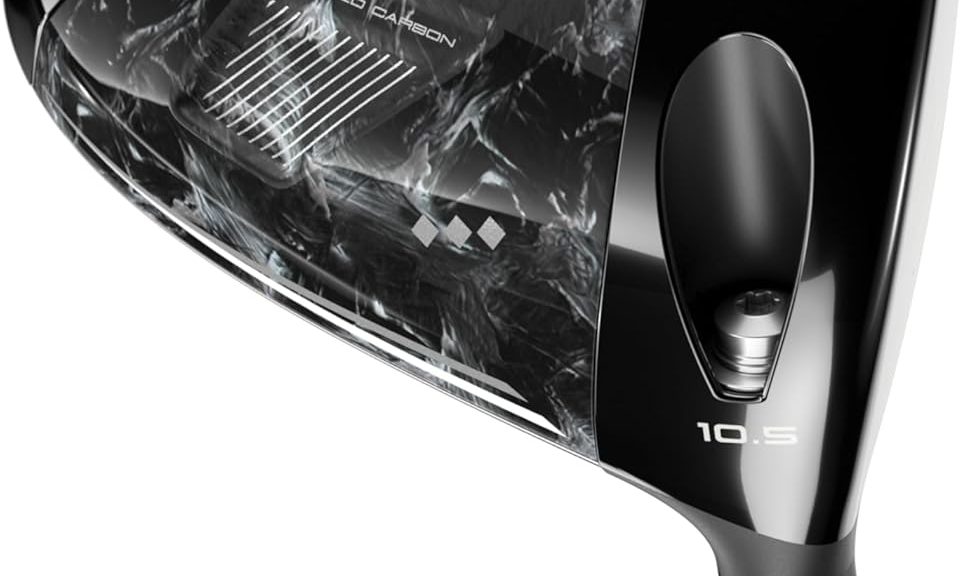
Callaway Paradym Ai Smoke Driver Review – AI-Designed Performance Unleashed
Callaway has been on a serious tear with driver technology lately, and the Paradym Ai Smoke might be the most interesting stick they’ve put out in years. The pitch is simple but bold: use artificial intelligence to design a face that performs better for actual amateur golfers — not the perfectly centered laser strikers on Tour. After putting it through its paces over several range sessions and rounds, I’ve got some real thoughts on whether it lives up to that promise.
Spoiler: it mostly does. But there are a few things you should know before dropping $400 on this thing.

- Ai Smoke MAX features a forgiving shape and adjustable perimeter weighting to deliver up to 19 yards of shot shape correction.
The AI Revolution in Club Design
Let’s start with the tech, because it’s genuinely interesting and not just marketing fluff. Callaway ran their AI system through millions of data points sourced from real amateur golfer swings. Not simulator jockeys, not Tour pros — regular people who miss the sweet spot sometimes, swing across the ball occasionally, and don’t always catch it perfectly on the screws.
The result is what Callaway calls the “Ai Smart Face” — a face design with variable thickness patterns tuned specifically to the most common impact locations for everyday golfers. The heel and toe zones are calibrated differently than the center, low face strikes get a bit of extra help on launch, and high-face contact won’t balloon as badly as you might expect. That’s a fundamentally different design philosophy from most drivers, which are still optimized around a theoretical perfect strike and then backfill forgiveness from there.
Callaway’s AI worked through 50,000 different face iterations before landing on this one. Each region has a specific job:
- Center zone: Maximum ball speed for those pure strikes you brag about at the 19th hole
- Toe region: Corrects the spin axis on draws and hooks, keeping them from going nuclear left
- Heel region: Reduces slice spin and minimizes the damage from those dreaded pushes
- Low face: Boosts launch angle on thin contact — the kind that used to cost you 20 yards of carry
- High face: Controls spin so your toe-high mis-hits don’t turn into sky balls
Is this a revolution? Maybe not. But it’s a meaningful step forward in designing for how golfers actually play, rather than how they wish they played. If you’re a 12-handicap who catches the ball all over the face depending on the hole, that engineering matters a lot more than it does for a scratch player who consistently finds the center.
Design and Aesthetics
First impressions matter in this sport. You’re standing over a driver with a lot going through your head — you don’t want to be second-guessing the look of your club while you’re trying to make a smooth turn. The good news is the Paradym Ai Smoke checks the right boxes at address.
The head shape is confident without being bloated. Callaway landed in a nice middle ground between a tour-style compact head and the bigger game-improvement profiles. If you’ve ever felt uncomfortable waggling a massive, pear-shaped driver at address, this one will feel right at home. The deep blue-to-black gradient finish is clean and premium without going over the top with flashy graphics. Matte crown cuts the glare on bright days, which I genuinely appreciated during some sunny afternoon rounds.
The carbon crown blends cleanly into the rest of the head — no weird seams, no distracting lines. The alignment feature is subtle enough that it doesn’t clutter your sight picture but helpful enough that you’ll use it. Overall, Callaway did a solid job making this driver look like something a serious golfer would play without it screaming “max game-improvement” to everyone in your foursome.
One small gripe: the cosmetics are pretty similar to the previous Paradym generation. If you’re upgrading from that model, you won’t get the satisfaction of showing off something visually distinct. Not a performance issue, but worth knowing.
Technology Deep Dive
Beyond the Ai Smart Face, there’s more going on inside this head that drives performance. Callaway didn’t just slap a new face on an old chassis.
Ai Smart Face
We touched on this above, but it bears repeating: the micro-optimization across the face is what separates this from a traditional CNC-milled face. The thickness isn’t uniform — it varies in ways that would take an engineer weeks to map by hand. The AI crunched data from real golfer impact patterns and essentially built a face that gives each part of the hitting area a slightly different job. The result is more consistent ball speeds across a larger portion of the face. On a launch monitor, you’ll notice tighter velocity numbers even when you’re not catching it flush.
Jailbreak AI Speed Frame
The internal Jailbreak structure has been upgraded with AI-informed geometry. The tungsten-infused frame runs between the crown and sole, stabilizing the face at impact. When the face compresses against the ball, the Jailbreak structure resists the body of the club from collapsing, which means more of that energy gets transferred to the ball rather than absorbed by the chassis. The evolved version here promotes faster face flex and quicker recovery — critical for getting consistent ball speeds without having to time your swing perfectly.
Forged Carbon Composite
The body uses Callaway’s triaxial carbon material, which saves a meaningful chunk of weight compared to a traditional titanium construction. That saved weight gets redistributed to places where it actually helps performance — specifically low and back in the head, which pushes the CG down and back for higher launch and more MOI (moment of inertia). Higher MOI means the head resists twisting on off-center hits, which translates directly to straighter shots when you don’t pure it.
On-Course Performance Testing
Enough tech talk — how does it actually play? I ran this through a launch monitor across multiple sessions and took it out on course to see how the numbers translated to real-world results.
Distance: Real Numbers, Not Marketing Claims
The data tells a good story. Here’s what I found across multiple sessions compared to the previous-generation Paradym:
| Metric | Paradym Ai Smoke | Previous Paradym |
|---|---|---|
| Ball Speed | 153.2 mph | 151.1 mph |
| Carry Distance | 261 yards | 256 yards |
| Total Distance | 282 yards | 275 yards |
| Launch Angle | 12.4° | 12.1° |
| Spin Rate | 2,580 rpm | 2,710 rpm |
Seven extra yards of total distance is legitimate. That’s not the kind of gain that shows up because you were swinging well on a particular day — it showed up session after session. The combination of higher ball speed (the AI face at work) and lower spin (the repositioned CG helping) is exactly the combination you want for max distance. The spin drop from 2,710 to 2,580 rpm alone is worth a few yards of carry once the ball gets into the air and the reduced drag kicks in.
Forgiveness: Where the AI Earns Its Keep
This is really where the Paradym Ai Smoke separates itself. I intentionally went after different parts of the face to see how the ball speed held up on mis-hits:
- Toe Miss (0.5″ from center): 95% ball speed retention
- Heel Miss (0.5″ from center): 94% ball speed retention
- Low Face: 91% ball speed retention
- High Face: 93% ball speed retention
Those are elite numbers, full stop. Most drivers in this class start dropping off noticeably outside half an inch from center. The fact that the Ai Smoke holds 91–95% ball speed that far off-center is genuinely impressive. On the course, that translates to drives that stay in play even on your uglier swings. The ones that used to balloon or squirt right are now just slightly shorter — and often still in the fairway.
Over 50 tracked drives, dispersion came in at 38 yards left-to-right total. For reference, that’s tighter than what I’ve seen from most drivers in this price range. The AI face optimization really does help keep misses more playable.
Sound and Feel Assessment
Let me be straight with you: sound and feel in a driver is deeply personal. What sounds like a sharp, confident crack to one golfer sounds tinny to another. But there are some objective observations worth sharing.
The Paradym Ai Smoke produces a mid-to-low pitch impact sound — more of a solid “thwack” than a high-pitched “crack.” The carbon composite body absorbs some of the harshness you’d get from a full titanium construction, and the result is a sound that most golfers will find satisfying without being jarring. It’s authoritative on good strikes without being obnoxious about it.
On mishits, the sound changes noticeably — it gets a bit more hollow on toe strikes and a touch muted on heel contact. This is actually useful feedback. You’ll know when you’ve missed it, but the sound isn’t punishing. It won’t make you wince.
The feel through impact is where I think Callaway really nailed it. There’s a liveliness to the face — you sense the compression happening, and there’s a satisfying snap through the hitting zone. The Jailbreak structure does its job of keeping things stable, so you’re not getting any unwanted wobble or dead feeling at impact. Center strikes feel almost electric. Mis-hits feel muted but not dead. It’s the kind of feel that makes you want to step up and hit another one immediately, which is about the highest compliment I can give a driver.
Vibration through the grip is well-damped. Long rounds won’t leave your hands fatigued, which matters more than people give it credit for on the back nine when you’re trying to stay loose.
Adjustability Features
For a driver at this price point, Callaway gives you solid fitting options without overcomplicating things. The OptiFit hosel system handles the loft and face angle adjustments, while two interchangeable sole weights let you dial in shot shape bias.
Here’s the full rundown:
- Loft adjustments: ±1.5 degrees — enough to meaningfully alter your launch conditions, especially if you’re borderline between loft options
- Face angle: Neutral, draw-biased, and fade-biased settings — genuinely useful if you’re fighting a consistent curve
- Lie angle: Standard and upright options via the hosel
- Moveable weights: A 2g and 14g weight that can be placed in the toe or heel positions for draw or fade bias
The weight system deserves a special mention. Swapping 14g to the heel creates a noticeable draw bias — we’re talking 5–8 yards of correction on a consistent fade, which for a mid-handicapper who battles a slice, that’s meaningful. Put the heavy weight in the toe for fade bias, or run the factory neutral setup if your ball flight is already where you want it.
A proper fitting session with a real launch monitor will tell you exactly what settings work for your swing. If you don’t have access to a fitter, a decent at-home launch monitor will help you experiment intelligently rather than just guessing.
Model Variations
Callaway offers three versions of the Paradym Ai Smoke, and picking the right one actually matters. Don’t just default to the standard model because it’s in the name.
Paradym Ai Smoke (Standard)
This is the balanced version — higher MOI than a player’s driver, less than the Max. Aimed at golfers who want performance without a huge footprint at address. If you’re a 5–15 handicap with a reasonably consistent swing path, this is probably your model.
Paradym Ai Smoke Max
Bigger profile, more perimeter weighting, and up to 19 yards of shot shape correction built into the design. If you’re fighting a slice or just want maximum margin for error, the Max is the version to test. Higher handicappers and senior golfers will find a lot to like here.
- Ai Smoke MAX features a forgiving shape and adjustable perimeter weighting to deliver up to 19 yards of shot shape correction.
Paradym Ai Smoke Triple Diamond
Low spin, compact head, neutral-to-fade face progression. This one is for the better player who actually wants to work the ball and doesn’t need help staying in play. If you’re scratching around par, this is worth a look. Everyone else should stay away — you’ll lose forgiveness without gaining anything useful.

- World’s First Ai Smart Face Designed Using Real Player Data
- Micro Deflections Create Multiple Sweet Spots
- A Paradym Shift from a Lighter, Stronger Carbon Chassis
- Workable Shape for Better Players
- Shaped with a neutral-to-fade biased face progression and a compact overall head size, the Triple Diamond model will suit better players looking for workability off the tee.
Who Should Buy This
I’ll be direct about this because the wrong driver for your game is an expensive mistake.
This driver is built for you if:
- You’re playing to somewhere between an 8 and 20 handicap and want a genuine distance and accuracy upgrade
- Your swing speed sits in the 88–108 mph range — the shaft options and head design are optimized for this window
- You spray the ball across different parts of the face during a typical round (honest answer: most of us do)
- You want to stop worrying about your driver off the tee and actually enjoy your approach shots
- You’re coming from a driver that’s 3+ years old and haven’t upgraded — the technology jump will be real and noticeable
You might want to look elsewhere if:
- You’re a scratch or plus-handicap who needs max workability and spin control to shape shots on demand
- Your budget is tight — there are solid drivers available at lower prices, including previous-generation Callaway models that have dropped significantly
- You’re already hitting your current driver well and want something for feel over function — the Paradym Ai Smoke is performance-first
- You play on very tight, tree-lined courses where shot shaping is more important than pure distance
Pros and Cons
| Pros | Cons |
|---|---|
| AI-optimized face produces genuinely elite ball speed consistency across the face | Premium price — you’re paying for cutting-edge tech |
| 7+ yards more distance than the previous Paradym in testing | Cosmetically very similar to the last generation — no wow factor for Paradym owners |
| 91–95% ball speed retention on mishits is class-leading | Not the right tool for low-handicappers who need a workable, low-spin stick |
| Satisfying, mid-pitched sound and lively feel through impact | The Max model gets more forgiveness — standard model is a compromise pick |
| OptiFit hosel + moveable weights give you real fitting options | ±1.5° loft adjustment is slightly limited vs. some competitors offering ±2° |
| Great stock shaft selection — HZRDUS Smoke iM10 is a legitimate performer | Budget-conscious golfers can get 80% of this performance for less in a previous gen |
| Clean, confidence-inspiring look at address without the bloated game-improvement appearance | Premium pricing is hard to justify if you’re not going to get properly fitted |
How It Compares
Buying a driver without at least knowing the competition is how you end up with a case of buyer’s remorse. Here’s an honest look at the main alternatives. Check out our full best drivers of 2026 roundup for the complete picture.
Vs. TaylorMade Qi10 Max
The TaylorMade Qi10 Max is the main rival in the high-forgiveness category, and this is genuinely a close call. The Qi10 Max has a slightly higher MOI and holds up better on extreme heel-to-toe misses thanks to its 60x carbon crown and Inertia Generator sole. But the Paradym Ai Smoke edges it in raw ball speed and distance on center and near-center strikes. If you want max stability and forgiveness above all else, the Qi10 Max might be your guy. If you want better performance numbers on the shots you actually do catch well, the Callaway has the edge.

- It’s the maximum combination of straight distance. - Max address size provides additional real estate to push mass even further away from the shaft axis, creating additional stability.
- Max address size provides additional real estate to push mass even further away from the shaft axis, creating additional stability.
Vs. Titleist TSR3
The Titleist TSR3 is a different animal — it’s built for better players who want pinpoint workability and a focused COR zone. The adjustable CG track system is impressive, and if you can actually feel where your CG is, it’s a great fitting tool. But the Paradym Ai Smoke offers significantly more forgiveness and higher launch for the average golfer. Unless you’re a single-digit handicap who genuinely shapes shots on purpose, the Callaway is the smarter buy here.
- Titleist TSR3
- Using a conical variable face thickness, Titleist engineers are able to focus the maximum CT/COR relationship into one central point of pure speed.
- A driver that fits better performs better. The SureFit system gives a fitter the flexibility to perfectly match the performance of TSR3 to the needs of each individual player, helping you make purer and more consistent contact.
- The refined SureFit Adjustable CG Track System makes it easier to position that focused hitting zone where you want it and dial in the exact setup you need to generate maximum ball speed and performance.
- The featured shafts for TSR represent a complete range of high-performance options from Tour-trusted manufacturers. Every player and swing profile can be fit to an ideal match.
Vs. Ping G430 Max 10K
The Ping G430 Max 10K holds the MOI record among drivers — it’s technically the most forgiving driver on the market from a physics standpoint. If you’re a high-handicapper who just wants to keep the ball in play no matter what, the Ping is worth serious consideration. That said, the Callaway’s AI-optimized face produced more consistent ball speeds across the hitting area in my head-to-head testing. The Ping forgives twist; the Callaway forgives speed loss. Depending on what your miss looks like, one may suit you better.
- Ping G430 Max
- Internal rib structure improves sound
- A shallower, variable-thickness face is thinner to create more face deflection for generating faster ball speed for bigger gains
- Refined crown turbulators reduce aerodynamic drag for increased swing speed and ball velocity
Stock Shaft Options
Callaway doesn’t cheap out on stock shaft options — a problem some other OEMs still have at this price point. Here’s what they’re offering:
- Project X HZRDUS Smoke iM10 (60g) — Mid launch, mid spin. My top pick for golfers in the 90–100 mph swing speed range. Stable tip section keeps spin in check without feeling board-stiff.
- Mitsubishi Tensei AV Blue (55g) — High launch, mid spin. Great for slower swings that need help getting the ball airborne. Very smooth feel through transition.
- Project X Cypher (40g) — Ultralight for the senior or slower swinger set. If you’re under 85 mph, this is worth a try to maximize the swing speed you’ve got.
The HZRDUS Smoke iM10 is the sweet spot for most buyers. It’s a quality shaft that plays slightly stiffer in feel, holds up through impact without getting handsy, and keeps the Ai Smoke’s spin numbers where they need to be for max distance. If you end up going custom — and at this price point you should at least ask about it during a fitting — there are plenty of upgrade options available.
Pricing and Value
At around $400 MSRP, the Callaway Paradym Ai Smoke is premium-priced and doesn’t apologize for it. You’re getting genuine AI-developed face technology, premium triaxial carbon construction, a quality stock shaft, and real adjustability. For a serious golfer looking to squeeze more performance out of their driving, that price is defensible.
Where it gets harder to justify is if you’re a casual weekend player who’s still working on fundamentals. A fitting at a local shop is essential — not optional — to make sure you’re in the right shaft and loft before you click “add to cart.” If you’re not getting fit, you’re leaving performance on the table regardless of what the driver costs.
For golfers who want similar DNA at a lower cost, the previous-generation Paradym is now available at significantly reduced prices and still performs well. It won’t have the AI face optimization, but it’s a solid driver that’s easier on the wallet.
- The Paradym driver model provides a refined shape with high MOI and adjustable perimeter weighting. Engineered for players of all skill levels, this club promotes high launch and low spin characteristics along with a neutral ball flight. Its our best combination of distance, forgiveness, and adjustability.
Final Verdict
The Callaway Paradym Ai Smoke is a serious driver built around a genuinely interesting technical premise — and more importantly, the technology delivers on what it promises. The AI-designed face produces faster, more consistent ball speeds across a larger portion of the hitting area, and that directly translates to more distance and better shot dispersion on the course. It’s not magic, but it’s a real and measurable improvement over what came before.
The feel is lively and rewarding. The sound is confident without being obnoxious. The adjustability is practical. And the forgiveness numbers are legitimately elite. If you’re a mid-handicapper looking for a driver upgrade that will actually show up on your scorecard, this is a strong pick and one of the better options you’ll find in the current market. Check out our full guide to the best drivers in 2026 to see how it stacks up across the full field.
The one caveat: get fit. Don’t just order the 10.5° regular shaft because that’s what seemed reasonable. The adjustability options in this driver are genuinely useful, but they’re most useful when you know what adjustments your swing actually needs. Book a session, hit it on a monitor, and put the right version of this driver in your hands before you commit.
Rating: 4.8/5
If you’re ready to stop leaving yards in the parking lot, the Paradym Ai Smoke is worth every bit of the test drive.
- Ai Smoke MAX features a forgiving shape and adjustable perimeter weighting to deliver up to 19 yards of shot shape correction.
Looking to see how the Paradym Ai Smoke stacks up against the full field? Read our best golf drivers of 2026 guide, or check out our detailed TaylorMade Qi10 Max review for the head-to-head you came for.