
Understanding Golf Club Lofts: Complete Angle Guide
Every degree matters when it comes to controlling your golf ball. Understanding club loft is the key to unlocking consistent distance, trajectory, and shot-making ability.
Walk into any golf shop, and you’ll see numbers stamped on every club—9.5°, 15°, 46°. These aren’t arbitrary figures. They represent loft angles, arguably the most important specification that determines how far and how high your golf ball travels.
Whether you’re a beginner trying to understand why your 7-iron goes further than your buddy’s, or an experienced player looking to dial in your distance gaps, this complete guide breaks down everything you need to know about golf club lofts.
What Is Loft and Why Does It Matter?
Loft refers to the angle of the clubface relative to the vertical plane. Picture your club at address: a driver’s face is nearly upright (low loft), while a lob wedge tilts dramatically backward (high loft).

This angle directly controls two critical factors:
- Launch angle – Higher loft = higher ball flight
- Spin rate – Higher loft = more backspin
The combination of launch and spin determines your carry distance, total distance, and how the ball behaves when it lands. A low-lofted driver produces a penetrating trajectory that rolls out, while a high-lofted wedge launches steeply and stops quickly on the green.
Understanding loft helps you:
- Choose the right clubs for your swing speed
- Identify distance gaps in your bag
- Make smarter club selections on the course
- Understand why “game improvement” irons fly further
Driver Lofts: 9 to 13 Degrees
The driver is the lowest-lofted club in your bag, designed for maximum distance off the tee. Modern drivers typically range from 9 to 13 degrees, with most golfers playing between 9.5° and 10.5°.

Choosing Your Driver Loft
Your ideal driver loft depends on swing speed and attack angle:
- Under 85 mph: 12-13°
- 85-95 mph: 10.5-12°
- 95-105 mph: 9.5-10.5°
- Over 105 mph: 9-10°
Important note: Many amateur golfers play drivers with too little loft. If you hit down on the ball or struggle to get the ball airborne, adding loft can actually increase your distance. Tour pros can play 9° drivers because they generate significant clubhead speed and hit up on the ball—most recreational golfers benefit from 10.5° or higher.
Modern adjustable drivers allow you to fine-tune loft by 1-2 degrees, making it easier to optimize launch conditions without buying a new club.
Fairway Wood Lofts
Fairway woods bridge the gap between your driver and long irons, offering distance with more control and versatility from the fairway or rough.
Standard Fairway Wood Lofts:
- 3-wood: 15-16°
- 4-wood: 16.5-18°
- 5-wood: 18-19°
- 7-wood: 20-22°
- 9-wood: 23-25°
The 3-wood is the second-longest club in the bag and can be challenging to hit from the fairway due to its low loft. Many golfers find a 5-wood or 7-wood more versatile and easier to launch—the extra loft helps get the ball airborne from tight lies.
Higher handicappers should seriously consider replacing their 3-wood with a 5-wood or 7-wood. You’ll sacrifice a few yards of potential distance but gain significant consistency and confidence.
Hybrid Lofts
Hybrids combine the distance of fairway woods with the playability of irons. They’ve largely replaced long irons (2-4 irons) in most golfers’ bags—and for good reason.
Standard Hybrid Lofts:
- 2-hybrid: 17-18° (replaces 2-iron)
- 3-hybrid: 19-21° (replaces 3-iron)
- 4-hybrid: 22-24° (replaces 4-iron)
- 5-hybrid: 25-27° (replaces 5-iron)
- 6-hybrid: 28-30° (replaces 6-iron)
The key advantage of hybrids is their higher launch with lower spin compared to long irons. The larger clubhead and lower center of gravity make it easier to get the ball airborne, even from rough or difficult lies.
When adding hybrids to your bag, match the loft to the iron you’re replacing, not necessarily the number on the club. A 22° hybrid doesn’t always equal a 4-iron—check your specific iron lofts and ensure proper gapping.
Iron Lofts (And Loft Creep Explained)
Iron lofts have changed dramatically over the past 20 years, and understanding this evolution is crucial for building a properly gapped set.
Traditional vs. Modern Iron Lofts:
- 4-iron: Traditional 24° → Modern Game Improvement 19-21°
- 5-iron: Traditional 28° → Modern 23-24°
- 6-iron: Traditional 32° → Modern 26-27°
- 7-iron: Traditional 36° → Modern 29-31°
- 8-iron: Traditional 40° → Modern 34-36°
- 9-iron: Traditional 44° → Modern 38-41°
- PW: Traditional 48° → Modern 43-45°
What Is Loft Creep?
Loft creep refers to the gradual strengthening (lowering) of iron lofts by manufacturers over the decades. Today’s 7-iron often has the same loft as a traditional 5-iron or 6-iron.
Why do manufacturers do this? Marketing. When golfers test a new set and hit their 7-iron 10 yards further than their old one, they’re impressed—but the “improvement” is largely because they’re actually hitting a 5-iron disguised as a 7-iron.
This matters because:
- Comparing clubs between brands requires loft comparison, not club numbers
- You may have distance gaps at the top end of your iron set
- Your pitching wedge might be too strong, leaving a huge gap to your sand wedge
If your game improvement pitching wedge is 43° and your sand wedge is 56°, you have a 13° gap—that’s roughly 40-50 yards of missing distance coverage!
Wedge Lofts: PW, GW, SW, LW
Wedges are the precision instruments of your bag, and proper loft gapping here is critical for scoring.

Standard Wedge Lofts:
- Pitching Wedge (PW): 44-48°
- Gap Wedge (GW/AW): 50-52°
- Sand Wedge (SW): 54-56°
- Lob Wedge (LW): 58-62°
Building Your Wedge Setup
The general rule is maintaining 4-6 degree gaps between wedges. Start with your pitching wedge loft and work down:
Example for a 46° PW:
- 46° – Pitching Wedge
- 50° – Gap Wedge
- 54° – Sand Wedge
- 58° – Lob Wedge
Example for a 43° PW (strong lofted set):
- 43° – Pitching Wedge
- 48° – Gap Wedge
- 52° – Sand Wedge
- 56° – Lob Wedge
- Optional: 60° – Lob Wedge
The stronger your PW loft, the more wedges you may need to properly cover your scoring distances. Many modern iron sets now include a gap wedge to address this issue.
Do You Need a Lob Wedge?
Not everyone needs a 60° lob wedge. It’s the most specialized and difficult wedge to master. If you’re not comfortable opening your sand wedge for high-lofted shots, a lob wedge can help—but many tour players carry only three wedges and manufacture shots with technique rather than relying on extreme loft.
Putter Loft: The Often Forgotten Angle
Yes, putters have loft too—typically 2 to 5 degrees. This might seem counterintuitive since you’re rolling the ball, but a small amount of loft is essential.
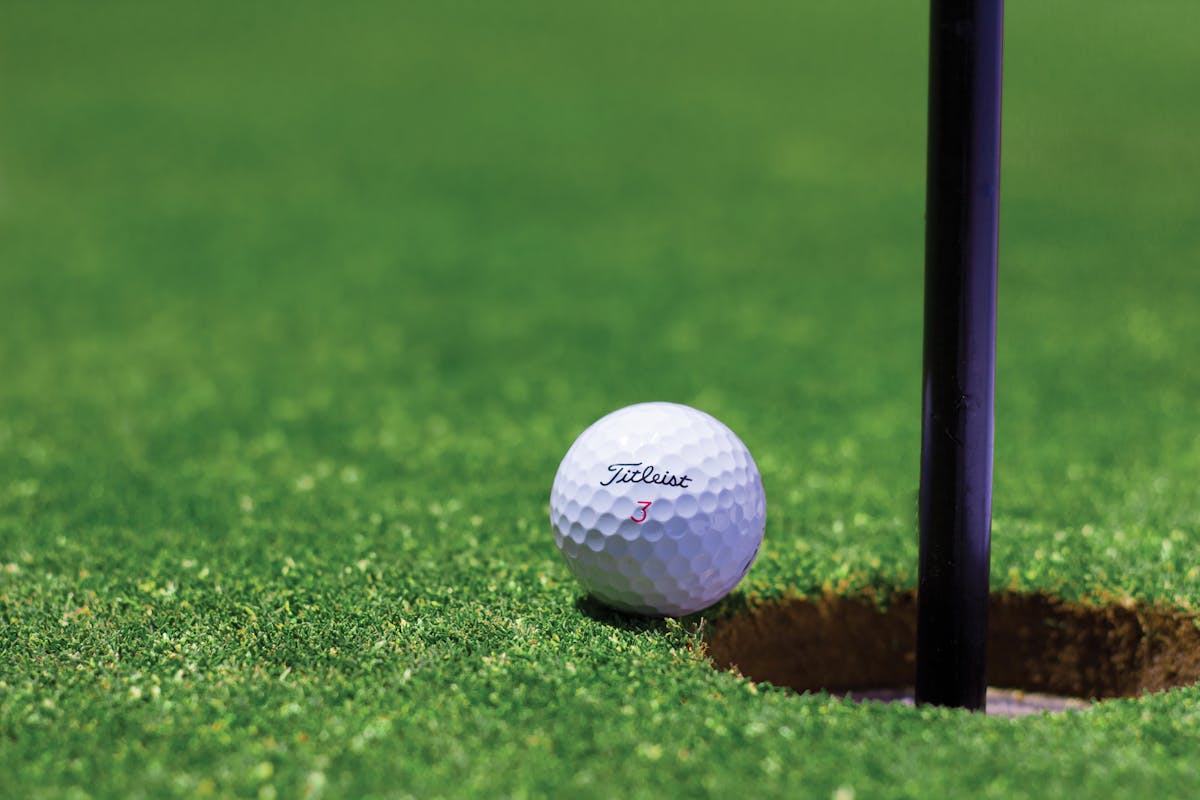
Why Putters Need Loft:
- Ball sitting down: At address, the ball sits slightly pressed into the turf. Loft lifts it onto the green’s surface to start rolling.
- Forward press compensation: Many golfers press their hands slightly forward at address, delofting the putter. Built-in loft compensates for this.
- Pure roll: Proper loft helps the ball start rolling smoothly rather than bouncing or skidding.
Most golfers do well with 3-4 degrees of putter loft. If you have an extreme forward press, you might need more; if you flip your hands at impact, you might need less. Putter fitting can optimize this for your stroke.
How Loft Affects Distance and Trajectory
Understanding the relationship between loft, distance, and trajectory helps you make better on-course decisions.

The Physics:
- Lower loft = lower launch + less spin = more roll, penetrating flight
- Higher loft = higher launch + more spin = steeper descent, less roll
Distance vs. Carry:
Lower-lofted clubs produce more rollout, so total distance exceeds carry distance significantly. Higher-lofted clubs land softer with minimal roll.
For example:
- Driver: 220-yard carry might produce 250 yards total
- 8-iron: 140-yard carry might produce 145 yards total
- Lob wedge: 70-yard carry might roll 2 yards or even spin back
This is why knowing your carry distances matters more than total distances—especially when hitting into greens over hazards.
Wind Considerations:
Lower-lofted clubs (driving irons, hybrids) are better in wind because they produce less spin and a more penetrating ball flight. High-lofted wedges can balloon in wind and become unpredictable.
Gapping Your Clubs Properly
Proper gapping ensures consistent distance intervals between clubs. Here’s how to optimize your set:
Step 1: Know Your Current Distances
Spend time on a launch monitor or track your distances on the course. Note the carry distance for each club.
Step 2: Identify Gaps
You should have roughly 10-15 yards between each club. Common problem areas:
- Between longest iron and shortest fairway wood/hybrid
- Between pitching wedge and sand wedge
Step 3: Fill the Gaps
Solutions for common gapping issues:
- Big gap at top of irons: Add a hybrid that bridges the distance
- Big gap in wedges: Add a gap wedge or check your PW loft
- Too many clubs with similar distances: Consider removing redundant clubs
Step 4: Consider Versatility
You’re limited to 14 clubs. Instead of carrying a 2-iron and 3-iron that hit similar distances, consider:
- A utility driving iron for wind/tee shots
- An extra wedge for short-game versatility
- A 7-wood for high-launching long shots
Example Well-Gapped Set:
- Driver (10.5°): 230 yards
- 3-wood (15°): 215 yards
- 5-wood (18°): 200 yards
- 4-hybrid (22°): 185 yards
- 5-iron (24°): 175 yards
- 6-iron (27°): 165 yards
- 7-iron (30°): 155 yards
- 8-iron (34°): 145 yards
- 9-iron (38°): 135 yards
- PW (43°): 120 yards
- GW (48°): 105 yards
- SW (54°): 85 yards
- LW (60°): 65 yards
- Putter (3°)
Frequently Asked Questions
What loft driver should a beginner use?
Most beginners benefit from 10.5-12 degrees of driver loft. Higher loft helps get the ball airborne and produces a more forgiving ball flight. As you develop swing speed and consistency, you can experiment with lower lofts.
Why does my 7-iron go as far as my friend’s 6-iron?
Likely loft creep. Your game improvement 7-iron may have 29-30° of loft, while your friend’s players iron 6-iron has 30-31°. Always compare lofts, not club numbers, when discussing distances.
How do I know if my clubs are gapped properly?
Track your carry distances for each club. You should see consistent 10-15 yard gaps. Large gaps (20+ yards) or overlapping distances indicate gapping issues that need addressing.
Should I get fit for driver loft?
Absolutely. A professional fitting with a launch monitor can optimize your driver loft based on your swing speed, attack angle, and ball speed. Many golfers gain 10-20 yards simply by using the correct loft for their swing.
What’s the most common loft mistake amateurs make?
Playing driver loft that’s too low and wedge gaps that are too wide. Most amateurs would benefit from more driver loft and an additional wedge to fill the gap between their PW and SW.
Does altitude affect what loft I should play?
At higher altitudes, the ball flies further due to thinner air. Some players at elevation use slightly less loft or choose different club selections. However, the effect is more about distance than loft choice—stick with the loft that produces optimal launch for your swing.
Conclusion
Golf club loft is the hidden architect of every shot you hit. From the towering drive off the first tee to the delicate pitch over a greenside bunker, loft determines how high the ball launches, how far it carries, and how it behaves when it lands.
Key takeaways:
- Loft controls launch angle and spin rate
- Driver lofts range from 9-13°; most amateurs benefit from 10.5°+
- Modern irons have “crept” to stronger lofts—compare specs, not numbers
- Wedge gapping (4-6° intervals) is critical for scoring
- Even putters need loft (2-5°) for proper roll
- Track your carry distances to identify and fix gaps
Take time to understand the lofts in your bag. Check your iron and wedge specs against the charts in this guide. Identify any gaps, especially in your wedge setup. With proper loft knowledge and gapping, you’ll have the right tool for every distance and situation on the course.
The best golfers don’t just swing well—they think well. And understanding loft is thinking like a golfer.